

3 Outfit Recipes for Black Tie Optional Women, Fit, Custom, Plus Size
Black tie optional asks women to choose a floor-length gown, a formal midi or tea-length dress, or an elevated cocktail dress made in an evening fabric, and a tailored suit or jumpsuit works too. Fabric and finish decide whether a shorter hem passes, not the length itself. The Emily Post Institute and fashion experts writing for Vogue agree on this point, and some fashion brands build their evening collections around the same logic.
TL;DR:
- Fabric and finish are more important than hem length in black tie optional attire, with satin, silk, velvet, and crepe being the most formal options.
- A formal midi dress in crepe or a knee-length elevated cocktail dress offers a safe, versatile choice for many venues and times of day.
- Shoes should be heels, dressy flats, or block-heel sandals, with small structured bags preferred over bulky or casual styles for a polished look.
- Colors like jewel tones, black, and metallics are safest, while white and ivory are off-limits at weddings to respect the bride.
- Custom-made dresses based on accurate measurements provide the best fit and confidence for formal events, especially for plus-size women.
Table of Contents
- What Does Black Tie Optional Mean for Women?
- Outfit Options That Actually Work
- Which Fabrics and Colors Read as Formal?
- Shoes, Bags and Jewelry That Finish the Look
- How to Choose Based on Venue, Time and Season
- Fit, Plus-Size Styling and Custom Solutions
- Common Mistakes and How to Fix Them Fast
- Why Fit and Fabric Matter More Than the Dress Code Label
- Get a Formal Fit Made for You
- Sources
- FAQ
What Does Black Tie Optional Mean for Women?
Hosts choose “optional” for a reason. They want the room to feel formal without forcing every guest to rent a tuxedo or buy a ball gown they’ll wear once. That’s the whole point of the phrase, and it’s worth remembering when you’re staring at your closet wondering how dressed up is too dressed up.
The confusion comes from where this code sits between two clearer ones. Black tie itself is rigid: tuxedos for men, floor-length gowns for women, no exceptions. Cocktail attire sits lower on the formality scale, with shorter hems and daytime-friendly fabrics allowed. Black tie optional splits the difference, leaning formal but giving you room to work with what fits your budget, comfort, and body.
| Dress Code | Shortest Acceptable Hem | Typical Fabrics | Common Venues |
|---|---|---|---|
| Black Tie | Floor-length only | Satin, silk, velvet | Galas, formal weddings |
| Black Tie Optional | Knee-length with evening fabric | Satin, silk, crepe, velvet, lace | Hotel ballrooms, upscale receptions |
| Cocktail | Knee-length | Cotton blends, jersey, lighter silks | Daytime receptions, casual parties |
The Knot notes that the flexibility built into black tie optional exists precisely so guests aren’t priced out of a formal event. That’s the mindset to carry into your closet, not a loophole to dress down.
Outfit Options That Actually Work
A floor-length gown is always safe. Choose a column or A-line silhouette if you’re worried about overdressing. It’s the surest bet for a hotel ballroom wedding or a formal gala where black tie optional sits close to black tie itself.
A formal midi or tea-length dress is the answer most stylists reach for when guests aren’t sure. Luxe Digital calls the formal midi the safest default, and it works because the hem sits in a gray zone that reads formal the moment the fabric is right.
An elevated cocktail dress in satin, lace, or crepe closes the gap between casual and formal. Pair it with statement jewelry and a structured clutch, and a knee-length piece like the jeweled neckline cocktail dress reads every bit as formal as a longer gown.
Tailored suiting or a jumpsuit gives you a third lane entirely. A sharp, well-fitted evening suit or a wide-leg jumpsuit in a heavy fabric signals confidence without asking you to wear a dress at all.
Three quick recipes to borrow:
- Hotel ballroom wedding: floor-length gown, metallic clutch, drop earrings, no coat needed indoors.
- Summer garden evening: formal midi in crepe, low block heel for grass, a light wrap for after sunset.
- Black-tie-optional city loft: elevated cocktail dress in velvet or lace, ankle strap heels, layered gold jewelry.
Which Fabrics and Colors Read as Formal?
Fabric does more work than hem length ever will. Satin, silk, velvet, crepe, jacquard, and heavy lace all catch light and hold structure the way formalwear should, and that’s exactly why Emily Post’s guidance on black tie dress codes lists them as the acceptable materials for this code.
Cotton, linen, and jersey fail for the opposite reason. They wrinkle, they drape softly instead of holding shape, and they read as daywear even in a beautiful color. A linen maxi dress, no matter how long, will look less formal than a knee-length satin dress standing next to it.
Color matters too, especially at weddings:
- Avoid white or ivory at any wedding. That palette belongs to the bride.
- Jewel tones, black, and metallics are always safe choices for evening events.
- Soft pastels and subtle prints work for daytime or garden ceremonies, but keep them structured rather than flowy.
- Watch the small details: a proper lining, boning at the bodice, clean seam finishing, and structured hems separate a formal piece from something that only looks formal in photos.
Shoes, Bags and Jewelry That Finish the Look
Heels are the default, but embellished flats and dressy block-heel sandals both work when comfort matters more than height. If you’re leaning into tailored suiting, a polished lace-up oxford or pointed flat keeps the whole outfit intentional rather than accidental.
Bag size tells on you fast. An evening clutch or a small structured bag with a thin strap keeps proportions right; anything bulky, canvas, or backpack-shaped undercuts even a great dress.
Jewelry and outerwear finish the story:
- Statement earrings pair beautifully with a simple neckline; save layered necklaces for dresses without embellishment.
- A delicate layered bracelet or ring stack adds polish without competing with the dress.
- An evening wrap, faux fur stole, or tailored coat keeps you warm without breaking the formal mood.
Pro Tip: Choose jewelry finishes that survive travel. Rhinestone and crystal pieces hold up better in a clutch than delicate chain jewelry that tangles the second you sit down for the reception.
How to Choose Based on Venue, Time and Season
Run through this checklist before you commit to an outfit:
- Indoor evening event, hotel ballroom or estate: Lean toward a floor-length gown or a heavier fabric midi. These venues expect the most formal end of the code.
- Outdoor daytime or early evening event: A formal midi in a lighter evening fabric like crepe balances the setting without looking underdressed once the sun goes down.
- Rooftop or city loft: An elevated cocktail dress works well here since these venues tend to read slightly less formal even under a black tie optional label.
- When you genuinely can’t decide: Choose the formal midi. It’s the one option that reads correctly across nearly every venue and time of day.
Two quick scenarios: for a spring afternoon garden wedding that shifts into evening, a tea-length dress in satin with a light wrap covers both halves of the day. For a winter hotel ballroom reception, a floor-length gown paired with a tailored coat handles the formality and the cold. Practical venue guidance from Brides backs up timing and setting as better predictors of the right outfit than the dress code label alone.
Fit, Plus-Size Styling and Custom Solutions
Fit fixes more problems than a new dress ever will. Check the shoulders first, then hem balance, then the waist. A dress that’s a size off in the shoulders will never look right no matter how expensive the fabric is, and a quick trip to a tailor solves it faster than another round of online shopping.
Plus-size dressing benefits from the same fabrics that work for everyone, just chosen with proportion in mind. Structured crepe and heavier satin hold their shape better than clingy jersey, and a defined waistline does more for balance than a loose silhouette ever will.
- Prioritize fabrics with body: crepe, satin, and structured lace over anything that clings or sags.
- Ask for a defined waist seam if you’re working with a tailor or ordering made-to-order.
- Consider a wrap-style bodice if you want more coverage without losing shape.
Made-to-order shortens the whole process. Instead of altering something that almost fits, a custom piece starts with your actual measurements. Primadonsanddonnas builds made-to-order dresses and plus-size evening pieces, along with embellished shoes, specifically to close that gap between “close enough” and formal-ready.
Pro Tip: If you’re working with an off-the-rack dress, a simple side-seam taken in and a proper hem can elevate it to evening standard in one alterations visit.
Common Mistakes and How to Fix Them Fast
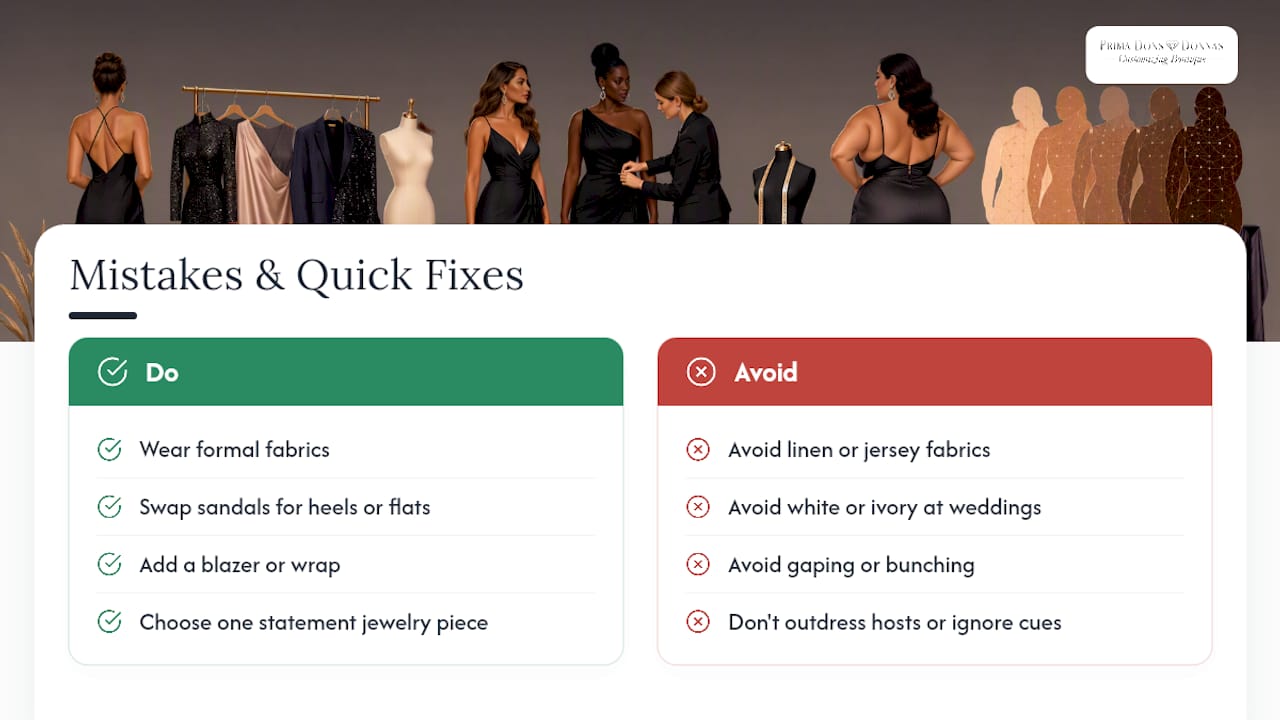
The most common miss is fabric, not length. A linen or jersey dress in the right hem still reads casual, and casual sandals undercut even a good dress. Sloppy tailoring, gaping at the waist or bunching at the shoulder, is the other repeat offender. And at weddings specifically, white or ivory is off-limits no matter how far it is from the bride’s dress.
Quick fixes exist for most near-misses. Swap casual sandals for a heel or dressy flat. Add a blazer or wrap over a dress that reads slightly too simple. Trade delicate everyday jewelry for one statement piece. None of these require buying a new outfit.
One more note on etiquette: black tie optional isn’t an invitation to outdress the hosts or ignore cultural cues at a wedding. Dress formally, dress for the venue, and let the event set the tone rather than trying to set it yourself.
Why Fit and Fabric Matter More Than the Dress Code Label
Years of watching women agonize over hem length have convinced me the wrong question gets asked constantly. The real question isn’t “how long should this be.” It’s “does this fabric and fit look intentional.” A knee-length satin dress with a great fit will outshine a floor-length linen dress every time, and that’s not a stylist’s opinion. It’s just what the eye reads as formal.
Confidence follows fit, not the other way around. That’s the whole philosophy behind how Primadonsanddonnas approaches custom evening wear, and it’s why fabric and proportion get more attention than arbitrary rules about how many inches a dress should cover.
— Latoya
Get a Formal Fit Made for You
Off-the-rack shopping means compromise: a hem that’s almost right, a waist that’s almost fitted, a size range that stops before it reaches you. Primadonsanddonnas skips that compromise entirely by building each piece to your actual measurements, in any size or color, so the fit problem gets solved before the dress ever ships.
The made-to-order dress collection covers gowns, formal midis, and elevated cocktail styles suited to black tie optional events, weddings included. For readers who need something sooner, ready-to-ship pieces like the rhinestone maxi gown and the lace maxi dress ship fast without sacrificing evening-appropriate fabric. Cooler weather events pair well with the custom outerwear collection for a wrap or tailored coat that matches your gown instead of clashing with it. Browse the made-to-order collection and start with your measurements, not your size chart.
Sources
Black Tie Dress Code: Our Comprehensive Guide — Emily Post Do You Know What Black-Tie-Optional Attire Looks Like? — The Knot What Is “Black Tie Optional”? The Most Confusing Wedding Dress Code, Explained — Vogue Black Tie Optional Dresses: What To Wear — Luxe Digital Cocktail attire guide: what to wear — Marie Claire
- Black Tie Dress Code: Our Comprehensive Guide — Emily Post
- Do You Know What Black-Tie-Optional Attire Looks Like? — The Knot
- What Is “Black Tie Optional”? The Most Confusing Wedding Dress Code, Explained — Vogue
FAQ
What does black tie optional mean for a woman?
It means a formal gown, formal midi, elevated cocktail dress, or tailored suit are all acceptable, with fabric and finish mattering more than hem length.
What shoes work for black tie optional?
Heels are the default choice, but embellished flats and dressy block-heel sandals both work when comfort is a priority, and oxfords pair well with tailored suiting.
What color should a woman wear to a black tie optional wedding?
Jewel tones, black, and metallics are always safe, while white and ivory should be avoided since that palette is reserved for the bride.
Is black tie optional too dressy?
Not necessarily. The code exists to keep a formal tone while giving guests flexibility, and a formal midi from a collection like Primadonsanddonnas’s made-to-order line hits that balance without requiring a full gown.


Leave a comment