

Boot Heel Comfort: Which Heel Feels Best and How to Fit It
The most comfortable boot heel is a wide, stable heel that is low to moderate in height, on a boot that locks your heel in place without pinching your toes. Podiatrist sources differ on the exact number, from three-quarters of an inch to two inches, but they agree on the pattern: wider is steadier, lower is kinder, and fit decides the rest. Custom sizing is how you get all of that in one pair, and our Custom Boots Collection is made to order in any size or color.
TL;DR
- Pick a wide heel over a narrow one. Block, wedge and platform shapes spread pressure better than stilettos.
- Keep heel height low to moderate. Sources range from 0.75 inch (Harvard Health) to under 2 inches (podiatrists quoted by Who What Wear).
- Fit matters as much as height: toes free to wiggle, heel snug, ankle collar not tight.
- Break new boots in over days, not hours, and shop in the afternoon when feet are at their largest.
- Made-to-order boots let you match size and heel style to your own foot instead of settling for a stock fit.
Table of Contents
- Why heeled boots hurt in the first place
- The most comfortable heel type: wide and stable
- How high is too high?
- Fit at the heel: the part most people get wrong
- Features that make a heel feel better
- Break in your boots the right way
- A try-on routine that predicts all-day comfort
- Make heels easier on your feet on the day
- Custom boots: choose the fit and the heel
- Order for your event
- Our view on boot heel comfort
- FAQ
- Sources
Why heeled boots hurt in the first place
A heel changes where your weight goes. According to Northwell Health, stepping into high heels puts your feet in a tiptoe position and shifts most of your body weight onto the balls of your feet. That compresses the bones and joints of the forefoot. Regular wear also tightens the Achilles tendon (the cord at the back of your ankle) and the calf muscles.
The Cleveland Clinic’s Dr. Nicolosi puts it as an alignment issue. In Cleveland Clinic’s boot guide he says that when things are off, every step carries extra stress.
So three things cause most boot pain:
- Height. The higher the heel, the more load lands on the front of your foot.
- Narrowness. A small heel base wobbles, and your ankle works harder to stay upright.
- Poor fit. Slipping heels cause blisters. Tight toe boxes and tight ankle collars cause numbness and pressure.
All three are things you can control when you choose well.
The most comfortable heel type: wide and stable
Heel width and heel shape change how steady you feel. Here is how the common types compare, based on what podiatrists and medical groups say.
| Heel type | Comfort profile | What the sources say |
|---|---|---|
| Block heel | Stable, good for long wear | Podiatrist Cunha, in Byrdie, says block heels give more stability thanks to a larger surface area. |
| Wide, low heel (1 to 1.5 in) | Steady, eases Achilles strain | Arya Foot & Ankle calls this range ideal for reducing Achilles tension and calf strain. |
| Platform | Lower effective pitch | Harvard Health notes platforms raise both toe and heel, which spares the toes extra stress. |
| Wedge | Mixed | Cleveland Clinic says wedge booties add forefoot pressure and give little side-to-side support. Wide, rubber-soled wedges with a thick forefoot platform are a better version, per the Arthritis Foundation. |
| Stiletto or narrow heel | Least stable | Arya says very high, narrow or stiletto heels destabilize the ankle and push pressure to the forefoot. |
The common thread is surface area. A wider heel base gives your ankle less to correct on each step.
Platforms: height is not the whole story
A platform changes the math. Podiatrist Parke explains in Byrdie that a platform’s effective pitch is lower than its total height. Her example: a 110 mm (4.3 in) heel with a 50 mm (2 in) front platform behaves like a 60 mm (2.4 in) heel. When you compare boots, look at the drop from heel to toe, not only the number at the back.

We cover this in more depth in our platform boots comfort guide.
Block heel or stiletto?
If you want one rule: choose the block. It feels steadier, and it looks good with the same outfits. Our piece on block heels versus stilettos goes through it side by side. Our boot heel types explained guide covers six styles and who each suits.
How high is too high?
Sources do not agree on one number, so here is the range:
- Up to 0.75 inch. Harvard Health says the most comfortable women’s shoes are low-heeled but not flat, no higher than three-quarters of an inch. It adds that height matters more than width: the higher the heel, the worse the effect, whether thin or chunky.
- 1 to 1.5 inches. Arya Foot & Ankle calls a stable, wide heel in this range ideal. Podiatrist Dr. Tom Biernacki, writing for Michigan Foot Doctors, says a slight heel of the same height can feel better than a flat, because it eases tension on the Achilles tendon and the plantar fascia (the band along the sole of your foot).
- Under 2 inches. Podiatrist Bobby Pourziaee tells Who What Wear that wider heels under two inches give the most stability. Byrdie reports that podiatrists see problems with any heel over two inches.
- Up to 2 inches for arthritis. The Arthritis Foundation cites a 1.5 to 2 inch maximum from experts, with wide, rubber-soled wedges as a good choice.
A slight heel can feel better than a totally flat boot, especially if your Achilles is tight. Flat boots with no cushioning or support are the ones the Arthritis Foundation says to avoid.
If you love a taller heel, you are not out of options. Choose a wide base, a platform up front, and a good fit, and wear the tallest pairs for the moments they are made for. Our boot heel height guide helps you match a height to an occasion.
Fit at the heel: the part most people get wrong
Heel height gets the attention, but fit does most of the work. Here is what a good fit looks like.
Heel hold
Syracuse Podiatry says a properly fitted boot keeps your heel locked, and that slipping more than a quarter inch raises the risk of blisters and instability. A simple test: unlace the boot, slide your foot forward, and see if one index finger fits behind your heel. Then lace up and walk.
Harvard Health puts it the same way. Heels should fit snugly without pinching or slipping.
New leather boots can slip a little at first. Baylor College of Medicine podiatrist Dr. Esther Jonas says in her rodeo boot advice that a bit of heel slip is normal in new boots, but side-to-side sliding of the heel or arch invites blisters, cuts and bruises. If the heel slips more than an inch, she says to get a different size.
Toe room
Harvard Health says to leave a quarter to half inch between your longest toe and the end of the shoe. It also says to check that the ball of your foot has room. Cleveland Clinic adds that a wide toe box is a feature to look for. Pointed, narrow toe boxes are linked by podiatrist Cunha to bunions, hammertoes, corns and calluses.
Width is easy to overlook. A guide on how to measure foot width shows a simple way to check whether a boot squeezes across the toes.
Ankle and calf
Podiatrist Sean Ravaei notes in Who What Wear that ankles swell during the day. If the collar is too snug, numbness and pain can follow. Fabric that is tight at the ankle is the usual culprit.
For tall boots, calf fit matters just as much. We wrote boot shopping tips for curvy women and a guide on how to choose plus size boots. If thigh-highs slide down, see how to stop thigh-high boots slipping.
Features that make a heel feel better
Dr. Biernacki lists the features of a comfortable boot:
- A firm heel counter (the cup that holds your heel) that resists squashing and springs back
- Built-in arch support
- A cushioned midsole that absorbs impact when your heel strikes
- A slight heel elevation of 1 to 1.5 inches
- A rocker sole for a smooth stride
- Enough toe box width
- A removable insole, if you wear orthotics
- Flexibility only at the ball of the foot, with a stiff midfoot
Cleveland Clinic gives a quick shop-floor check: try to bend the boot in half. A boot that resists twisting and bending gives better support. The Arthritis Foundation also likes soft uppers and adjustable laces or buckles, so you can tune the fit through the day. It says a steel or composite shank, a stiff piece inside the sole, can relieve midfoot pressure.
If you add an insole, Dr. Biernacki says in his insole guide to take out the factory insole first, since stacking makes the boot too tight. Look for a deep heel cup, and add wear time gradually.
Break in your boots the right way
Dr. Jonas says the break-in period for new boots is 80 to 100 hours of wear. The aim is to loosen the leather fibers so you feel less pain and soreness. Her tips:
- Wear two pairs of ankle-high athletic socks while you break them in.
- Soften leather with a moisturizing leather cream, or with a hair dryer on low heat.
- Build wear time in steps. Dr. Biernacki suggests starting with two to three hours at home and spreading the break-in over one to two weeks.
Harvard Health warns against telling yourself shoes just need to be broken in. A boot that hurts in the store because it is the wrong size will not fix itself. Break-in softens good fit. It does not rescue bad fit.
For tall styles, our thigh-high break-in guide walks through it step by step.
A try-on routine that predicts all-day comfort
Harvard Health’s checklist works for boots too:
- Shop in the afternoon, when feet have expanded.
- Measure both feet and size to the larger one.
- Leave a quarter to half inch past your longest toe.
- Walk around. Check ball-of-foot room and that the heel is snug, not pinching or slipping.
- Feel inside for seams or tags that could rub.
- Test the sole on hard floor and on carpet for cushioning.
When you order online, you cannot walk the aisle. That is where made-to-order sizing helps, because the boot is made around the size and details you choose.
Make heels easier on your feet on the day
Podiatrist Cunha has practical habits for heel days, reported in Byrdie:
- Stretch your arch and Achilles tendon for five to ten minutes before and after wearing heels.
- Take your heels off now and then to stretch.
- Try an Epsom salt soak at the end of the day to relax your feet.
- Save the tallest heels for special occasions. Carry them and put them on at the event.
Cleveland Clinic adds that you should rotate your footwear, keep boots dry, and choose breathable, quality materials.
When to see a doctor
Northwell’s Dr. Bitterman lists signs that heels may be causing real damage: foot pain in the morning that does not ease after a few steps, constant swelling or redness in the toes or joints, and frequent numbness or tingling between the toes. If you notice these, see a podiatrist or your doctor. Cunha also says to call your foot doctor if sudden pain lasts more than a week. If you have diabetes or neuropathy, check with your doctor before choosing footwear and insoles.
Custom boots: choose the fit and the heel
Stock boots are made around an average foot. Most of the fit problems above, slipping heels, tight calves, squeezed toes, come from the gap between that average and you.
Our boots are made to order in any size or color, and we make plus size options too. Our Custom Plus Size Apparel page has plus size boots and clothing. You can also choose a different heel on the Change Heel Style custom service page, so a heel you can stand in is part of the order.
See the Over-Sized Thigh Boots, a 10 cm high heel style, for one example of a made-to-order pair.
What to do when you order:
- Measure your foot in the afternoon, both feet, and use the larger one.
- Decide where you will wear the boots. A birthday dinner, a concert, a lunch date, a photoshoot and a wedding each call for different time on your feet.
- Choose your heel shape first, then the height. Wide and stable first.
- Plan your break-in time before the event, not the night before.
Order for your event
We make made-to-order boots, dresses, jumpsuits, outerwear, costumes and more. If you need your boots for a date, browse the Ready to Ship collection. Custom pieces are in the Custom Boots Collection. For a faster order, the customization options page lists Express Shipping at $103, Rush Processing Add-On at $128, and Shipping Insurance and Signature Confirmation at $4 each.
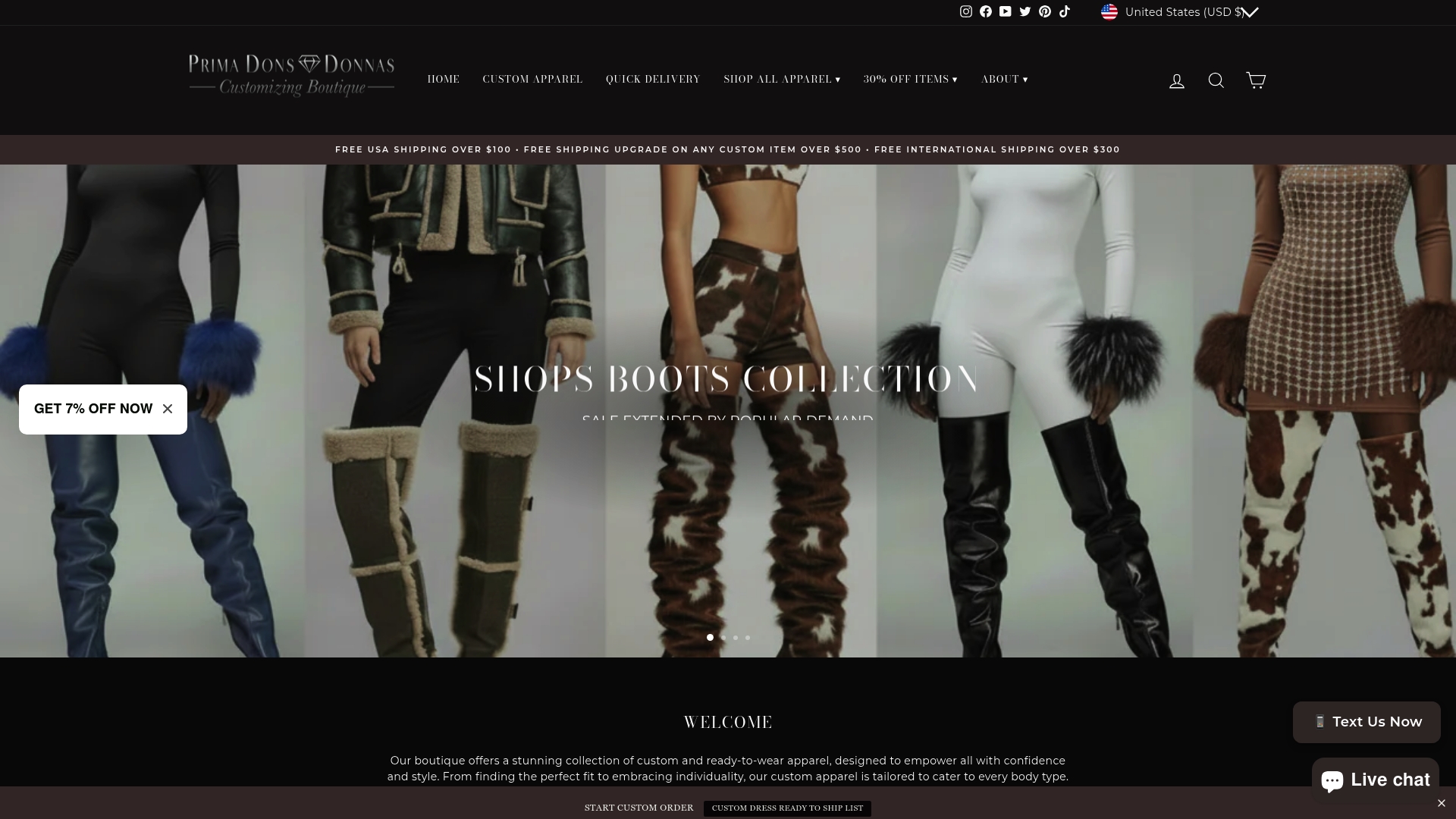
Faux fur boots and coats are in our Faux Fur & Leather collection. If you are dressing for a wedding or prom, see the Wedding & Prom pieces.
Our view on boot heel comfort
Comfort is not a trade you make for style. It is a result of fit.
We design for bold, confident looks, and we make pieces to order in any size or color. That matters for boots more than for almost anything else you wear, because a heel that fits your foot feels different from a heel that nearly does.
Our advice is simple. Start with the heel base, not the height. A wider base steadies you. Then make sure the boot closes where you need it to, at the heel, the ankle and the calf. If you wear plus sizes, you should not have to settle for a boot that only works on paper.
Then give yourself time. Wear new boots at home first. Build up. By the night of your event, you should be thinking about the night, not your feet.
Latoya
FAQ
What is the most comfortable heel type for boots?
A wide, stable heel is the most comfortable, usually a block heel or a platform with a modest heel drop. Podiatrists quoted above say a bigger surface area steadies the ankle. Narrow stiletto heels sit at the other end, since they push pressure to the forefoot.
Why do my boots hurt at the heel?
The cause is usually slipping or a poor match in size. A heel that moves up and down rubs your skin and causes blisters. Syracuse Podiatry says to watch for slipping beyond a quarter inch. A heel that is too high or too narrow also loads the front of your foot, so check height and width as well.
Is a small heel better than flat boots?
Often yes. Harvard Health says a slight heel feels better than flats if your Achilles tendon is tight, and Dr. Biernacki says a 1 to 1.5 inch heel eases tension on the Achilles and plantar fascia. Flat boots without support or cushioning are the ones to skip.
How long does it take to break in heeled boots?
Baylor College of Medicine’s Dr. Jonas puts it at 80 to 100 hours of wear for leather boots. Start with two to three hours at home and build up over one to two weeks. Wear them with socks in the early days, and stop if you feel sharp pain.
Can I get boots made for my size and heel preference?
Yes. Our boots are made to order in any size or color, with plus size options. You can pick a heel style through our custom service, and choose Express Shipping or Rush Processing if you are on a deadline.
Sources
- How To Make High Heels Comfortable, Northwell Health
- What Kinds of Boots Are Healthiest for Your Feet?, Cleveland Clinic
- How to find the best shoes for foot pain, Harvard Health
- A Podiatrist’s Guide to Fall Booties and Boots, Arya Foot & Ankle
- A Guide to the Best Shoes for Arthritis, Arthritis Foundation
- 5 Most Comfortable Types of Heels Podiatrists Recommend, Byrdie
- The Most Comfortable Boots, According to a Doctor, Who What Wear
- Best Boot for Plantar Fasciitis, Michigan Foot Doctors
- How to Choose the Best Winter Boots, Syracuse Podiatry
- Boot scoot into the rodeo with comfort, Baylor College of Medicine
- Best Insoles for Construction Workers, Michigan Foot Doctors
- Jak změřit šířku dětské nohy


Leave a comment