

6 Boot Heel Types Explained: Which One Fits Your Life
Six heel shapes cover nearly every western and cowboy boot on the market: Fowler, Roper, Walking, Cowboy, Riding (horseman), and Fashion. Each one solves a different problem, and picking the wrong shape is the fastest way to end up with boots that look right but hurt by lunch.
Here’s the short version. The Fowler heel suits someone who wants a classic look with everyday comfort. The Roper heel is built for anyone who spends hours on their feet, roping, working a job site, or walking a lot. The Walking heel is the pick for commuters and city wearers who want boots with attitude but no ranch obligations. The Cowboy heel (the classic pitched silhouette) splits the difference between saddle time and street style. The Riding or horseman heel is non-negotiable for anyone actually working cattle from a horse. And the Fashion heel is for concerts, parties, and any night where the outfit matters more than the mileage.
Consumer guides like Mosqueras and Henderson’s Western Store both organize the category this same way, matching each heel to a lifestyle rather than just a look. If you’re shopping for a wedding, a photoshoot, or a night out, skip ahead to the Fashion heel and heel-height sections. If you ride, go straight to the Riding heel breakdown. If your feet just need to survive a 10-hour shift, start with Roper.
- Fowler: balanced daily wear, moderate stirrup use
- Roper: stability, roping, all-day standing or walking
- Walking: urban wear, commuting, long hours on hard pavement
- Cowboy: hybrid style and function, saddle-ready with western flair
- Riding/horseman: dedicated saddle work, undercut for stirrup lock
- Fashion: dress occasions, height and drama over walkability
Key Takeaways
The right boot heel depends on matching heel geometry, height, and base width to your primary activity rather than picking the most familiar western silhouette.
| Point | Details |
|---|---|
| Match heel to activity | Choose Roper or walking heels for daily standing and Riding heels only for actual saddle work. |
| Respect the 1-2 inch comfort zone | Podiatrists favor a modest heel lift over flat shoes, with two inches as a practical walkable ceiling. |
| Save tall heels for occasions | Fashion heels above 2.5 inches work best for short wear windows like weddings or concerts, not daily rotation. |
| Check the base width | Undercut and pitched heels trade ground stability for stirrup security. |
| Custom heels solve fit gaps | Primadonsanddonnas offers adjustable heel-height and change-heel-style options for plus-size and special-occasion needs. |
Table of Contents
- What Is a Fowler Heel on a Boot?
- Why Choose a Roper Heel for Boots?
- Is a Walking Heel Comfortable for All-Day Wear?
- What Makes a Classic Cowboy Heel Different?
- What Is a Horseman (Riding) Heel on a Boot?
- What’s the Point of a Fashion Heel on Western Boots?
- How Do You Choose the Right Boot Heel?
- What Heel Height Is Best for Your Feet?
- Boot Heel Glossary: Undercut, Breast, Pitched, and More
- What Materials Make a Boot Heel Last?
- Which Heel Type Holds Up Longest?
- A Custom Approach to Heel Choice: Why One Size Never Fits All
- Custom and Adjustable Heels for Every Occasion
- Sources
- FAQ
What Is a Fowler Heel on a Boot?
The Fowler heel is the moderate middle ground of western footwear. It typically runs 1.0 to 1.25 inches, with either a slight pitch or a straighter, more upright profile depending on the maker. It’s shorter than a classic riding heel but has more shape than a flat walking sole, which is exactly why it became a go-to for ranch hands who needed one boot for daywork and errands alike.
Originally, the Fowler filled a practical gap: cowboys wanted enough heel to keep a boot from sliding forward in the stirrup, but not so much height that walking across a yard all day became a chore. Modern versions lean into that same logic. You’ll see the Fowler on boots marketed for daily wear, ranch-to-town transitions, and casual western styling where a dramatic heel would look out of place.
- Moderate stirrup engagement, better than a flat sole
- Comfortable for walking distances a full riding heel would punish
- Works well with jeans, casual dresses, or everyday western outfits
- Not tall enough for serious equestrian control on rough terrain
The tradeoff is straightforward. You gain walking comfort and versatility, and you give up some of the grip a taller, undercut heel provides in the stirrup. For someone who rides occasionally but walks constantly, that trade usually pays off.
Why Choose a Roper Heel for Boots?
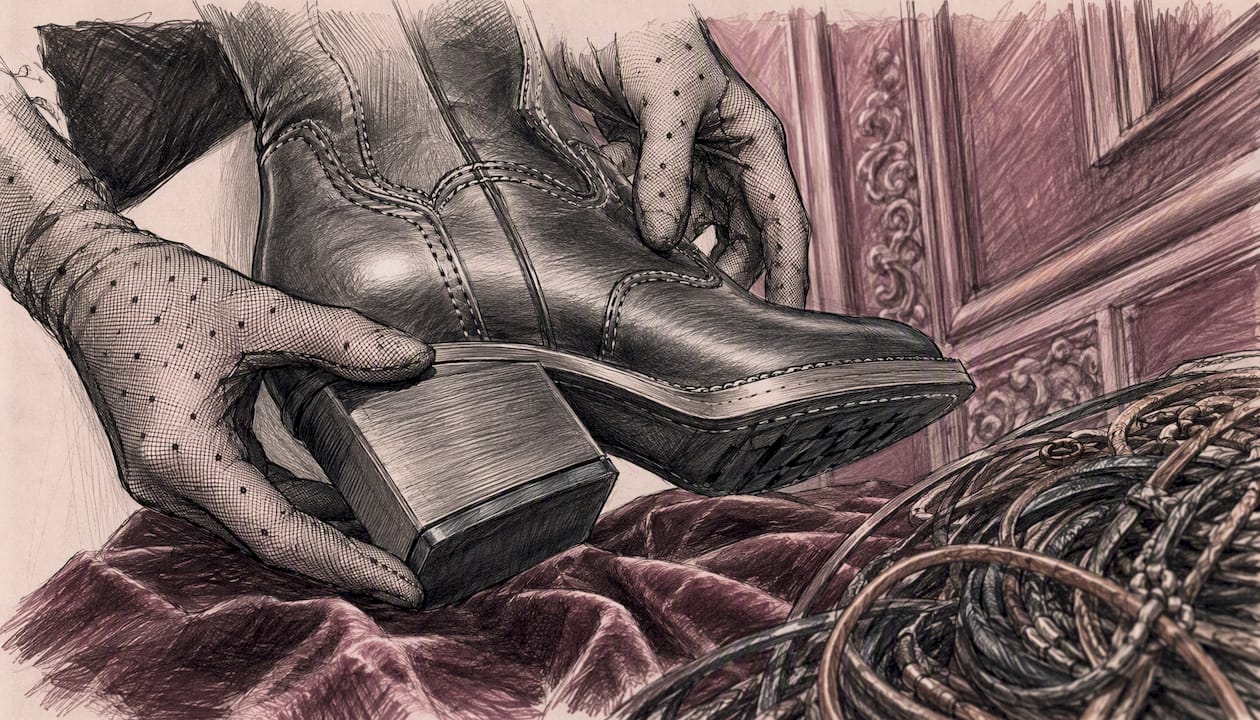
If stability is your priority, the Roper heel wins by a wide margin. It’s short and broad, generally 1 to 1.25 inches, with a flatter footprint that puts more heel in contact with the ground than almost any other western style. Henderson’s Western Store notes this low, wide build is exactly what makes Ropers a favorite for anyone dismounting quickly or working on foot for long stretches.
The name comes from rodeo roping events, where competitors need to jump off a horse and plant their feet instantly. That same broad base makes Ropers a strong pick well outside the arena.
- Best for: roping, ranch chores, job sites, retail or service jobs on hard floors
- Comfort: minimal break-in time, close to a standard shoe underfoot
- Stability: widest ground contact of any western heel type
- Limitation: less stirrup “lock” than a riding heel for serious horseback control
A practical trade-off shows up here often: many boot buyers reserve taller, undercut heels for saddle-specific boots and choose Ropers or walking heels for everything else, simply because comfort wins when you’re not actually riding.
Is a Walking Heel Comfortable for All-Day Wear?
Yes, and that’s the entire point of the design. Walking heels sit slightly taller than Ropers, usually 1.25 to 1.5 inches, with a wide base and a gentle bevel at the back edge. That small bevel changes how your foot rolls through each step, giving you a more natural stride than a flat heel while still keeping enough ground contact for stability. Henderson’s points to this beveled rear as the feature that separates walking heels from Ropers, even though the heights overlap.
Material matters more here than in most heel types. A rubber heel absorbs shock and stays quieter on pavement or tile, which matters if you’re wearing these boots into an office or a restaurant. A leather stack heel looks more traditional and holds up well outdoors, but it transmits more impact and clicks louder on hard floors.
- Rubber: quieter, more shock absorption, better for concrete and city sidewalks
- Leather stack: classic look, firmer feel, better for outdoor and mixed terrain
- Best for commuters, urban wearers, and anyone standing or walking for most of the day
- Pairs well with jeans, casual dresses, or everyday western looks
If your boots see more sidewalk than saddle, the walking heel is usually the smarter buy over a full cowboy or riding profile.
What Makes a Classic Cowboy Heel Different?
The classic cowboy heel is the hybrid everyone pictures when they hear “western boot.” It has a pitched or slanted profile, typically 1.5 to 2 inches depending on the maker, angled slightly forward under the arch instead of sitting straight down like a block heel. That angle is what gives cowboy boots their distinctive stance and silhouette.
Functionally, the pitch helps the heel catch a stirrup without needing the deep undercut that a dedicated riding heel has. It’s a compromise, and a good one. You get real riding function along with a shape that reads as unmistakably western on the street, at a concert, or paired with a dress.
- Height: 1.5 to 2 inches, pitched forward under the arch
- Function: solid stirrup engagement without full riding-heel commitment
- Style: the most recognizable western silhouette, works for both function and fashion
- Tradeoff: less walking comfort than a Roper, less saddle security than a dedicated riding heel
Choose the classic cowboy heel when you want one pair of boots that can handle occasional riding, a night out, and everyday western style without forcing you into a single-purpose heel.
What Is a Horseman (Riding) Heel on a Boot?
The riding heel, sometimes called a horseman heel, is built for one job: staying locked in a stirrup. It runs 1.5 to 2 inches or taller, with a narrow, undercut base tucked in sharply behind the heel breast. That undercut is the defining feature, and Top Work Boots describes it as specifically designed to hook the stirrup and stop the foot from sliding through.
The undercut breast that makes riding heels so good in the saddle is also what makes them less ideal on foot. Because the base is narrower, it reduces the amount of ground contact compared with a vertical block or Roper heel, which cuts into all-day walking stability. That’s not a flaw. It’s a design choice, and it’s the correct one if you’re actually working cattle from horseback.
- Height: 1.5 to 2+ inches
- Base: narrow, undercut, angled specifically to catch a stirrup
- Best for: active riders, ranch work involving mounted time, rodeo and equestrian use
- Avoid for: all-day walking on concrete, retail or service jobs, long stretches on foot
Pro Tip: If you split your time between riding and walking around town, don’t force one boot to do both jobs. Keep a riding heel pair for the saddle and a Roper or walking heel pair for everything else. Your feet will thank you by the end of the week.
What’s the Point of a Fashion Heel on Western Boots?
Fashion heels borrow the tall, narrow look of a riding heel but drop the functional stirrup engineering entirely. Heights commonly start around 2.5 inches and climb from there, often with a spiked or heavily stacked profile designed purely to elongate the leg and dress up an outfit.
These are the boots you reach for at a concert, a birthday party, a lunch date where the outfit is doing half the talking, or a wedding-guest look that needs a western edge without sacrificing polish. Garter-style boots and separated heel silhouettes, like the Separated Garter Heel Boots style, fall squarely into this category, built for statement dressing rather than a full day on your feet.
- Best occasions: concerts, parties, weddings, photoshoots, clubwear
- Style: narrow, spiked, or tall stacked dress silhouettes
- Comfort tradeoff: least walkable of all six heel types, plan for shorter wear windows
- Maintenance: thinner heel materials wear faster and need more careful sole care
Save these for events, not errands. If a Fashion heel is your only western boot, you’ll love the photos and regret the parking lot.
How Do You Choose the Right Boot Heel?
Start with one rule: pick the heel built for whatever you do most, not the one you’ll do occasionally.
Run through this sequence before you buy:
- Name your primary surface. Concrete and pavement favor Roper or walking heels. Dirt, arenas, and stirrups favor Cowboy or riding heels.
- Count your hours on your feet. More than four hours standing or walking points you toward a wider, lower heel.
- Check your toe box and arch needs. A narrow toe box paired with a tall heel shifts pressure forward fast, especially if you already deal with foot pain.
- Factor in workplace rules. Job sites and retail floors often require stable, low-profile heels for safety.
- Separate special-occasion needs from daily needs. A Fashion heel for a wedding doesn’t need to double as your work boot.
When you’re actually shopping, ask about sole material, heel base width, and whether the heel height is adjustable or customizable, since a boot that fits your foot shape in one heel height can feel completely wrong in another. Watch for two red flags: a narrow toe box paired with a tall heel, and any “everyday” boot with an extreme heel height that’s really meant for occasional wear.
- Surface type and terrain
- Hours spent standing or walking
- Toe-box width and arch support
- Workplace safety requirements
- Occasion-specific styling needs
What Heel Height Is Best for Your Feet?
Completely flat isn’t automatically the safest option, and neither is a dramatic heel. Podiatrists commonly recommend a modest heel lift, often around one inch, over a fully flat shoe, because a small lift reduces tension on the Achilles tendon compared with walking totally flat all day. Some podiatry-informed fashion guidance also points to a height around two inches as a workable ceiling for a walkable dress heel, since that height still distributes pressure across the foot instead of dumping it all onto the forefoot.
Individual foot anatomy plays a bigger role here than most people assume. Ankle flexibility, arch shape, and even how your talus moves all affect which heel height actually feels comfortable. There is no single “perfect” heel height that works for every foot, which is exactly why heel type should follow activity, not the other way around.
Extremes on either end carry real risk. Very high heels, worn regularly and for long stretches, are linked to metatarsalgia, tendonitis, and bunion progression. Fully flat footwear, on the other hand, can shorten the Achilles over time and contribute to shin discomfort for people used to some heel lift.
- Everyday wear: aim for roughly 1 to 2 inches for most people
- Look for a wider toe box if you’re wearing a taller heel for several hours
- Save anything past 2.5 inches for shorter wear windows, not daily rotation
- Rotate heel heights across your week rather than wearing one extreme constantly
If your feet already deal with pain, a made-to-order fit built around your exact foot shape solves problems a standard size run simply can’t.
Boot Heel Glossary: Undercut, Breast, Pitched, and More
A few terms show up constantly on product pages, and knowing them makes label reading a lot faster.
- Heel breast: the front-facing surface of the heel, closest to the arch
- Undercut: when the heel breast angles inward toward the top, narrowing the base, common on riding heels
- Pitched or slanted: a heel angled forward rather than sitting perfectly vertical, typical of classic cowboy heels
- Straight: a heel with a vertical front, common on Fowler and walking styles
- Stacked: a heel built from layered material (often leather) rather than a single molded piece
- Block heel: a wide, straight-sided heel with maximum ground contact, closest cousin to the Roper
To measure heel height reliably, run a tape or ruler straight up the back of the heel from the ground to where it meets the sole, not along the slanted front edge. That single measurement point is why two boots listed at “1.5 inches” can feel noticeably different if one has a steep pitch and the other doesn’t.
| Profile Shape | Quick Use-Case Cue |
|---|---|
| Straight | Everyday wear, moderate stirrup contact |
| Pitched/slanted | Western style with real riding function |
| Undercut | Dedicated saddle work, stirrup security |
| Stacked | Traditional look, firmer underfoot feel |
What Materials Make a Boot Heel Last?
Heel construction affects comfort and lifespan just as much as shape does. Traditional stacked leather heels are built from layered leather lifts compressed and shaped into a single block, then finished with a rubber or leather cap on the bottom. They flex slightly with wear, which some riders prefer for stirrup feel, but they wear down faster on pavement than synthetic alternatives.
Molded rubber and composite heels dominate the walking and Roper categories because they resist abrasion better on concrete and asphalt. They also absorb more shock, which matters if you’re standing on hard floors for hours. The tradeoff is a slightly less refined look compared with a leather stack, though most riding boot makers offset that with a leather wrap over a synthetic core.
Fashion heels typically use thinner, lighter materials, sometimes wood or plastic cores wrapped in leather or fabric, since the priority is height and shape rather than years of hard use. That’s a fair trade for occasion wear, but it means these heels need more careful handling and shouldn’t be treated like daily boots.
Which Heel Type Holds Up Longest?
Longevity comes down to surface contact and material density, and the six heel types split into three rough tiers.
Roper and walking heels last longest under regular wear because their wide, flat bases spread impact evenly and typically use durable rubber caps that are easy to replace at a cobbler. Fowler heels fall into a similar middle tier, holding up well to daily use with occasional cap replacement.
Cowboy and riding heels wear less evenly because the narrower, pitched, or undercut base concentrates pressure on a smaller footprint. That doesn’t mean they’re fragile. It means they need heel-cap checks more often, especially if you’re riding on hard-packed dirt or gravel regularly. Fashion heels sit at the bottom of the durability list simply because their thinner build was never meant for daily rotation. Treat them as occasion pieces, and they’ll last for years. Wear them daily, and you’ll be replacing them within a season.
A Custom Approach to Heel Choice: Why One Size Never Fits All
Every heel type above solves a real problem, but the honest truth is that most people don’t fit neatly into one category. You might ride occasionally, stand on concrete all week, and still want boots dramatic enough for a Saturday night out. Standard sizing forces you to pick one compromise and live with it.
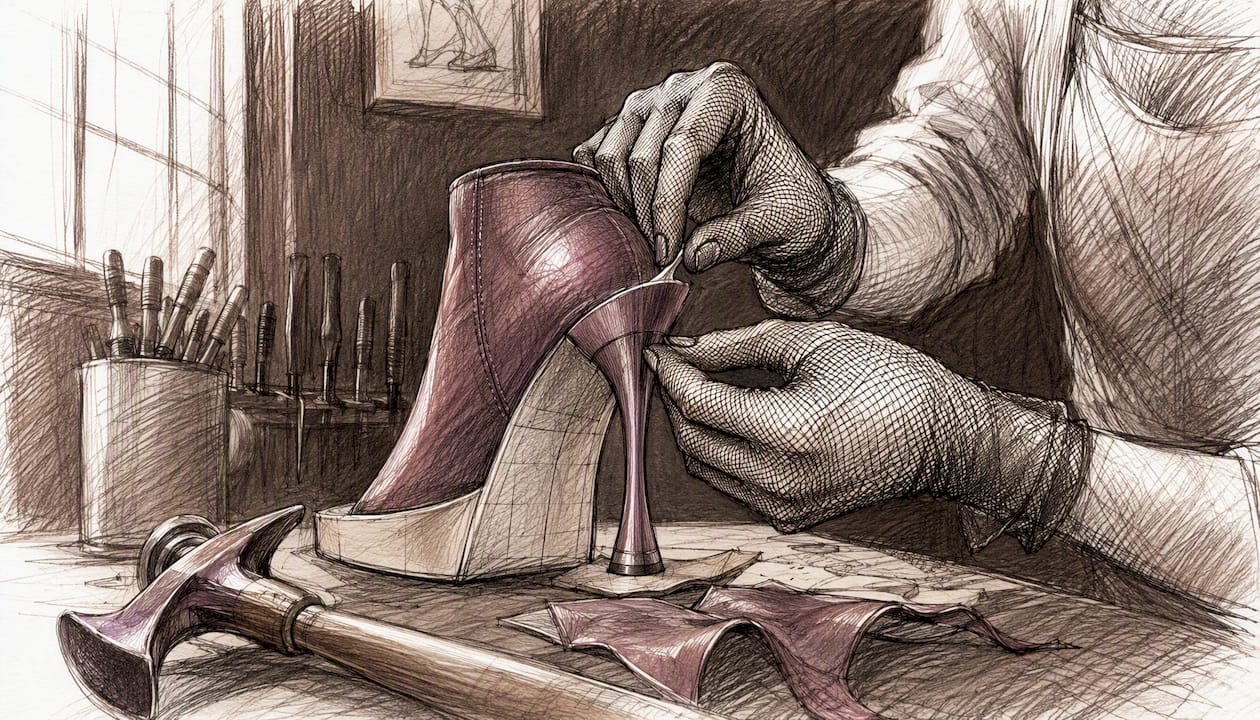
That’s the gap custom and made-to-order boots close. Instead of choosing between a Roper’s stability and a Fashion heel’s drama, you can specify heel height and shape based on your actual week, not a generic size chart. Plus-size shoppers face this problem even more acutely, since most standard heel shapes are built and tested on a narrow range of foot and leg proportions. A boot that fits comfortably at one size doesn’t always translate cleanly to another without real adjustment.
Custom heel options also solve the special-occasion problem differently than buying a second pair of boots. A wedding, a milestone birthday, or a photoshoot often calls for a heel taller than anything practical for daily wear, and made-to-order construction lets that heel be built specifically for a few hours of wear rather than forced to double as an everyday shoe. That’s a meaningfully different design brief, and it shows in how the boot feels by hour three.
Custom and Adjustable Heels for Every Occasion
If you’ve read this far, you already know the frustration: the heel that looks perfect rarely fits your actual week. Primadonsanddonnas solves that by letting you choose heel height and style as part of the order, instead of hunting through six different heel categories hoping one matches your life.
The Custom Boots collection offers adjustable heel-height options built into the ordering process, so a boot meant for a wedding can get a taller, dressier heel while a pair meant for daily wear stays closer to a walking or Fowler height. Prefer to keep a pair you already love but swap the heel entirely? The change-heel-style service handles that directly. Every design is made-to-order in any size, which matters most for plus-size shoppers who’ve struggled to find a heel shape built with their proportions in mind from the start. Ready-to-ship options exist too, for anyone who needs boots in hand before a concert, a party, or a lunch date this week rather than weeks from now.
Browse the full boots collection to compare heel styles side by side, or start a custom order if your event calls for something built specifically around your foot and your occasion.
Sources
- Different Types of Heels in Cowboy Boots — Top Work Boots
- A Guide to Boot Heel Types & What They’re Best For — Henderson’s Western Store
- Cowboy boot heel styles — Mosqueras
- What is the ideal heel height? What is the long term affect of wearing high heels? | Gotham Footcare
- Types of heels — Stitchdown
This article is general information, not a substitute for advice from a qualified doctor. Consult a qualified healthcare professional about your own circumstances before acting on anything here.
FAQ
What are the different types of boot heels?
The six main western boot heel types are Fowler, Roper, Walking, Cowboy, Riding (horseman), and Fashion, each built for a different activity from ranch work to dress occasions.
What are four types of heels?
If narrowed to four core categories, most guides group heels into flat/walking, Roper, riding/undercut, and fashion/dress styles, based on height and base width.
What is a horseman heel on a boot?
A horseman heel, also called a riding heel, is a tall, narrow heel with an undercut base built to hook a stirrup and keep the foot from sliding through while riding.
What type of heel is most supportive?
Roper and walking heels tend to offer the most stability for daily wear because their wide, flat base spreads weight evenly, while podiatrists generally favor a modest one to two inch lift over completely flat shoes.


Leave a comment