

How to Break In Thigh-High Boots: A Step-by-Step Guide
New thigh-high boots feel stiff at first. Most of the time you can fix that in one to two weeks of short wears at home, a little leather conditioning and the right socks. Start with the fit check below. Then soften, wear in short sessions and protect your skin.
This guide covers leather, suede and faux materials. It also covers what to do when the boots rub, slip or pinch, and when to stop.
TL;DR
- Check the fit first. Boots should be snug, not constrictive, at the foot, calf and thigh.
- Wear them at home in short sessions. Add time each day.
- Leather can be softened with conditioner or gentle, low warmth. Never use ovens or direct heat.
- Protect rubbing spots before blisters start. Stop wearing the boots if skin breaks.
- If the shaft is wrong for your calf or thigh, no break-in will fix it. Custom sizing will.
Table of Contents
- Check the fit before you break anything in
- Why new thigh-high boots feel stiff
- A 7-day break-in plan
- How to soften boots by material
- Use the right socks and layers
- Stop rubbing before it becomes a blister
- Common problems and quick fixes
- When to stop and re-measure
- Our perspective
- Get a pair that fits from day one
- Wearing them out: styling and event prep
- FAQ
- Sources
Check the fit before you break anything in
Break-in works on material. It does not change size. The Hospital for Special Surgery says there is no such thing as breaking in a shoe: a shoe either fits or it doesn’t. Forcing a poor fit can strain the bones, muscles and tendons of the foot.
That is useful as a test. Before you start, run through these checks.
- Toes. You can wiggle them. They do not press the front.
- Heel. It lifts a little at first in new leather. It should not slide out.
- Ankle and calf. The shaft is snug all the way up. You can zip or pull it on without a fight.
- Thigh. The top sits flat. It does not dig in, and it does not gap.
- Sole. Your arch sits on the footbed without cramping.
If toes, ankle and foot pass, a stiff shaft is normal. If the calf or thigh fails, read how to measure before you buy and our guide to wide-calf and plus size thigh highs.
Snug versus tight
Baylor College of Medicine’s Dr. Esther Jonas says boots should be snug but not constrictive. Snug means even contact, with no numbness or tingling. Tight means pinching, a red line left behind or toes going numb. Tight is a sizing problem.

Why new thigh-high boots feel stiff
Three things make new boots feel rigid.
- Shaft material. Leather fibers start firm. They loosen with warmth and movement. Dr. Jonas describes the goal as loosening the leather fibers to cut pain and soreness.
- Height. A thigh-high shaft is long. It has to bend at the ankle, knee and hip. Every one of those joints creases the material.
- Lining and seams. Seams at the back of the knee and the top band are the usual rub points until they relax.
Stretch fabric and faux materials behave differently from leather. They give faster, but they do not respond to conditioners the same way. Check the care label or product page for your pair.
A 7-day break-in plan
Short, repeated wears do more than one long night out. Use this schedule as a guide and adjust to how your feet feel.
| Day | What to do | Time |
|---|---|---|
| 1 | Wear at home with the socks or tights you plan to use. Sit, stand, climb stairs. | 20 to 30 minutes |
| 2 | Repeat. Flex your knees often. Check the heel and ankle for hot spots. | 30 to 45 minutes |
| 3 | Rest day. Condition leather if needed. | None |
| 4 | Walk around the house. Add the outfit you plan to wear. | 1 hour |
| 5 | Short walk outside or a quick errand. | 1 to 2 hours |
| 6 | Rest day. Check seams and top band for wear marks. | None |
| 7 | Full test: wear them as you would at the event, with a spare pair of flats nearby. | 2 to 3 hours |
Do this at least a week before a birthday, concert or trip. Do not leave it for the night before.
How to soften boots by material
Smooth leather
Dr. Jonas suggests a moisturizing leather cream or a hairdryer on low heat to warm the sides of leather boots and loosen the fibers. Keep it simple:
- Wipe the boots clean and dry.
- Work a thin layer of leather conditioner into the shaft, especially where it bends at the ankle and knee.
- Put the boots on with your usual socks. Walk and flex your knees for 10 to 15 minutes.
- If you use a hairdryer, keep it on low and keep it moving. The leather should feel gently warm, never hot.
Conditioning also helps the leather last. Saphir notes that leather needs nourishment to help prevent cracking. A boot that stays hydrated bends more easily and holds up longer.
Skip the heat tricks
Ovens, fires and heaters can ruin a pair. Obenauf’s warns that extreme heat, over 100°F can harm leather and break down the glue bonds in footwear. Warm, not hot, is the rule. Also skip soaking boots in water. It can leave stains and stiff patches as the leather dries.

Suede and faux leather
Suede takes conditioner badly if the product is not made for it. Use a suede-safe product, or simply wear the boots in short sessions. For faux leather and stretch materials, wear time is the safest softener. Follow the care instructions that came with your pair before using any product.
Faux fur trim
Faux fur trim does not need break-in, but it does need care. Brush it gently and keep it away from heat sources.
Use the right socks and layers
The layer between skin and boot decides a lot of comfort.
- Foot: A moisture-wicking sock helps keep feet dry. Harvard Health lists well-fitting shoes, socks and dry feet among the ways to prevent friction blisters.
- Leg: Wear thin leggings, tights or stockings under tight shafts. They reduce skin drag as you move.
- Thigh: Smooth, dry skin helps any grip. Oils and lotion make boots slide, which leads to more rubbing. Our guide on keeping thigh-high boots up covers boot bras and skin-safe adhesives.
If the top still slips on every wear, see our plus size fixes for slipping.
Stop rubbing before it becomes a blister
Harvard Health explains that friction blisters come from continuous rubbing or pressure, including from poorly fitting shoes. So treat any warm spot as a signal.
- Stop and check the area as soon as it feels hot.
- Cover heel, ankle bone and back of the knee with a blister bandage or moleskin before long wear.
- Keep skin dry. Change socks if they get damp.
- Mark the spot. If the same place hurts twice, the issue is fit, not break-in.
If a blister forms
Harvard Health advises leaving a blister intact if possible, and either avoiding more irritation or covering it with a sterile bandage. If blisters or open wounds develop, Dr. Jonas advises stopping wear for a day and applying bandages or antibiotic ointment. If the area gets more red, swollen or painful, or you develop a fever, see a doctor. People with diabetes or poor circulation should ask a clinician about any foot wound.
Common problems and quick fixes
| Problem | Likely cause | What to try |
|---|---|---|
| Stiff ankle crease | New leather or lining | Conditioner, short wears, flex your ankle often |
| Rubbing behind the knee | Seam or shaft too tall | Bandage the spot, thin tights, check shaft height |
| Heel slips | Footbed or size | Heel grips, thicker sock, check size |
| Top band digs in | Thigh circumference too small | Do not stretch it. Check thigh measurements |
| Boots slide down | Smooth skin, lotion, weight of shaft | Boot bra, adhesive, dry skin |
| Shaft gaps at the calf | Shaft too wide | Tailoring or a custom pair |
The bottom rows are fit questions. A softer boot will not shrink a calf or add thigh room.
When to stop and re-measure
Give new boots a fair trial. Stop and reassess if you notice any of these:
- Numbness or tingling in toes or calf.
- Red marks that last long after you take the boots off.
- A blister in the same place after two wears.
- Pain that increases rather than eases from day to day.
The fix is a better fit. For thigh highs, that means three numbers: calf, thigh and shaft height. Our guides on measurements for tall women and petite shaft heights walk through them. For curvier legs, see boot shopping tips for curvy women.
Our perspective
Most break-in complaints we hear are really fit complaints. A boot made for an average leg asks your leg to adapt. We think it should be the other way around.
That is why we make boots to order. Our custom boots are made in the size you need, and in the color you choose. A shaft cut for your calf and thigh needs far less “breaking in” and slips less. Plus size and wide-calf customers are the reason we built the process this way.
If you buy a pair from us, still do the steps above. Short wears at home, a little care and the right socks make any boot more comfortable. But start from a fit that works. Read more on why custom beats off-the-rack.
Latoya
Get a pair that fits from day one
If you are tired of stiff shafts and slipping tops, shop boots made to your measurements. Our Custom Boots Collection is made to order in any size or color, including plus size and wide-calf options. Need them fast? Browse the Ready to Ship collection.
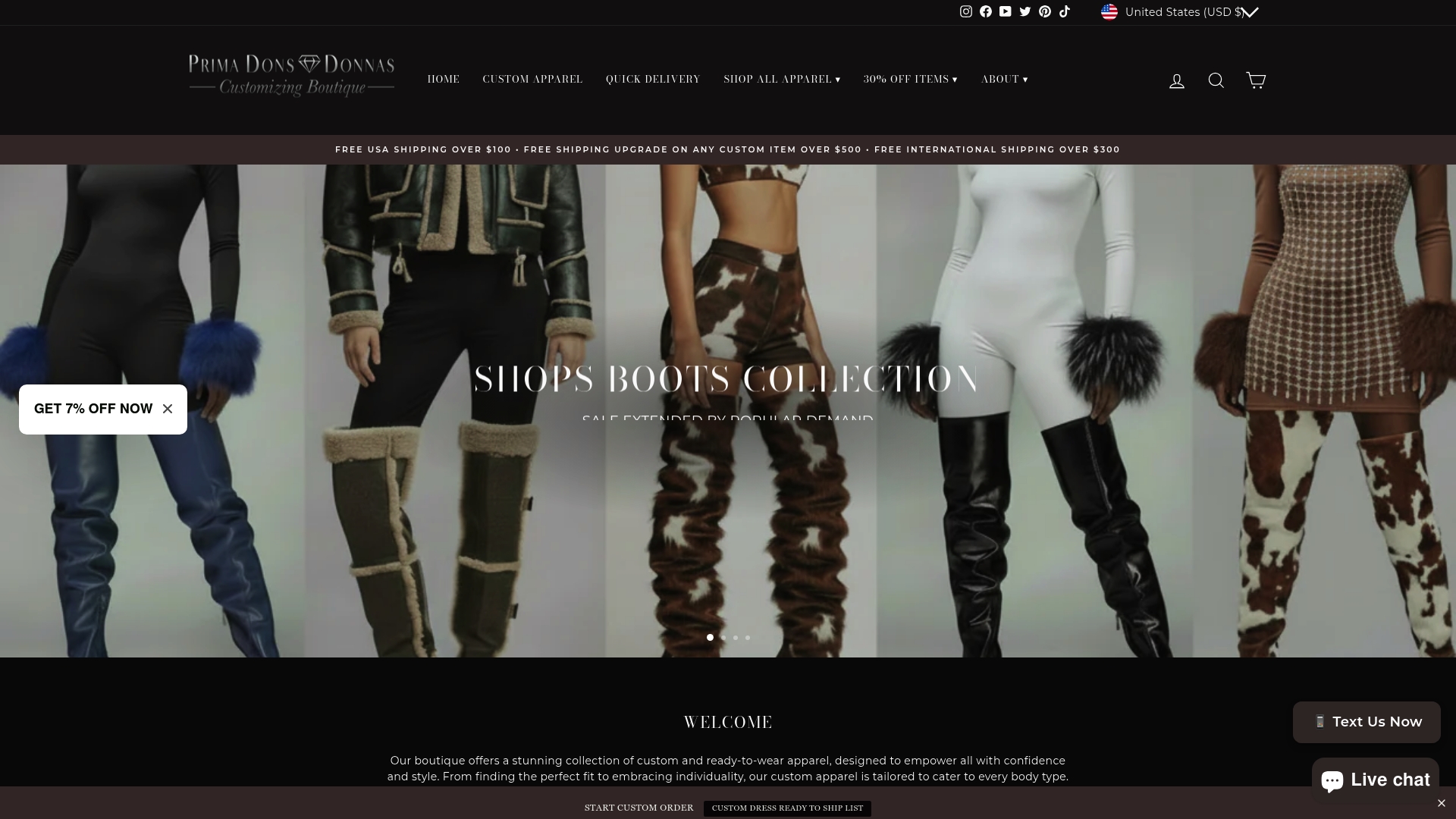
For a deadline, the customization options page lists Express Shipping at $103 and the Rush Processing Add-On at $128. Shipping Insurance is $4 and Signature Confirmation is $4. For plus size styles beyond boots, see our Custom Plus Size Apparel.
Wearing them out: styling and event prep
Once the boots are broken in, wear them for what you bought them for. A birthday dinner, a concert or a lunch date each ask for a different plan.
- Concert: Plan for standing. Do the full 2 to 3 hour test first and bring bandages.
- Lunch date: Pair with a dress or a knit set. Short sit-down wear is the easiest first outing.
- Birthday or photoshoot: Wear them for the final test day with the exact outfit. Check that the top band and hem sit right.
For outfit ideas, see how to style thigh-high boots. To pair them with a dress, browse our custom dress collection.
FAQ
How long does it take to break in thigh-high boots?
For most pairs, plan on one to two weeks of short wears. Start at 20 to 30 minutes and add time each day. If a boot still hurts after that, the problem is likely fit, not stiffness.
Can I use a hairdryer to soften thigh-high boots?
On leather, yes, with care. A hairdryer on low heat to warm the sides is a method suggested by a Baylor physician. Keep it moving and never let the leather get hot. Avoid ovens and open flame.
Should I wear thick socks to stretch boots?
Thick socks can help leather give a little, but only if the boot already fits. Do not force a boot that is too small. A moisture-wicking sock also helps prevent blisters.
What do I do if my boots give me blisters?
Stop wearing them for a day, cover the area with a sterile bandage and keep it clean. Put a bandage on the same spot before the next wear. See a doctor if you see spreading redness, severe pain or fever.
Do thigh-high boots stay up better once they are broken in?
Sometimes a little. Softer material moves with your leg. But staying up depends mostly on thigh fit, dry skin and a hold such as a boot bra. See our guide to keeping thigh-high boots up.
Sources
- The Do’s and Don’ts of Caring for Your Feet, Hospital for Special Surgery
- Boot scoot into the rodeo with comfort, Baylor College of Medicine
- FAQ, Saphir
- Friction Blisters, Harvard Health
- Learn How To Apply Obenauf’s Leather Care Products


Leave a comment