

Your Complete Checklist for Bespoke Apparel Orders
TL;DR:
- Preparing measurements and clarifying your priorities before working with a tailor ensures a better fit and faster process.
- Bespoke garments are crafted from scratch with multiple fittings, offering the highest customization and fit accuracy.
Before you book a consultation or place a made-to-order request, run through this checklist. Having these decisions locked down saves time, reduces remakes, and gets you a garment that actually fits your life.
Quick pre-order checklist:
- Choose your garment type (dress, coat, suit, gown) and its primary use (wedding, concert, lunch date, everyday)
- Set your budget range and confirm your timeline against realistic lead times
- Gather body measurements: bust, waist, hips, shoulder width, back length, inseam, rise, and arm length
- Pull reference photos or a mood board showing silhouette, color, and detail preferences
- Identify your non-negotiables: fit, drape, embellishments, or fabric type
- Confirm fabric preference (fiber, weight, season) and any care restrictions
- Prepare a simple design brief or tech pack with sketches, color notes, and trim details
- Know your shoe heel height and the undergarments you plan to wear with the piece
Lead time at a glance: customized ready-to-wear runs 3–10 days, made-to-measure typically 2–5 weeks, and true bespoke 4–8 weeks or more depending on fittings and workshop schedule. For weddings or major events, add a buffer of at least two weeks on top of the quoted lead time.
High-value bespoke garments should clear 8–12 quality checkpoints before delivery. Primadonsanddonnas builds these checkpoints into every made-to-order piece, from fabric inspection through final pressing.
Table of Contents
- What does “bespoke” actually mean compared to MTM and ready-to-wear?
- What to decide before your consultation
- How to pick the right fabric for your garment
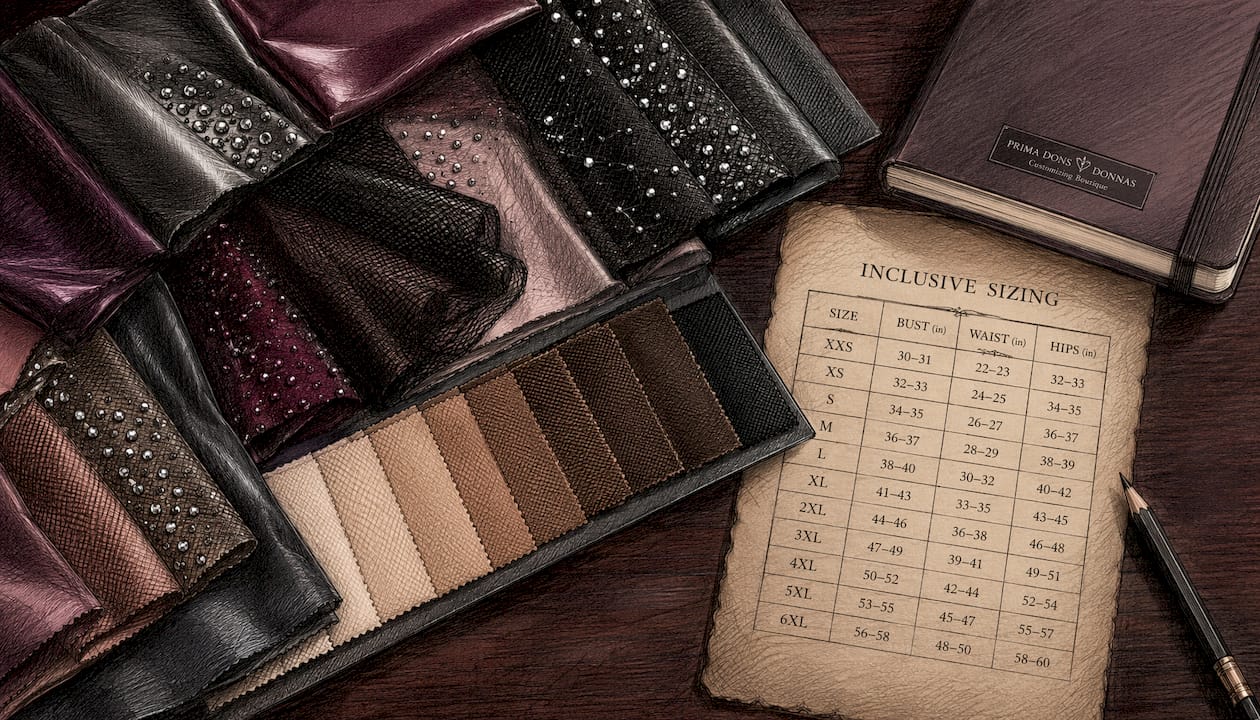
- What measurements you need and how to get them right
- What the bespoke process looks like from start to delivery
- What happens at each fitting and what to bring
- Pre-delivery quality checkpoints: what to inspect before you accept
- Questions to ask your tailor and red flags to watch for
- How to care for your bespoke garment after delivery
- Key Takeaways
- The part most clients get wrong about working with a tailor
- Primadonsanddonnas: made-to-order for every size and occasion
- Useful sources and further reading
- FAQ
What does “bespoke” actually mean compared to MTM and ready-to-wear?
The word bespoke has a specific meaning in tailoring: the pattern is drafted from scratch for your body, construction involves significant handwork, and you attend multiple fittings before the garment is finished. No standard block is used as a starting point. That is what separates true bespoke from the two tiers below it.
| Feature | Bespoke | Made-to-Measure (MTM) | Ready-to-Wear |
|---|---|---|---|
| Pattern origin | Drafted from scratch for you | Standard block adjusted to your measurements | Fixed standard sizes |
| Fit precision | Highest | High | Variable |
| Customization | Unlimited | Fabric, lining, details within options | Color and size only |
| Fittings required | 2–4 in-person | 1–2 (sometimes virtual) | None |
| Typical lead time | 4–8+ weeks | 2–5 weeks | 3–10 days |
| Price range | Highest | Mid-range | Lowest |
Made-to-measure starts with a standard pattern and adjusts it to your measurements. You still choose fabric and some details, but the construction process is faster and the price is lower. Ready-to-wear is cut to fixed size standards and requires no fitting appointments.
Pro Tip: If your event is soon, MTM is generally more practical. True bespoke requires more time for multiple fittings and any remakes. For longer lead times and maximum customization, bespoke offers unique advantages.
What to decide before your consultation
Arriving at a consultation without clear priorities costs you time and money. Decisions made in the room under pressure tend to produce garments that miss the mark. Lock these down before you go.
Garment scope and use case. Know exactly what you are ordering and where you will wear it. A gown for a black-tie wedding has different construction requirements than a rhinestone dress for a birthday party or a structured coat for a concert. The use case drives fabric weight, lining choice, and silhouette.
Priority matrix. Every bespoke project involves trade-offs. Rank your three priorities before the appointment:
| Priority | What it affects | Trade-off |
|---|---|---|
| Fit precision | Number of fittings, pattern complexity | Longer lead time, higher cost |
| Fabric quality | Drape, hand feel, durability | Higher material cost |
| Decorative details | Embellishments, embroidery, trim | Added labor time and cost |
Clients who try to maximize all three simultaneously often end up with delays and budget overruns. Pick your top two and let the third flex.
Visual references. Collect photos that show the silhouette, neckline, sleeve style, and any specific details you want. A clear design brief with sketches, color notes, and trim preferences reduces back-and-forth and helps the atelier give you an accurate quote. You do not need professional drawings. A photo with annotations works fine.
How to pick the right fabric for your garment
Pick fabric to match how the garment needs to move and where you will wear it. That single rule eliminates most bad fabric choices before you even touch a swatch.
Fiber and weight basics:
- Wool (Super 100s–150s): Best for structured suiting and coats. Higher Super numbers mean finer yarn and softer hand feel, but also less durability for daily wear.
- Wool blends: All-season workhorses. A wool-polyester or wool-silk blend resists wrinkles and travels well.
- Linen and linen blends: Ideal for warm-weather pieces and spring events. Linen wrinkles easily; a linen-cotton blend softens that tendency.
- Silk blends: Formalwear and evening gowns. Silk charmeuse drapes beautifully but requires careful handling. A silk-polyester blend is more forgiving.
- Sustainable faux fur: A conscious choice for outerwear and statement pieces. Primadonsanddonnas offers high-quality faux fur options that deliver the luxury look without the ethical concerns.
- Stretch fabrics (jersey, ponte, scuba): Particularly useful for plus-size fit, where ease of movement matters as much as silhouette. These fabrics accommodate body curves without pulling at seams.
At the swatch stage, assess fabric weight, stretch and recovery, colorfastness under light, and how the fabric behaves when folded or bunched. A fabric that looks perfect flat can pucker badly at seams once cut and sewn.
Pro Tip: Ask your tailor how the fabric behaves with interfacing and canvas. A lightweight silk may need a fusible interfacing to hold structure at the bodice, while a heavy wool might need a half-canvas chest piece to drape correctly. The fabric choice and the internal construction are a package deal, not separate decisions.
For bold, detail-forward pieces, the must-have custom clothing details guide on the Primadonsanddonnas blog covers finishing choices that complement specific fabric types.
What measurements you need and how to get them right
Bespoke fit goes far beyond bust, waist, and hip. Even a 1–2 cm deviation in a key measurement can materially affect how a garment sits and moves on the body.
Essential measurement points:
| Measurement | Where to take it | Common mistake |
|---|---|---|
| Bust (full) | Fullest part of chest, tape parallel to floor | Tape too tight or angled |
| Waist (natural) | Narrowest point, usually above navel | Measuring at hip instead |
| Hip (full) | Fullest part, typically 7–9 inches below waist | Tape angled or too low |
| Shoulder width | Seam to seam across the back | Measuring over a thick top |
| Back length | Nape of neck to natural waist | Not standing straight |
| Shoulder slope | Angle from neck base to shoulder point | Skipped entirely |
| Arm length | Shoulder point to wrist, arm slightly bent | Arm held straight |
| Inseam | Crotch to floor, standing in intended shoes | Wrong shoe height |
| Rise (front and back) | Crotch seam to waistband | Only measuring one |
| Scye depth | Nape to underarm level | Frequently omitted |
Use inches for US-market orders. Tolerances of ±0.25 inch are standard for most points; shoulder and scye measurements warrant tighter tolerances of ±0.125 inch because errors there affect the entire upper body balance.
Common mistakes to avoid. Measure in the undergarments and shoes you plan to wear with the finished garment. A 2-inch heel changes your posture and therefore your back length and rise. Body shape that fluctuates with weight changes is another risk: if your measurements are likely to shift, discuss timing with your tailor before cutting begins.
Document everything. A measurement tech pack with point-of-measure definitions and construction notes reduces revisions and helps the atelier give you an accurate quote. Ask whether the tailor stores your pattern digitally for future orders.
Pro Tip: Have a local tailor or a friend take your measurements rather than self-measuring. Self-measurement errors are the most common source of remakes, particularly for back length and shoulder slope, which are nearly impossible to measure accurately on yourself.
For a full measurement diagram and step-by-step instructions, the measuring for made-to-order clothing guide at Primadonsanddonnas walks through every point with photos.
What the bespoke process looks like from start to delivery
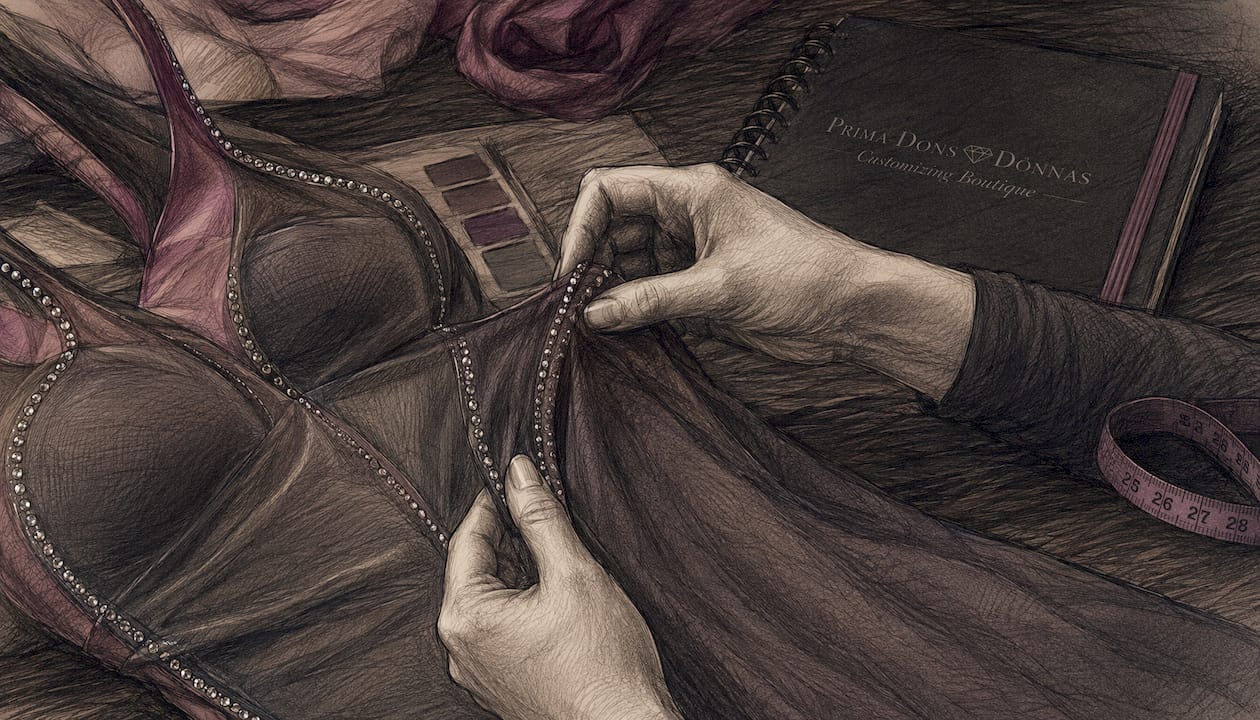
The standard sequence runs: consultation, design brief approval, pattern draft, baste fitting, refinement fitting, final fitting, and delivery. Here is how that maps to realistic timelines.
| Phase | Typical duration | What happens |
|---|---|---|
| Consultation and brief | 1–3 days | Measurements, fabric selection, design sign-off |
| Pattern draft | 1–2 weeks | Pattern created from your measurements; toile or baste shell prepared |
| Baste fitting | Scheduled after pattern | First fitting in unfinished shell; balance and proportion checked |
| Refinement fitting | 1–2 weeks after baste | Collar, armhole, sleeve pitch, and silhouette refined |
| Final fitting | 1 week before delivery | Hems, buttons, finishing details confirmed |
| Delivery | Per agreed date | Pressed, packaged, and inspected |
True bespoke runs 4–8 weeks or more. MTM compresses to 2–5 weeks by skipping the pattern-from-scratch stage. Customized ready-to-wear can ship in 3–10 days.
Cost drivers to plan for:
- Fabric quality and mill provenance
- Number of fittings and pattern complexity
- Handwork (hand-stitched buttonholes, hand-sewn hems)
- Embellishments: rhinestones, embroidery, appliqué
- Rush fees for compressed timelines
- Remake costs if measurements change after cutting
For weddings and major events, book at least 10–12 weeks out for true bespoke. Special-occasion pieces with heavy embellishment need even more runway. A pre-production checklist covering documentation, material approvals, and construction sign-offs prevents costly errors once cutting begins.
What happens at each fitting and what to bring
Expect at least two to three in-person fittings for bespoke. Each one has a specific purpose, and arriving unprepared wastes the appointment.
| Fitting | Focus areas | What the tailor checks |
|---|---|---|
| First (baste) | Balance and proportion | Overall silhouette, length, shoulder placement, grain line |
| Second (refinement) | Structural details | Collar roll, armhole shape, sleeve pitch, side seam position |
| Final | Finishing | Hem height, button placement, lining, pressing, symmetry |
What to bring to every fitting:
- Shoes at the exact heel height you will wear with the garment
- The undergarments (bra, shapewear, slip) you plan to wear underneath
- Reference photos of any details you want to confirm or adjust
- A written list of your non-negotiables so nothing gets forgotten in the moment
During fittings, be specific with feedback. “The shoulder feels tight when I raise my arm” gives the tailor something to act on. “It feels a bit off” does not. Take photos at each fitting and note the changes agreed on. That documentation protects you if a revision does not carry through correctly.
The step-by-step custom clothing guide at Primadonsanddonnas covers fitting preparation in detail, including what to photograph and how to frame feedback.
Pre-delivery quality checkpoints: what to inspect before you accept
High-value bespoke garments should pass 8–12 specific checkpoints before delivery, compared to the basic 5-point inspections used in standard apparel production. Use this list at your final pickup or delivery review.
- Measurement accuracy. Re-measure key points against your spec sheet. Confirm bust, waist, hip, shoulder width, and length are within tolerance.
- Pattern alignment. Stripes, plaids, and prints should match at side seams and center front. Asymmetry here is a construction defect.
- Seam quality. Check for puckering, skipped stitches, and consistent seam allowance. Stress points (underarm, crotch, pocket corners) should be reinforced.
- Stitch density. Stitch count should be consistent throughout. Variation signals a machine or tension issue.
- Buttonhole and fastening integrity. Buttonholes should be clean-cut with no fraying. Buttons should be firmly attached. Zippers should run smoothly with no snagging.
- Lining and pocket finish. Lining should lie flat with no bubbling or pulling. Pocket bags should be fully finished and securely attached.
- Pressing and crease quality. Seams should be pressed flat and crisp. Lapels and collars should hold their roll without pinning.
- Construction symmetry. Left and right sides should match in panel shape, pocket placement, and strap position.
- Trim and hardware. All decorative elements (rhinestones, embroidery, appliqué) should be securely attached with no loose threads or missing pieces.
- Fabric surface. No pulls, snags, or shading variations across panels.
The pre-production sample approval principle applies here too: the garment you inspect at final delivery is the standard against which any remake is measured. Document defects with photos and written notes before leaving the atelier.
Pro Tip: If a checkpoint fails, ask for a written remake timeline and confirm whether the atelier has reserved cloth from the same dye lot. A color mismatch on a remake panel is one of the most common and avoidable finishing problems.
Questions to ask your tailor and red flags to watch for
Ask these questions at your first consultation. The answers tell you a lot about how the workshop operates.
| Question | What a strong answer looks like |
|---|---|
| Who drafts the pattern? | Named cutter or in-house pattern maker, not outsourced |
| How many fittings are included? | At least two to three for bespoke; one to two for MTM |
| What is your remake policy? | Clear written policy with defined defect criteria |
| Do you document lead times in writing? | Yes, with milestone dates |
| Do you reserve cloth from my dye lot? | Yes, for a specified period post-delivery |
Red flags to watch for:
- Vague or verbal-only remake policies
- No documented measurement protocol or tolerance standards
- Inability to show sample photos of completed work in your fabric type
- No mention of quality checkpoints or inspection steps
- Poor communication response time during the process
Verify claims by asking to see a completed sample in a similar fabric, a written measurement protocol, and any AQL or quality-control process description. A workshop that cannot show you these things is operating without the documentation that prevents expensive mistakes.
How to care for your bespoke garment after delivery
Follow fabric-specific care and your tailor’s finishing notes. That combination extends garment life more than any single product or technique.
Core care actions:
- Dry cleaning. Most structured bespoke garments (wool, silk blends, heavily lined pieces) should be dry cleaned rather than machine washed. Find a cleaner experienced with tailored garments.
- Spot cleaning. Address small stains immediately with a damp cloth and mild solution. Do not rub; blot from the outside in.
- Steaming vs. pressing. Steam is safer for most fabrics between wears. Pressing with an iron requires a pressing cloth to avoid shine, especially on wool and silk.
- Storage. Use wide, shaped wooden or padded hangers for structured garments. Never fold a tailored jacket or coat for long-term storage. Use a breathable garment bag, not plastic.
- Seasonal checks. Inspect seams and lining at the start of each season. Check for moth damage if storing in a closet with natural fiber garments. Cedar blocks or lavender sachets deter moths without chemicals.
- Re-pressing. Have structured garments professionally re-pressed once or twice a year, especially after travel or extended storage.
For faux fur pieces, avoid heat and direct sunlight. Shake the garment out after wearing and store flat or on a wide hanger in a cool, dry space.
Key Takeaways
A successful bespoke order comes down to preparation, clear communication, and a workshop that documents every step from measurement to delivery.
| Point | Details |
|---|---|
| Lead times vary by service level: customized ready-to-wear ships in 3–10 days, made-to-measure requires 2–5 weeks, and true bespoke generally takes 4–8 weeks or more depending on the number of fittings and workshop schedule. | |
| Measurement precision is critical | Even a 1–2 cm deviation can materially affect fit; use a professional for key points. |
| Fittings require preparation | Bring the shoes and undergarments you will wear; give specific, written feedback at each visit. |
| Inspect before you accept | Check all 8–12 quality checkpoints and document any defects with photos before leaving. |
| Primadonsanddonnas | Offers made-to-order dresses, plus-size options, and special-occasion pieces with built-in quality checkpoints. |
The part most clients get wrong about working with a tailor
The conventional wisdom says the tailor is the expert and the client just shows up. That framing sets people up for disappointment. The best bespoke results come from a genuine client–artisan partnership, where the client brings a clear vision and the tailor brings the technical knowledge to execute it.
What that means in practice: when a tailor recommends a construction change, it is almost always grounded in how the fabric actually behaves on a body, not personal preference. A tailor who suggests a half-canvas chest piece instead of fusible interfacing on your chosen fabric is protecting the drape you asked for. Pushing back on that recommendation to save cost often produces exactly the result you were trying to avoid.
The flip side is also true. Clients who stay silent during fittings and accept whatever they are handed end up with garments that fit the tailor’s aesthetic, not their own. Speak up. Frame feedback around function and feeling rather than technical terms you may not know. “The sleeve feels like it pulls when I reach forward” is more useful than “I think the pitch is wrong.”
Document every agreed change in writing at each fitting. A quick photo with a note is enough. That record protects both you and the tailor if a revision does not carry through. The custom clothing order workflow at Primadonsanddonnas is built around exactly this kind of documented, collaborative process.
Primadonsanddonnas: made-to-order for every size and occasion
Skip the guesswork of sizing up a standard pattern. Primadonsanddonnas builds every piece to your measurements, whether you are ordering a rhinestone gown for a birthday, a structured coat for a concert, a wedding look, or a bold statement dress for a lunch date.
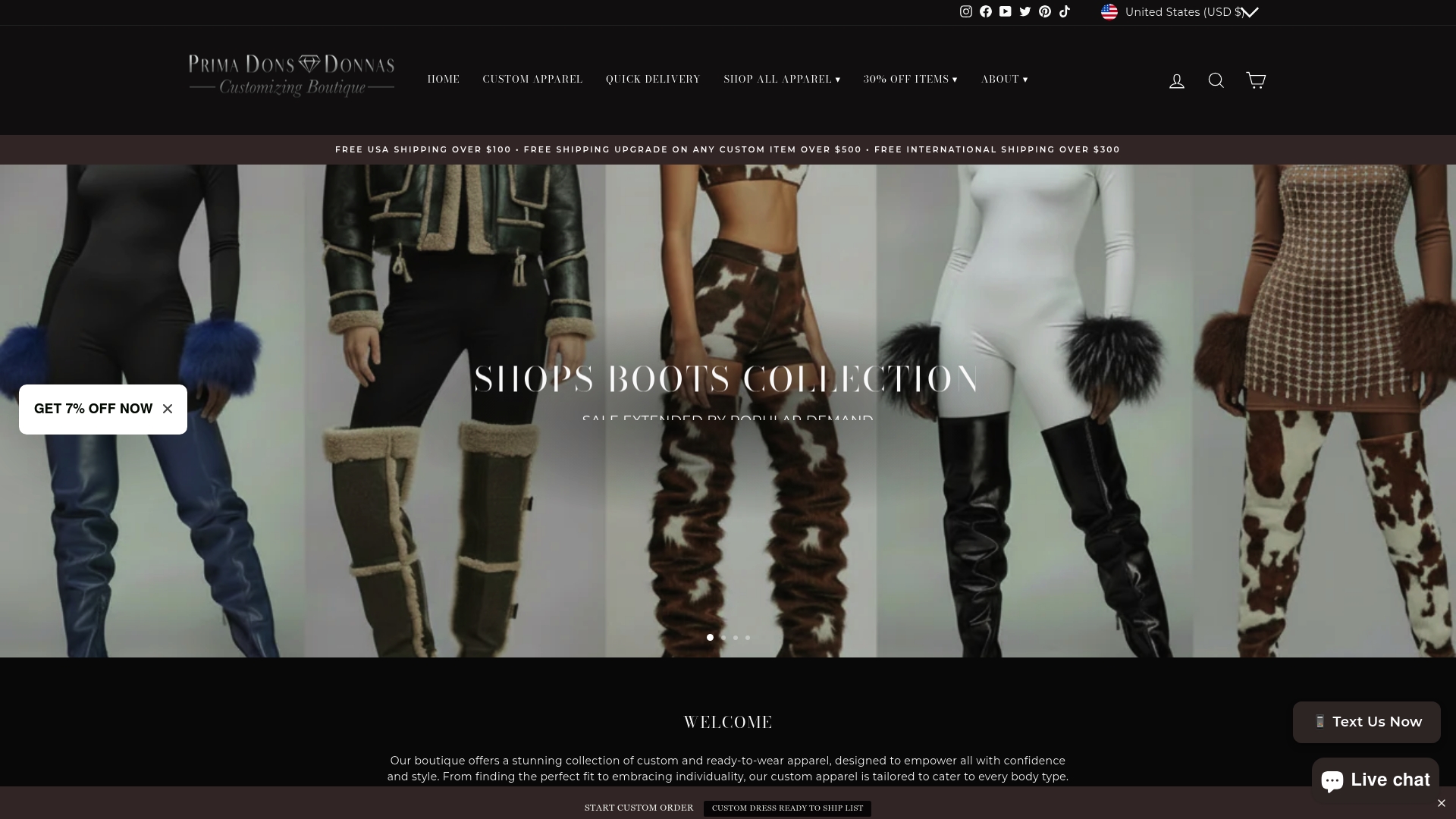
The brand covers the full size range, with plus-size options designed for fit and drape, not just scaled-up proportions. Sustainable faux fur outerwear, embellished dresses, and special-occasion pieces are all available as made-to-order, with a curated fabric selection and clear measurement protocols built into the process. Ready-to-ship options are also available for clients who need something fast.
Browse the made-to-order dress collection to find your next statement piece, or explore the full custom and made-to-order apparel range to see what is available in your size and color.
Useful sources and further reading
| Source | What it covers |
|---|---|
| Bespoke tailoring in the future | Lead times, quality checkpoints, and measurement error data for bespoke and MTM programs |
| Apparel pre-production checklist | Pre-production approval gates: documentation, samples, material, factory, compliance, and logistics |
| Clothing manufacturer readiness checklist | Tech pack and measurement spec requirements before contacting an atelier or manufacturer |
| Custom clothing factory sample approval | Detailed sample approval checklist covering fit, fabric, construction, and finishing |
| Bespoke tailoring complete guide | Client–artisan partnership principles and construction guidance |
| Before custom clothing production | Tech pack structure, AQL inspection standards, and production readiness scorecard |
| Primadonsanddonnas blog | Made-to-order workflow, measurement guides, and custom clothing order checklists |
The Primadonsanddonnas blog expands on several topics covered here, including measurement guides for made-to-order clothing and how to order MTM pieces with confidence.
For a look at how custom casual-wear workflows compare to formal tailoring, the custom designs for oversized tees guide from TheWhiteLabel offers a useful contrast in process and lead time expectations.
FAQ
What is the difference between bespoke and made-to-measure?
Bespoke garments are patterned from scratch for your body with multiple fittings and significant handwork. Made-to-measure starts from a standard block adjusted to your measurements, typically with fewer fittings and a shorter lead time.
How many fittings does a bespoke garment require?
Expect at least two to three in-person fittings: a baste fitting for balance and proportion, a refinement fitting for structural details, and a final fitting for hems and finishing.
How accurate do my measurements need to be for a custom order?
Very accurate. A deviation of even 1–2 cm in key points can materially affect fit and may require a remake. Having a professional take your measurements, especially for shoulder slope and back length, reduces that risk significantly.
When should I order bespoke for a wedding or special event?
Book at least 10–12 weeks out for true bespoke. If your event is six weeks or fewer away, made-to-measure is the more reliable option given its 2–5 week lead time.
Does Primadonsanddonnas offer plus-size made-to-order options?
Yes. Primadonsanddonnas makes every piece to your measurements in any size, with plus-size options designed for proper fit and drape across the full size range.
Recommended
- Custom Clothing Order Workflow for Unique Fashion Success – Prima Dons & Donnas
- Step by Step Custom Clothing Guide for Unique Looks – Prima Dons & Donnas
- How to Order Made-to-Measure Clothing for Confidence – Prima Dons & Donnas
- 7 Essentials for Your Ultimate Luxury Fashion Checklist – Prima Dons & Donnas


Leave a comment