

Choose Custom Boot Materials That Last: Made to Order Fit and Plus Sizes
Full-grain leather wins for durability and patina, suede wins for a soft dressed-down look, exotics win for statement pieces, and vegan or synthetic uppers win when low maintenance matters most. Top-grain and corrected-grain sit in the middle, trading some longevity for a lower price tag. Prima Dons and Donnas builds custom boots across these material families, so the right pick depends less on what looks best in a photo and more on how you plan to wear the boots.
TL;DR:
- Full-grain leather offers the highest durability and develops a rich patina over years but requires a longer break-in period and more maintenance.
- Suede and nubuck provide a softer look suited for dress occasions but are less weather resistant and require special care like water-repellent spray.
- Exotic hides such as ostrich, alligator, and stingray create statement boots that need species-specific conditioners and come with sourcing documentation requirements.
- Vegan and synthetic leathers deliver immediate comfort and low maintenance but tend to wear out faster and do not develop the aging character of real leather.
- Construction quality, especially welted versus cemented, heavily influences a boot’s lifespan and repairability, often more than the upper material.
Table of Contents
- Custom Boot Materials 101: What the Terms Actually Mean
- Full-Grain, Top-Grain, Corrected-Grain, and Suede: What to Expect From Each
- Exotic Hides: Ostrich, Alligator, and Stingray for Statement Boots
- Vegan Leather and Modern Synthetics: How Well Do They Really Perform?
- How to Choose the Right Material for Your Custom Boots
- Caring for Each Material: What Actually Extends the Life of Your Boots
- Where Prima Dons and Donnas Fits Into Your Material Decision
- How Boot Materials Hold Up Across Climates and Uses
- An Editorial Take on Choosing Boot Materials
- Ready to Choose Your Custom Boot Materials?
- Sources
- FAQ
Custom Boot Materials 101: What the Terms Actually Mean
“Custom boot materials” covers a wider range than most shoppers expect, and the vocabulary gets murky fast. Full-grain leather keeps the hide’s outer layer intact, including natural grain and minor imperfections, which is why it develops a rich patina over years of wear. Top-grain leather sands away the top layer to remove flaws, trading some character for a smoother, more uniform surface. Corrected-grain leather goes further, stamping an artificial texture onto a heavily sanded hide. It looks consistent but loses much of the fiber strength that makes full-grain so tough.
Suede is leather split from the underside of the hide, prized for its soft nap but more vulnerable to water and stains. Exotic hides (ostrich, alligator, caiman) bring texture and status but come with sourcing questions worth asking upfront. Synthetic or vegan leathers use polyurethane or plant-based coatings over a fabric backing, skipping animal hides entirely.
Construction matters as much as the upper material. Welted boots use stitched construction that lets a cobbler replace soles for decades, while cemented construction glues the sole on and is cheaper but harder to repair. Bench-made custom boots typically pair full-grain leather with welted or hand-pegged construction, prioritizing repairability over the lowest possible price.
- Full-grain: strongest, ages best, highest upfront cost
- Top-grain: smoother finish, moderate durability, mid-range price
- Corrected-grain: most affordable, shortest lifespan
- Suede: softest hand, the least weather resistant
Full-Grain, Top-Grain, Corrected-Grain, and Suede: What to Expect From Each
Full-grain leather resists tearing because its fibers stay dense and unaltered, and custom makers who prioritize hand-finishing and material selection lean on it for exactly that reason. It breaks in slower than cheaper leathers, often needing two to four weeks of regular wear before it fully molds to your foot, but it rewards patience with a boot that can be resoled and reconditioned for years. Scuffs and scratches tend to blend into the patina rather than ruin the look.
Top-grain and corrected-grain leathers make sense when budget or appearance consistency matters more than heirloom durability. Corrected-grain in particular hides flaws well, so it shows up often in boots meant for uniform color or a polished retail look, but it cracks sooner and does not accept high-shine polish as well as full-grain.
Suede and nubuck bring a completely different aesthetic, better suited to dressier lunch dates or evening looks than rough outdoor use. Both need a suede brush and a water-repellent spray before their first wear, since moisture and salt stains are much harder to fix than on smooth leather.
Quick comparison:
| Material | Typical Lifespan | Best For |
|---|---|---|
| Full-grain | Years, with resoling | Daily wear, investment pieces |
| Top-grain | Several years | Balanced style and budget |
| Corrected-grain | Shorter, wears faster | Budget-conscious, uniform color needs |
| Suede/nubuck | Moderate, weather-dependent | Dressier, low-abrasion occasions |
Pro Tip: Ask your bootmaker whether the leather is vegetable-tanned or chrome-tanned. Vegetable-tanned hides age into deeper, richer patina but need more frequent conditioning; chrome-tanned leather is more water-resistant out of the box.
Exotic Hides: Ostrich, Alligator, and Stingray for Statement Boots
Exotic leathers turn a boot into a centerpiece, and each hide behaves differently underfoot. Ostrich has a distinctive quill-pattern texture and stays notably supple, making it comfortable for concerts or long nights out despite its premium price. Alligator and caiman are stiffer and more structured, better suited to boots that hold a sharp silhouette than ones meant for constant flexing. Stingray is the toughest of the common exotics, prized for durability, though its rigid texture limits where makers can use it on the upper.
Exotics change your maintenance routine too. They generally need specialty conditioners rather than standard leather cream, and resoling or repair work often requires a cobbler experienced specifically with exotic hides.
- Confirm the hide species and country of origin in writing before ordering
- Ask whether CITES documentation applies to your specific hide and shipping destination
- Request care instructions specific to that exotic, not generic leather advice
Pro Tip: If an exotic-look boot is the goal but sourcing paperwork feels like a hurdle, ask about embossed or printed leather alternatives that mimic ostrich or alligator texture at a fraction of the cost and complexity.
Vegan Leather and Modern Synthetics: How Well Do They Really Perform?
Vegan leather has closed the comfort gap significantly. High-quality synthetic uppers in 2026 often deliver predictable comfort right out of the box, skipping the multi-week break-in period that real leather requires. Maintenance is simpler too. A damp cloth handles most cleaning, and there’s no conditioning schedule to track.
The trade-off shows up over the long haul. Synthetics don’t develop the patina that makes full-grain leather look better with age, and most wear out on a shorter timeline than well-maintained leather, particularly with heavy daily use.
- Choose synthetics for everyday city wear where low upkeep matters more than aging character
- Choose synthetics when ethical sourcing or budget rules out animal hides entirely
- Choose real leather when you want the boot to improve, not just survive, over years of wear
Vegan leather options are genuinely mature enough now that buyers focused on immediate comfort should give them serious consideration rather than treating them as a compromise.
How to Choose the Right Material for Your Custom Boots
Start with how you’ll actually wear the boots, not how they look in a mood board. Match material to your real schedule: daily commuting favors full-grain or a tough synthetic, while occasional wear for events opens the door to suede or exotics.
- Define usage — daily wear, special occasions, or both
- Check your climate — wet climates favor treated leather or synthetics over untreated suede
- Be honest about maintenance habits — if conditioning leather sounds like a chore, synthetics or top-grain may fit better
- Set a budget range — material selection is a major driver of overall custom-boot cost
- Ask about construction, not just the upper — welted boots with layered insole systems mold to your foot and stay repairable for years
Ask your maker directly about lining material, outsole type, resoling policy, and lead time. For exotics, ask for sourcing documentation before you commit.
| Priority | Best Material Match |
|---|---|
| Longevity and patina | Full-grain leather |
| Low maintenance | Vegan/synthetic |
| Statement style | Exotic hides |
| Budget-conscious | Top-grain or corrected-grain |
Paying more upfront for full-grain or exotic leather buys decades of repairability. Choosing synthetics buys convenience now. Neither choice is wrong once you know which trade-off you’re making.
Caring for Each Material: What Actually Extends the Life of Your Boots
Leather needs a rhythm, not a one-time treatment. Clean off dirt and salt with a damp cloth, apply a leather conditioner every one to two months depending on wear frequency, and finish with a protectant spray if you’re facing wet conditions. Skipping conditioner is the fastest way to crack full-grain leather that should otherwise last for years.
Suede and nubuck need their own toolkit. A suede brush lifts dirt and restores the nap after each wear, and a water-repellent spray applied before the first outing prevents the moisture damage suede is especially prone to. Exotic hides call for species-specific conditioners, since standard leather cream can dull or dry out delicate textures like ostrich quill.
- Store boots with cedar shoe trees to hold shape and absorb moisture
- Rotate pairs rather than wearing the same boots daily
- Take welted boots to a cobbler for resoling before the midsole wears through
Pro Tip: Set a calendar reminder for conditioning. Boots that get conditioned on a schedule outlast boots that only get attention when they already look dry and cracked.
Where Prima Dons and Donnas Fits Into Your Material Decision
Prima Dons and Donnas builds its Custom Boots Collection around the same trade-offs covered above, letting you choose material, color, and fit rather than picking from a fixed size run. Boots come with adjustable heel height and full plus-size availability, so fit isn’t limited by whatever a standard last happens to offer.
- Made-to-order boots with customizable material and sizing
- Adjustable heel height for comfort
- Options for plus sizes
- Sustainable faux fur and non-animal material options
- Some ready-to-ship styles available for quicker delivery
Whether you’re outfitting a wedding party, a concert night out, or a lunch date look, the material decision starts with the same questions this guide walks through.
How Boot Materials Hold Up Across Climates and Uses
Material performance shifts dramatically depending on where and how the boots get worn, and that’s the piece most shoppers skip until it’s too late. Full-grain leather handles cold, dry climates well once broken in, but untreated leather in humid or rainy regions needs a protectant spray applied more frequently, or salt stains and water spots show up fast.
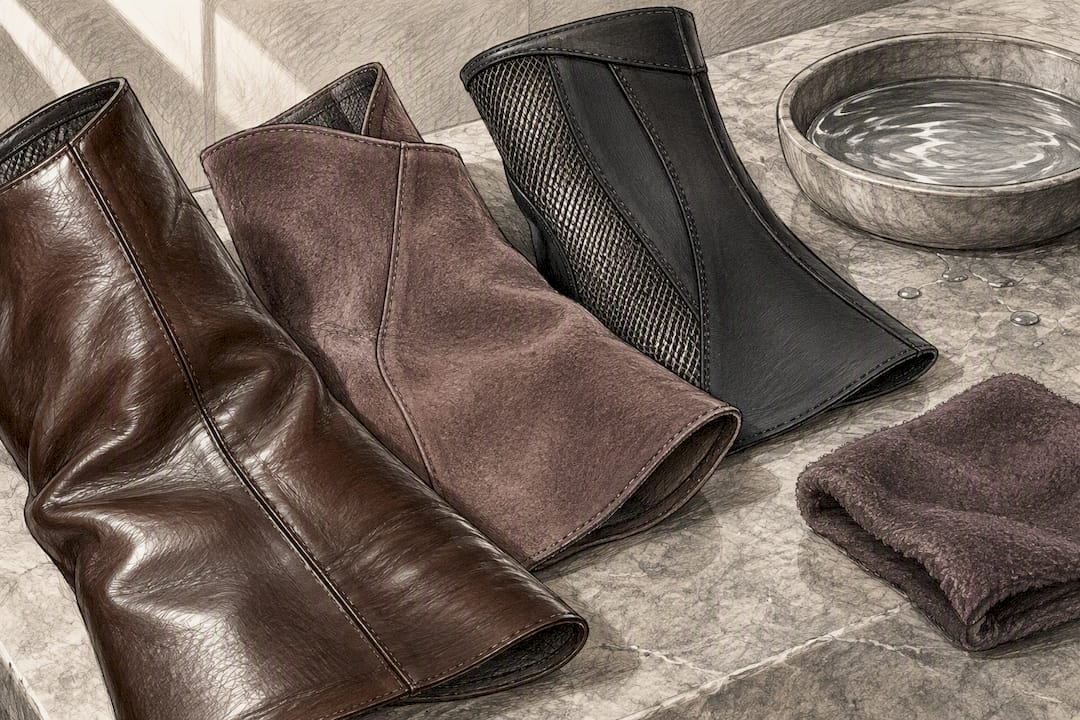
Suede performs beautifully in dry, mild weather and struggles badly in rain or slush. If you live somewhere with real winters, suede boots are better reserved for indoor events or dry-weather lunch dates rather than daily commuting.
Exotic hides vary by species. Stingray shrugs off scuffs better than most leathers, making it surprisingly practical for boots that see real wear, while more delicate exotics like ostrich are better suited to occasions where the boots aren’t fighting sidewalk grit and road salt.
Vegan and synthetic uppers are the most climate-flexible option on the list. They resist water better than untreated leather, don’t stain the way suede does, and hold up consistently whether you’re wearing them at a summer concert or a winter party. The trade-off is breathability. Synthetics trap heat and moisture more than real leather, which matters if you’re on your feet for hours at a time.
For hot, humid climates, prioritize treated leather or synthetics with breathable linings over suede or corrected-grain, which show wear faster under sweat and humidity. For cold, dry regions, full-grain leather with a solid conditioning routine is hard to beat for both comfort and longevity.
An Editorial Take on Choosing Boot Materials
Most first-time custom boot buyers obsess over the upper material and barely ask about construction, which is backward. A gorgeous full-grain leather boot built on cemented construction still can’t be resoled the way a modest leather boot with a proper welt can. Fit and construction determine whether a boot lasts. Material determines how it looks while doing it. Chase both, but never let the second one distract you from the first.
— Latoya
Ready to Choose Your Custom Boot Materials?
Once you know which material fits your lifestyle, the next step is putting it into an actual pair. Primadonsanddonnas is the alternative to guessing at a mass-market size run: every custom boot order lets you specify material, color, and an adjustable heel height, with plus-size availability built in rather than treated as a special request.
Browse the Custom Boots Collection to start specifying material and fit, or check the customization options page for add-ons like rush processing and shipping insurance if you’re working against an event date. Need boots faster than a made-to-order timeline allows? The Ready to Ship collection covers that gap without sacrificing the same attention to material quality. Start your order today and specify exactly what you want from sole to shaft.
Sources
For deeper comparisons on construction and material trade-offs, this breakdown of bench-made versus mass-produced boots covers welted construction in detail, and this custom-versus-mass-produced footwear comparison breaks down fit and cost factors. For vegan leather specifically, this 2026 material comparison covers performance versus real leather. See also Primadonsanddonnas’s own guide to custom boots cost.
- The $2,000 designer boot vs. the bench-made Western boot: what you actually pay for
- Vegan Leather Boots vs Real Leather Boots: What Actually Matters in 2026
FAQ
How Much Does It Cost to Have Custom Boots Made?
Material choice is one of the biggest cost drivers in custom boots, since exotics and premium full-grain leathers carry a notable price premium over synthetic or corrected-grain options. Primadonsanddonnas doesn’t publish a flat price for its Custom Boots Collection since cost depends on material and design specifics, but current pricing is available directly on the collection page.
What Is the Best Material for Boots?
There’s no single best material. Full-grain leather wins for durability and patina, suede wins for a soft dressed-down look, exotics work for statement pieces, and vegan leather wins for low-maintenance daily wear. The right choice depends on your climate, usage, and how much upkeep you’re willing to do.
How Do I Make My Own Custom Boots?
You don’t need to make boots from scratch to get a custom result. Working with a made-to-order bootmaker lets you specify material, color, fit, and details like heel height without any leatherworking skill required, and Primadonsanddonnas’s Custom Boots Collection is built specifically around that process.
Can I Get Boots Custom Made in Plus Sizes?
Yes. Plus-size availability is standard, not a special request, across Primadonsanddonnas’s made-to-order footwear. Adjustable heel height is also available, so fit isn’t limited to a single standard last.


Leave a comment