

Custom Boots Cost: What Buyers Should Budget
Custom boots in the US typically fall into three general price categories: budget-friendly made-to-order options at the lower end, mid-range handcrafted pairs in the middle, and fully bespoke high-end boots at the premium end. Maker help pages confirm that hand-built custom pairs often start in the low thousands, with exotic leathers and detailed inlays pushing prices considerably higher. The main cost drivers are materials, hand labor, sole construction, and design complexity. To get an accurate quote, you’ll need your measurements, a style preference, and a material choice ready before you reach out.
Key Takeaways
Custom boots cost varies most by materials, construction method, and design complexity — investing in fit and sole quality delivers the best long-term value.
| Point | Details |
|---|---|
| US price bands | Budget $200–$500, mid-range $500–$1,500, fully bespoke $1,500–$5,000+ |
| Top 3 cost drivers | Materials (leather grade/exotics), custom last creation, and sole construction method |
| Lead time | Plan for 8–16 weeks; rush orders typically add 15–25% to the base price |
| Hidden fees to watch | Fitting fees, pattern change charges, shipping, and resoling (usually not covered by warranty) |
| Primadonsanddonnas | Offers made-to-order custom boots in any color and size, with adjustable heels and plus-size fits |
Table of Contents
- What makes custom boots more or less expensive?
- What do you actually get at each price level?
- How long does a custom boot order take?
- Do custom boots pay off over time?
- How to order custom boots step by step
- Should you make your own boots?
- Why custom boots are worth it for the right buyer
- Primadonsanddonnas custom boots: made to order, ready to impress
- Sources
- FAQ
What makes custom boots more or less expensive?
Materials are the single biggest lever. Full-grain cowhide sits at the affordable end of the leather spectrum. Exotic skins like ostrich, python, caiman, or stingray can add hundreds of dollars to the base price on their own. Hardware (buckles, zippers, metal toe caps) and decorative inlays or embroidery add cost on top of that.
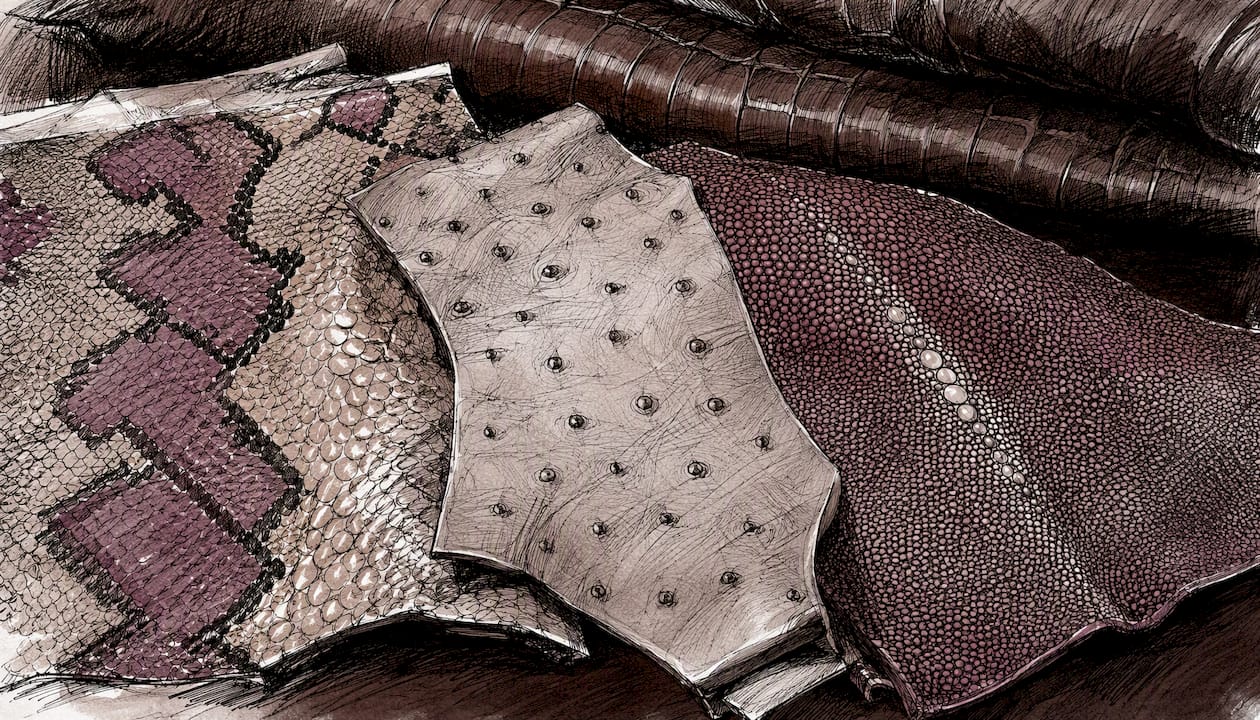
Labor is the second major factor. Hand-stitching, custom last creation, and hand-lasting each take skilled hours that machine production skips entirely. A Goodyear welt or stitch-down construction costs more upfront than a cemented (glued) sole, but it allows resoling later, which matters for long-term value.
Key cost drivers at a glance:
- Leather grade: Full-grain vs. corrected-grain vs. exotic skin
- Last creation: A custom last built to your foot adds $100–$300 to most orders
- Sole construction: Goodyear welt or stitch-down vs. cemented
- Design complexity: Inlays, embroidery, custom color blocking
- Hardware and embellishments: Metal hardware, rhinestones, crystals (see Half Crystal Custom Boots as an example of how embellishments change the build)
- Fittings and alterations: Pattern changes after the first build often carry a separate fee
- Shipping and taxes: International shipping on imported materials or finished boots adds cost
- Rush charges: Expedited orders typically carry a surcharge of 15–25% over standard pricing
Pro Tip: Invest in construction quality and fit before decorative extras. A Goodyear welt and a well-fitted last will outlast three pairs of glued-sole boots with fancy inlays.
Considering sustainable material alternatives? Cork vs. leather trade-offs are worth reviewing if eco-friendly options matter to your buying decision.
What do you actually get at each price level?
Price ranges vary by maker, region, and style, but the bands below reflect typical US market conditions.
| Price Band | Approximate Range | What’s Typically Included |
|---|---|---|
| Budget / Entry | $200–$500 | Semi-custom sizing, limited color/material choices, cemented sole, shorter lead time |
| Mid-Range | $500–$1,500 | Full custom sizing, broader material selection, stitch-down or Goodyear welt, basic inlay options |
| High-End / Bespoke | $1,500–$5,000+ | Bespoke last, exotic leathers, hand-stitching throughout, complex inlays, full fitting appointments |
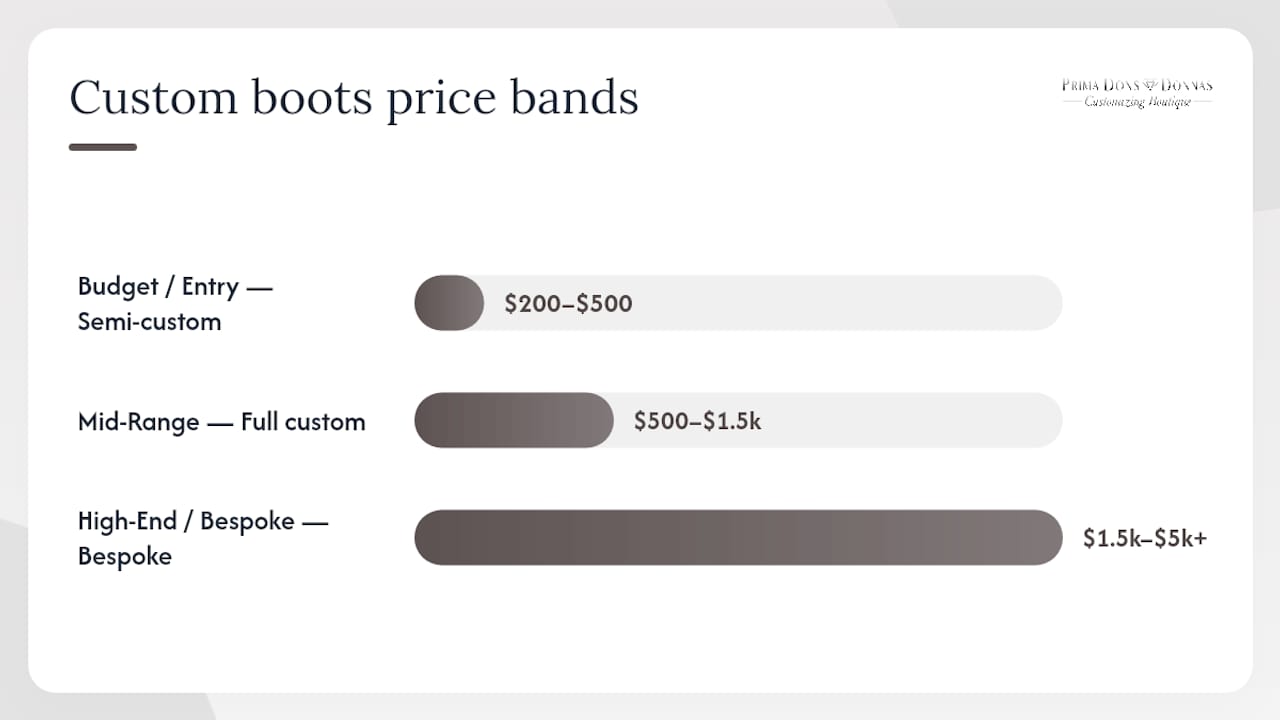
At the budget end, you’re usually choosing from a set of standard lasts with minor width or calf adjustments. Mid-range orders typically include a dedicated measurement session and a wider material menu. Fully bespoke pairs at the high end involve a custom last built to your exact foot shape, multiple fitting appointments, and near-unlimited design options.
Regional variance is real. A maker in New York or Los Angeles will generally charge more than one in a smaller market, and overseas makers (often in Mexico or Spain) can undercut US prices while still offering quality construction. Always ask what’s included in the quoted price before comparing numbers.
How long does a custom boot order take?
Lead times for made-to-order boots are longer than most buyers expect. Maker support material confirms that appointment-driven measurement processes and bespoke construction are standard, which adds time at every stage.
A typical US order follows these milestones:
- Initial consultation (1–3 days): Style, material, and budget discussion. Many makers require this before quoting.
- Measurements and last creation (1–2 weeks): In-person or virtual measurement session; custom last carved or sourced.
- First build (4–8 weeks): Cutting, lasting, stitching, and sole attachment.
- Fitting and adjustments (1–2 weeks): Try-on or photo/video review; corrections made.
- Finishing and shipping (1–2 weeks): Final polish, hardware, and delivery.
Total: 8–16 weeks is a realistic window for a mid-range to high-end order.
Pro Tip: Planning boots for a wedding, concert, or special event? Place your order at least 16 weeks out. That buffer covers delays in material sourcing and any fitting corrections without forcing a rush charge.
Do custom boots pay off over time?
The cost-per-wear math usually favors custom. A well-built pair with a Goodyear welt or stitch-down sole can be resoled multiple times, extending wearable life well beyond what a cemented-sole boot allows. Maker support pages recommend investing in solid construction specifically because it reduces cost-per-wear over the boot’s lifetime.
Typical repair costs in the US:
- Full resole: $80–$150 depending on sole type and cobbler
- Heel replacement: $30–$60
- Leather conditioning service: $20–$50 at a cobbler, or DIY with quality conditioner
A $1,200 mid-range pair resoled twice over ten years costs roughly $1,400 total across its life. A $200 cemented-sole boot replaced every two years costs $1,000 over the same period, with less fit precision and no repair option. The gap narrows quickly.
Check repair and warranty policies before ordering. Many makers treat resoling as a chargeable service outside any warranty, so knowing the policy upfront helps you budget accurately.
How to order custom boots step by step
Getting a quote right the first time saves money and avoids costly alterations. Here’s the standard process:
- Gather your measurements: Foot length, width, instep height, calf circumference, and heel height preference.
- Choose your last type: Standard last with minor tweaks, or fully custom last built to your measurements.
- Select materials: Leather grade, color, sole type, and any hardware or embellishments.
- Request a quote: Submit measurements and style details. Many makers, as local business listings show, rely on direct email inquiry rather than fixed online pricing.
- Pay a deposit: Typically 50% upfront; confirm the maker’s deposit and cancellation policy.
- Attend fittings: In-person or virtual. Virtual fittings using photos and video are acceptable for minor adjustments but less reliable for complex fit issues.
- Approve the final build and pay the balance: Before shipping.
Questions to ask every maker before you commit:
- What’s the total lead time from deposit to delivery?
- Is a custom last included, or is it an add-on fee?
- What sole construction method do you use?
- What’s your repair and resoling policy?
- What does the deposit cover if I need to cancel?
- Can I see photos or a portfolio of similar past orders?
- Do you offer virtual fittings, and what’s the process?
Measurement terms to know: A last is the foot-shaped form the boot is built on. Instep is the arch height. Calf circumference matters for tall boots. Heel height affects both comfort and construction cost. Clear measurement protocols reduce the risk of costly alterations after the first build.
A custom fitting fee is a separate charge some makers list explicitly. Knowing what it covers before you order makes quotes easier to compare.
Should you make your own boots?
DIY bootmaking is genuinely possible, but the startup costs are higher than most people expect. A basic kit includes:
- Lasts: $50–$200 per pair
- Tools (knives, lasting pliers, awls, hammers): $150–$400 for a starter set
- Leather: $80–$200 per hide depending on grade
- Soles, adhesives, thread: $40–$80
- Patterns or a class: $50–$200
Total startup: roughly $370–$1,080 before you’ve made a single boot. The learning curve is steep. Most first pairs take 80–120 hours and still need professional finishing.
DIY makes sense as a hobby or for learning the craft. As a cost-saving strategy, it rarely beats a mid-range professional order unless you plan to make multiple pairs.
Pro Tip: Want to reduce professional costs without sacrificing fit? Order on a standard last with small fit tweaks (width adjustment, calf width) rather than a fully custom last. You’ll save $100–$300 and still get a boot that fits far better than off-the-rack.
Why custom boots are worth it for the right buyer
Custom footwear isn’t for everyone, but for buyers who need a specific fit, a statement look, or a boot built for a special occasion, the investment makes clear sense. Plus-size buyers especially benefit: standard sizing rarely accommodates wider calves or non-standard foot widths, and a custom pair eliminates that frustration entirely.
The buyers who get the most value from custom boots are those dressing for events where fit and appearance both matter: weddings, concerts, performances, and photo shoots. Off-the-rack simply can’t deliver the same combination of precise fit and intentional design.
Primadonsanddonnas custom boots: made to order, ready to impress
Skip the guesswork of standard sizing. Primadonsanddonnas builds custom boots to your exact measurements, in any color, with adjustable heel options and plus-size fits that most retailers don’t offer. Whether you’re dressing for a wedding, a concert, or a bold everyday look, every pair is made to order with your specifications.
To get a quote, share your measurements, heel height preference, and style direction. Made-to-order pairs follow the standard 8–16 week timeline; ready-to-ship styles are available for faster delivery. Browse the full custom boot collection or pair your boots with a look from the made-to-order dress collection for a complete special-occasion outfit.
Sources
- Nicksboots
FAQ
How much does a custom boot typically cost in the US?
Custom boots range from roughly $200–$500 at the entry level to $1,500–$5,000 or more for fully bespoke pairs with exotic leathers and hand-stitching throughout.
Can you get boots custom made?
Yes. Many US makers and brands like Primadonsanddonnas offer made-to-order boots built to your measurements, in your chosen color and material, including plus-size and special-occasion styles.
What is the average cost of boots overall?
Mass-produced retail boots typically run $80–$400. Custom or handmade boots start higher because of the labor, materials, and fit work involved, but they tend to last significantly longer.
How difficult is it to make your own boots?
DIY bootmaking requires $370–$1,080 in startup tools and materials, plus 80–120 hours of work for a first pair. It’s a rewarding craft but rarely saves money compared to ordering from a mid-range professional maker.


Leave a comment