

Faux Fur Care: How to Clean, Dry, and Store It Right
Hand-washing in cool water with a mild detergent is the safest way to clean most faux fur, and machine washing only belongs in the routine when the care label explicitly says the garment is washable. Never apply heat to dry it. Heat is the single fastest way to melt or warp synthetic pile, and once that happens, no amount of brushing brings it back.
Before you touch a coat, jacket, or trim piece, run through this short checklist.
- Do check the care label first to know the recommended washing method.
- Do air-dry flat or on a padded hanger, away from direct sun and heating vents.
- Don’t use hot water, a dryer, or a hair dryer at any point in the process.
Guides from The Laundress and The Spruce both back this cool-water, no-heat approach, and it’s the same standard Prima Dons & Donnas recommends for its own faux fur outerwear.
Key Takeaways
Faux fur stays soft and full only when it’s hand-washed in cool water, air-dried without heat, and stored in breathable fabric rather than plastic.
| Point | Details |
|---|---|
| Hand-wash is the default | Cool water and mild detergent, soaked up to 30 minutes, is the safest method for most garments. |
| Machine wash only if labeled | Use a mesh bag, cold water, delicate cycle, and low spin on garments explicitly marked washable. |
| Heat is the real threat | Dryers, hair dryers, and irons melt synthetic fibers permanently; air-dry flat or on a padded hanger instead. |
| Store clean, dry, and breathable | Use cotton or linen garment bags and padded hangers, never sealed plastic. |
| Prima Dons & Donnas builds for easy care | Its custom outerwear and dress collections use pile lengths and linings that hold up to gentle hand-washing. |
Table of Contents
- When Does Faux Fur Actually Need a Full Wash?
- How Do You Pretreat and Spot-Clean Stains?
- How Do You Hand-Wash a Faux Fur Coat?
- Can You Put Faux Fur in a Washing Machine?
- How Do You Dry and Restore Fluff Without Damage?
- What’s the Best Way to Store Faux Fur Long-Term?
- When Should You Take Faux Fur to a Professional?
- Caring for Custom and Special-Occasion Faux Fur
- What Are the Different Types of Faux Fur and How Does Care Change?
- What Mistakes Ruin Faux Fur the Fastest?
- How Do You Protect Faux Fur From Sun and Moisture Damage?
- What’s the Safest Way to Deodorize Faux Fur?
- How Do You Remove Oil, Ink, and Wine Stains From Faux Fur?
- Is It Safe to Iron or Steam Faux Fur?
- Why Care Details Matter for Bespoke Faux Fur
- Ready-to-Wear and Custom Faux Fur Outerwear That’s Easier to Care For
- Sources
- FAQ
When Does Faux Fur Actually Need a Full Wash?
Most faux fur doesn’t need frequent deep cleaning. Spot-cleaning and airing the piece out between wears keeps the fiber structure intact far better than repeated washing does. A general rule: clean once per season, or sooner if the item was worn somewhere smoky or around heavy food and drink.
Watch for these signals that a full wash is overdue:
- Persistent odor that doesn’t fade after a night of airing
- Visible stains, grease spots, or dulled, flattened patches of pile
- Heavy soiling from regular outdoor wear
Short-pile faux fur, like the kind used on collars and cuffs, tolerates more frequent light cleaning. Long or shaggy styles mat more easily, so stretch out the time between washes and lean on spot treatment and brushing in between.
How Do You Pretreat and Spot-Clean Stains?
Always test any cleaning solution on a hidden seam or inside cuff first. A patch that looks fine on the label can still react badly to a new product.
- Mix a mild detergent with cool water and dab it onto the stain with a lint-free cloth. Work from the outside of the mark inward.
- For grease or gum, rub a tiny amount of neutral cooking oil into the spot to loosen it, then blot with detergent solution.
- For localized marks that resist detergent, dab a 50/50 mix of water and rubbing alcohol on the specific spot rather than the whole panel.
- Finish with a light mist of conditioner spray to soften any fibers that feel stiff after treatment.
Use a soft stain brush or your fingertips, never a stiff scrub brush, and skip bleach and enzymatic cleaners entirely. Those break down synthetic fibers and the fabric backing.
Pro Tip: Vacuum the piece lightly with an upholstery attachment before you spot-clean. It lifts loose debris first, so you’re not grinding dirt further into the pile.
How Do You Hand-Wash a Faux Fur Coat?
Hand-washing is the safest home method for most garments and the only method recommended for long or shaggy pile.
- Fill a tub or sink with cool water. Add a small capful of mild, pH-neutral detergent for a coat, or a few drops for a smaller accessory like a hat or collar.
- Submerge the piece fully and agitate it gently with your hands. Let it soak for up to 30 minutes, no longer.
- Never rub the pile against itself or wring the fabric. Both actions crush the backing and mat the fibers permanently.
- Drain the tub and press water out with flat palms, working from top to bottom.
- Roll the piece in a dry towel to blot out excess moisture before you move to drying.
- Lay it flat on a mesh drying rack or hang it on a wide, padded hanger, reshaping the pile as you go.
Reposition the garment every few hours so it dries evenly on both sides. Full drying typically takes between 24 and 48 hours, depending on pile length and how much water it absorbed.
Pro Tip: Stuff the sleeves and shoulders of a coat with a dry towel while it dries. It holds the shape and keeps the shoulders from sagging or flattening against the hanger.
Can You Put Faux Fur in a Washing Machine?
Only if the care label says so, explicitly. If it doesn’t, skip the machine entirely and hand-wash instead.
- Use a front-loading or HE washer. Top-loading agitator machines twist and yank the pile in ways that flatten it fast, while front-loaders and HE drums treat the fabric more gently.
- Place the item inside a mesh laundry bag before loading it.
- Select cold water, the delicate or gentle cycle, and the lowest spin setting available.
- Wash it alone, or with only very light, soft items. Never load it with jeans, towels, or anything with zippers or hooks.
- Use a small amount of mild detergent, and limit machine washes since repeated cycles wear down the backing faster than hand-washing does.
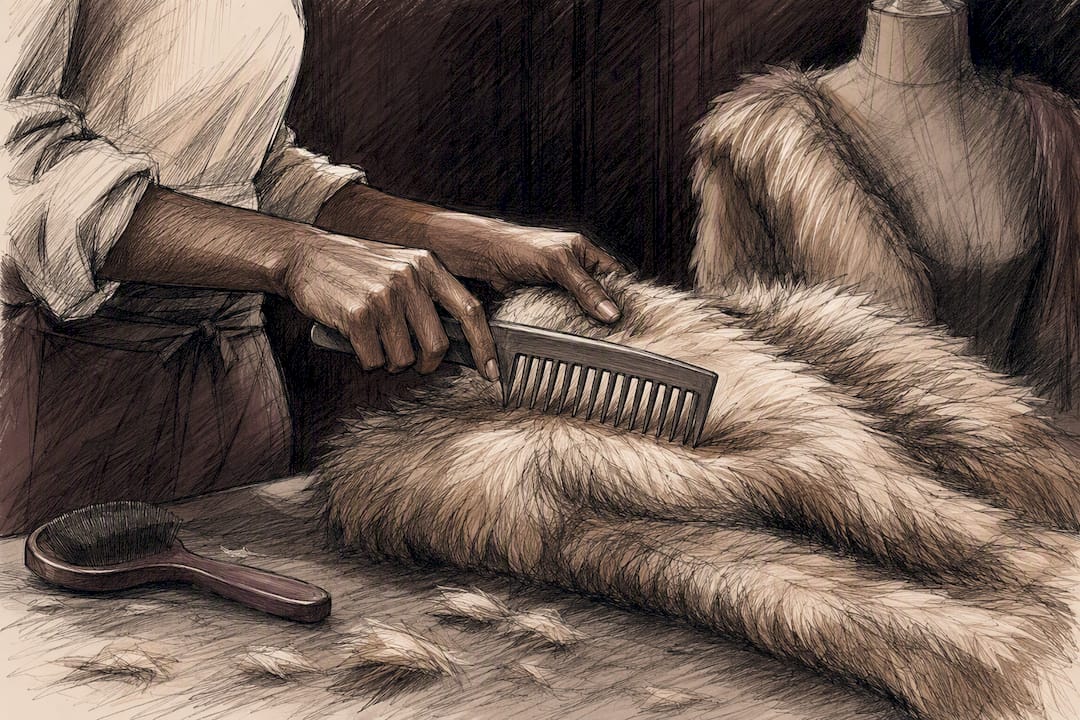
If the pile comes out matted, don’t panic. Brush it gently with a wide-tooth comb while it’s still slightly damp, then let it finish air-drying flat. A second light brushing once fully dry usually restores most of the volume.
How Do You Dry and Restore Fluff Without Damage?
Heat is the enemy here. Synthetic fibers like acrylic, modacrylic, and polyester soften and warp under direct heat, and once the pile melts or fuses, it stays that way permanently. That rules out dryers, hair dryers, radiators, and hot air vents entirely.
- Lay the piece flat on a towel or mesh rack, or hang it on a wide padded hanger.
- Keep it out of direct sunlight while it dries. UV exposure fades color and dries out the fibers.
- Brush gently with a wide-tooth comb or soft-bristled brush once the piece is dry, working in the direction the fur naturally falls to detangle and lift the pile.
- Mist lightly with a homemade conditioner spray, about one teaspoon of hair conditioner diluted in two cups of water, then brush it through to soften fibers that feel coarse.
If wrinkles or flat spots persist, steam instead of iron. Hold a garment steamer several inches away and let the steam pass over the pile without direct contact. Never press an iron onto faux fur; even a cool setting carries enough heat to leave a permanent flat scar in the fibers.
Pro Tip: Brush in short strokes rather than long, dragging ones. Short strokes lift the base of the pile instead of just smoothing the surface, which makes a bigger visible difference on flattened spots.
What’s the Best Way to Store Faux Fur Long-Term?
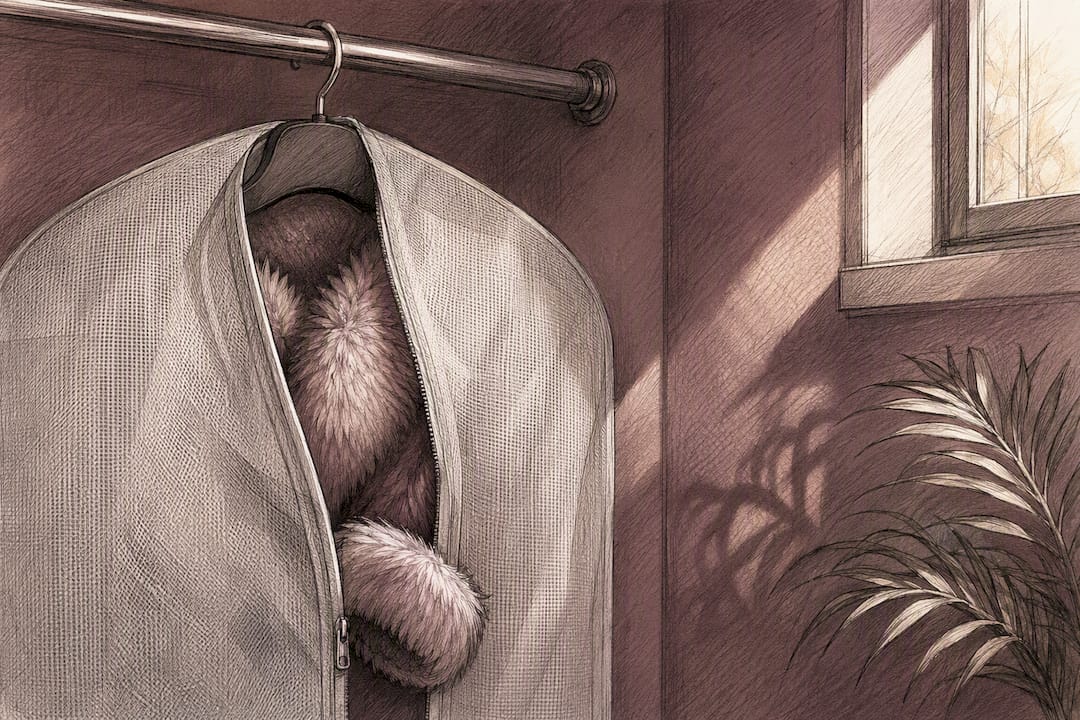
Store faux fur only once it’s completely clean and dry. Any lingering moisture trapped in storage invites mildew and a musty smell that’s hard to reverse. Use breathable cotton or linen garment bags rather than sealed plastic or the thin bags dry cleaners hand out. Those trap humidity against the fibers.
- Hang coats and jackets on wide, padded hangers that support the shoulder shape.
- Avoid folding or crowding pieces into a tight closet. Compression crushes the pile and it doesn’t always spring back.
- Choose a cool, dry, ventilated storage space for the off season.
- Use cedar blocks or archival sachets to deter pests. Skip mothballs, since their chemical residue clings to synthetic fibers and is hard to air out.
Between wears, a quick shake and a few minutes of open-air hanging refreshes a piece that doesn’t need a full clean. For more on seasonal setups, Prima Dons & Donnas covers breathable storage methods in more detail for garments you’re rotating in and out throughout the year.
When Should You Take Faux Fur to a Professional?
Some problems are beyond home care. Persistent odor that survives multiple airings, stains that won’t budge after pretreatment, structural pieces with boning or heavy embellishment, and any melted or fused patch of pile all call for a professional’s help.
- Ask a cleaner directly what solvents or processes they use on faux fur specifically. Solvent-based methods can lift deep oils without the water-related matting risk that comes with home washing.
- Ask about their experience with faux fur specifically, not just general dry cleaning.
- Understand the limits: a good cleaner can repair seams and backing tears, but melted or fused pile from heat exposure generally can’t be restored to its original texture.
Expect costs and turnaround time to vary by piece complexity, so get a quote before you commit.
Caring for Custom and Special-Occasion Faux Fur
Made-to-order pieces deserve a slightly gentler hand than off-the-rack basics, especially anything with structured shoulders or embellishment. Skip the hanger stretch test on heavily built pieces and lean toward hand-washing or a professional cleaner instead.
- Avoid hanging structured coats by the shoulders for extended storage; a padded hanger still works best short-term.
- Follow the garment’s specific care label for the collection it came from, since pile length and lining vary piece to piece.
- Finish with a light hover-steam session and a reshape on a padded hanger before wearing.
For construction details that affect how a piece should be cleaned, see what goes into a faux fur coat’s build and how custom fabric choices change the care routine.
What Are the Different Types of Faux Fur and How Does Care Change?
Not all faux fur behaves the same way in the wash, and knowing which type you own changes how carefully you need to treat it. Most modern faux fur is made from acrylic, modacrylic, or polyester fibers, sometimes blended, and each reacts differently to water, heat, and agitation.
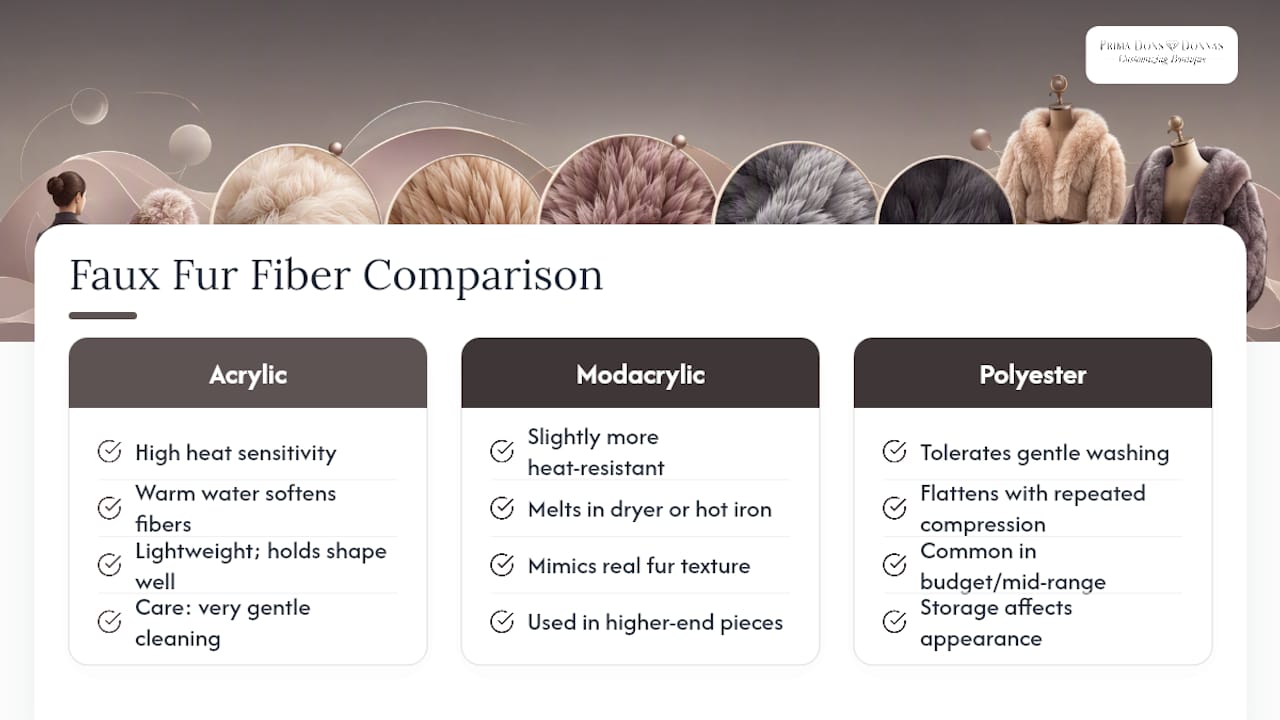
Acrylic pile tends to be lightweight and holds its shape well, but it’s especially sensitive to heat. Even warm water can start to soften the fiber structure over repeated washes. Modacrylic, often used in higher-end faux fur because it mimics real fur texture closely, is slightly more heat-resistant than pure acrylic but still melts under dryer temperatures or a hot iron. Polyester-based faux fur, common in budget and mid-range pieces, holds up reasonably well to gentle washing but tends to flatten faster under repeated compression, which is why storage habits matter as much as washing technique.
Pile length matters as much as fiber type. Short, dense pile, the kind you see on collars, cuffs, and structured coat trims, resists matting better and tolerates more frequent light cleaning. Long, shaggy styles trap more debris between fibers and mat faster once wet, which is exactly why hand-washing beats machine washing for those pieces. Backing material also plays a role: cheaper knit backings stretch more easily when wet, while sturdier woven backings hold their shape through a hand-wash cycle. Checking a fabric guide to faux fur construction before cleaning an unfamiliar piece helps you match the method to the material instead of guessing.
What Mistakes Ruin Faux Fur the Fastest?
The single most common mistake is heat exposure, whether that’s a dryer cycle, a hair dryer on the “quick dry” setting, or hanging a wet coat too close to a radiator. Heat doesn’t just dry faux fur faster; it changes the fiber’s physical structure, and that damage doesn’t reverse.
The second most common mistake is aggressive scrubbing. Rubbing a stain hard, wringing out excess water, or using a stiff-bristled brush all crush the pile’s base and mat the backing. Gentle pressure and patience get better results than force every time.
Other frequent missteps include:
- Using bleach or enzymatic stain removers, which break down synthetic fibers and strip color unevenly
- Storing a damp piece in a sealed plastic bag, which traps moisture and invites mildew
- Skipping the care label entirely and assuming all faux fur washes the same way
- Ironing directly on the pile instead of using hover steam
- Machine washing a piece with no washable label just because it “looks sturdy enough”
- Letting a piece sit crushed in a drawer or suitcase for weeks, which flattens pile that doesn’t always bounce back
Most of these mistakes come from treating faux fur like a regular cotton or synthetic garment. It behaves more like a delicate textile with a plastic-based fiber structure, and the care routine needs to reflect that difference.
How Do You Protect Faux Fur From Sun and Moisture Damage?
Sunlight and humidity cause slower, quieter damage than a hot dryer, but the end result is just as permanent. UV exposure breaks down the dye molecules in synthetic fibers over time, leading to fading and a dry, brittle texture that no conditioner spray fully restores. Keep faux fur pieces away from direct sunlight during storage, and avoid hanging them near a sunny window for display, even when they look great catching the light.
Moisture causes a different kind of problem. A faux fur piece caught in rain or snow isn’t ruined outright, but leaving it wet for too long invites mildew, a musty odor, and matting in the pile as fibers clump together while drying unevenly. If a coat gets caught in a downpour, shake off excess water immediately, blot with a towel, and let it air-dry flat away from direct heat, following the same no-heat rule that applies to washing. Never store a piece while it’s still even slightly damp; trapped moisture in a garment bag turns into mildew within days in a humid closet.
Humidity control matters for long-term storage too. A ventilated closet with some airflow beats a sealed, damp basement every time, and it’s worth checking stored pieces every few weeks during rainy seasons to catch any moisture problems early.
What’s the Safest Way to Deodorize Faux Fur?
Odor doesn’t always mean a piece needs a full wash. Airing a garment out on a hanger in a well-ventilated room for several hours often clears mild smells from smoke, food, or general wear without any washing at all.
For stronger odors, try these gentler steps before reaching for a full wash:
- Sprinkle baking soda lightly over the pile, let it sit for 30 minutes to absorb odor, then shake and brush it out thoroughly.
- Use a fabric-safe odor spray designed for delicate synthetics, tested first on a hidden area.
- Hang the piece outdoors in shade on a dry, breezy day rather than direct sun, which speeds odor removal without UV damage.
- Avoid heavy perfume sprays directly on the fibers, since some fragrances leave sticky residue that attracts more dirt over time.
If odor persists after airing and baking soda treatment, that’s a sign the smell has worked into the backing material, not just the surface pile. At that point, a full hand-wash or a professional cleaner is the more reliable fix, since surface deodorizing won’t reach embedded odor sources.
How Do You Remove Oil, Ink, and Wine Stains From Faux Fur?
Different stains call for different tactics, and using the wrong one can set a stain deeper into the fibers.
Oil and grease respond well to the neutral oil trick: work a small amount of plain cooking oil into the stained area to loosen the grease, then blot with a mild detergent solution. Cornstarch or baby powder sprinkled on fresh grease also absorbs oil before it spreads, if you catch the stain early.
Ink stains need a lighter touch. Dab, don’t rub, with a cotton swab dipped in rubbing alcohol, working from the outer edge of the stain inward so it doesn’t spread further into clean pile. Test the alcohol on a hidden patch first, since some dyed faux fur can bleed with alcohol contact.
Wine and other liquid stains respond best to quick action. Blot immediately with a dry cloth to lift as much liquid as possible before it sets, then treat with cool water and a small amount of mild detergent. Avoid hot water on wine stains specifically; heat can set the tannins into the fiber permanently.
Across all three stain types, the same rule holds: treat the stain quickly, test any product on a hidden area first, and never scrub hard enough to crush the pile. For sticky residues from candles or wax that occasionally land on faux fur trim, a dedicated wax removal method works better than trying to wash the wax out directly.
Is It Safe to Iron or Steam Faux Fur?
Ironing faux fur directly is never safe, even on a low or synthetic setting. The iron’s flat, direct heat contact melts synthetic pile almost instantly, leaving a flattened, shiny scar that no brushing fixes.
Steaming is the safer alternative, and it works well when done correctly. Hold a garment steamer several inches away from the fabric surface and let the steam pass over the pile without the steamer head ever touching the fibers directly. This “hover” technique relaxes wrinkles and helps flattened pile spring back without the risk of contact heat.
Work in short passes, moving the steamer steadily rather than holding it in one spot, which prevents localized heat buildup. Once you’ve steamed a section, brush it gently with a wide-tooth comb while the fibers are still slightly warm and pliable, then let the piece air out fully before wearing or storing it. If a garment came out of storage compressed and wrinkled, steaming followed by a thorough brushing is usually enough to restore its shape without a full wash.
Why Care Details Matter for Bespoke Faux Fur
A custom piece takes real time and craftsmanship to build, and the care routine is part of what protects that investment. A quick refresh trick worth remembering: a few minutes of hover-steam followed by a light brush-out can save a flattened faux fur piece the morning of an event, no full wash required.
Ready-to-Wear and Custom Faux Fur Outerwear That’s Easier to Care For
Design choices made before a garment ever reaches your closet affect how much work its care routine takes later. Prima Dons and Donnas builds its faux fur pieces with that in mind: pile lengths chosen for durability, linings that reduce friction against the backing, and construction that holds shape through gentle hand-washing instead of demanding constant professional attention.

The Custom Outerwear Collection includes made-to-order coats and jackets built to any size or color, with the same no-heat, hand-wash-friendly construction covered throughout this guide. If you’re shopping for a special-occasion piece instead, whether that’s a wedding, a concert, or a lunch date outfit, the Custom Made to Order Dress Collection offers faux fur accents and trims built the same way. Browse either collection, or reach out to customer service directly for care advice specific to your piece before you order.
Sources
- How To Wash Faux Fur | Faux Fur Care Guide | The Laundress
- How to Wash and Clean a Faux Fur Coat, Jacket, or Vest - The Spruce
- How To Care For Faux Fur
- How to Clean a Faux Fur Coat: An Artisan’s Guide for 2026 - Pandemonium Millinery
FAQ
Does Faux Fur Get Ruined if It Gets Wet?
Not usually. A brief soak in rain won’t ruin faux fur, but it needs to dry flat away from heat and shouldn’t sit wet for long, since trapped moisture invites mildew and matting.
How Do You Make Faux Fur Look Good Again After It Flattens?
Brush the dry pile with a wide-tooth comb or soft brush in the direction it naturally falls, then mist lightly with a diluted conditioner spray to soften and lift the fibers.
What Happens to Faux Fur When You Wash It?
Washed correctly in cool water with mild detergent, faux fur cleans without damage; washed in hot water or agitated roughly, the pile mats and the backing can stretch.
Can You Put Faux Fur in the Dryer?
No. Dryer heat melts or warps synthetic fibers permanently, so faux fur should always air-dry flat or on a padded hanger instead.
Recommended
- How to Store Faux Fur: A Crafter’s Care Guide – Prima Dons & Donnas
- What Is a Faux Fur Coat? | Stylish, Ethical & Cozy Outerwear Guide – Prima Dons & Donnas
- Faux Fur vs Real Fur: Which One Is Right for You? – Prima Dons & Donnas
- Faux fur fashion: Style, sustainability, and personalization – Prima Dons & Donnas


Leave a comment