

Faux Fur vs Real Fur: Which One Is Right for You?
For most shoppers today, high-quality faux fur is the smarter, more responsible choice. It skips the animal welfare concerns, costs less upfront, and modern versions look nearly identical to the real thing. That said, the decision isn’t always simple.
Here’s how to quickly align yourself:
- You lean faux if: ethics, price, and styling flexibility matter most. Brands like Primadonsanddonnas offer made-to-order faux-fur pieces in any size or color, including plus sizes and special-occasion looks.
- You lean real if: maximum warmth, long-term resale value, and biodegradability are your priorities, and you’re prepared to verify sourcing and care requirements.
- You’re unsure which you already own: FOUR PAWS recommends skipping price as a guide entirely. A $10 trim can be real fur. Identification tests covered below are the only reliable way to know.
Key Takeaways
For most shoppers, high-quality faux fur offers the best balance of ethics, price, and style, with made-to-order options from Primadonsanddonnas covering special occasions and plus sizes.
| Point | Details |
|---|---|
| Faux wins on ethics and price | Faux fur avoids animal welfare concerns and costs far less upfront than real fur. |
| Backing check is the fastest ID test | Fabric or mesh backing means faux; leather or skin backing means real fur. |
| Both carry environmental trade-offs | Faux sheds microplastics; real fur farming raises welfare and land-use concerns. |
| Real fur lasts longer with proper care | A well-maintained real fur coat can last 20 years; quality faux typically holds up 5–10 years. |
| Primadonsanddonnas for custom faux | Made-to-order faux fur in any size or color, suited for parties, weddings, and plus-size fits. |
Table of Contents
- How can you tell real fur from faux fur?
- What are the real environmental and ethical trade-offs?
- Warmth, durability, and care: what to expect from each
- How do price and resale value compare?
- Is faux fur still in style, and where does real fur fit in 2026?
- A five-minute buyer checklist for faux or real fur
- Why Primadonsanddonnas is a strong choice for faux fur shoppers
- Why I recommend made-to-order faux fur for special occasions
- Shop Primadonsanddonnas faux fur: made-to-order and ready to ship
- Sources
- FAQ
How can you tell real fur from faux fur?
Price tells you nothing. FOUR PAWS confirms that real fur trims appear on items as cheap as $10, so tactile and backing checks are the only dependable method.
Start with the non-destructive tests before anything else:
- Touch and texture: Real fur feels soft with a dense, layered structure. Faux fur often feels slightly coarser or more uniform, though luxury faux is closing that gap fast.
- Tip shape: Part the fibers and look at the ends. Real fur tapers to a fine natural point. Faux fur fibers are blunt-cut or slightly frayed at the tip.
- Underwool check: Push the fibers aside and look at the base. Real fur has a dense, soft underlayer of shorter fibers beneath the guard hairs. Faux fur has no underwool — just a single fiber length attached to a woven or knit backing.
- Backing test: Flip the garment and look at the underside. Real fur sits on leather or skin. Faux fur is sewn onto a fabric or mesh backing. This is one of the fastest, most reliable checks.
- Wind test: Blow gently across the surface. Real fur fibers move naturally and settle at varied heights because they’re rooted in skin. Faux fur tends to move stiffly as a single layer.
- Burn test: Pull out two or three fibers and hold a flame to them briefly. Real fur smells like burning hair and leaves a fine ash. According to PETA guidance via PlantBasedNews, faux fur melts into small plastic beads and smells chemical.
Pro Tip: Try the underwool, backing, and wind tests first. They’re fast, non-destructive, and accurate. Save the burn test for situations where you’re still unsure after the others — and never perform it indoors or on a valuable vintage piece.
Safety note on the burn test: Burning synthetic fibers releases fumes. Do it outdoors, with only two or three fibers, and keep the flame brief. If a garment is expensive or its origin is unknown, skip the burn test entirely and consult a professional appraiser or furrier instead. Mislabeling is a documented problem: investigations cited by PETA have found real fur sold as synthetic in boutique and secondhand markets, so a second opinion on ambiguous pieces is worth it.
What are the real environmental and ethical trade-offs?
Neither option is perfectly clean. The honest answer is that both carry trade-offs, and the right choice depends on which trade-off you’re more willing to accept.
Faux fur and microplastics
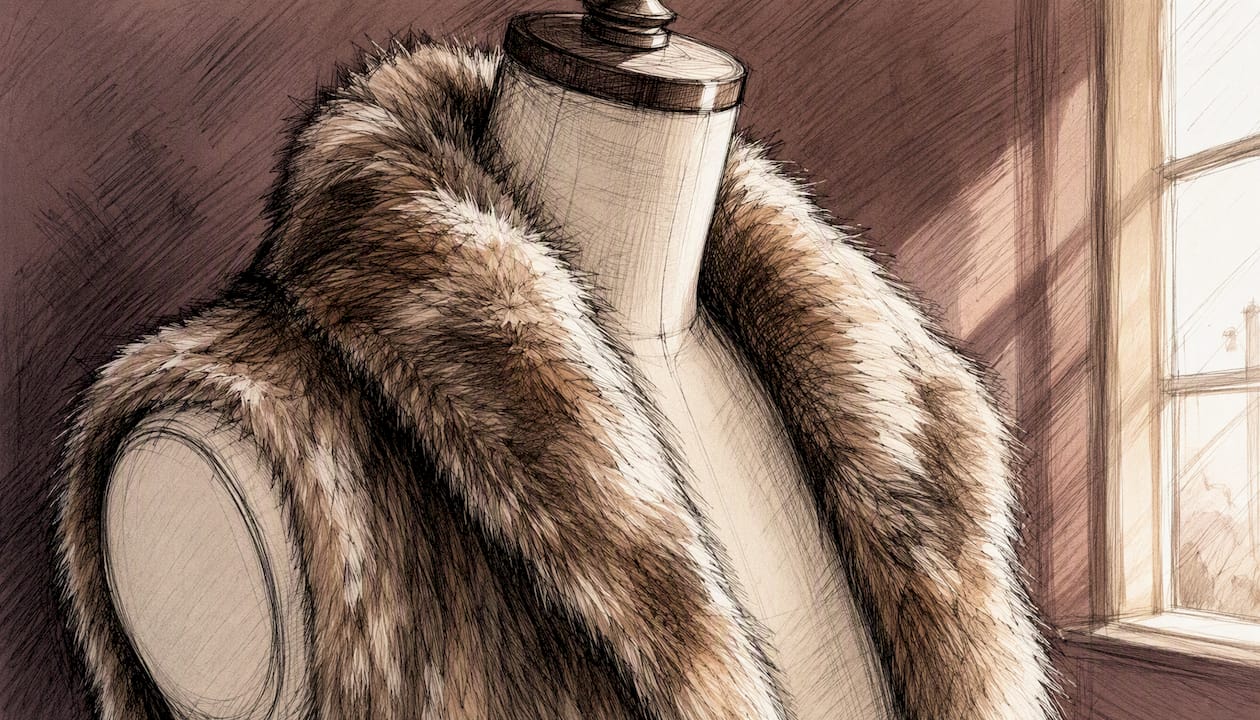
Faux fur is typically made from polyester, acrylic, or nylon. Every wash cycle sheds microplastic fibers into waterways. These particles are persistent — synthetic textiles can take hundreds of years to biodegrade under natural conditions. That long-term environmental persistence is a genuine concern, not a minor footnote.
Real fur: farming, trapping, and regulation
Real fur production raises animal welfare issues across mink, fox, rabbit, and other species. Fur farming practices vary widely by country, and trapping of wild animals introduces additional welfare and ecological concerns. Wild-sourced species are subject to CITES international trade controls, which regulate export and import of listed species. Those controls affect availability, legality, and traceability for certain real-fur products in the United States.
Biodegradability vs. persistence
Real fur, being a natural protein fiber, does biodegrade under the right conditions. Faux fur does not, at least not within any practical timeframe. This gives real fur a narrow environmental edge at end-of-life, though the farming and processing footprint offsets much of that advantage.
What you can do as a shopper:
- Ask brands for fiber content labels and country-of-origin documentation before buying.
- Look for recycled polyester content in faux fur, which reduces virgin plastic demand.
- Consider vintage or upcycled real fur as a practical middle ground: the animal welfare impact already occurred, and no new farming is involved.
- Check CITES listings if you’re purchasing real fur that may involve wild-sourced species.
- Support brands with transparent supply chains and third-party certifications.
Warmth, durability, and care: what to expect from each
Real fur outperforms faux fur on insulation. The dense underwool traps air close to the body in layers, creating natural thermal regulation that synthetic fibers replicate only partially. A well-made mink or fox coat in cold climates performs at a level that most faux alternatives don’t match, particularly in sustained sub-zero temperatures.
High-quality faux fur is closing the performance gap, especially for moderate climates and fashion-forward styling. Luxury faux pieces with dense pile construction and quality backing hold their shape well and offer real warmth for most U.S. winters. Where faux falls short is in extreme cold and in long-term durability: synthetic fibers are more prone to matting, pilling, and fiber breakdown over years of wear.
A well-maintained real fur coat can last many years. A quality faux fur piece, with careful handling, typically holds up for several years before showing significant wear.
Care guide:
- Faux fur: Hand wash or dry clean only — never machine wash on high heat. Store in a breathable garment bag, away from direct sunlight and heat sources, which cause matting and fiber degradation. Never use a hot iron directly on faux fur.
- Real fur: Professional cleaning only. Store in a cool, dark space or a professional cold-storage vault to prevent pest damage and preserve loft. Never store in plastic.
- Drying: Shake faux fur gently after any moisture exposure and let it air dry at room temperature. Real fur should never be wrung or machine dried.
- Repairs: Minor faux fur repairs (loose backing, small tears) can often be handled by a tailor. Real fur repairs require a specialist furrier.
Pro Tip: For long-term faux fur storage, add a cedar block or lavender sachet to the garment bag. It deters moths without the heat or chemical exposure that damages synthetic fibers.
How do price and resale value compare?
Upfront cost favors faux fur by a wide margin. A mass-market faux fur coat typically costs less than many real fur options, with luxury faux fur from designer or made-to-order brands varying widely. Real fur trims or accessories are usually more expensive, and luxury real fur coats from established houses can be costly.
Resale value tells a different story. Quality real fur holds value better over time, particularly pieces from recognized furriers or luxury houses in excellent condition. Provenance, species, and condition all affect resale price significantly. Faux fur depreciates faster and carries minimal resale value on the secondhand market, regardless of original price.
The practical way to evaluate either purchase:
- Divide the purchase price by expected years of use. A $400 faux fur coat lasting 8 years costs $50 per year. A $3,000 real fur coat lasting 25 years costs $120 per year — but requires professional storage and cleaning that adds to the real annual cost.
- Red flags on pricing: An item labeled “real fur” priced under $50 is almost certainly mislabeled. Conversely, a “faux fur” item priced at $500+ from an unknown brand warrants a label check and backing inspection.
- Watch for missing care labels. Legitimate garments in the U.S. are required to carry fiber content and care labels. A missing label on a secondhand piece is a reason to inspect more carefully before buying.
Is faux fur still in style, and where does real fur fit in 2026?
Both are on the runway. Vogue’s coverage of recent collections documents a renewed presence of faux and real fur in designer shows, alongside growing industry interest in lab-grown fur and deadstock alternatives as sustainability responses. Vintage fur and shearling remain strong as practical compromises for shoppers who want the real-fur aesthetic without new production.
The broader trend favors faux for everyday and special-occasion wear. Many major retailers have moved away from new real fur entirely, and the styling options in faux have expanded dramatically — bold colors, sculptural silhouettes, and custom lengths that real fur rarely offers at accessible prices.
For special occasions specifically:
- Party events and concerts: A statement faux fur coat or jacket in a bold color reads as intentional and fashion-forward. Oversized silhouettes work especially well for evening events.
- Lunch dates: A shorter faux fur jacket or trim-detail coat keeps the look polished without going full maximalist.
- Wedding guest looks: Ivory, blush, or champagne faux fur wraps and stoles are a strong choice for winter ceremonies. They photograph beautifully and avoid the weight of a full coat.
- Plus-size styling: Made-to-order faux fur in custom lengths and proportions solves the fit issues that plague off-the-rack options. Longer coats and structured shoulders work particularly well for fuller figures. See top luxury faux fur styles for curated examples.
Vintage real fur remains a credible style choice, particularly for shoppers drawn to Sessùn’s Autumn Winter 2025 collection aesthetic: layered, textured, and rooted in natural materials. The key is sourcing from reputable vintage dealers who can verify origin and condition.
A five-minute buyer checklist for faux or real fur
Use this before purchasing in-store or online:
- Define your intended use. Party, daily wear, wedding guest, or concert? The occasion shapes the silhouette, length, and color you need.
- Assess your warmth needs. For extreme cold, real fur or a high-density faux with a quilted lining is the better call. For moderate winters or indoor events, standard faux fur is sufficient.
- Clarify your ethical priorities. If animal welfare is a firm line, faux is your only option. If biodegradability and microplastics concern you equally, vintage real fur is a reasonable middle ground.
- Check the label. U.S. law requires fiber content and care instructions on all garments. No label is a red flag.
- Inspect the backing. Fabric or mesh backing means faux. Leather or skin means real. This takes ten seconds and is the most reliable non-destructive check.
- Evaluate condition for vintage pieces. Look for bald patches, stiff or brittle fibers, and odor. Any of these signals poor storage and a shortened lifespan.
- Run the cost-per-year calculation. Price divided by realistic years of use. Factor in cleaning and storage costs for real fur.
Red flags to walk away from:
- “Real fur” labeled items priced under $50
- No care label or fiber content information
- Fabric backing on a piece sold as genuine fur
- Suspicious uniformity in fiber length and tip shape on a “real fur” item
When to choose made-to-order faux: Custom fit, special-occasion styling, plus sizes, or bold color choices that off-the-rack options don’t offer. See how to customize faux fur for a practical guide to the process.
Why Primadonsanddonnas is a strong choice for faux fur shoppers
Primadonsanddonnas specializes in made-to-order faux fur coats, jackets, and outerwear built to any size or color. For shoppers who’ve decided faux is the right call, the brand addresses the two biggest gaps in off-the-rack faux: fit and quality construction.
Key buying signals for quality faux fur, as reflected in Primadonsanddonnas’s approach:
- Fiber content transparency: Look for recycled polyester or labeled synthetic fiber content. Primadonsanddonnas specifies materials so you know exactly what you’re buying.
- Dense pile and quality backing: A well-constructed faux fur piece has a tight, even pile and a stable woven or knit backing that doesn’t stretch or separate.
- Custom sizing and plus-size options: Made-to-order means the coat is cut to your measurements, not adjusted from a standard size. This matters especially for plus-size customers where proportion and length affect the entire look.
- Special-occasion and event styling: The brand’s catalog includes pieces suited for party events, concerts, lunch dates, and wedding guest looks — not just everyday outerwear.
- Ready-to-ship options: For shoppers who need a piece quickly, Primadonsanddonnas carries ready-to-ship items alongside the custom-order catalog.
The faux fur mink jacket and fluffy faux fur coat are two strong starting points for shoppers new to the brand.
Why I recommend made-to-order faux fur for special occasions
The faux fur category has changed. The gap between a well-made faux piece and a real fur garment has narrowed to the point where most people in a room cannot tell the difference by sight. What hasn’t changed is the fit problem: most off-the-rack faux fur is cut for a narrow size range, and the proportions rarely work for plus-size customers or for the specific silhouette a special occasion demands.
Made-to-order faux fur solves that. When a coat is built to your measurements, the length, shoulder width, and sleeve proportions are correct from the start. For a concert, a winter wedding, or a birthday dinner, that fit difference is visible in every photo.

Primadonsanddonnas’s focus on sustainable faux fur, custom sizing, and special-occasion styling reflects exactly what this market needs: a piece that looks intentional, fits correctly, and doesn’t require a compromise on ethics or budget.
Shop Primadonsanddonnas faux fur: made-to-order and ready to ship
Primadonsanddonnas carries faux fur pieces built for the moments that matter: party events, concerts, lunch dates, winter weddings, and everything in between. Every coat and jacket is available in custom sizing, including plus sizes, so the fit is right the first time.
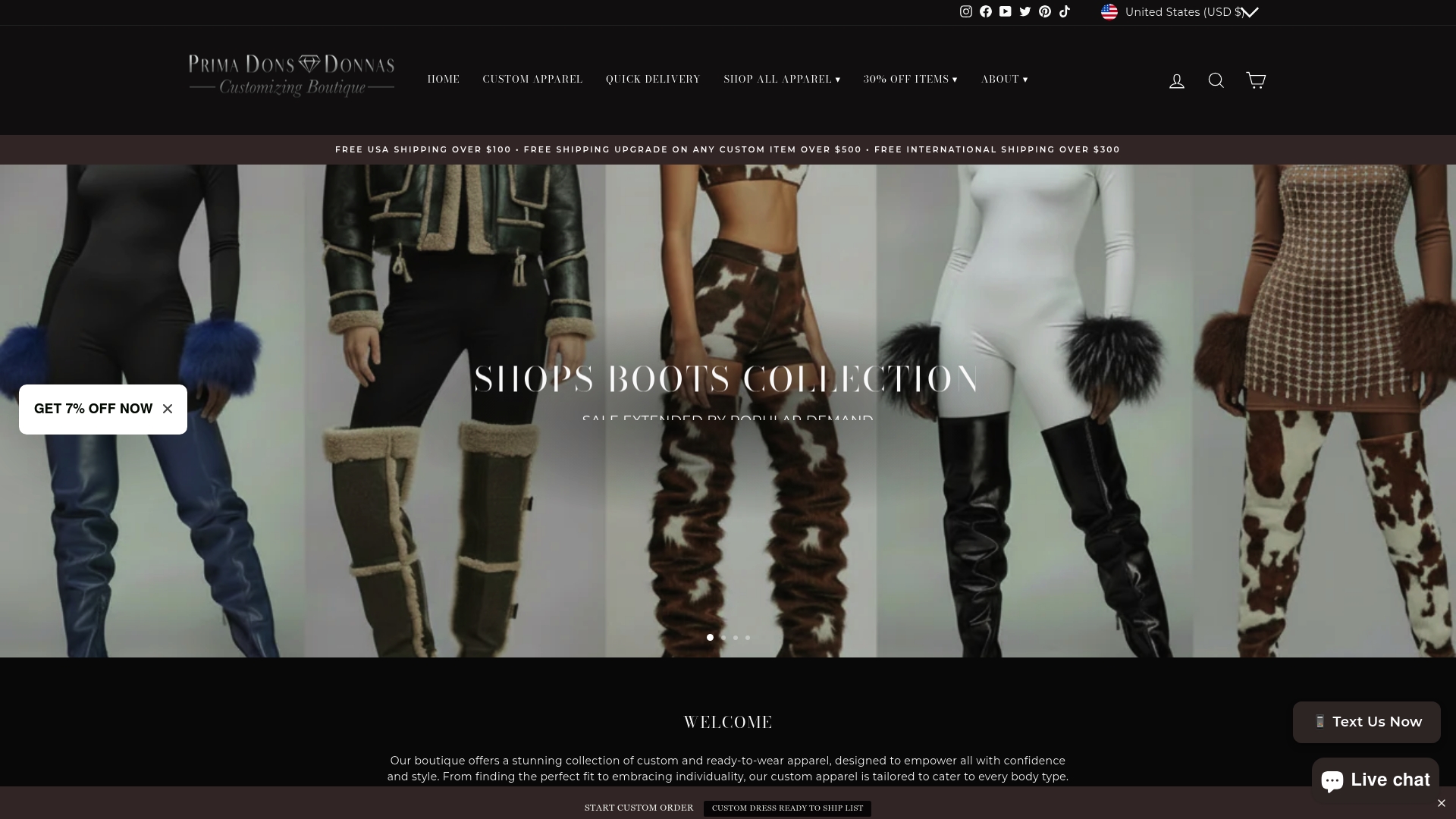
The faux fur and leather outerwear collection covers everything from statement full-length coats to shorter event jackets. For shoppers who want a piece built to exact measurements, the custom outerwear collection is the place to start. Ready-to-ship options are also available for faster delivery. Visit Primadonsanddonnas to browse current styles and place a custom order.
Sources
- Fur or Fake - FOUR PAWS in US - Global Animal Protection Organization
- Fake fur
- Why Is Fur—Real and Pretend—Everywhere Again? | Vogue
- Cites
FAQ
How do you tell if fur is real or faux?
Check the backing first: real fur sits on leather or skin, while faux fur attaches to a fabric or mesh base. The underwool check and wind test are also reliable non-destructive methods before attempting a burn test.
What are the downsides of faux fur?
Faux fur sheds microplastics during washing, is less biodegradable than natural fiber, and tends to mat or pill faster than real fur with heavy use. High-quality faux fur mitigates some of these issues but doesn’t eliminate them.
Is faux fur high quality?
Luxury and made-to-order faux fur has improved significantly. Dense pile construction, quality backing, and recycled fiber content are the markers of a well-made piece. Primadonsanddonnas’s made-to-order faux fur is built to custom measurements with specified fiber content.
Is faux fur still in style in 2026?
Yes. Vogue’s recent runway coverage confirms faux fur’s continued presence in designer collections, alongside vintage fur and lab-grown alternatives. Bold colors and sculptural silhouettes in faux fur are particularly strong for special-occasion and event styling.
Recommended
- What Is a Faux Fur Coat? | Stylish, Ethical & Cozy Outerwear Guide – Prima Dons & Donnas
- Faux Fur & Leather Coats, Jackets & Boots | Ethical Fashion – Prima Dons & Donnas
- The Luxe Look Without the Guilt: Faux Fur Mink Jackets Explained – Prima Dons & Donnas
- Faux fur fashion: Style, sustainability, and personalization – Prima Dons & Donnas


Leave a comment