

Runway to Street: Boots and Dresses, Plus Size Custom Fit
The fastest rule for how to match boots to a dress: pair boot height to hemline (higher hem, higher shaft) or lean tonal by matching boot color to the dress or tights for an elongated line. Ankle boots, Chelsea boots, knee-high boots, over-the-knee boots, and combat boots cover nearly every dress silhouette you own. The rest comes down to a handful of proportion tricks and a few formulas you can copy today.
TL;DR:
- Matching boot height to dress hemline improves proportion, with knee-high and over-the-knee boots ideal for shorter hemlines and midi-lengths.
- Ankle boots are the most versatile choice for casual daily outfits, while specific styles like Chelsea, combat, or western boots suit different dress silhouettes and occasions.
- Tonal color matching between dress and boots creates a sleek, elongated look, but contrasting textures and finishes add style and statement.
- Proper fit is critical for plus-size shoppers, requiring adjustable shafts or custom-made options to avoid gaping at the calf and ensure silhouette accuracy.
- Building a foundational boot wardrobe prioritized by versatility, with occasional trend pieces, supports long-term style flexibility and value.
Table of Contents
- How Do You Match Boots to a Dress by Style?
- How Does Dress Length Change Your Boot Choice?
- What Colors and Textures Work Best With Boots and Dresses?
- How Should Season and Occasion Change Your Pairing?
- Fit Guidance for Plus-Size and Curvy Shoppers
- How Do You Accessorize a Boots-and-Dress Look?
- How Do You Care for Boots You Wear With Dresses?
- How Do You Take a Boots-and-Dress Look From Day to Night?
- How Do You Adjust Boot Pairings for Different Body Types?
- Should You Chase Trends or Build a Timeless Boot Wardrobe?
- A Starter Wardrobe Checklist Worth Following
- Get the Fit Right With Made-to-Order Dresses and Boots
- Sources
- FAQ
How Do You Match Boots to a Dress by Style?
Boot styles fall into a few dependable categories, and each one changes the shape and mood of a dress in a predictable way. Once you know what each boot does to a silhouette, matching footwear with dresses stops being a guessing game.
Ankle boots hit right at or just above the anklebone, which is the most versatile cut for everyday dressing. They shorten the visible leg line slightly, so they read best with midi and mini hemlines rather than maxis. Pair a floral mini with pointed-toe ankle boots and a cropped jacket for brunch, or swap in a lug-sole ankle boot under a sweater dress for errands. WhoWhatWear’s rundown of boot types treats ankle boots as the anchor piece most closets should build around.
Chelsea boots have a sleek, elastic-sided profile that reads polished without trying hard. A slip dress with a leather Chelsea boot and a structured blazer is a reliable transition from desk to dinner.
Knee-high boots are the workhorse of fall and winter dressing. They pair naturally with midi dresses, closing the gap between hem and boot so no skin shows in cold weather. Try a knee-high boot with a ribbed sweater dress and a wide belt.
Over-the-knee (OTK) boots create the longest, leanest line of any boot style, which makes them ideal under minis and short shirtdresses. Runway and street-style pairings from fall 2025 showed slip and shirtdresses styled with glove-fit OTK boots for a polished, runway-to-street look, and the same source noted embellished dresses played well against croc-embossed boots for contrast.
Combat and moto boots intentionally rough up a delicate dress. Street-style editors consistently recommend contrasting a floaty floral or slip dress with a chunky combat boot, which keeps a party dress from feeling too formal for a concert or festival, according to Cosmopolitan’s boots-with-dresses roundup.
Cowboy and western boots bring a pointed toe and a stacked heel that works surprisingly well with sundresses and denim-adjacent looks. Lug-sole and platform boots add height without sacrificing comfort, a smart trade for all-day events. Riding boots, with their close, tall shaft, do double duty as knee-high boots for lending polish to sweater dresses and midis.
Quick formulas to copy:
- Mini dress + OTK boots + oversized blazer = date-night polish
- Midi sweater dress + knee-high or riding boots + wide belt = cold-weather brunch
- Slip dress + Chelsea boots + leather jacket = easy weeknight dinner
- Floral sundress + combat boots + denim jacket = concert-ready contrast
- Shirtdress + western boots + statement belt = weekend lunch date
How Does Dress Length Change Your Boot Choice?
Hemline dictates how much boot shaft should show, and getting that ratio wrong is the single most common styling mistake with dresses and boots.
- Mini dresses need a boot tall enough to avoid a bare, unbalanced thigh. Knee-high or OTK boots elongate the leg and cover the gap; short ankle boots on a mini can look unfinished unless you add tights.
- Midi dresses live or die on the gap between hem and boot shaft. A slit or a side vent lets you show a strip of skin or a cuffed sock peeking above a knee-high boot, which keeps the look intentional rather than accidental.
- Maxi dresses call for a “peek-a-boot” approach: let a low heel or pointed toe show at the hem so the boot registers as a style choice, not a mystery. A slight heel also keeps a long hem from dragging.
- Sweater and slip dresses behave differently even at the same length. A structured sweater dress can carry a soft, slouchy boot, while a floaty slip dress needs a more structured boot (think a stiff-shaft Chelsea or a sturdy combat boot) to keep the silhouette from reading as shapeless. Balancing volume this way, pairing structured with soft and soft with structured, is one of the most repeated tricks among stylists working with mixed proportions.
What Colors and Textures Work Best With Boots and Dresses?
Tonal dressing, matching your boot color to the dress or to your tights, creates a sleek, elongated line and is a favorite move for formal or office-adjacent occasions, according to InStyle’s dress-and-boot styling guide. It is the single easiest way to look intentional without overthinking an outfit.
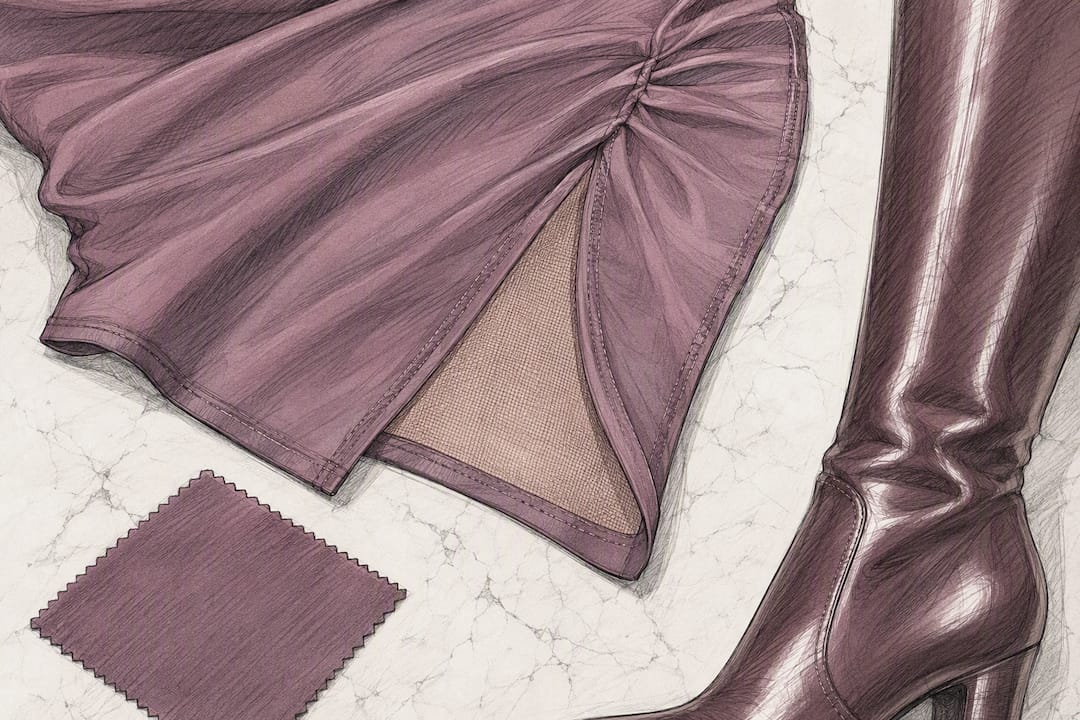
Contrast is the other lever. When you want the boots to be the outfit’s focal point, break the tone: a black leather boot under a cream dress, or a snakeskin boot against a solid neutral. Vogue’s fall styling notes point to leather and croc-embossed finishes as the dressiest textures, suede as the natural match for knitwear, and metallic or snakeskin prints acting like a statement neutral that goes with almost anything.
Material pairing rules worth memorizing:
- Suede boots + knit or sweater dresses = soft, cohesive fall texture
- Leather or patent boots + slip or satin dresses = evening polish
- Croc-embossed boots + simple solid dress = instant elevation
- Printed dress + solid neutral boot pulled from the pattern = no color clash
Pro Tip: If your dress has a busy print, pull one neutral color out of the pattern (black, tan, or white) and match your boot to that shade. It reads as coordinated even when nothing else in the outfit matches exactly.
How Should Season and Occasion Change Your Pairing?
Boots are seasonal workhorses. Ankle boots work nearly year-round, while knee-high and over-the-knee styles dominate fall and winter, and lighter suede or fabric boots ease dresses into the shoulder seasons.
Occasion changes the calculation as much as weather does:
- Work: tonal knee-high or ankle boots, low block heel, minimal hardware
- Wedding guest or formal event: sleek leather or suede OTK boots, moderate heel, tonal to the dress
- Brunch or lunch date: ankle boots or Chelsea boots, comfortable flat or kitten heel
- Concert: combat or lug-sole boots for standing and contrast against a soft dress
- Rain or cold: waterproof or treated leather over suede, which stains and watermarks easily
Layer tights under minis and midis in cold months, add a slouchy sock over an ankle boot for texture, and finish rainy-day looks with a weatherproof coat rather than risking a delicate fabric.
Fit Guidance for Plus-Size and Curvy Shoppers
Height is not the only measurement that matters. Shaft width and boot opening affect the silhouette just as much as how tall the boot sits, and a shaft that gaps at the calf undercuts an otherwise perfect pairing, according to plus-size boot guide.
Fit priorities worth checking before you buy:
- Measure calf circumference at its widest point, not just boot height
- Look for adjustable shafts or zipper garter styles that flex to fit
- Add structure at the waist (a belt or defined seam) when the dress is soft and floaty
- Keep the boot shaft simple when the dress already has embellishment or volume
Custom shaft circumference avoids the gapping that throws off an otherwise well-planned outfit, and it preserves the exact silhouette you meant to create in the first place.
Prima Dons and Donnas’ made-to-order dress collection and zipper garter heel boots solve this directly. Adjustable garter straps let you fine-tune shaft and heel fit across different dress lengths instead of settling for a standard size that fits nowhere perfectly. For deeper guidance on proportion, the brand’s over-the-knee boots for curvy figures guide is worth a read before you shop.
How Do You Accessorize a Boots-and-Dress Look?
Bags, hats, and jewelry either finish the outfit or fight it, and the safest rule is to let one element lead. If your boots are the statement (croc-embossed, OTK, a bold western style), keep jewelry minimal and let a simple crossbody bag do the work. If your dress is doing the talking, a structured top-handle bag and a few delicate pieces round things out without competing.
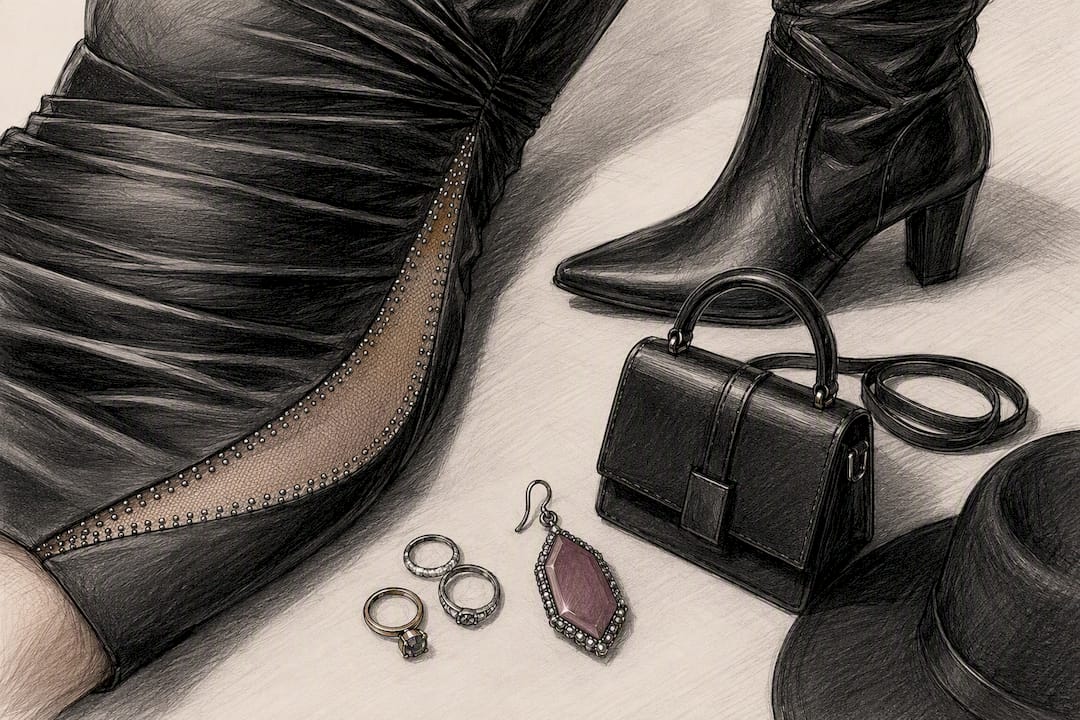
Hats add the most impact in transitional weather: a wide-brim felt hat with knee-high boots and a midi dress reads effortlessly put-together for fall, while a structured cap works with combat boots for a concert look. Jewelry should scale with formality. Stack thin gold rings and small hoops for daytime pairings, then move to a statement necklace or drop earrings when boots and dress shift into evening territory. Ezra Gems’ roundup of trendy jewelry styles is a useful reference if you are rebuilding a jewelry box to match new boot-and-dress combinations.
Belts deserve a mention too. A wide belt over a sweater dress ties into the boot’s leather or suede finish and keeps a loose silhouette from swallowing your shape.
How Do You Care for Boots You Wear With Dresses?
Boots worn against bare legs or thin tights take more visible wear than boots worn with pants, since scuffs and salt stains show against a clean hemline. Wipe leather boots down after every wear with a soft cloth, and condition them every few weeks in dry winter months to prevent cracking at the ankle crease, the spot that flexes most when you walk in a dress.
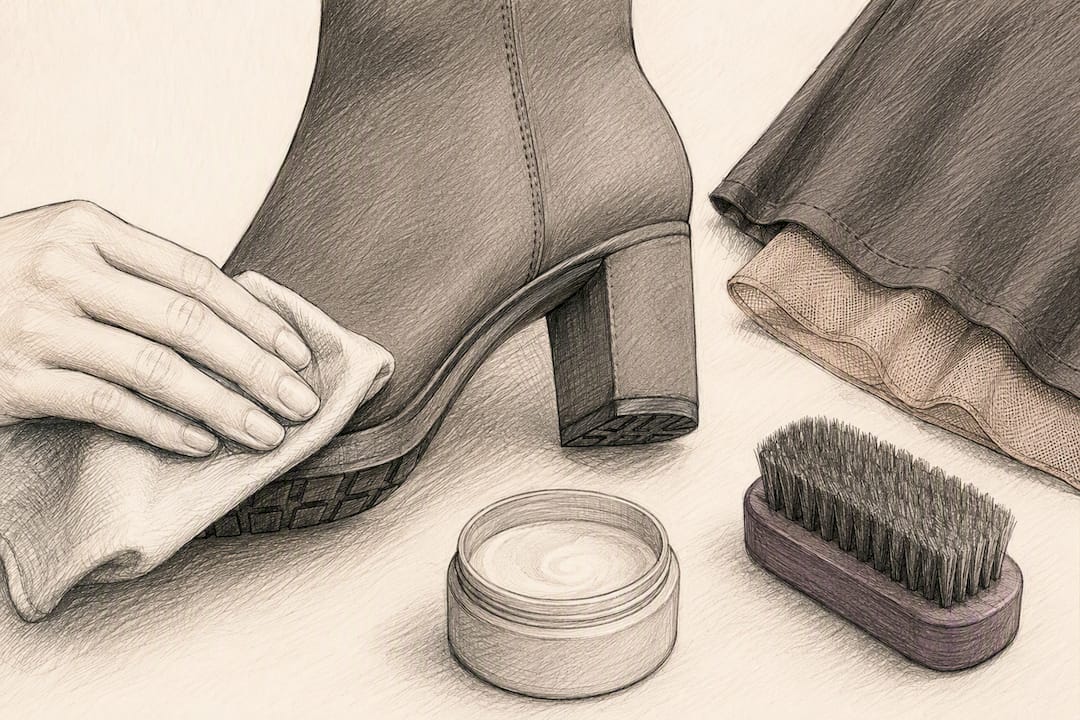
Suede needs a different approach. Brush it with a suede brush after each wear to lift dirt before it sets, and treat it with a waterproofing spray before the first wear of the season, since suede stains permanently in rain or snow. Store boots upright with boot shapers or rolled magazines inside the shaft to prevent creasing, especially for OTK and knee-high styles that collapse if left flat.
Rotate your boots rather than wearing the same pair daily. Letting leather rest for a day between wears helps it hold its shape longer, which matters more with dress-and-boot looks since the boot is often the visual anchor of the outfit. A quick polish before a formal event takes minutes and makes the difference between a boot that looks intentional and one that looks tired next to a clean dress silhouette.
How Do You Take a Boots-and-Dress Look From Day to Night?
The fastest transition trick is swapping one component, not the whole outfit. Keep the dress and boots exactly as they are for daytime, then change the jacket, bag, and jewelry for evening.
A daytime lunch look, say, a midi shirtdress with Chelsea boots and a denim jacket, moves into evening by dropping the jacket, adding a leather moto jacket or nothing at all, and swapping a crossbody for a small clutch. Add a bolder lip and a statement earring, and the same boots that felt casual at noon read as edgy by dinner.
For dressier transitions, like a wedding-guest outfit that needs to work for a daytime ceremony and an evening reception, tonal dressing helps carry the look through both settings without a full change. A cream midi dress with tonal suede OTK boots reads appropriate for a garden ceremony, then a swap to a metallic clutch and a stacked bracelet carries it into reception hours. Concert-to-after-party transitions work the opposite way: start with combat boots and a denim jacket, then strip the jacket and add a slip of jewelry to dress the same base outfit up for a late set or after-show plans.
How Do You Adjust Boot Pairings for Different Body Types?
Height and leg shape change how a boot cut should sit as much as dress length does. Shorter frames generally benefit from a boot that matches or nearly matches the dress color, since a strong color break at the ankle can visually shorten the leg. Taller frames have more room to experiment with contrast and chunkier lug soles without the outfit feeling top-heavy.
Leg shape matters too. Straighter legs can wear a snug-shaft boot at almost any height, while curvier calves often look more balanced in a boot with a slightly looser or adjustable shaft, which avoids the squeezed look a too-narrow boot creates. For a full breakdown of styling OTK boots on curvier legs, the over-the-knee boots for curvy figures guide covers heel height and shaft width in more detail than a quick tip list can. Petite frames also benefit from a slightly higher heel on the boot itself, since even an inch of lift keeps a midi or maxi from overwhelming a shorter torso to leg ratio.
Should You Chase Trends or Build a Timeless Boot Wardrobe?
Trend pieces (a specific print, an ultra-chunky lug sole, this season’s boot color) are worth buying only in small, low-cost doses, since their moment passes fast. Timeless combinations, black knee-high boots with a tonal midi, tan ankle boots with a slip dress, hold up wear after wear because they solve a proportion problem rather than chase a look.
A smart split treats trends as accessories to a timeless base. If you already own reliable ankle boots and a knee-high pair in a neutral, a single trend boot (a bold western style, a croc-embossed pair) adds range without leaving your closet full of one-season purchases. Editors consistently point back to the same core boot types, ankle, Chelsea, knee-high, OTK, combat, western, lug, and riding, as the ones that outperform trend cycles because they flex across nearly every dress silhouette you own.
A Starter Wardrobe Checklist Worth Following
If you are building a boot collection from scratch, prioritize in this order: versatile ankle boots first, black knee-high boots second, one tonal casual pair third, and a single statement boot last. That order covers work, weekend, and event dressing before you spend a dollar on anything purely trend-driven.
Custom-made options earn their price when standard sizing has failed you before, particularly around calf width or heel comfort, since a boot that fits the shaft correctly changes how an entire outfit sits. Ready-to-wear works fine for low-stakes trend pieces. For the boots you will wear constantly, invest in fit first. A pair that fits right gets worn for years; a pair that almost fits gets worn twice and abandoned.
— Latoya
Get the Fit Right With Made-to-Order Dresses and Boots
Standard sizing forces most shoppers to choose between the right hem length and the right calf width, and that trade-off is exactly what Primadonsanddonnas eliminates. Every dress and boot can be built to your measurements instead of the other way around, so the tonal dressing and proportion rules above actually work on your body, not just the model’s.
The made-to-order dress collection covers everything from slip dresses to sweater dresses in any size or color, which means you can commission the exact hem length a particular boot pairing calls for. The boots collection includes plus-size and custom shaft options, so a knee-high or over-the-knee boot fits the calf it is meant for instead of gapping at the top. Cold-weather looks round out with the custom outerwear collection for coats and jackets built to layer over your dress-and-boot combination.
Start by browsing the boots collection for your next event and pair it with a made-to-order dress in a tonal shade for the elongated look stylists keep recommending.
Sources
- 10+ Dress and Boot Combos to Wear All Fall Long — Vogue
- 14 Ways to Pair Dresses and Boots All Year Round — InStyle
- 10 best boots to wear with dresses — WhoWhatWear
- Dresses with boots — Cosmopolitan
FAQ
What Boots Look Good With a Dress?
Ankle boots suit minis and midis, knee-high and over-the-knee boots elongate the leg under short hems, and combat or western boots add contrast to soft, floaty dresses.
Which Boots Look Best With Dresses for Formal Occasions?
Tonal leather or suede knee-high and over-the-knee boots in a color matching the dress create the most polished, elongated line for weddings and formal events.
What Is the 3-3-3 Rule for Clothes?
The 3-3-3 rule is a packing and outfit-planning method where you build looks from 3 tops, 3 bottoms, and 3 pairs of shoes (or a similar small set), which works well for planning a small boot-and-dress capsule for travel or a busy week.
Are Boots in Fashion for 2026?
Boots remain a core seasonal category rather than a passing trend, with runway and street-style coverage consistently pairing them with dresses across fall and winter collections.
Can You Wear Boots With a Sundress?
Yes, ankle boots or western boots pair well with sundresses for a casual-to-dressy shift, especially when the boot color pulls a neutral tone from the dress’s print.


Leave a comment