

Personalized Footwear Workflow: Your Complete 2026 Guide
TL;DR:
- A personalized footwear workflow combines digital scanning, validated models, and sustainable materials to create custom shoes. It separates fit and aesthetic customization, reducing errors and waste, while ensuring precise fit and style control. The process emphasizes alignment between digital design and factory production, supporting sustainable, made-to-order manufacturing.
A personalized footwear workflow is the process by which custom shoes are designed, fit-optimized, and produced to meet individual style and comfort needs. This process combines digital foot scanning, 3D configurators, and sustainable material selection with traditional shoemaking craft. The result is footwear that fits your exact measurements, reflects your personal style, and supports responsible production. Whether you are shopping for a special occasion, a wedding, or everyday wear in a plus size, understanding this workflow puts you in control of every decision before a single shoe is made.
What tools and prerequisites does a personalized footwear workflow require?
A successful custom shoe design workflow starts with the right tools, not just good intentions. Three categories matter most: digital scanning technology, validated base models, and a curated material library tied to real suppliers.
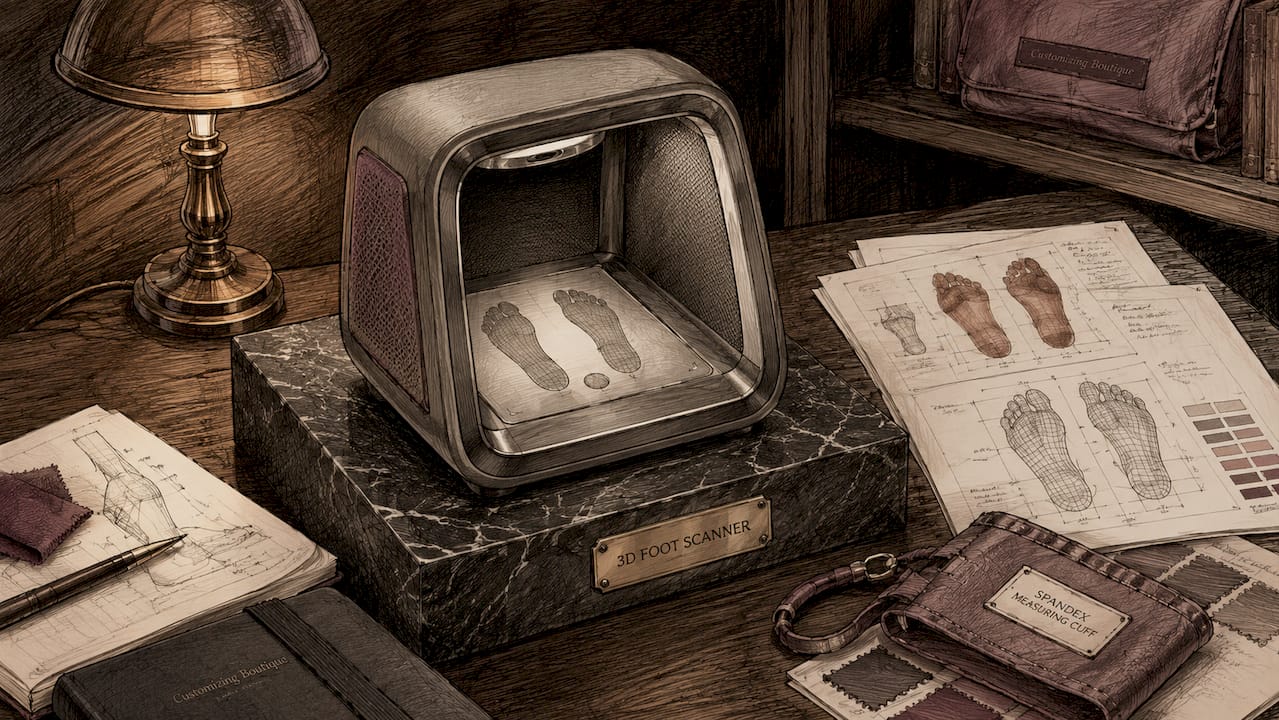
Digital foot scanning captures the exact shape, length, width, and arch profile of your feet. Consumer-grade 3D scanning apps now run on smartphones, while professional orthopaedic clinics use structured-light scanners for medical-grade accuracy. Either method feeds precise data into the design platform, replacing the guesswork of standard sizing.
Validated base models are the structural templates a shoe is built on. A base model defines the last shape, sole construction, and upper attachment points. Choosing a validated model means the factory already knows how to build it. This keeps production stable and avoids costly prototyping errors.
Sustainable material libraries connect digital swatches to real-world suppliers. Digitized material libraries map leather, mesh, knit, and outsole options to their actual mechanical and visual properties. That connection means what you see on screen matches what arrives at your door.
| Tool Category | Function | Example Inputs |
|---|---|---|
| 3D foot scanner | Captures precise fit data | Length, width, arch height |
| Base model library | Defines buildable shoe structures | Last shape, sole type |
| Material library | Links digital swatches to suppliers | Leather, mesh, eco-knit |
| 3D configurator | Previews design combinations | Color, texture, hardware |
| Artisan finishing | Refines fit beyond digital data | Manual padding, stretching |
- Confirm your scanning tool exports data in a format the design platform accepts.
- Choose base models with at least one production run behind them.
- Ask whether the material library links to verified suppliers before committing to a design.
Pro Tip: Request a digital material sample card before finalizing your shoe design. Seeing the texture, sheen, and color accuracy on a rendered 3D model prevents surprises when the physical shoe arrives.
How do customers navigate the custom shoe design and fit process?
The custom shoe design process works best when fit and aesthetics are handled as two separate flows. Effective interface design separates foot scanning from aesthetic customization to reduce user errors and improve data accuracy. Mixing the two in one screen overwhelms customers and produces bad fit data.
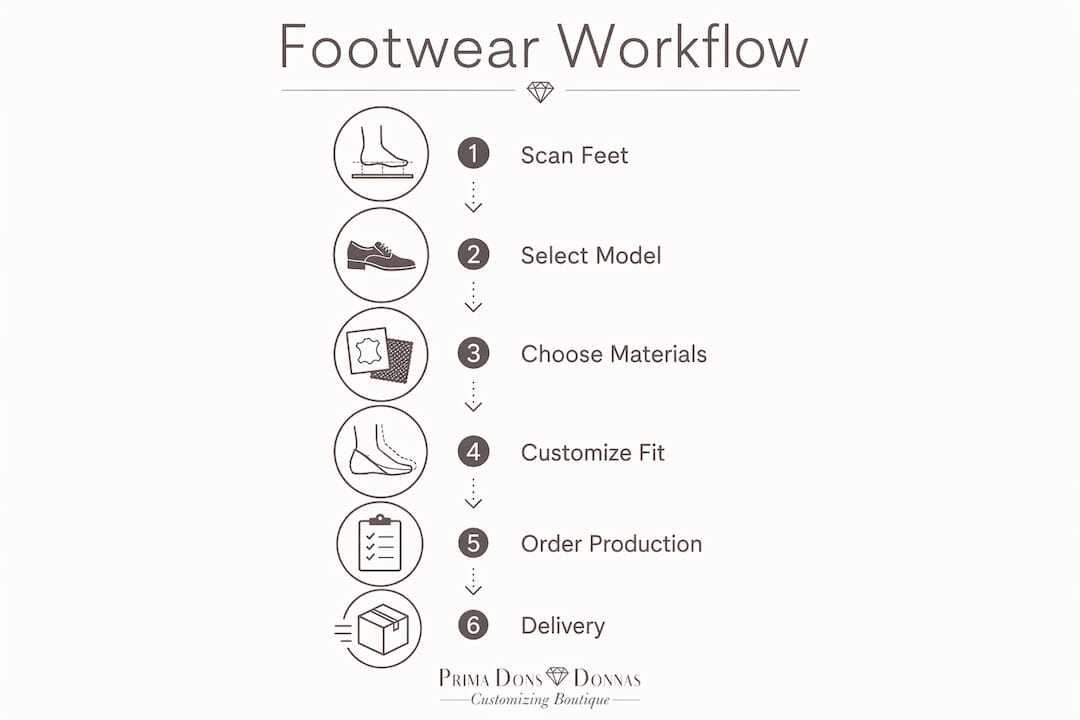
Here is the standard step-by-step sequence for a well-built shoe customization workflow:
- Foot scan upload. Submit your scan file or enter manual measurements. The platform converts this data into a digital foot profile.
- Base model selection. Choose a shoe structure that matches your intended use, such as a boot for a concert or a heel for a wedding.
- Aesthetic customization. Select colors, materials, hardware, and embellishments using the 3D configurator. One manufacturer reported 573 possible combinations from just 31 base models. That scale eliminates the need for thousands of physical samples.
- Fit adjustment. Apply width modifications, arch support preferences, and toe box adjustments based on your scan data.
- Design review and price confirmation. The platform displays a real-time price update and a final 3D preview before you place the order.
Common pitfalls to avoid during this process:
- Skipping the foot scan and relying on standard size alone. Standard sizing misses width and arch variation.
- Choosing a base model that has not been production-tested. Untested lasts create fit inconsistencies.
- Ignoring real-time price updates during customization. Material upgrades add cost quickly.
Pro Tip: If the platform allows it, save multiple design versions before committing. Comparing a bold color choice against a neutral one side by side on the 3D model saves you from post-order regret.
You can find a detailed walkthrough of this ordering sequence in the step-by-step custom footwear guide from Primadonsanddonnas.
What sustainable materials are integral to personalized footwear workflows?
Sustainable material choice is not a bonus feature in bespoke footwear production. It is built into the workflow from the start. Digitized sustainable material libraries link every digital swatch to a real supplier, so eco-friendly selections are production-ready, not just decorative.
The most common sustainable material categories in personalized shoe manufacturing include:
- Vegetable-tanned leather. Processed without heavy metals, it biodegrades faster than chrome-tanned alternatives.
- Recycled mesh and knit uppers. Made from post-consumer plastic bottles, these materials reduce landfill waste while keeping shoes lightweight.
- Natural rubber outsoles. Sourced from certified plantations, they outperform synthetic rubber in durability and biodegradability.
- High-quality faux fur. A cruelty-free alternative to animal fur, used by Primadonsanddonnas for statement outerwear and footwear trim.
- Cork midsoles. Harvested without cutting the tree, cork is renewable, lightweight, and naturally antimicrobial.
| Material | Eco Benefit | Best Use |
|---|---|---|
| Vegetable-tanned leather | No heavy metal processing | Dress shoes, boots |
| Recycled mesh | Diverts plastic waste | Athletic and casual uppers |
| Natural rubber | Renewable, biodegradable | Outsoles |
| Faux fur | Cruelty-free | Trim, lining, statement pieces |
| Cork | Renewable, antimicrobial | Midsoles, insoles |
Made-to-order production amplifies these benefits. Because each shoe is built after the order is placed, there is no overstock, no unsold inventory, and no mass disposal of surplus product. A base SKU plus personalization attachments model keeps production recipes stable while avoiding the creation of thousands of unique physical variants. Less waste enters the supply chain at every stage.
For a deeper look at how bold style and sustainability intersect, the custom footwear sustainability guide from Primadonsanddonnas covers current material trends in detail. Retail businesses implementing personalized apparel workflows follow the same material-first logic across clothing and footwear categories.
What production processes turn a digital design into a physical shoe?
The gap between a finished digital design and a wearable shoe is where most custom workflows either succeed or fail. Closing the digital-to-production loop means aligning 3D digital twins, Tech Packs, and Bills of Materials with factory production before the order is accepted. This alignment prevents expensive last-minute changes on the factory floor.
Key production steps in a well-run personalized shoe manufacturing workflow:
- Digital twin validation. The 3D model undergoes tension, wrinkle, and volume checks before production begins. This step catches fit problems that would otherwise appear only in a physical sample.
- Tech Pack generation. A Tech Pack translates the digital design into factory-readable instructions: material specs, stitch counts, hardware placements, and sole bonding details.
- Bill of Materials confirmation. Every component is sourced and confirmed before cutting begins. This prevents mid-production substitutions that change the shoe’s feel or appearance.
- Artisan finishing. Master orthopaedic shoemakers confirm that final fitting involves manual adjustments that go beyond what digital scanning captures. Subtle padding, edge finishing, and last stretching are done by hand.
- Quality check and delivery. The finished shoe is inspected against the original digital design before shipping.
Production timelines vary by complexity. Custom orthopaedic shoes can be produced in as few as 15 working days using digital configurators. Fashion-forward custom designs with complex material combinations may run longer depending on supplier lead times.
Made-to-order production also removes the need for large inventory buffers. Each pair is built for one customer, which means zero unsold stock and a direct line between the design decision and the finished product.
How does a custom shoe workflow improve style and customer experience?
Custom footwear design delivers benefits that go well beyond aesthetics. Combining digital customization with artisanal shoemaking produces shoes that fit precisely, last longer, and reflect a customer’s individual identity in ways that off-the-shelf options cannot match.
The practical benefits include:
- Reduced foot pain. Shoes built to your exact measurements eliminate pressure points caused by standard width and length assumptions. The made-to-order footwear benefits guide from Primadonsanddonnas covers this in detail.
- Design control. You choose every element, from the outsole color to the lining material, so the finished shoe reflects your taste, not a trend forecast.
- Occasion-specific fit. A heel designed for a wedding reception differs from a boot built for a winter concert. Custom workflows let you specify the use case from the start.
- Plus-size and wide-width accommodation. Standard sizing excludes a significant portion of customers. Custom workflows treat every foot shape as a valid starting point.
- Post-purchase support. Many custom brands offer fitting consultations after delivery to address minor adjustments.
Pro Tip: When ordering custom shoes for a special occasion like a wedding or gala, place your order at least six weeks in advance. This gives the production team time to complete artisan finishing without rushing the quality check.
Primadonsanddonnas applies this same philosophy to its full collection. Bold style, precise fit, and sustainable materials are the standard, not the exception, across every made-to-order option.
Key Takeaways
A personalized footwear workflow succeeds when digital precision, sustainable materials, and skilled craftsmanship work together from the first scan to the final fitting.
| Point | Details |
|---|---|
| Start with accurate foot data | Use 3D scanning or precise manual measurements before selecting any base model. |
| Separate fit from aesthetics | Handle foot scanning and design customization as two distinct steps to reduce errors. |
| Choose materials tied to real suppliers | Digitized material libraries only add value when linked to verified production sources. |
| Close the digital-to-production loop | Align 3D twins, Tech Packs, and BOMs with the factory before accepting any order. |
| Made-to-order reduces waste | Building each shoe after purchase eliminates overstock and supports sustainable production. |
What I have learned from watching custom footwear workflows evolve
The biggest mistake I see customers make is treating the digital configurator as the whole process. It is not. The configurator is the front door. What happens behind it, the Tech Pack, the artisan finishing, the material sourcing, determines whether the shoe actually fits and lasts.
Technology has made personalization faster and more accessible. A 3D configurator that once required a design agency can now run in a browser. But the brands that produce the best results are the ones that have not replaced their shoemakers. They have given those shoemakers better data to work with. The combination of a precise digital scan and an experienced hand during final fitting is what separates a truly custom shoe from a mass-produced shoe with a custom label on it.
Sustainability is the other area where I see a real shift. Customers are asking better questions now. They want to know where the leather comes from, whether the outsole is recyclable, and how much waste the production run generates. Made-to-order answers most of those questions by design. No overstock means no disposal. That is a structural advantage that fast fashion cannot replicate.
My honest advice: prioritize brands that show you the material supply chain, not just the material name. And if a brand cannot tell you how long production takes, that is a signal worth paying attention to.
— Latoya
Primadonsanddonnas: made-to-order footwear and apparel
Primadonsanddonnas builds every piece after you order it. That means your size, your color, and your style, with no compromise on fit or quality.
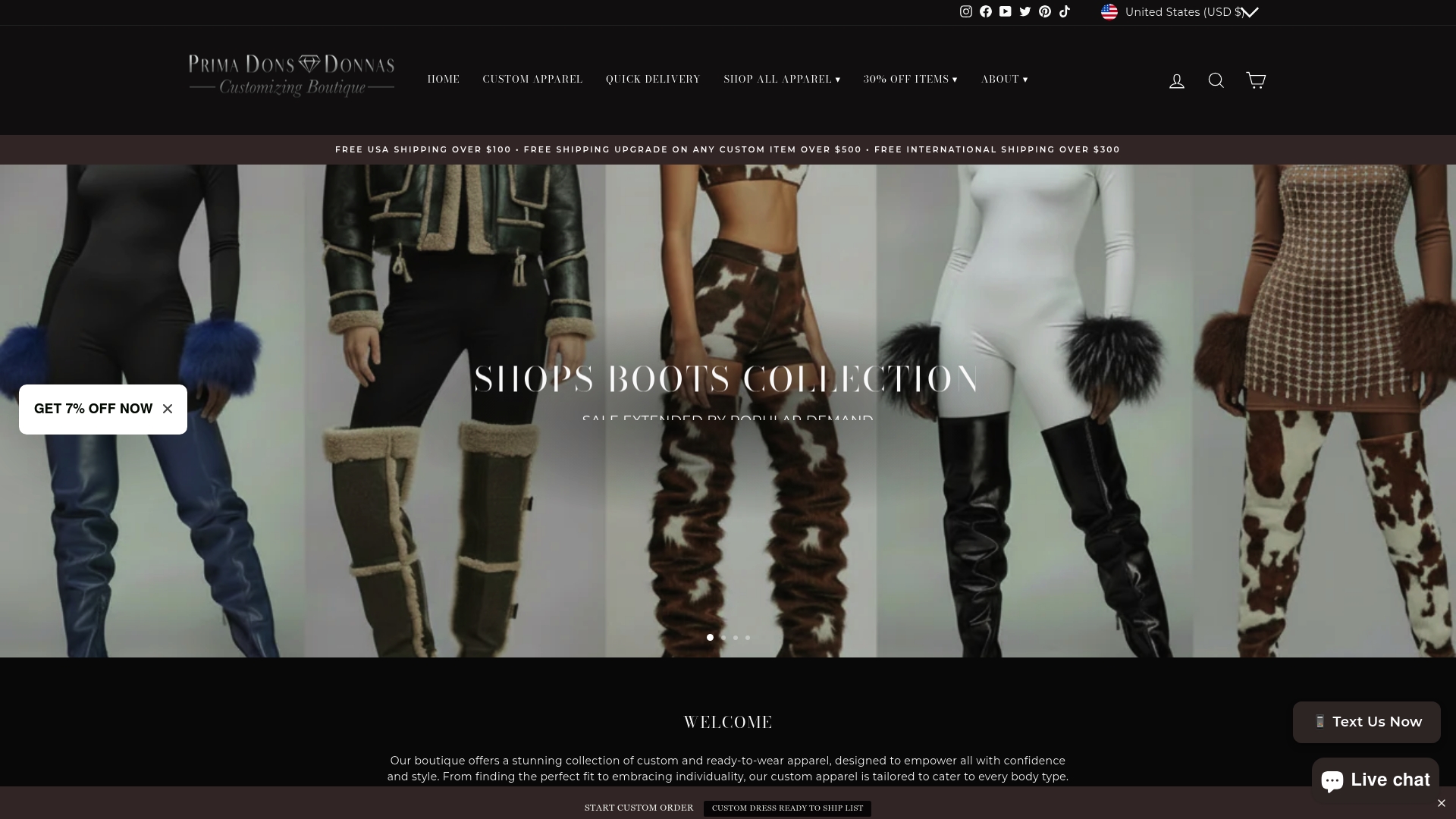
The custom boots collection covers thigh-high styles, plus-size fits, and statement designs built for concerts, parties, and special occasions. For a full wardrobe moment, the made-to-order dress collection pairs directly with custom footwear for weddings, lunch dates, and events. Every order is tailored to your measurements. Ready-to-ship options are also available for customers who need a faster turnaround. Shop the full custom apparel range at Primadonsanddonnas.
FAQ
What is a personalized footwear workflow?
A personalized footwear workflow is the end-to-end process of designing, fitting, and producing custom shoes using digital tools and artisan craftsmanship. It typically includes foot scanning, base model selection, material choice, and production alignment before manufacturing begins.
How long does custom shoe production take?
Custom orthopaedic shoes can be produced in 15 working days using digital configurators. Fashion-focused made-to-order designs may take longer depending on material sourcing and finishing complexity.
Why does separating fit and design customization matter?
Research on footwear interface design shows that separating foot scanning from aesthetic customization reduces user errors and improves data accuracy. Combining both in one step leads to higher abandonment rates and less reliable fit data.
Are made-to-order shoes more sustainable than standard shoes?
Made-to-order production eliminates overstock by building each pair only after purchase. This removes surplus inventory from the supply chain and reduces material waste compared to mass production runs.
Can custom footwear workflows accommodate plus sizes and wide widths?
Custom workflows treat every foot shape as a valid starting point, so plus sizes and non-standard widths are standard inputs, not exceptions. Brands like Primadonsanddonnas build footwear and apparel to any size or measurement by design.
Recommended
- Your Guide to Personalized Footwear: Style, Fit & Sustainability – Prima Dons & Donnas
- Custom footwear: bold style meets sustainability in 2026 – Prima Dons & Donnas
- How to order made-to-measure footwear in 2026 – Prima Dons & Donnas
- Personalized Footwear: Style, Fit & Sustainability Guide – Prima Dons & Donnas


Leave a comment