

Sheer Dress Undergarments: Your Complete Style Guide
For full coverage under a sheer dress, a slip or seamless bodysuit is your best starting point. For mid-level coverage, pair high-waist shorts with a bralette or a seamless brief with a bandeau. For minimal coverage, silicone nipple covers or a thong with a bralette handle the job cleanly.
Here’s what to check before you buy any sheer dress undergarments:
- Seamless construction: No raised seams or stitched edges that print through fabric
- Color match: Skin-tone nude, not default beige (more on this below)
- Strap style: Matches or disappears under the neckline of your specific dress
- Fabric weight: Lightweight microfiber or silk reads flat; thick cotton or lace can create bulk
The right choice depends on your dress fabric, the occasion, and how much of the underlayer you want to show. The sections below map each option to each situation.
Key Takeaways
The right sheer dress undergarment depends on your coverage goal, dress fabric, and occasion, with skin-tone color matching and seamless construction being the two non-negotiable fit rules across all options.
| Point | Details |
|---|---|
| Coverage by category | Full slip or bodysuit for complete coverage; high-waist shorts plus bralette for mid; nipple covers or thong for minimal. |
| Color rule | Match your skin tone, not default beige; test two nude shades in natural light before the event. |
| Single fit check | Walk, sit, and bend near a window before leaving home to confirm hem, straps, and waistband all stay in place. |
| Occasion drives the choice | Conservative events call for a full slip or liner; casual and evening looks allow coordinated sets or adhesive solutions. |
| Primadonsanddonnas custom option | Made-to-order slips and liners in any size, color, and fabric weight, with ready-to-ship pieces for faster delivery. |
Table of Contents
- What are the best sheer dress undergarments for every coverage level?
- How do you match underlayers to your dress fabric and cut?
- Which bra or bust solution works best under a sheer dress?
- When does shapewear make sense under a sheer dress?
- How do you choose color, fabric, and fit so underlayers stay invisible?
- How do you style sheer dresses for weddings, concerts, and dates?
- How do you fix common fit problems with sheer dress underlayers?
- Why a custom slip or liner solves fit problems that off-the-rack can’t
- Why intentional underlayers matter more than most guides admit
- Primadonsanddonnas has custom and ready-to-ship options for sheer dresses
- Sources
- FAQ
What are the best sheer dress undergarments for every coverage level?
Glamour’s editorial testing confirms slips and bodysuits as the most versatile sheer dress undergarments across fabric types and occasions. Here’s how the full category list breaks down by coverage level.
Full coverage: slips, slip dresses, and bodysuits
A full-length slip or slip dress worn underneath gives complete coverage from bust to hem. It works especially well under non-fitted sheers like chiffon maxi dresses or embroidered lace pieces where you need opacity without clinging. A seamless bodysuit (full or shortie length) is the single-piece alternative: no separate top and bottom to shift around, no waistband gap.

Marelia’s practical guide notes that bodysuits are the go-to for a clean, single-piece silhouette, while slips add opacity without bulk for daytime or conservative events.
Best for: Wedding guests, formal dinners, conservative workplaces, plus-size fits where a single smooth layer matters most.
Mid coverage: high-waist shorts, bralette sets, and bandeaus
High-waist bike shorts or shaping shorties paired with a bralette cover the core without adding length. A coordinated bralette and brief set reads as intentional styling when the sheer fabric is plain. A bandeau with matching panties keeps the bust low-profile while letting the dress’s print or texture stay visible.
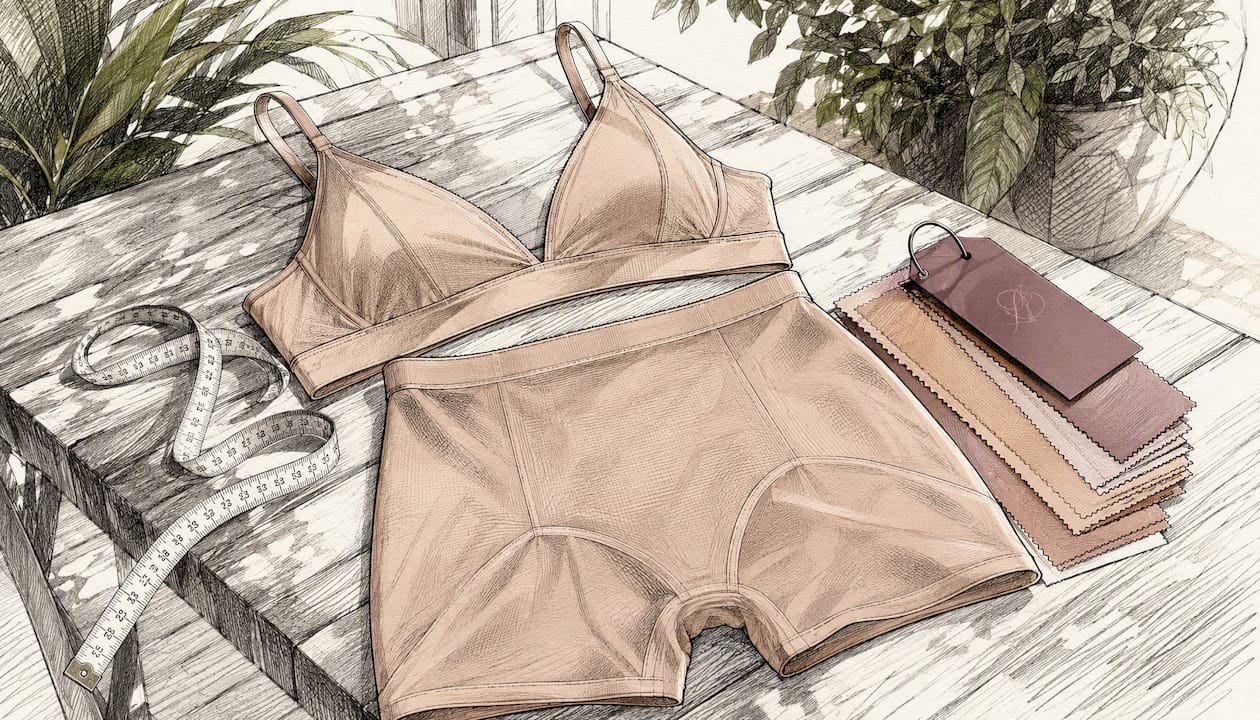
Stylight’s roundup lists bike shorts plus bralettes as a recurring sporty-luxe option that translates sheer dresses into daywear or concert looks.
Best for: Concerts, daytime brunch, date nights, casual parties.
Minimal coverage: nipple covers and thong sets
Lingerie experts at Marie Claire Australia recommend silicone nipple covers or adhesive cups when minimal coverage is the goal. A seamless thong eliminates visible panty lines without adding fabric. This combination works when the dress has enough embellishment or opacity in strategic areas, and you want the sheer effect to read as intentional.
Best for: Evening events, fashion-forward parties, embellished or heavily textured sheers.
How do you match underlayers to your dress fabric and cut?
Fabric density changes everything. Fine mesh needs more coverage than embroidered lace, which already has built-in opacity in its pattern. Chiffon sits somewhere in between: lightweight but often layered by the designer.
Fabric type guide
| Dress fabric | Opacity level | Recommended underlayer |
|---|---|---|
| Fine mesh | Very sheer | Full slip or seamless bodysuit |
| Chiffon | Semi-sheer | Half-slip or high-waist shorts + bralette |
| Embroidered lace | Patterned opacity | Seamless brief + bandeau or nipple covers |
| Crochet | Open weave | Fitted slip dress or bike shorts + bralette |
| Embellished/beaded | Varies by placement | Nude seamless brief + adhesive cups |
| Sheer georgette | Very sheer | Full slip or slip dress |
Neckline and back rules
- Plunge neckline: Adhesive cups or a plunge bralette; avoid any bra with a center gore that shows
- Halter neck: Backless adhesive bra or nipple covers; traditional straps will show
- Backless: Silicone tape or adhesive cups only; no band across the back
- Strapless: Strapless bralette or bandeau; check that the band sits below the dress’s neckline
Hem length rules
A mini sheer dress pairs well with bike shorts or high-waist briefs that stop at or above the hem. A midi works with a half-slip cut 1–2 inches shorter than the dress. A maxi needs a full-length slip or slip dress to prevent the underlayer hem from showing mid-stride.
Pro Tip: Before leaving home, walk, sit, and bend in natural light near a window. If the underlayer hem peeks below the dress hem when you walk, the slip is too long or the dress is shorter than you measured.
Dos and don’ts checklist
- Do choose a slip 1–2 inches shorter than the dress hem
- Do test in natural light, not just indoor lighting
- Don’t wear thick cotton briefs under fine mesh; the texture prints through
- Don’t use a heavily embellished bralette under a heavily embellished dress; the layers compete
- Don’t assume black underwear disappears under dark sheer fabric; it often reads darker and more visible than nude
Which bra or bust solution works best under a sheer dress?
The bust solution you pick depends on three things: the neckline, how much support you need, and whether you want the bra to be part of the look or invisible.
- Adhesive cups / silicone nipple covers: Maximum freedom, no straps, no band. Best for backless, halter, and deep-plunge necklines. Support is light to moderate; not ideal for larger cup sizes without additional silicone tape. SweeTee Beauty carries adhesive nipple covers and bra solutions designed for exactly this use case.
- Strapless bralette or bandeau: Low-profile support with a soft band. Works under most necklines except very deep plunges. Choose a silicone-lined band to prevent slipping.
- Bralette (strappy or lace): When you want the lingerie to be part of the look. Pairs best with plain sheer fabrics where the bralette reads as intentional styling. Avoid under heavily patterned sheers where it competes visually.
- Convertible bra: Adjustable straps (halter, cross-back, strapless) give flexibility across necklines. Choose a seamless, unpadded cup to minimize bulk under fine fabric.
- Built-in cups: Some slip dresses and bodysuits include sewn-in cups. Convenient, but check the cup size range before ordering.
Pro Tip: For larger cup sizes needing support under a backless or plunge neckline, layer silicone tape under an adhesive cup for extra lift. Run the tape from the side of the breast upward toward the shoulder, not straight across, for a more natural shape.
When to match the bra to the brief: if the sheer fabric is plain and lightweight, a coordinated set reads as a deliberate styling choice. When to conceal: if the dress has heavy embellishment, a pattern, or a structured silhouette, keep the underlayer simple and skin-tone matched.
When does shapewear make sense under a sheer dress?
Shapewear adds a layer of smoothing and control, but it also adds fabric density. Under fine sheer, that density can create its own visible lines if the shapewear isn’t cut correctly.
- Light smoothing (microfiber briefs or shortie): Reduces texture without adding compression. Good under chiffon or georgette where you want a clean silhouette but not firm control.
- Medium control (mid-thigh shaper or high-waist brief): Smooths the hip and thigh line. Choose laser-cut leg bands to avoid a visible edge under the dress. A thong base eliminates panty lines entirely.
- Firm control (shaping bodysuit): Full torso smoothing. Works under structured sheer pieces or heavily embellished dresses where the outer layer is stiff enough to hide the bodysuit’s edges.
Fit and visibility tips for shapewear under sheer dresses:
- Seamless edges are non-negotiable; any raised seam will print through fine mesh or chiffon
- Laser-cut leg bands prevent the “shorts line” that appears mid-thigh under fitted sheers
- Avoid shapewear with visible boning under lightweight fabrics; the boning creates ridges
- Size up if the garment pulls or rolls at the waist; a rolling waistband is more visible than the body shape it was meant to smooth
Care note: Wash shapewear in cold water on a gentle cycle and air-dry flat. Heat degrades the elastic fibers that give the garment its opacity and control. A worn-out shapewear piece loses both its smoothing power and its ability to stay opaque under sheer fabric.
How do you choose color, fabric, and fit so underlayers stay invisible?
Skin-tone matching is more effective than defaulting to beige. Beige reads as a separate garment under most sheer fabrics; a true nude matched to your skin tone disappears. Brands now offer nude shades across a wide range of skin tones, so look for descriptors like “deep nude,” “caramel,” or “espresso” rather than a single “nude” option.
Celebrity stylist Danyul Brown advises keeping detailed or embellished sheer pieces paired with simple nude undergarments, and reserving bright or high-contrast underlayers for plain sheer pieces where the contrast creates intentional visual interest.
Fabric choices by goal:
- Invisible: Seamless microfiber in your skin tone. Thin, flat, and reads as nothing under fine fabric.
- Styling layer: Silk slip or satin slip dress in a complementary color. Visible but intentional.
- Minimal: Matte silicone nipple covers. No fabric, no line, no color.
- Contrast styling: A lace bralette or printed brief in a color that plays off the dress’s palette.
Fit tests to do at home before the event:
- Stand in natural light near a window and check front, back, and side
- Sit down and check that the slip hem doesn’t ride above the dress hem
- Walk a few steps and confirm the bodysuit or slip doesn’t shift or bunch at the waist
- Raise your arms to check that a bandeau or strapless piece doesn’t slide
Pro Tip: If you’re ordering online and can’t try before the event, buy two shades of nude and test both under the dress in daylight. Return the one that reads more visible. This single step prevents most color-matching mistakes.
How do you style sheer dresses for weddings, concerts, and dates?
The New York Times notes that the appropriate level of coverage is contextual: casual settings permit more exposure, while professional or conservative occasions call for slips or liners. Here’s how that plays out across the occasions you’re most likely to dress for.
Occasion-by-occasion underlayer guide:
- Wedding guest: Full slip or slip dress in ivory, champagne, or skin tone under a lace or chiffon sheer. Add a tailored blazer or structured jacket for ceremony coverage. See special occasion styling ideas for more layering options.
- Evening party or gala: Seamless bodysuit or coordinated bralette and brief set. Let the sheer fabric do the work; keep the underlayer simple.
- Concert: Bike shorts plus bralette for a sporty-luxe look. Comfortable for standing and moving, and the shorts prevent any accidental exposure. Pair with thigh-high boots for an edgier finish.
- Daytime brunch or lunch date: Half-slip or high-waist shorts under a midi or maxi sheer. Add an oversized blazer or denim jacket for a relaxed, layered look.
- Date night: Coordinated lace bralette and brief set under a plain sheer. The lingerie becomes part of the outfit. Keep the color palette cohesive.
Leaning into the sheer trend vs. downplaying it:
When you want the underlayer to show, match it deliberately. A silk slip in a complementary color under a sheer maxi reads as editorial. A lace bralette under a plain mesh top is a styling choice, not an accident. When you want to downplay the sheer effect, a full slip or a blazer layered on top shifts the focus to the outer silhouette.
How do you fix common fit problems with sheer dress underlayers?
Getting the underlayer right is mostly a fitting exercise. Most problems show up in the first five minutes of wearing the piece.
Fitting checklist:
- Straps sit flat and don’t dig or gap
- Waistband sits at the natural waist without rolling or folding
- Hem of the underlayer falls 1–2 inches above the dress hem
- Side seams lie flat with no pulling or twisting
- Back tension is even with no riding up at the center back
Quick fixes for common problems:
- Visible panty line (VPL): Switch to a seamless thong or laser-cut brief. If you’re already wearing one and still seeing a line, the fabric is too thick for the dress; try a lighter-weight option.
- Slip riding up: Apply a thin strip of double-sided fashion tape at the hem of the slip, pressing it lightly against the inside of the dress. Reapply as needed through the event.
- Straps showing: Use a strap converter to pull straps to a racerback position, or switch to an adhesive solution entirely.
- Bodysuit bunching at the waist: The bodysuit is too short for your torso. Size up in length or choose a style with a longer torso option.
- Bandeau slipping: Choose a silicone-lined inner band, or apply a strip of silicone tape along the inside top edge.
When to size up vs. size down:
Size up in slips and bodysuits when the garment pulls across the bust or hips; a too-tight slip creates its own visible lines. Size down only when the garment is so loose it shifts and bunches. In shaping pieces, sizing down for extra control usually creates more visible edges, not fewer.
Plus-size fit notes:
Modern shapewear designed for plus-size bodies uses laser-cut hems and reinforced side panels to prevent rolling. Look for pieces with broader waistbands (at least 3 inches) and flexible boning at the sides. A rolling waistband under a sheer dress is one of the most visible fit problems; a wider band distributes tension more evenly and stays put.
Why a custom slip or liner solves fit problems that off-the-rack can’t
Off-the-rack slips are cut to standard proportions. If your bust, waist, and hip measurements don’t follow those proportions, which is common across all body types, the slip will fit in one place and gap or pull in another. A made-to-measure slip eliminates that problem entirely.
Advantages of a custom slip or liner:
- Exact hem length matched to your specific dress (no guessing, no tape)
- Color matched to the dress fabric or your skin tone using swatches before production
- Fabric weight chosen for the specific sheer fabric (heavier for fine mesh, lighter for chiffon)
- Built-in support options (shelf bra, boning, adjustable straps) sized to your measurements
- Plus-size accommodation without the compromises of standard sizing
Measurements to prioritize when ordering:
- Bust (fullest point) and high bust (above the bust, below the armpit)
- Underbust (directly under the bust)
- Natural waist and hip (fullest point)
- Torso length (shoulder to waist, and waist to desired hem)
Pro Tip: Order a fabric swatch before committing to a custom slip color. Fabric colors photograph differently than they appear in person, and a swatch held against your dress in natural light is the only reliable color check.
Primadonsanddonnas’s made-to-order dress collection includes custom sizing in any color, with plus-size options and sustainable fabric choices. The Geographic Stripes Sheer Maxi Dress is a strong example of a sheer piece that benefits from a coordinated custom liner for special-occasion wear. Ready-to-ship options are also available for faster needs. Lead times vary by piece; check the product page for current turnaround.
Why intentional underlayers matter more than most guides admit
Wearing a sheer dress confidently comes down to one decision made before you leave the house: did you choose the underlayer, or did you just grab whatever was in the drawer? That gap between intentional and accidental is what separates a polished look from one that reads as unfinished.
The advice in most styling guides focuses on concealment, but concealment is only half the picture. For special occasions, weddings, concerts, and evening events, the underlayer is often part of the outfit. A silk slip in a contrasting color under a plain sheer maxi is a styling choice. A lace bralette under a mesh top is editorial. The question isn’t always “how do I hide this?” It’s “what do I want the viewer to see?”
Plus-size dressing adds another layer to this. Standard slips and bodysuits often don’t account for the proportional differences that come with larger sizes, and the result is a garment that fits in one place and fails in another. Custom or made-to-measure pieces solve this in a way that off-the-rack simply can’t, especially for special occasions where fit precision matters most.
Primadonsanddonnas has custom and ready-to-ship options for sheer dresses
Getting the underlayer right is easier when the dress and the liner are designed together. Primadonsanddonnas’s made-to-order collection lets you order a custom slip or liner in any color, length, and fabric weight alongside your sheer dress, so the two pieces are matched from the start.
Plus-size options are available across the collection, with flexible sizing and fabric swatch requests before production. For faster needs, ready-to-ship pieces ship quickly without the wait of a full custom order. The custom outerwear collection also includes tailored jackets and layering pieces for occasions where you want coverage over a sheer dress without sacrificing the look.
Browse the made-to-order collection at Primadonsanddonnas to view current styles, request swatches, and place a custom order in your size and color.
Sources
These are the editorial and expert sources used to compile this guide, each worth bookmarking for deeper reading.
- What to Wear Under a See-Through Dress: I Did All the Research | Glamour
- Here’s How to Style Sheer Clothing Like a Celebrity Stylist
- What to wear with sheer clothing | The New York Times
- What to Wear Under a Sheer Dress | Marelia
- Here’s what to wear under a see through dress | Stylight
- What To Wear Under Sheer And See-Through Clothing And Dresses, From An Expert
FAQ
What undergarments should you wear under a sheer dress?
The best choice depends on coverage level: a full slip or seamless bodysuit for complete coverage, high-waist shorts plus a bralette for mid-level coverage, or silicone nipple covers with a seamless thong for minimal coverage. Match the underlayer color to your skin tone and choose seamless construction to avoid visible lines.
What can you wear under a dress so it’s not see-through?
A full-length slip or a seamless bodysuit in a skin-tone nude is the most effective solution for making a sheer dress opaque. For partial coverage, a half-slip cut 1–2 inches shorter than the dress hem works well under midi and maxi lengths.
What kind of bra do you wear under a sheer dress?
Adhesive cups or silicone nipple covers work best for backless and deep-plunge necklines. A strapless bralette or bandeau suits most standard necklines. When you want the bra to be part of the look, a lace or strappy bralette in a complementary color reads as intentional styling under a plain sheer fabric.
What do people wear under sheer skirts?
A half-slip or bike shorts are the most common options under a sheer skirt. A half-slip in a skin-tone nude adds opacity without bulk; bike shorts give coverage and comfort for more active occasions like concerts or daytime events.
When is it okay to let the underlayer show?
Showing the underlayer is a deliberate styling choice that works best when the sheer fabric is plain and the underlayer is coordinated in color and fabric. Stylist Danyul Brown recommends saving contrast or bright underlayers for plain sheers, and keeping embellished or detailed sheer pieces paired with simple, nude underlayers.


Leave a comment