

Store Thigh High Boots That Fit: Custom and Plus Size in 3 Weeks
The most reliable way to store thigh high boots in your closet with confidence is to buy them right the first time, from a retailer that offers made-to-order customization alongside ready-to-ship inventory and true wide-calf sizing. Measure your calf and shaft height first, confirm shipping timelines against your event date, and check reviews for real fit data. Some retailers fit that description, with custom builds and quick-ship options in one place.
TL;DR:
- Custom-made boots are best for wide calves and specific measurements, especially when waiting two to six weeks is feasible.
- Confirm production and shipping timelines in writing, and allow extra days for possible delays before ordering for an event.
- Measure calf circumference at the fullest point and shaft height from heel to thigh to ensure the right fit, using reviews to verify sizing accuracy.
- Wide-calf and plus-size shoppers should look for adjustable features or true custom builds, not just “wide” tiers, to guarantee proper closure.
- Use a combination of heel style and material choice to match the occasion, and test fit by sitting, walking, and photographing boots before finalizing the purchase.
Table of Contents
- Made-to-Order vs. Ready-to-Ship: Which One Fits Your Timeline?
- How Do You Measure Your Calf and Shaft Height Correctly?
- Solving Fit Problems for Plus-Size and Wide-Calf Shoppers
- Planning Your Order Around an Event Date
- Styling Thigh-High Boots for Every Occasion
- Tips for Trying On Thigh-High Boots In-Store or at Home
- Materials and Care for Thigh-High Boots
- Where to Shop for Every Budget and Style
- Budgeting for Your Thigh-High Boot Purchase
- Practical Tips to Keep Thigh-High Boots Up and Comfortable
- Brand Perspective: Fit Confidence Starts With the Right Questions
- How Prima Dons and Donnas Gets You Fitted and Ready
- Sources
- FAQ
Made-to-Order vs. Ready-to-Ship: Which One Fits Your Timeline?
Custom boots solve the fit problem. Ready-to-ship solves the deadline problem. Most shoppers eventually need to decide which one matters more for a given purchase, and the honest answer is: it depends on how far out your event sits on the calendar.
Made-to-order works when you have room to wait, usually two to six weeks depending on the maker, but it gives you a shaft height, calf width, and color built to your body rather than a size chart average. Ready-to-ship works when the party, concert, or wedding is closing in fast, and you need something in your closet within days, not weeks.
Before you commit either way, run through this checklist:
- Confirm the stated production lead time in writing, not just the shipping estimate.
- Ask whether rush processing is available and what it adds to the cost.
- Check the shipping method’s delivery window against your actual event date, allowing some extra buffer for delays.
- Read the return and alteration policy before you buy, since custom pieces often carry different rules than ready-to-ship stock.
- Verify the size chart matches the brand’s own measuring method, not a generic industry chart.
If you’re torn, lean custom whenever your calf or shaft measurements fall outside standard runs. Off-the-rack boots often compromise on fit in exactly the places that matter most for a thigh-high style, the calf and the top of the shaft.
How Do You Measure Your Calf and Shaft Height Correctly?
Getting this step right eliminates most of the guesswork in buying thigh-high boots online. Three measurements decide whether a boot will work for you: shoe size, calf circumference, and shaft height, and each one plays a different role.
- Measure your foot size the way you normally would, but do it late in the day when feet are slightly swollen for a more realistic fit.
- Measure calf circumference at the fullest point, standing with your weight on both feet and your leg relaxed, not flexed. Wrap a soft tape measure around that fullest point and record the number in inches.
- Measure shaft height from the floor at your heel to where you want the boot to end on your thigh, since shaft height varies slightly by shoe size and should be checked against the brand’s specific chart rather than assumed.
Once you have your numbers, compare them directly to the product page’s calf-width spec. A quarter-inch to one-inch of ease between your measurement and the boot’s calf width usually gives you room to sit and walk without the leather gapping or squeezing.
Reviews are where most of this gets confirmed or contradicted. Roughly 48% of apparel shoppers say they specifically look for reviewer measurements and photos before trusting a size chart, and thigh-high boots are exactly the category where that habit pays off. Look for reviews that mention the reviewer’s height, weight, calf measurement, and the size they ordered.
Pro Tip: If a product page doesn’t list a calf-width range clearly, email customer service with your exact calf and shaft measurements before you order. A brand that builds custom pieces should be able to tell you in minutes whether your numbers fit their standard run or need a custom build.
Solving Fit Problems for Plus-Size and Wide-Calf Shoppers
Standard boot sizing is built around a narrow band of calf widths, which is exactly why so many plus-size and athletic-legged shoppers end up with boots that zip halfway or gap at the top. Once your calf circumference sits outside that narrow band, a custom calf width stops being a luxury and becomes the only realistic path to a boot that actually closes.
Look for these features when you’re shopping wide-calf or plus-size thigh-high boots:
- Wide-calf cuts with a noticeably larger circumference than the brand’s standard run.
- Stretch panels or gores built into the shaft for flexible give.
- Adjustable laces or buckles along the back or side seam.
- True custom shaft circumference, built to your exact number rather than a “wide” size tier.
Before you buy, ask the seller directly: What’s the maximum calf circumference this style supports? Are there sample photos on plus-size or curvier models? What are the alteration or return terms if the shaft still doesn’t sit right? Primadonsanddonnas builds custom plus-size boots around your actual calf number rather than forcing you into a stretched version of a standard size, which is the difference between a boot that fits and one you just tolerate.
Planning Your Order Around an Event Date
Boots don’t materialize the moment you click “buy,” and the gap between production time and fulfillment time trips up more event shoppers than any fit issue does. Production is the maker building the piece. Fulfillment is the shipping carrier getting it to your door. Confirm both dates separately, in writing, rather than assuming a vague “2 to 3 weeks” covers everything.
Stock matters more than most shoppers expect. In a recent footwear survey, 65% of shoppers abandoned a purchase because their size was out of stock, and 67% walked away over price, which means popular sizes and wide-calf runs sell out fastest ahead of prom season and holiday party season. Check stock the moment you start planning, not the week before.
Build your order around this timeline:
- Set your order cutoff date well before the event to allow time for made-to-order pieces.
- Leave a real try-on window once the boots arrive, not just a quick glance before you rush out the door.
- Confirm the return or exchange policy before you order, especially for custom builds.
- Add a shipping buffer of several days beyond the promised delivery date in case of carrier delays.
Styling Thigh-High Boots for Every Occasion
The right pair of thigh-high boots should flex between a bold statement look and something you can wear on a Tuesday lunch date without feeling overdressed. Heel height does a lot of that work: a block or chunky heel carries you through a long concert or a full night out, while a slimmer stiletto shaft reads more formal for weddings or dinner events where you’re mostly standing and posing rather than walking blocks.
- For parties and concerts, pair a statement boot (rhinestone, patent, or bold color) with a fitted mini dress or high-waisted denim shorts, letting the boot carry the outfit.
- For lunch dates and daytime looks, go subtler: a suede or matte boot under a midi skirt or straight-leg denim keeps the look wearable without losing the thigh-high impact.
- For weddings and formal events, match the boot’s finish to your dress fabric, satin with satin, and keep the silhouette sleek under a gown or fitted jumpsuit.
- For everyday wear, a mid-heel thigh-high under an oversized sweater or trench coat reads more casual and much more repeatable.
For more outfit combinations, Prima Dons and Donnas’ styling guide breaks down eight distinct looks built specifically around thigh-high silhouettes.
Tips for Trying On Thigh-High Boots In-Store or at Home
A thigh-high boot behaves differently once you’re standing, sitting, and walking in it, so a quick five-second try-on rarely tells you the whole story. Whether you’re trying a pair on in a fitting room or at your kitchen table, give the boot a real test before deciding it works.
Sit down and stand back up while wearing it. Thigh-high shafts that feel fine standing still sometimes pinch behind the knee once you bend, and that’s a detail no size chart catches. Walk several steps in each direction, not just across the room, since the shaft’s fit at the top of your thigh shifts slightly with movement. Check where the top of the boot lands relative to your leg. If it stops mid-thigh instead of near the top, you’re either working with the wrong shaft height or the wrong size overall.
If you’re trying boots on at home from an online order, wear the same undergarments and hosiery you’d actually wear with the outfit, since tights or leggings change how snug the calf feels. Photograph yourself from the side and back, since a mirror alone tends to hide gapping at the back of the calf. And if a pair feels almost right but not quite, that’s the moment to reach out about alterations rather than accepting a boot that’s merely close enough. Some makers include an alteration allowance as part of a custom order, which turns an “almost” into an actual fit.

Materials and Care for Thigh-High Boots
The material you choose affects everything from how the boot molds to your leg to how long it survives a season of wear. Faux leather and vegan leather options give you a sleeker, more uniform finish and tend to be easier to wipe clean, while suede offers a softer, more forgiving stretch around the calf but shows water spots and scuffs more easily.
Faux fur trims and accents, a specialty for brands leaning into sustainable materials, need occasional brushing to keep the pile looking full, and should never go through a washing machine. For the boot shaft itself, wipe down faux leather with a damp cloth and a mild soap after events where you’ve been on your feet in crowds, then let it air dry away from direct heat.

Store thigh high boots upright rather than folded flat whenever possible, since a shaft that creases sharply near the ankle for months at a time can develop a permanent crack line, especially in faux leather. Boot shapers or even a rolled towel inside the shaft keep the material from collapsing in on itself between wears. Keep custom pieces, rhinestone details, or embellished styles away from direct sunlight for long stretches, since prolonged UV exposure fades color and can loosen adhesive-set embellishments over time.
Where to Shop for Every Budget and Style
Thigh-high boots span a wide price spectrum, and the right retailer depends less on your budget ceiling than on what you actually need: speed, customization, or a specific aesthetic. Fast-fashion retailers and mass-market shoe chains offer the lowest entry price point, generally under $100, but they rarely carry true wide-calf sizing or shaft-height options beyond one standard run.
Mid-range specialty boot brands sit in the middle, often between $100 and $250, and some offer limited wide-calf variants, though customization is rare at this tier. For shoppers who need a specific calf width, shaft height, or color that off-the-rack sizing doesn’t cover, made-to-order specialists fill that gap, building the boot around your measurements rather than asking you to fit theirs.
Primadonsanddonnas operates in that made-to-order space, with a ready-to-ship collection for shoppers who need something faster and a full custom build option for those who need an exact calf and shaft match. Whichever retailer you choose, confirm the return policy and sizing method before you buy, since a low price tag means little if the boot doesn’t fit and can’t be exchanged.
Budgeting for Your Thigh-High Boot Purchase
Setting a realistic budget starts with separating the boot’s base price from the extras that come with buying for a specific event. A custom or statement thigh-high boot itself might land anywhere from under $100 for entry-level styles to several hundred dollars for fully custom, embellished, or premium-material builds.
Beyond the base price, factor in optional add-ons that matter most when you’re working against a deadline. Rush processing, expedited shipping, and shipping insurance all add cost but reduce risk, and that tradeoff is worth making when a wedding or big event is only a few weeks out. On Primadonsanddonnas, for example, Express Shipping runs $103 and Rush Processing adds $128, while Shipping Insurance and Signature Confirmation are each $4. Building these into your budget upfront, rather than treating them as surprise costs at checkout, keeps the whole purchase from feeling like an emergency expense.
Practical Tips to Keep Thigh-High Boots Up and Comfortable
Even a well-measured boot needs a little help staying put through a full night of standing, dancing, or walking. Silicone-lined shafts or a strip of fashion tape along the inside of the boot’s top edge keeps the leather from sliding down your thigh as you move. Thigh-high garter clips, the kind that attach to a belt loop or waistband, solve the same problem for boots without a built-in grip lining.
Comfort over long events usually comes down to two things: heel height and sock choice. A block heel distributes weight more evenly than a stiletto across hours of wear, which matters more at a concert or wedding reception than it does for a quick photo. Thin, seamless socks or knee-highs under the boot reduce friction against the shaft, especially in faux leather styles that don’t stretch as much as suede.
If a boot still slips despite these fixes, that’s usually a sign the shaft circumference runs slightly large for your leg rather than a styling problem, and it’s worth revisiting the sizing rather than layering on more workarounds. Prima Dons and Donnas’ own guide to keeping boots up covers several DIY fixes worth trying before you write off a pair entirely.
Brand Perspective: Fit Confidence Starts With the Right Questions
Most fit disappointments trace back to one thing: buying before measuring. Primadonsanddonnas builds around your calf and shaft numbers rather than a generic chart, backed by fit guides and styling content built for exactly this problem. Read reviews first, measure twice, and reach out to customer service with your numbers before you order anything.
— Latoya
How Prima Dons and Donnas Gets You Fitted and Ready
Primadonsanddonnas is the alternative to guessing your size off a generic chart: every custom boot is built to your actual calf and shaft measurements, and the ready-to-ship collection covers you when an event is coming up fast.
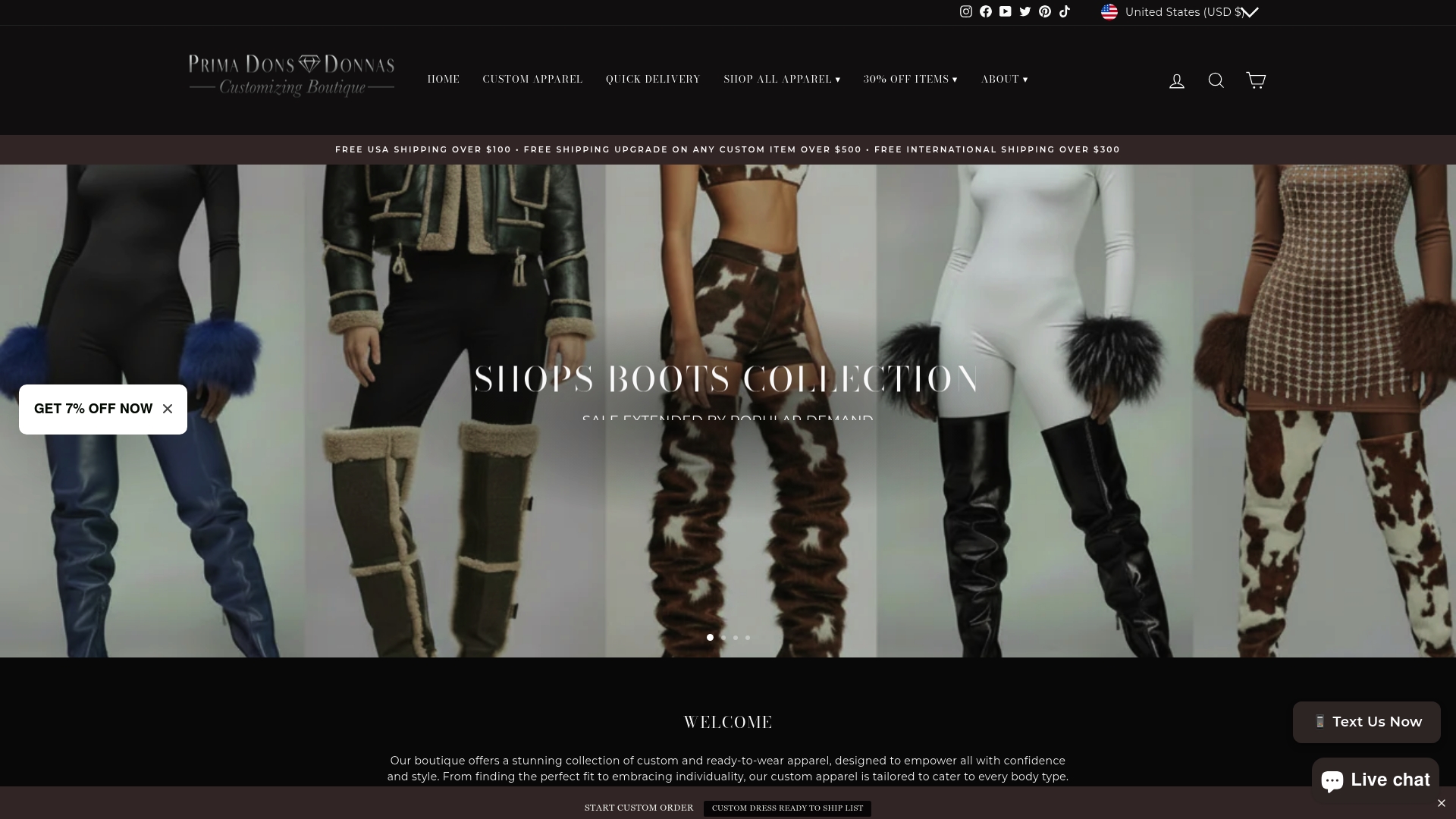
Starting a custom order is straightforward. Browse the made-to-order apparel collections to see boot styles, colors, and customization options, or check the ready-to-ship collection if your event is only days away. If you’re between sizes or your calf falls outside a standard run, the plus-size apparel line is built specifically to solve that. Need it faster? Rush processing and express shipping are available as add-ons at checkout. Whatever the occasion, send your measurements to customer service before you order, so your boots fit the first time they arrive.
Sources
- Apparel & accessories quantitative UX insights 2026 — Baymard
- AlixPartners spring 2026 footwear survey
- Boot Fitting Guide - Macy’s
FAQ
How Do I Know My Correct Thigh-High Boot Size?
Measure your calf circumference at its fullest point while standing, then compare that number to the shaft height and calf-width spec listed on the product page rather than relying on your regular shoe size alone. Reviews with reviewer height, weight, and ordered size add a helpful second reference point.
What’s the Difference Between Made-to-Order and Ready-to-Ship Boots?
Made-to-order boots are built around your specific calf and shaft measurements and typically take longer to arrive, while ready-to-ship boots come from existing stock and ship much faster. Choose ready-to-ship when your event is close and your size falls within standard runs, and made-to-order when your measurements need a custom build.
Does Prima Dons and Donnas Offer Wide-Calf or Plus-Size Thigh-High Boots?
Yes, Primadonsanddonnas builds custom boots around your actual calf and shaft measurements through its plus-size apparel collection, rather than limiting shoppers to one standard wide-calf tier. Reach out with your measurements before ordering to confirm fit.
How Far in Advance Should I Order Boots for an Event?
Order made-to-order boots at least three weeks before your event to allow for production and shipping time, plus a buffer of several extra days for carrier delays. If your event is closer than that, a ready-to-ship option is generally the safer choice.


Leave a comment