

Types of Custom Dress Embellishments for Special Occasions
TL;DR:
- Custom dress embellishments add texture, sparkle, and personality through techniques like beading, embroidery, and appliqués. The choice of embellishment depends on fabric, silhouette, and event lighting, with handwork offering unique, three-dimensional effects. Strategic placement and moderation create elegant, memorable looks for special occasions while enhancing durability and versatility.
Custom dress embellishments are specialized decorations applied to fabric to add texture, sparkle, and individuality, ranging from hand-stitched beads and zardozi embroidery to appliqués, crystals, and lace trims. The types of custom dress embellishments you choose define the entire mood of your look, whether you are dressing for a wedding, a concert, a party, or a lunch date. Each technique carries its own visual weight, application method, and styling power. Knowing the difference between them helps you build a dress that feels intentional, not accidental.
1. Types of custom dress embellishments: the full breakdown
Custom dress decorations fall into six main categories. Each one creates a different effect on the body and in different lighting conditions.
- Beading: Glass, acrylic, and seed beads are sewn onto fabric individually or in patterns. Hand-stitched beading creates dimension and depth that machine application cannot replicate. Seed beads work beautifully on fitted sheaths and column silhouettes.
- Embroidery: Threadwork ranges from basic surface stitches to zardozi, a South Asian technique using metallic threads and wire to create raised, sculptural designs. Custom embroidery services can apply these techniques to garments at varying price points.
- Appliqués: Lace motifs, 3D fabric florals, and embroidered patches are cut and sewn onto a base fabric. They add visual interest without adding significant weight.
- Crystals and rhinestones: These catch light sharply and read as glamorous from a distance. They are the go-to choice for evening wear, galas, and red carpet events.
- Trims and lace: Ribbon trim, fringe, and lace edging define the silhouette and add texture at hems, necklines, and sleeves.
- Raised or puff embroidery: 3D raised embroidery creates a sculptural effect by stitching over a foam base, giving designs a bold, tactile quality.
Pro Tip: Mix one flat embellishment type, like embroidery, with one dimensional type, like 3D florals or beading, to create contrast without visual chaos.
2. How to match embellishments to your fabric and silhouette
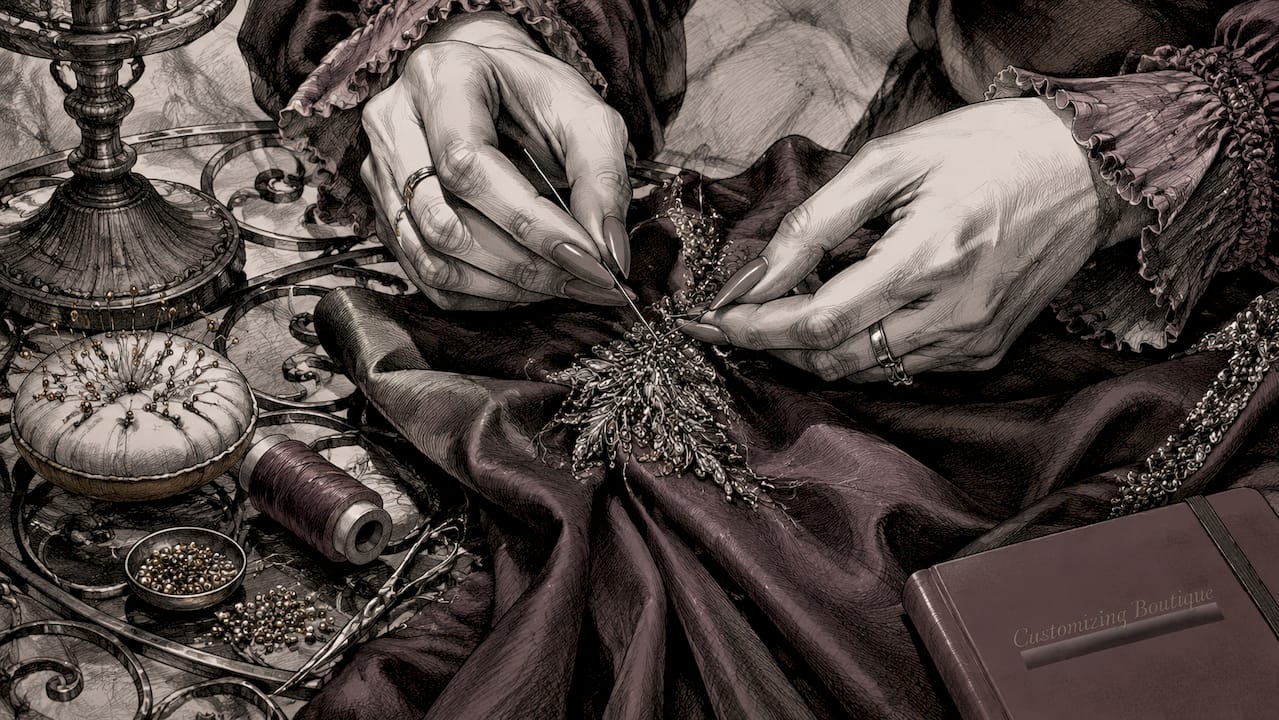
The fabric you choose determines which dress embellishment ideas will actually work. Heavy embellishments on lightweight fabrics cause sagging and distortion. Structural support like boning or a heavier lining is required when applying dense beadwork or metal accents to tulle or chiffon.
The silhouette matters just as much as the fabric. Placement of embellishments shapes how the eye moves across the body.
| Fabric | Best embellishment style | Why it works |
|---|---|---|
| Tulle | 3D florals, scattered crystals | Lightweight appliqués float on tulle without pulling |
| Satin | Embroidery, beading | Smooth surface shows threadwork and bead patterns clearly |
| Crepe | Minimal beading, trim edging | Crepe drapes best with subtle, low-weight decoration |
| Lace | Crystal accents, ribbon trim | Adds sparkle without competing with the lace pattern |
| Velvet | Embroidery, rhinestone clusters | Rich texture pairs with bold, defined embellishment shapes |
Pearl placement for daylight events and crystal accents for evening wear is a well-established styling principle in bridal design. The logic applies to all special occasion dresses. Pearls scatter soft light. Crystals reflect hard, sharp light. Choose based on your venue and time of day.
For A-line silhouettes, concentrate embellishments at the bodice to draw attention upward. For ballgowns, a heavily embellished skirt creates drama. For sheath dresses, vertical beading lines elongate the body.
3. Hand-applied vs. machine-applied embellishments
The difference between hand and machine application is not just about cost. It is about what the finished garment can do.
Hand embellishment techniques like zardozi and couture beading command significant premiums. Basic hand embroidery costs $3.60 to $14.50 per application. Zardozi and heavy hand embroidery run $18 to $180 per application. Machine embroidery costs $1.80 to $6. That price gap reflects real differences in time, skill, and result.
Manual hand beading enables complex 3D haute couture designs. Machine beading requires pre-defined patterns and is faster but limited in texture and placement flexibility. Hand application lets an artisan place a bead exactly where the body curves. A machine cannot do that.
When to choose hand application:
- You want a one-of-a-kind piece with irregular, sculptural texture
- The dress is for a wedding, gala, or high-profile event
- You are investing in a garment you plan to keep long term
When machine application makes sense:
- You need a consistent, repeating pattern across a large surface area
- Budget is a primary factor
- The dress is for a recurring event where wear and tear is expected
Pro Tip: Ask your dressmaker to hand-finish the focal point of a machine-embellished dress, such as the neckline or waist, to add a luxury detail without the full cost of all-over hand work.
4. Current trends in dress embellishment ideas for special occasions
The strongest trend in embellishment right now is kinetic glamour. Fringe, tassels, and kinetic beadwork add dynamic movement, enhancing how dresses catch light and respond to body motion. The Primadonsanddonnas sheer tassels sequin dress is a direct example of this principle in action. Every step creates visual interest.
The second major trend is modular embellishment. Detachable sleeves and overskirts allow a single dress to shift from ceremony to reception without a full outfit change. This is especially relevant for wedding clients and anyone attending multi-part events. You get two looks from one garment.
“Build your look around a single show-stopping feature. An embellished neckline, a custom cape, or a beaded hem. Let everything else support it.” — Styling principle from David’s Bridal
The third trend is texture mixing. Combining matte embroidery with high-shine crystals or pairing velvet appliqués with metallic thread creates an editorial quality that flat, single-texture embellishment cannot achieve. This approach works especially well for concert outfits and evening events where you want to stand out under stage lighting.
For plus-size dresses, strategic embellishment placement is a powerful tool. Vertical beading lines and waist-focused embroidery create elongation and definition. Bold embellishment at the neckline draws the eye upward and frames the face.
5. Practical tips for applying and caring for embellished dresses
Application technique determines how long your embellishments last. Invisible thread is the professional standard for hand sewing sequins. It keeps the finish clean and the sequins flat. The trade-off is that polyamide monofilament can feel scratchy against skin. Always line or wear a slip under heavily sequined areas.
Knotting after each bead or sequin is the single most important durability step. Skipping knots means one broken thread unravels an entire section. On a heavily embellished gown, that is a catastrophic failure. Knot every single attachment point.
Care checklist for embellished dresses:
- Dry clean only for hand-beaded and zardozi pieces
- Store flat or on a padded hanger to prevent bead stress
- Keep away from direct sunlight to prevent crystal discoloration
- Spot clean small areas with a damp cloth before committing to full cleaning
- Use a garment bag for transport to protect surface embellishments
Pro Tip: Before wearing a new embellished dress, gently tug a few beads or sequins to test attachment strength. Better to find a loose one at home than mid-event.
Key takeaways
The most effective custom dress embellishments combine the right technique, fabric, and placement to create a look that holds up visually and physically through any special occasion.
| Point | Details |
|---|---|
| Match embellishment to fabric | Heavy beading needs structural support; lightweight fabrics require boning or lining. |
| Hand vs. machine application | Hand work costs more but delivers 3D complexity and unique placement machine work cannot. |
| One statement element | Build the look around one focal embellishment and keep the rest of the dress clean. |
| Kinetic and modular trends | Fringe, tassels, and detachable pieces add movement and versatility to special occasion dresses. |
| Durability starts at application | Knot every bead and sequin individually to prevent cascading unraveling. |
What I have learned about embellishing with intention
I have seen every version of over-embellishment. Dresses covered from shoulder to hem in crystals, beads, and fringe all at once. The result is never more glamorous. It is just louder. The balance in embellishment placement that stylists talk about is real. Less, placed with purpose, reads as editorial. More, placed everywhere, reads as unfinished.
The clients who get this right are the ones who pick one technique and commit to it fully. A dress with exceptional zardozi embroidery at the bodice does not need rhinestones at the hem. The craftsmanship speaks for itself. That is the difference between a dress that photographs beautifully and one that just looks busy.
My honest advice: choose your embellishment based on where you want the eye to land. Then let the rest of the dress support that decision. For personalized special occasion styling, that single principle produces better results than any trend guide.
— Latoya
Custom embellished dresses, made to order at Primadonsanddonnas
Primadonsanddonnas builds every dress to your size, color, and style. The made-to-order dress collection includes options with beading, sequins, fringe, and rhinestone detailing suited for weddings, parties, concerts, and formal events.

Plus-size options are available across the full collection. Wedding clients can request custom embellishment placement and silhouette adjustments. Ready-to-ship styles are also available for faster delivery. Whether you want a full zardozi bodice or a simple crystal-trimmed hem, Primadonsanddonnas can build it. Shop the collection at primadonsanddonnas.com and find your statement piece.
FAQ
What are the most popular dress embellishments for special occasions?
Beading, crystals, embroidery, and appliqués are the most widely used dress embellishment types for special occasions. Crystals and rhinestones are the top choice for evening events because of how they reflect light.
How do I choose between hand and machine embellishments?
Hand embellishments cost more but allow complex 3D designs and custom placement. Machine application is faster and more affordable, making it a practical choice for repeating patterns or budget-conscious projects.
Can heavy embellishments damage lightweight fabrics?
Yes. Heavy beads and metal accents on fabrics like tulle require internal structural support such as boning or a heavier lining to prevent sagging and distortion.
What is the best way to care for a beaded or sequined dress?
Dry clean hand-beaded pieces, store them flat or on a padded hanger, and always wear a lining or slip under heavily sequined areas to protect both the garment and your skin.
What does modular embellishment mean in fashion?
Modular embellishments are detachable elements like overskirts, sleeves, or bows that can be added or removed during an event, giving one dress multiple distinct looks without a full outfit change.


Leave a comment