

What Defines Couture Rhinestone Dresses: A Designer's Guide
TL;DR:
- Couture rhinestone dresses are handmade, made-to-measure garments supported by internal structure and hand-set stones. Their durability and perfect fit result from custom fitting, internal boning, stabilized linings, and layered fabrics. They are suitable for formal occasions like weddings, galas, and upscale events, and require careful cleaning and storage to preserve their quality.
Couture rhinestone dresses are defined as handcrafted, made-to-measure garments that combine bespoke structural engineering with hand-applied rhinestone embellishments to create gowns of lasting beauty and precise fit. The industry term is haute couture embellished gowns, though “couture rhinestone dresses” accurately describes this category in retail and design circles. What separates these pieces from mass-produced alternatives is not the sparkle alone. The foundation, the internal construction, and the method of stone placement determine whether a rhinestone dress is truly couture or simply decorative.
What defines couture rhinestone dresses: craftsmanship and internal engineering
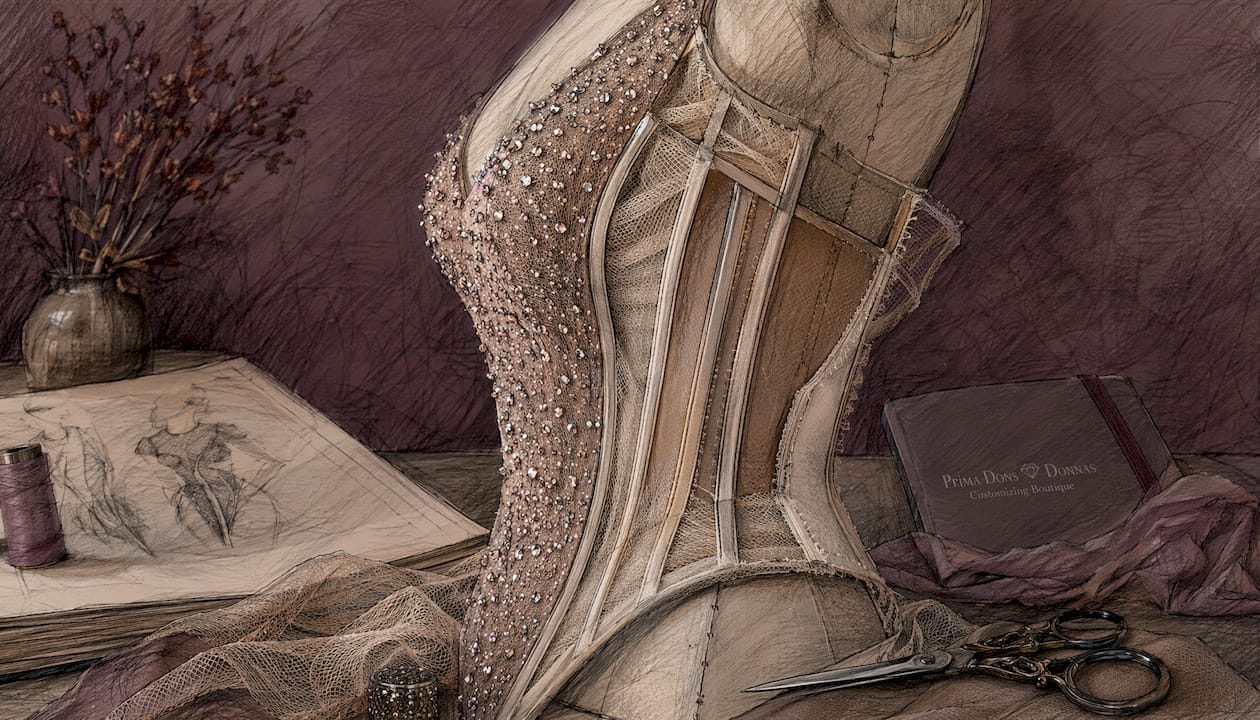
The defining feature of couture rhinestone gowns is their internal engineering, which supports both the garment’s shape and the weight of the stones. Without this structural foundation, even the most beautiful rhinestone placement will distort, sag, or fail within a season.
Couture construction relies on several core techniques:
- Custom drafting and multiple fittings. Couture dresses are custom drafted and fitted multiple times, unlike garments cut from standard patterns. Each fitting adjusts the dress to the wearer’s exact body shape and movement, not just their measurements.
- Internal corsetry and boning. Structured boning runs through the bodice to hold the silhouette in place under the added weight of rhinestones. Without boning, a heavily embellished bodice collapses or shifts during wear.
- Stabilized linings and power mesh reinforcement. Experienced designers use power mesh and stabilized linings to prevent fabric stretch at high-stress points like the neckline and waist. This is the most overlooked detail in rhinestone dress construction.
- Layered fabric systems. Multiple fabric layers distribute the weight of stones evenly across the garment. A single layer of chiffon or mesh cannot bear thousands of hand-set rhinestones without pulling or tearing over time.
Pro Tip: When evaluating a couture rhinestone dress, press gently on the bodice from the inside. A well-constructed gown will feel firm and supported. If it collapses easily, the internal structure is insufficient for long-term wear.
Rhinestone placement on flexible mesh poses a specific structural challenge. Heavy-duty power mesh and reinforced linings prevent fabric distortion over time when stones are set into stretch materials. This is why couture rhinestone gowns retain their shape after hours of wear, while lesser versions lose their silhouette by the end of an evening.
What are the main rhinestone dress styles in couture fashion?
Couture rhinestone gowns appear in a range of silhouettes, each with specific construction and embellishment requirements. The style choice directly affects how rhinestones are applied and how the dress performs on the body.
The four most recognized couture rhinestone dress styles are:
- Corset bodice maxi gowns. A structured corset top with full-length skirt. The corset provides built-in boning, making it one of the most structurally sound bases for heavy rhinestone embellishment. A strapless corset rhinestone maxi is a signature couture evening wear silhouette.
- Illusion mesh mini dresses. Sheer mesh panels create the appearance of skin beneath a layer of rhinestones and pearls. The illusion mesh rhinestone mini relies on power mesh as the base layer to hold embellishments without distorting the sheer effect.
- Bandage fabric rhinestone minis. Bandage fabrics sculpt the silhouette through compression. Bandage fabrics combined with sheer mesh and adjustable elements create figure-sculpting fit while supporting rhinestone weight.
- Full-coverage rhinestone gowns. Every surface of the dress is covered in stones, requiring the most intensive internal engineering. These gowns are the most demanding to construct and the most visually dramatic.
| Style | Key Fabric | Rhinestone Technique | Best Occasion |
|---|---|---|---|
| Corset maxi | Satin, boned mesh | Dense symmetrical placement | Weddings, galas |
| Illusion mesh mini | Power mesh, sheer | Scattered and clustered | Parties, concerts |
| Bandage mini | Stretch bandage | All-over coverage | Events, nights out |
| Full-coverage gown | Structured base fabric | 3D concave/convex setting | Red carpet, formal |
Couture rhinestone gowns often feature over 5,000 hand-set stones arranged in concave and convex patterns to create three-dimensional effects. That level of detail produces visible depth and dimension that flat, glued stones cannot replicate.
How does couture compare to ready-to-wear rhinestone dresses?
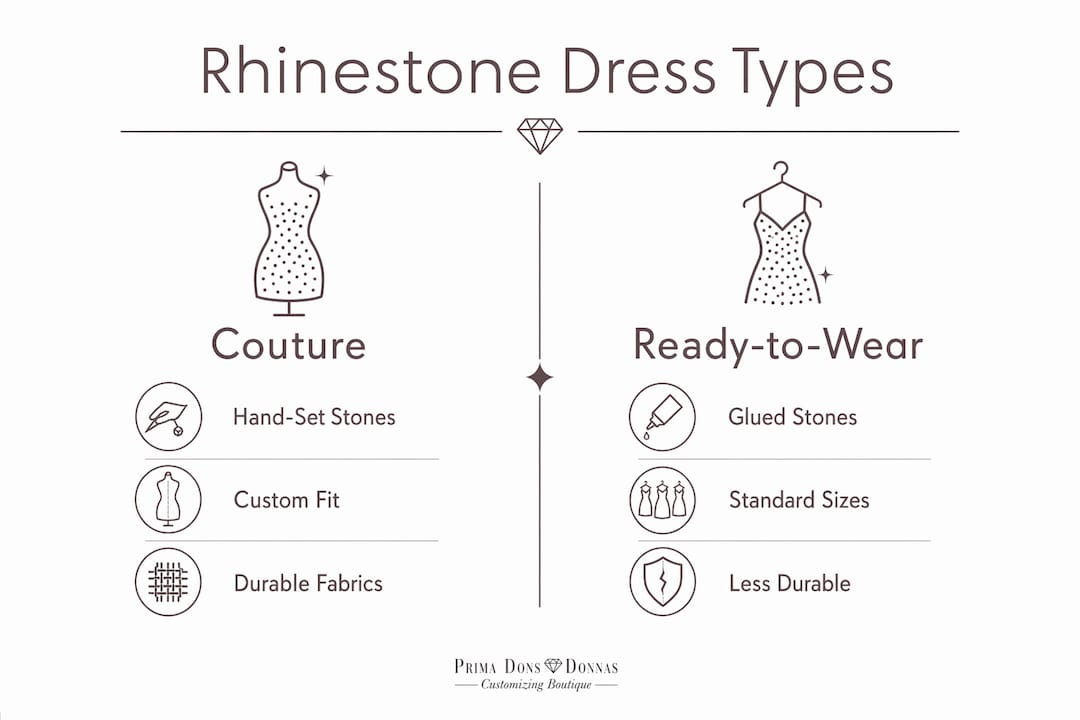
The gap between couture and ready-to-wear rhinestone dresses is structural, not just visual. Ready-to-wear rhinestone dresses lack the structural support and precise hand embellishment found in couture gowns, which directly affects fit and longevity.
Mass-produced rhinestone dresses use glued stones and less durable base fabrics. Glued stones detach with heat, moisture, and friction. Hand-set stones, secured individually through prong or thread techniques, stay in place through repeated wear and careful cleaning.
Pro Tip: Run your hand across the stone surface of any rhinestone dress before purchasing. Hand-set stones have slight variation in height and angle. Glued stones sit perfectly flat and uniform. Flat uniformity is the clearest sign of mass production.
The fit difference is equally significant. Couture gowns go through multiple fittings to account for posture, movement, and proportion. Ready-to-wear dresses are cut to standard size blocks that fit an average body, not your body. For plus-size shoppers and those with non-standard proportions, this distinction is especially important. A made-to-order rhinestone gown from a brand like Primadonsanddonnas delivers the fit precision that off-the-rack sizing cannot provide.
Durability follows directly from construction quality. A couture rhinestone gown, properly cared for, lasts years. A mass-produced version typically loses stones, loses shape, or loses structural integrity within a handful of wears.
How to style and care for couture rhinestone gowns
Styling a couture rhinestone dress correctly protects the investment and maximizes the visual impact. Simple jewelry and neutral shoes often best highlight the dress’s brilliance. The dress is the statement. Accessories should support it, not compete with it.
Key styling and care guidelines:
- Accessories. Choose one focal point. If the dress is fully embellished, wear minimal jewelry. Small stud earrings or a delicate bracelet work well. Avoid chunky necklaces that visually clash with a rhinestone neckline.
- Shoes. Neutral or metallic shoes extend the leg line without pulling attention from the dress. Crystal-embellished heels, like the custom crystal shoes from Primadonsanddonnas, create a cohesive head-to-toe look for formal events.
- Occasions. Couture rhinestone gowns suit weddings, galas, concert events, and upscale parties. A rhinestone mini works for a birthday party or concert. A full-coverage maxi belongs at a luxury wedding reception or black-tie event.
- Cleaning. Gentle hand washing or professional cleaning protects rhinestone embellishments. Machine washing loosens both glued and hand-set stones and stresses structured boning.
- Storage. Store couture rhinestone dresses in breathable garment bags. Plastic bags trap moisture, which weakens adhesives and stresses fabric. Hang structured gowns on padded hangers to preserve the bodice shape.
- Repairs. Address loose or missing stones immediately. A professional seamstress or the original maker can re-set stones using the correct technique for that garment’s construction.
Key Takeaways
Couture rhinestone dresses are defined by internal engineering, hand-set stone placement, and made-to-measure construction that mass-produced rhinestone dresses cannot replicate.
| Point | Details |
|---|---|
| Internal structure is primary | Boning, power mesh, and layered linings support rhinestone weight and preserve garment shape. |
| Hand-set stones last longer | Individually set stones resist detachment far better than glued alternatives. |
| Made-to-measure fit matters | Custom drafting and multiple fittings produce a silhouette that standard sizing cannot match. |
| Style choice affects construction | Each silhouette, from corset maxi to bandage mini, requires specific engineering to function correctly. |
| Care preserves the investment | Hand washing, breathable storage, and prompt repairs extend the life of couture rhinestone gowns. |
What I’ve learned about rhinestone dresses that most people get wrong
Most people look at a rhinestone dress and evaluate it entirely by what they can see. The stones, the sparkle, the color. That instinct is understandable, but it misses the point entirely.
After working closely with couture construction and studying how embellished gowns perform over time, the single most important factor is always what you cannot see. The boning that holds the bodice upright at hour four of a wedding. The power mesh that keeps the neckline from stretching under the weight of a thousand stones. The custom fitting that makes the dress look like it was poured onto the body rather than pulled over it.
Aspiring designers often want to start with the embellishment. They sketch the rhinestone patterns first and figure out the structure later. That approach produces beautiful sketches and disappointing garments. The structure is not a constraint on the design. It is the design. The sparkle only works because something solid is holding it in place.
The other misconception I see constantly is that more rhinestones always means more luxury. A gown with 5,000 precisely placed stones in a deliberate pattern reads as couture. A gown with the same number of stones scattered without intention reads as costume. Placement logic, symmetry, and the relationship between embellished and unembellished areas determine whether a rhinestone dress looks expensive or just busy.
For anyone designing or shopping in this category, learn to read a dress from the inside out. The lining tells you everything.
— Latoya
Primadonsanddonnas rhinestone gowns, made for you
Primadonsanddonnas builds every rhinestone gown as a made-to-order dress, custom fitted to your size, shape, and color preference. No standard sizing blocks. No compromises on fit.

The collection covers special occasions across the board: parties, concerts, weddings, lunch dates, and formal galas. Plus-size options are available in every style, with the same structural construction and embellishment quality as any other size. Ready-to-ship options are also available for shoppers who need a gown quickly. Whether you want a full rhinestone maxi for a wedding or a bandage mini for a concert night, Primadonsanddonnas has a rhinestone gown built to your specifications.
FAQ
What makes a rhinestone dress “couture”?
A couture rhinestone dress is custom drafted, fitted multiple times, and constructed with internal boning, power mesh, and hand-set stones. These structural elements separate it from mass-produced rhinestone garments.
How are rhinestones applied in couture gowns?
Couture designers hand-set each stone individually using prong or thread techniques, often arranging them in concave and convex patterns to create three-dimensional effects. Glued stones are a sign of mass production, not couture craftsmanship.
Can couture rhinestone dresses be made for plus sizes?
Yes. The made-to-measure process in couture construction accommodates any size by custom drafting the pattern to the individual’s measurements rather than scaling a standard block. Brands like Primadonsanddonnas specialize in this approach.
How do I clean a couture rhinestone dress?
Gentle hand washing or professional dry cleaning is the correct method. Machine washing damages both the rhinestone settings and the structural boning inside the garment.
What occasions suit a couture rhinestone gown?
Couture rhinestone gowns work for weddings, galas, formal parties, concerts, and upscale events. The silhouette, from mini to full-length maxi, determines the formality level and the appropriate occasion.
Recommended
- Rhinestone Corset Dress - Sparkling Evening Gown With Adjustable Fit & Stone Embellishments – Prima Dons & Donnas
- Tips for choosing exclusive designs: your fashion guide – Prima Dons & Donnas
- Stunning Swarovski Crystal Dress: Shine in Style – Prima Dons & Donnas
- Sparkle and Shine: Rhinestone Bra Styles for You – Prima Dons & Donnas


Leave a comment