

What Is Custom Tailoring and Why It Matters
Nearly half of American women feel frustrated by mass-produced clothing that fails to match their shape or style. If you crave fashion that truly represents your individuality while supporting a more sustainable future, you’re not alone. This guide uncovers the art and impact of custom tailoring, breaking common myths and spotlighting ways you can personalize every piece with confidence, from bold jumpsuits to everyday essentials.
Table of Contents
- Defining Custom Tailoring And Common Misconceptions
- Key Types: Made-To-Measure And Bespoke Explained
- Custom Tailoring Process: From Vision To Creation
- Why Choose Custom Over Ready-To-Wear Clothing
- Personalization, Sustainability, And Style Impact
Key Takeaways
| Point | Details |
|---|---|
| Custom Tailoring is Personalized | Custom tailoring creates garments uniquely designed for individuals, ensuring exceptional fit and personal expression. |
| Made-to-Measure vs. Bespoke | Understand the differences; made-to-measure offers limited customization, while bespoke provides unlimited personalization through fully unique patterns. |
| Investment in Quality and Sustainability | Custom garments signify a commitment to quality, reducing waste and offering more sustainable fashion choices compared to mass-produced options. |
| Empowerment Through Self-Expression | Custom tailoring allows individuals to reflect their personal style, creating a wardrobe that celebrates diversity and individuality. |
Defining Custom Tailoring and Common Misconceptions
Custom tailoring represents a sophisticated clothing creation process where garments are meticulously designed and constructed specifically for an individual, moving far beyond standard off-the-rack fashion. Unlike mass-produced clothing, bespoke tailoring originated from the prestigious Savile Row tradition in London, emphasizing precision, personalization, and exceptional craftsmanship.
At its core, custom tailoring involves creating unique garment patterns drafted entirely from scratch, without relying on pre-existing templates. This intricate process requires multiple consultations to understand the client’s style preferences, precise body measurements, and desired aesthetic. Skilled tailors invest significant time in creating a garment that not only fits perfectly but also reflects the wearer’s individual personality and silhouette.
Many people mistakenly believe custom tailoring is exclusively for wealthy individuals or formal wear. In reality, custom tailoring has evolved to become increasingly accessible, offering versatile options across casual and professional wardrobes. Modern custom tailoring encompasses everything from everyday shirts and pants to statement pieces like custom jumpsuits, providing individuals with unprecedented wardrobe personalization.
Pro tip: When exploring custom tailoring, prioritize understanding your body measurements and personal style aesthetic to ensure the most flattering and comfortable garment experience.
Key Types: Made-to-Measure and Bespoke Explained
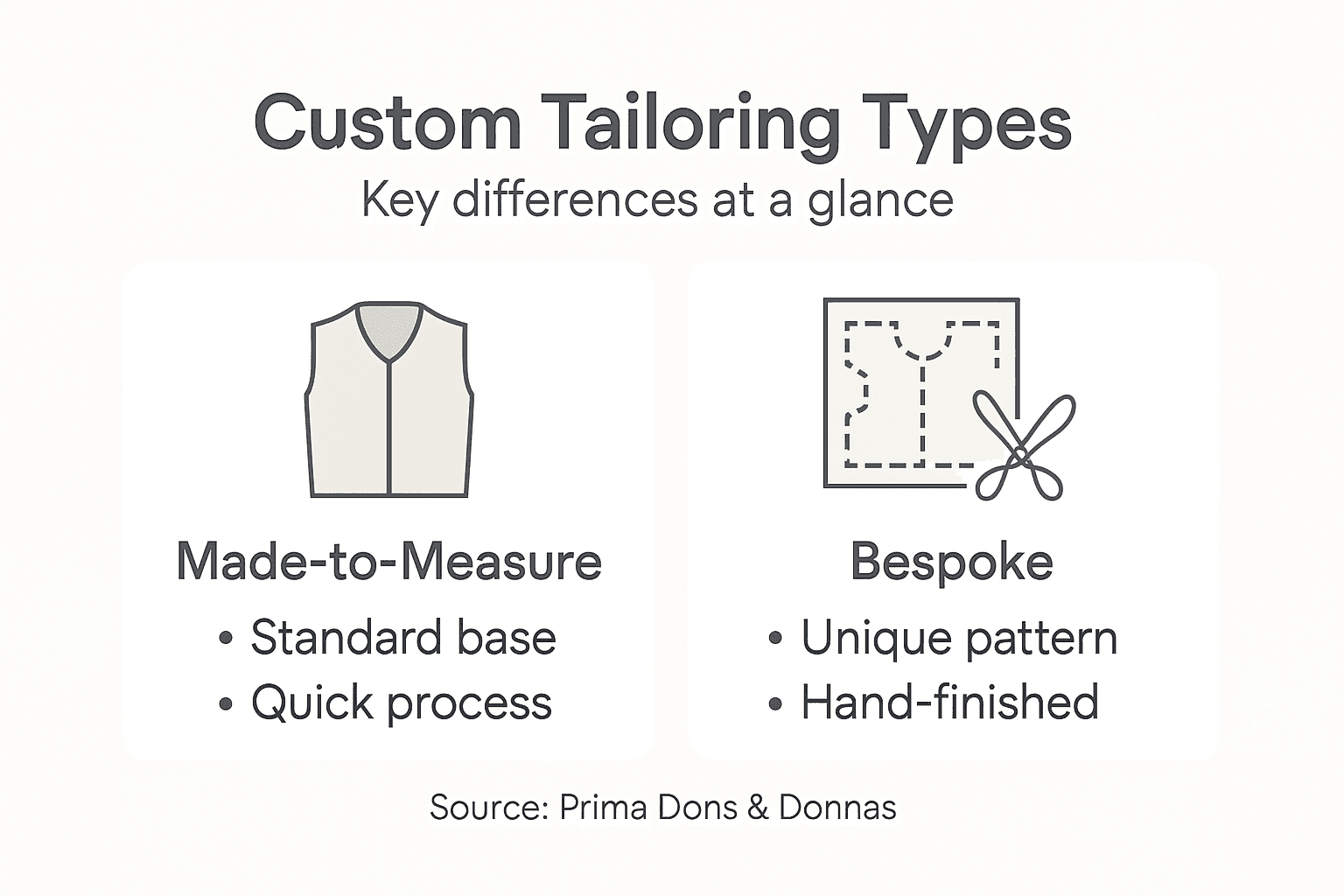
Custom tailoring encompasses two primary approaches: made-to-measure and bespoke, each offering unique levels of personalization and craftsmanship. Made-to-measure garments represent a more accessible entry point into personalized clothing, where existing patterns are modified to fit an individual’s specific measurements. This approach allows for some customization while maintaining a more standardized production process.
Bespoke tailoring, in contrast, represents the pinnacle of personalized clothing creation. Custom garment design involves creating an entirely unique pattern from scratch, with multiple fittings and precise measurements taken to ensure an unparalleled fit. Skilled artisans draft the pattern specifically for an individual’s body, taking into account every nuance of their physique, posture, and personal style preferences.
The key differences between made-to-measure and bespoke lie in their level of personalization and craftsmanship. Made-to-measure typically involves selecting from existing patterns and making basic alterations, while bespoke starts with a completely blank canvas. Bespoke tailoring requires more time, multiple fittings, and a more intensive consultation process. This approach allows for intricate details like unique fabric selections, personalized styling elements, and completely individualized pattern construction.
Pro tip: When choosing between made-to-measure and bespoke, consider your budget, time availability, and the specific level of personalization you desire for your garment.
Here’s how made-to-measure and bespoke tailoring differ on key features:
| Aspect | Made-to-Measure | Bespoke |
|---|---|---|
| Pattern Creation | Modified existing templates | Fully drafted from scratch |
| Number of Fittings | Usually 1-2 | Multiple, iterative fittings |
| Level of Personalization | Limited options | Unlimited customization |
| Time Commitment | 2-4 weeks typical | 4-12 weeks or longer |
Custom Tailoring Process: From Vision to Creation
The custom tailoring journey begins with a comprehensive fabric consultation process that transforms personal style vision into a tangible, perfectly crafted garment. This intricate process starts with an in-depth conversation where clients explore their aesthetic preferences, lifestyle needs, and the specific occasion for which the garment is being created. Skilled tailors act as personal style architects, guiding clients through fabric selections, design elements, and potential customization options that will make the piece uniquely theirs.
Measurement taking represents a critical phase of custom tailoring, far more nuanced than standard sizing. Tailors conduct precise body measurements that account for individual posture, body shape, and movement patterns. This meticulous approach goes beyond simple width and length calculations, capturing the subtle nuances of an individual’s physique. Advanced tailors use specialized techniques to understand how a garment will drape, move, and complement the wearer’s unique body structure.
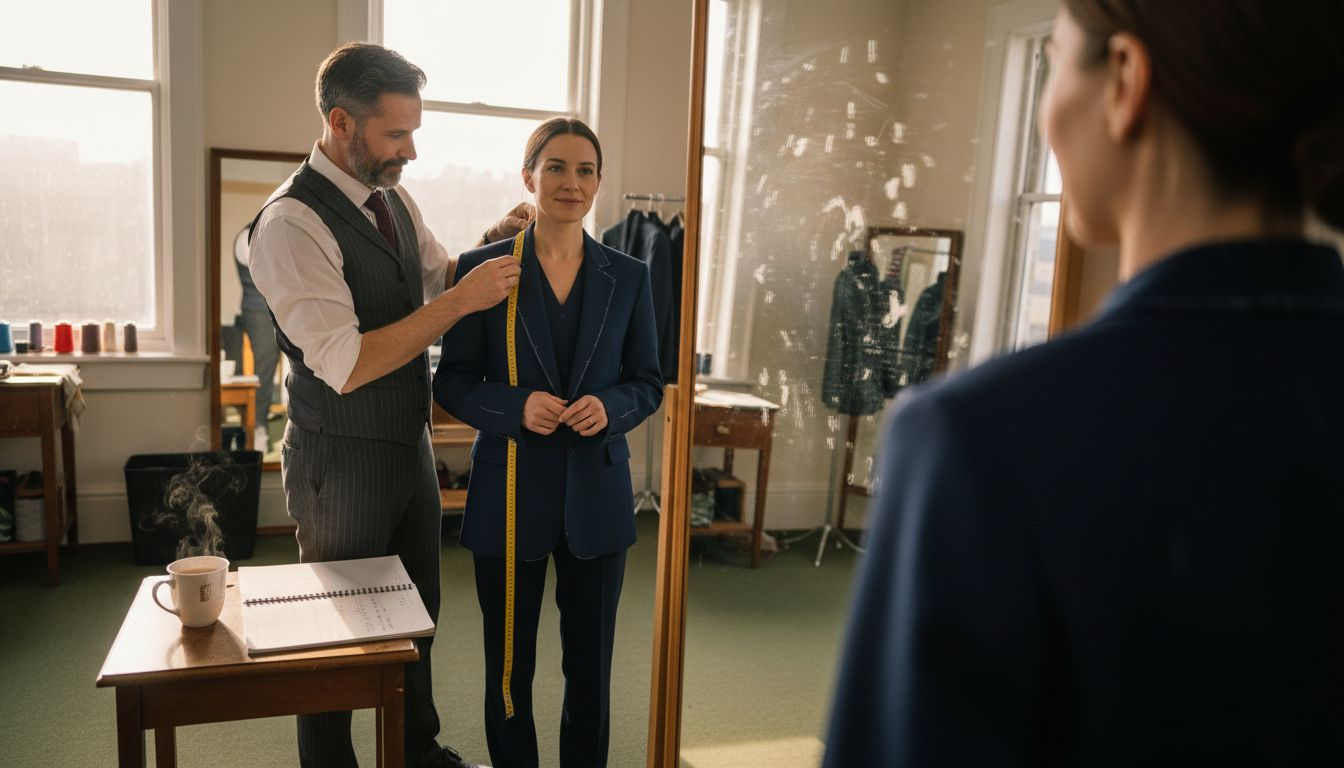
The crafting process involves multiple stages of precision and artistry. After initial measurements and design consultations, tailors create initial pattern drafts, conduct preliminary fittings, and make incremental adjustments. Each iteration refines the garment’s fit, ensuring absolute precision. The final product represents a collaborative journey between the tailor and client, with multiple fittings allowing for subtle modifications that transform a good garment into a perfect one. This approach guarantees not just a piece of clothing, but a personalized statement that reflects individual style and body characteristics.
Pro tip: Bring multiple types of shoes and undergarments to your initial fitting to ensure the most accurate and comprehensive measurement experience.
Why Choose Custom Over Ready-to-Wear Clothing
Custom tailoring represents a transformative approach to fashion that fundamentally challenges the limitations of traditional ready-to-wear clothing. Research on clothing preferences reveals that discerning consumers increasingly prioritize personalization and exceptional fit over mass-produced garments. Unlike standard off-the-rack options that offer generalized sizing, custom tailoring provides a precise, individualized solution that celebrates unique body types and personal style preferences.
The advantages of custom tailoring extend far beyond mere aesthetic considerations. While ready-to-wear clothing presents a convenient, lower-cost alternative, it often compromises on critical aspects of comfort and personal expression. Custom garments are meticulously crafted to complement an individual’s specific body structure, accounting for nuanced measurements that standard sizes simply cannot accommodate. This approach ensures not just a better fit, but enhanced confidence and comfort that mass-produced clothing rarely achieves.
Moreover, custom clothing for women represents an investment in quality and individuality. Each piece is designed to reflect the wearer’s unique personality, lifestyle, and body shape. The attention to detail in custom tailoring means higher-quality materials, superior craftsmanship, and a level of personalization that transforms clothing from a basic necessity to a form of personal expression. By choosing custom, individuals reject the one-size-fits-all approach and embrace a more thoughtful, sustainable approach to fashion that truly celebrates individual diversity.
Below are major benefits of custom tailoring compared to ready-to-wear clothing:
| Advantage | Custom Tailoring | Ready-to-Wear |
|---|---|---|
| Fit Quality | Precise, body-specific | Generic, standardized |
| Material Selection | Wide range, premium options | Limited selection |
| Sustainability | Reduces waste, longer lifespan | Frequent replacement |
| Expression | Maximum personal style | Constrained by trends |
Pro tip: Schedule an initial consultation during a time when you feel confident and have ample time to discuss your style preferences in depth.
Personalization, Sustainability, and Style Impact
Custom tailoring represents a powerful intersection of personal style, environmental consciousness, and individual empowerment. Mass customization in fashion offers a transformative approach to clothing production that challenges traditional manufacturing models by prioritizing sustainable, personalized consumption. By creating garments that precisely match individual preferences and body types, this approach dramatically reduces textile waste and encourages more thoughtful, long-term wardrobe investments.
The sustainability impact of personalized clothing extends far beyond environmental considerations. Each custom-tailored piece represents a deliberate choice to move away from fast fashion’s disposable culture. When individuals invest in meticulously crafted garments that fit perfectly and reflect their unique style, they inherently reduce clothing turnover. This approach means fewer discarded items, less frequent shopping, and a more intentional relationship with personal fashion that emphasizes quality over quantity.
Beyond sustainability, personalized clothing becomes a powerful medium of self-expression. Custom tailoring allows individuals to transcend standardized fashion limitations, creating garments that not only fit physically but also represent their personality, lifestyle, and aesthetic preferences. The collaborative process between tailor and client transforms clothing from a mere commodity into a deeply personal art form, where each stitch and fabric choice tells a unique story. This approach empowers individuals to curate a wardrobe that is truly and authentically their own, celebrating diversity and individual creativity.
Pro tip: Approach custom tailoring as an investment in your personal style ecosystem, focusing on versatile pieces that can be styled multiple ways and will endure beyond seasonal trends.
Discover the Power of Personalized Fashion with Prima Dons and Donnas
If you are ready to move beyond the limitations of ready-to-wear clothing and embrace the precision and individuality that custom tailoring offers look no further than Prima Dons and Donnas. The article highlights key challenges such as finding the perfect fit true personalization and sustainable style choices — all of which are addressed by our made-to-order fashion solutions crafted for every size and color preference with bold confident style. Experience garments that are not only tailored to your unique measurements but also designed to empower your personal expression through luxurious comfort and exclusivity.
Take the next step in refining your wardrobe with custom jumpsuits and statement pieces that merge high-quality craftsmanship with sustainable materials like our premium faux fur. Don’t settle for generic when you can choose bespoke. Visit Prima Dons and Donnas today to start your personalized fashion journey and enjoy our ready-to-ship options for faster delivery. Your perfect fit and style await.
Frequently Asked Questions
What is custom tailoring?
Custom tailoring is a clothing creation process where garments are specifically designed and constructed for an individual, emphasizing precision and personalization over standard mass-produced options.
What are the key differences between made-to-measure and bespoke tailoring?
Made-to-measure involves modifications of existing patterns to fit an individual’s measurements, while bespoke starts from scratch with a fully customized pattern, offering a higher level of personalization and craftsmanship.
Why is custom tailoring considered a sustainable fashion choice?
Custom tailoring reduces textile waste by creating garments that exactly match individual preferences and body types, promoting a more thoughtful approach to clothing consumption and encouraging investment in quality over quantity.
How does the custom tailoring process work?
The custom tailoring process includes an initial consultation to discuss style preferences, precise body measurements taken by skilled tailors, multiple fittings to ensure an excellent fit, and careful crafting of the garment from premium materials.
Recommended
- Custom Clothing for Women | Made-to-Order Fashion | Prima Dons – Prima Dons & Donnas
- Lazzer Custom Jumpsuit- Prima Dons and Donnas – Prima Dons & Donnas
- Custom Nike Sneakers - Prima Dons & Donnas Two Tone Air Force One
- Custom Chains Catsuit jumpsuit catsuit- Prima Dons and Donnas – Prima Dons & Donnas


Leave a comment