

What Is Power Dressing: Your 2026 Style Guide
TL;DR:
- Power dressing involves wearing structured, well-fitted clothing to project confidence and authority. It influences both mindset and perceptions through enclothed cognition, emphasizing fit, color, and individual expression. Modern power dressing prioritizes personal style while maintaining professional authority across various industries.
Power dressing is the deliberate selection of structured, well-fitted clothing designed to project professional confidence and authority in formal and workplace settings. Known in behavioral science as a practice rooted in enclothed cognition, it goes far beyond looking polished. The clothes you wear physically and symbolically shape how you think, perform, and lead. What is power dressing in 2026? It is a personalized, psychologically grounded approach to professional attire, and it has moved well past the rigid shoulder-pad silhouettes of the 1980s into something far more individual and effective.
What is power dressing and why does it work?
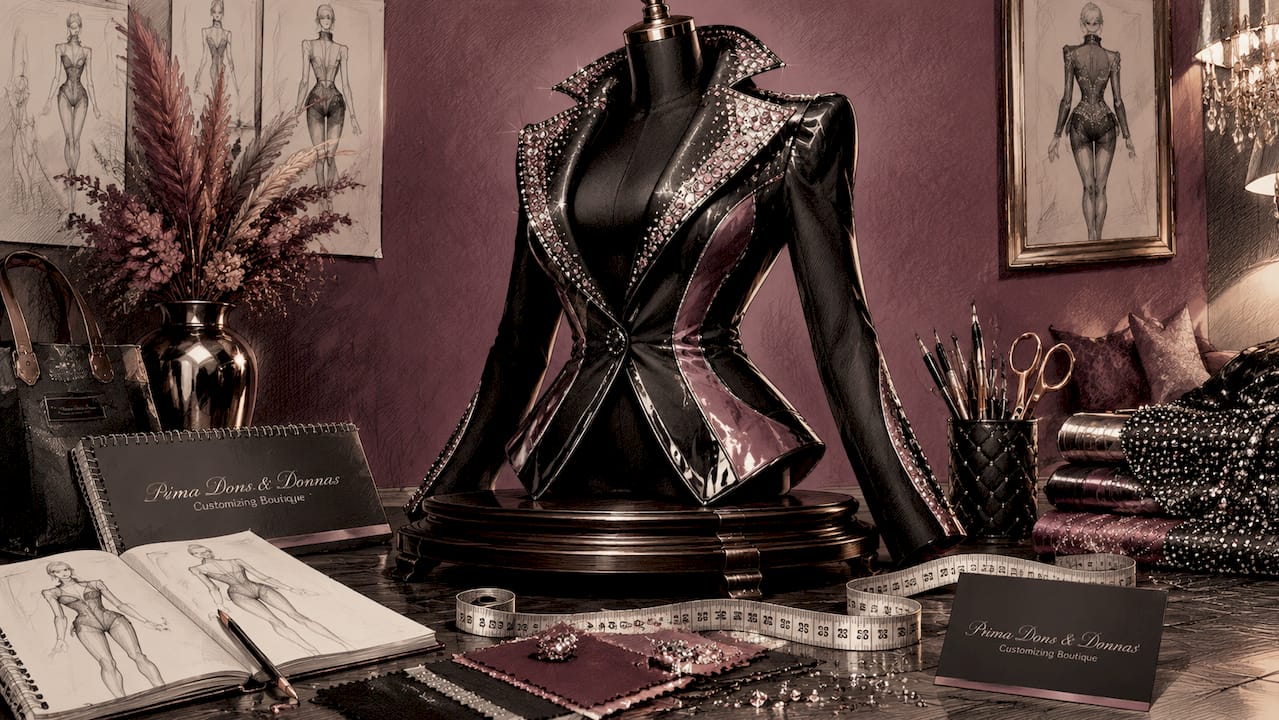
Power dressing is defined as the strategic use of structured garments, intentional color choices, and high-quality tailoring to signal competence and confidence. The concept is grounded in enclothed cognition, a theory developed by researchers Adam and Galinsky, which holds that clothing’s physical and symbolic characteristics directly influence the wearer’s psychology and behavior. When you put on a well-tailored blazer, you are not just changing your appearance. You are priming your brain for leadership.
The halo effect reinforces this further. Observers form rapid judgments about a person’s competence, authority, and trustworthiness based on attire alone. Formal wear links to better abstract thinking and more profitable negotiation outcomes, according to studies on workplace dress and cognitive performance. That means your outfit choice before a high-stakes meeting is not vanity. It is preparation.
Power dressing also functions as a feedback loop. Dressing for success impacts behavior internally as well as how others perceive you, boosting confidence, social grace, and leadership presence simultaneously. The external signal and the internal shift reinforce each other.
“Power dressing is fundamentally an internal tool to enhance performance and social grace, not merely an external show of status.”
Pro Tip: Choose clothing that makes you feel mentally sharp and physically at ease, not just clothing that looks impressive to others. The internal shift is what drives the external result.
How power dressing evolved from the 1980s to now
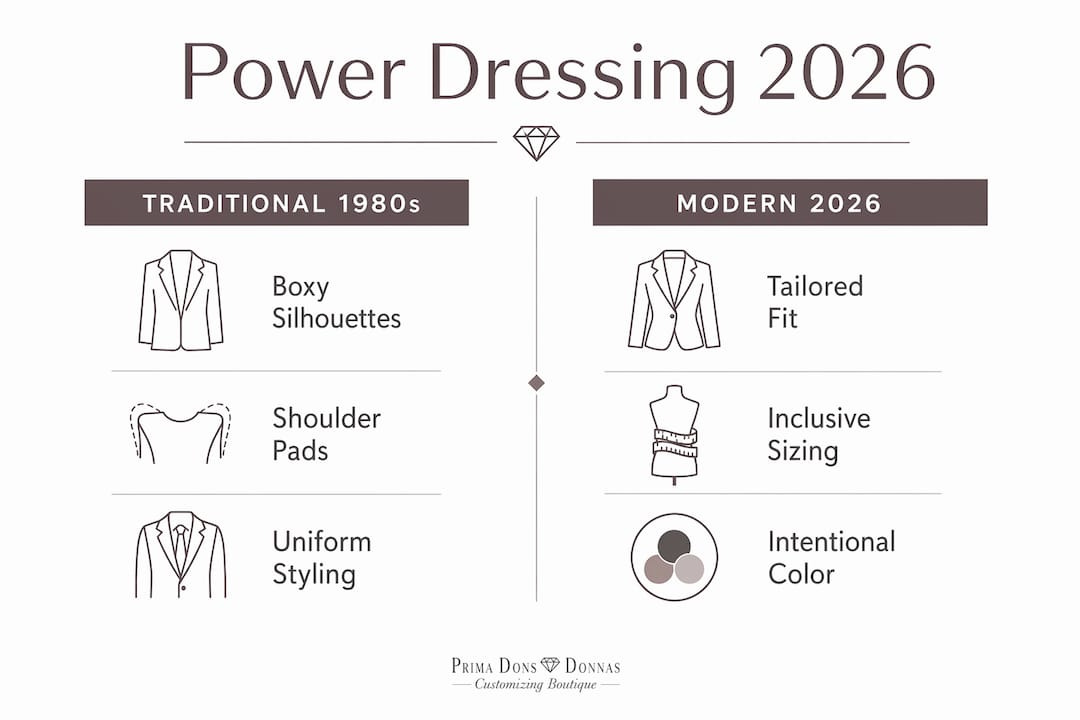
Power dressing originated in the 1970s and gained full cultural momentum in the 1980s, when women entering corporate America adopted structured suits with broad shoulder pads and masculine silhouettes. The goal was clear: signal equality by mirroring the visual language of male authority. Power dressing historically challenged gender norms by using masculine styles to communicate professional legitimacy for women.
That approach worked for its era, but it came with a cost. Rigid silhouettes and uniform styling left little room for individual expression or physical comfort. By the 2000s, the corporate uniform began to loosen. By the 2020s, the shift was complete.
Today, modern power dressing emphasizes fit and intentionality over mimicking any single corporate silhouette. Professionals now build looks that reflect personal identity while still communicating authority. Gender dynamics have also shifted. An unstated dress code still persists, particularly for women in corporate and political roles, but the definition of what qualifies as a power look has expanded considerably.
| Element | Traditional (1980s) | Modern (2026) |
|---|---|---|
| Silhouette | Boxy, shoulder-padded suits | Tailored, body-aware cuts |
| Color palette | Black, gray, navy only | Navy, charcoal, forest green, bold accents |
| Gender influence | Masculine-coded styles for women | Individual expression within professional context |
| Fabric focus | Heavy wool, stiff materials | Quality fabrics with comfort and movement |
| Fit priority | Uniform, off-the-rack sizing | Custom or tailored fit for every body type |
Key elements of power dressing style in 2026
Fit is the single most important element of a power look. A perfectly tailored piece at any price point reads as more authoritative than an expensive garment that does not fit well. Custom tailoring often exceeds designer off-the-rack options in communicating precision and fostering ease of movement. This is where investment matters most.
Color psychology plays a direct role in how authority is perceived. Navy, charcoal, and forest green convey professionalism, while red or burgundy accents signal assertiveness. Understanding color’s role in bold style gives you a practical edge in building a wardrobe that works across different professional settings.
Signature pieces anchor the entire approach. A structured blazer, tailored trousers, a clean sheath dress, and quality footwear form the core of most effective power wardrobes. These pieces work across industries and occasions, from boardrooms to client lunches.
Power dressing do’s:
- Prioritize fit above brand name or price tag
- Choose fabrics that hold their shape and allow movement
- Build around 2–3 core neutral colors with one accent
- Invest in quality footwear, including boots that complete a structured look
- Keep accessories intentional and minimal
Power dressing don’ts:
- Wear restrictive clothing that limits your range of motion
- Rely on trends over timeless silhouettes
- Ignore the dress culture of your specific industry
- Overlook the psychological impact of color in your choices
- Dress for the role you have rather than the role you want
Pro Tip: A minimal “uniform” of interchangeable, high-quality tailored pieces reduces decision fatigue and reinforces authority consistently. Pick 5–7 core pieces that all work together and rotate them with purpose.
How to build a power dressing routine that fits your life
Building a power dressing practice starts with your wardrobe foundation, not a shopping spree. The goal is a curated set of pieces that align your external appearance with your professional ambitions. A core wardrobe of structured pieces focused on fit increases confidence and a sense of control before you even walk into the room.
- Audit what you own. Pull out every piece you wear to professional settings. Identify what fits well, what projects confidence, and what you reach for on important days.
- Define your industry’s visual language. A law firm and a creative agency have different authority signals. Know your environment before you build your look.
- Invest in tailoring first. Before buying new pieces, get your best existing items tailored. The return on that investment is immediate.
- Build your color foundation. Choose two neutral base colors and one accent. Every piece you add should work within that palette.
- Add structured statement pieces. A blazer, a tailored dress, or a quality coat can anchor an entire look. These are your power anchors.
- Test comfort under pressure. Wear new pieces on lower-stakes days first. Ill-fitting or restrictive clothing reduces professional performance, regardless of how polished it looks.
- Refine over time. Power dressing is not a one-time purchase. It is a practice you sharpen as your career and confidence grow.
Adapting this approach across industries takes awareness. Finance and law still reward conservative tailoring. Creative fields allow bolder color and silhouette. Healthcare and education call for authority signals that also communicate approachability. The principles stay the same. The application shifts.
Pro Tip: Use your seasonal wardrobe checklist to audit your closet twice a year. Structured pieces that no longer fit well or feel confident should be replaced or tailored, not kept out of habit.
Key Takeaways
Power dressing works because structured, well-fitted clothing triggers enclothed cognition, which primes leadership behavior and shapes how others perceive your competence before you say a word.
| Point | Details |
|---|---|
| Enclothed cognition drives results | Structured clothing primes leadership thinking and reduces stress in high-stakes settings. |
| Fit outranks brand or price | A tailored piece at any cost reads as more authoritative than an expensive ill-fitting garment. |
| Color signals authority | Navy, charcoal, and forest green project professionalism; red and burgundy accents signal assertiveness. |
| Modern power dressing is personal | Today’s approach blends professional authority with individual expression, not a one-size uniform. |
| Comfort is non-negotiable | Restrictive clothing lowers performance. Power dressing must allow full movement to work effectively. |
What I’ve learned about power dressing and real confidence
I used to think power dressing was about looking the part for other people. After years of watching professionals walk into rooms and immediately shift the energy, I changed my mind completely. The shift happens inside the person wearing the clothes, not in the audience watching them.
The most confident professionals I have observed are not wearing the most expensive pieces. They are wearing clothes that fit their bodies, match their personal style, and feel like a second skin. That combination, fit plus identity plus comfort, is what actually produces the presence people call “authority.”
One misconception I see constantly is that power dressing means suppressing personality. That is exactly backwards. The professionals who dress with the most impact are the ones who have figured out how to express who they are within a structured framework. A bold color, a signature silhouette, a standout boot. These choices communicate confidence, not conformity.
The other pitfall is treating power dressing as a costume you put on for big moments. Real impact comes from consistency. When your daily wardrobe reflects your professional ambitions, you stop performing confidence and start living it. That is when the feedback loop the research describes actually kicks in.
Power dressing for women, in particular, carries an extra layer of nuance. The unstated expectations in corporate and political environments are real. But the answer is not to dress down or disappear into a uniform. The answer is to dress with intention, on your own terms, within the context you are navigating. That is where clothing builds genuine confidence rather than just projecting it.
— Latoya
Custom pieces built for your power wardrobe
Power dressing starts with fit, and fit starts with clothing made for your body.
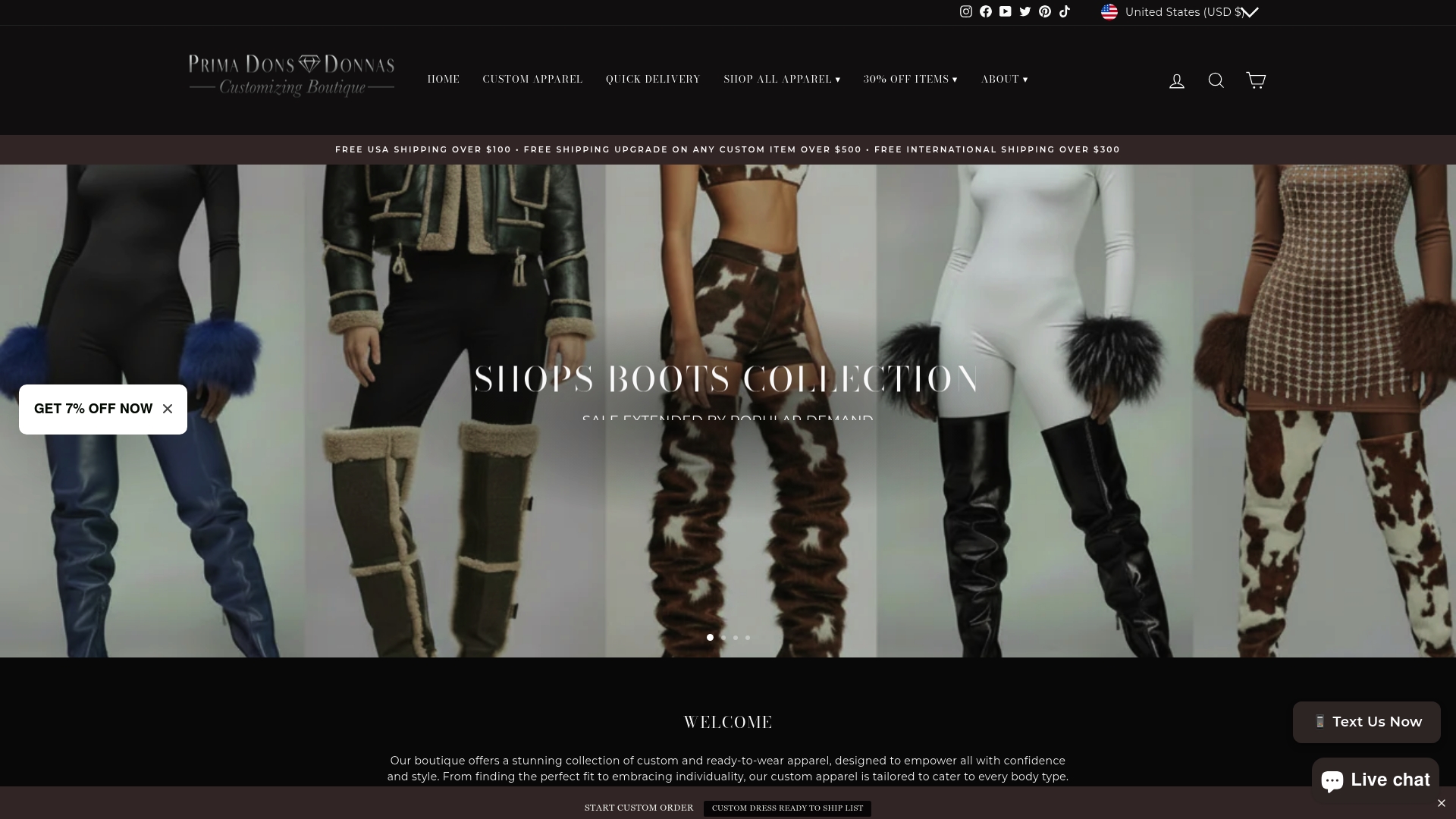
Primadonsanddonnas specializes in made-to-order dresses and custom outerwear tailored to any size and color, so your power look is built around you, not adjusted to fit a standard mold. Every piece is designed with bold, confident style in mind, combining structure with wearability. For professionals who want a wardrobe that works as hard as they do, custom tailoring is the clearest path to a look that projects authority and feels completely natural to wear. Ready-to-ship options are also available for faster delivery when you need a polished look quickly.
FAQ
What is power dressing in simple terms?
Power dressing is the practice of wearing structured, well-fitted clothing to project confidence and authority in professional settings. It uses fit, color, and silhouette to influence both how you feel and how others perceive you.
What are the key benefits of power dressing?
Power dressing improves cognitive performance, negotiation outcomes, and leadership presence through enclothed cognition. It also creates a positive first impression by triggering the halo effect in observers.
What should women wear for power dressing?
Tailored blazers, structured dresses, fitted trousers, and quality footwear form the foundation of power dressing for women. Color choices like navy, charcoal, and forest green project professionalism, while bold accents signal assertiveness.
Does power dressing still matter in casual workplaces?
An unstated dress code persists even in casual environments, particularly for women in leadership roles. Structured, intentional dressing continues to signal authority and competence regardless of the overall office culture.
How is power dressing different from regular business attire?
Business attire follows a dress code. Power dressing is intentional. It uses fit, color psychology, and personal expression to actively shape perception and internal mindset, not just meet a workplace standard.
Recommended
- Explaining Special Occasion Outfits: Your 2026 Style Guide – Prima Dons & Donnas
- Guide to expressing style with custom fashion in 2026 – Prima Dons & Donnas
- Bold statement outfit ideas 2026: sustainable custom style – Prima Dons & Donnas
- Purpose-Driven Fashion Defined: Your 2026 Style Guide – Prima Dons & Donnas


Leave a comment