

Role of Personalization in Fashion: Defining Unique Style
Finding clothing that celebrates your individuality while offering true comfort and sustainable luxury can feel impossible when most brands simply lump personalization with ordinary customization. For fashion-forward women, understanding the difference between personalization and customization is crucial. By exploring how thoughtful design, transparent technology, and size-inclusive strategies actually support your values, this guide helps you decode fashion buzzwords and discover what genuine personalized experiences look like.
Table of Contents
- Personalization In Fashion Defined And Debunked
- Types Of Personalization In Modern Fashion
- How Made-To-Order Empowers Individuality
- Sustainability And Size Inclusivity Benefits
- Common Pitfalls In Personalization Practices
Key Takeaways
| Point | Details |
|---|---|
| Understanding Personalization | Personalization tailors fashion to individual preferences and needs, going beyond simple customization. |
| Empowerment through Made-to-Order | Made-to-order options allow for unique garments made specifically for your measurements, promoting self-expression. |
| Sustainability and Size Inclusivity | Personalized fashion reduces waste and ensures all body types are accommodated, linking sustainability with inclusivity. |
| Avoiding Common Pitfalls | Brands must be transparent and accurately represent their personalization offerings to avoid consumer distrust and confusion. |
Personalization in Fashion Defined and Debunked
Personalization in fashion gets thrown around like confetti at a runway show, but most people misunderstand what it actually means. The term refers to tailoring clothing, accessories, and shopping experiences to match individual preferences, body types, and style values. It’s not simply customization, though the two terms often get tangled together in casual conversation.
Here’s where the confusion starts. Customization lets you pick colors, fabrics, or details from preset options. Personalization goes deeper. Five key elements guide personalization experiences: the offerings themselves, knowledge about you as a customer, the channels through which you shop, the purpose behind recommendations, and the specific context of your needs. For example, a brand that knows you prefer sustainable materials, understands your body shape, and sends recommendations via your preferred shopping method is personalizing, not just customizing.
The biggest myth about personalization? That it requires surrendering privacy or dealing with creepy algorithms. In reality, personalization works best when it’s transparent and genuinely helpful. A scholarly consensus definition established through expert research shows that effective personalization respects individual agency while delivering relevant suggestions. You remain in control of what information you share and how brands use it.
Another misunderstanding centers on size inclusivity. Many assume personalization only benefits standard sizes. The opposite is true. Made-to-order and personalized approaches actually serve diverse body types better than mass production. When your clothing is tailored to your measurements and preferences, fit improves dramatically regardless of whether you wear a size 2 or size 22.
Personalization also addresses sustainability concerns many women prioritize. Instead of buying multiple items hoping something fits, you order one piece crafted specifically for you. This reduces returns, excess inventory, and waste. Choosing sustainable materials like high-quality faux fur becomes genuinely accessible when the entire garment is designed around your values and specifications.
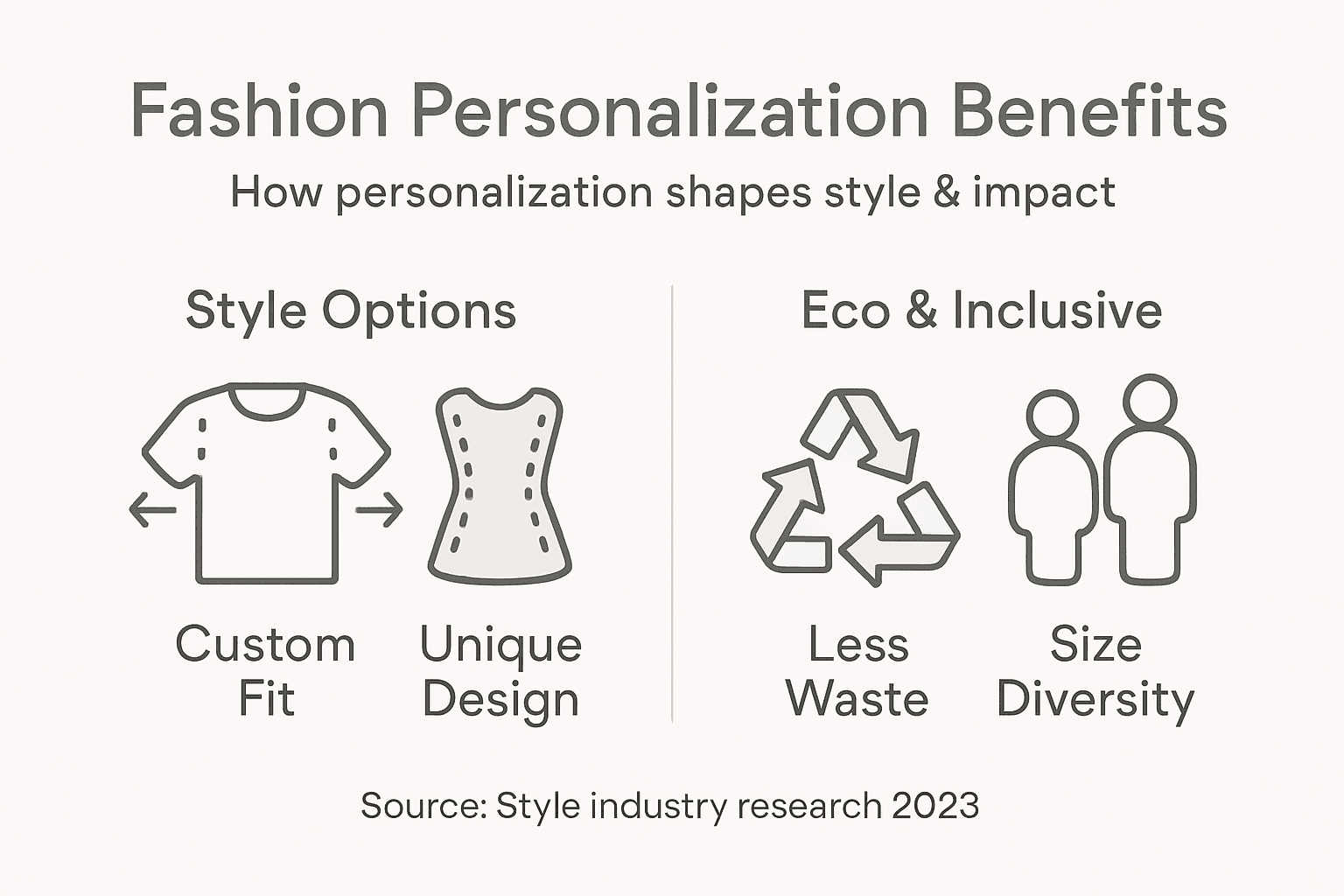
Here’s a quick comparison of personalization, customization, and made-to-order fashion:
| Approach | Level of Individuality | Customer Input Type | Typical Outcome |
|---|---|---|---|
| Customization | Low | Select preset options | Standard item, some tweaks |
| Personalization | Moderate to High | Share preferences, values | Tailored suggestions, better fit |
| Made-to-Order | Very High | Provide exact measurements | Unique, one-of-a-kind garment |
Pro tip: Start your personalization journey by clearly identifying three non-negotiables in your style, whether that’s comfort level, color preferences, or ethical sourcing requirements. This clarity transforms vague shopping into intentional purchasing.
Types of Personalization in Modern Fashion
Modern fashion personalization comes in several distinct flavors, each serving different customer needs and style goals. Understanding these types helps you recognize what you’re actually getting when brands promise a personalized experience. Not all personalization approaches are equal, and knowing the differences matters when you’re investing in pieces that reflect your identity.
Mass customization represents the most accessible type. This approach offers you a curated set of choices within a framework. Think selecting your preferred neckline, sleeve length, fabric color, and lining material from available options. The brand provides structure, you make selections within those boundaries, and the piece gets made specifically for you. It’s faster than bespoke work and more affordable, making it ideal for quality basics and statement pieces.
Bespoke design and co-created fashion represent the deeper end of personalization. Co-creation means you actively collaborate in the design process. A designer might work directly with you to understand your lifestyle, preferences, and vision, then create something entirely unique. This approach respects your creative input and produces clothing that truly feels like an extension of yourself rather than a standard option.
Data-driven personalization uses your preferences and style history to inform recommendations and designs. Technologies like AI and digital design tools analyze what flatters your body type, colors that complement your skin tone, and styles aligned with your previous purchases. This type feels almost intuitive because the brand learns from your choices and anticipates what you’ll love next.
Emotional personalization connects fashion directly to how you want to feel. Rather than focusing solely on aesthetics, this approach asks what emotions and confidence you want to express. Do you want bold and powerful? Soft and approachable? Adventurous and unconventional? The design then aligns with that emotional intent, creating pieces that serve your psychological needs alongside your style preferences.
Each type offers distinct advantages. Mass customization balances choice with efficiency. Co-creation delivers true uniqueness. Data-driven approaches save time and increase satisfaction. Emotional personalization ensures your clothes support your well-being, not just your wardrobe.
Pro tip: When exploring personalized fashion options, identify which type resonates most with your lifestyle, then prioritize brands offering that approach rather than jumping between different personalization methods.
How Made-to-Order Empowers Individuality
Made-to-order fashion represents a fundamental shift from mass production’s one-size-fits-many approach to clothing that genuinely reflects who you are. When you commission a piece, you’re not selecting from thousands of identical garments made for a hypothetical average body. Instead, you’re creating something that exists only because you exist, with your measurements, preferences, and vision embedded into every seam.
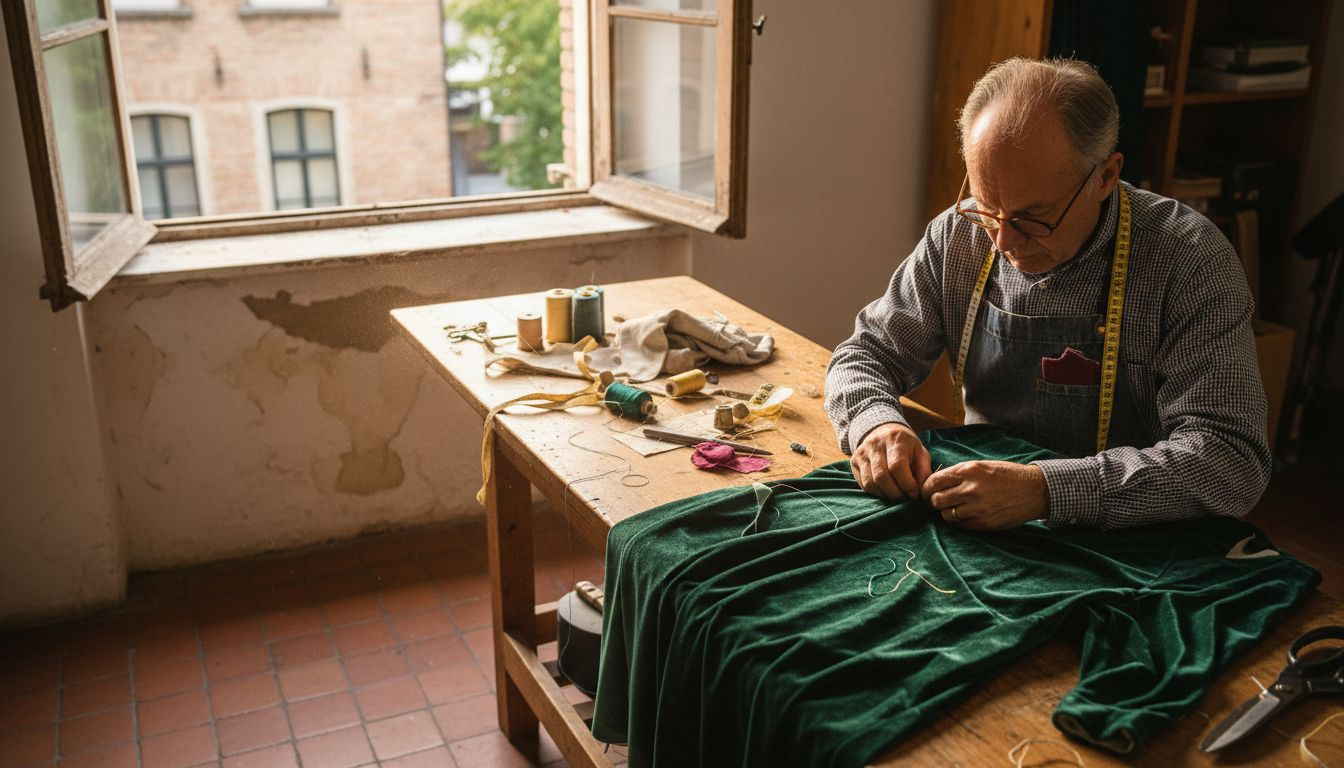
This shift matters profoundly for self-expression. Mass customization and made-to-order strategies allow you to move beyond passive consumption into active creation. You’re not asking whether a dress will work for your body. You’re designing a dress that works with your body. The distinction changes everything about how you feel wearing the piece.
Made-to-order also strips away the compromise factor that plagues conventional shopping. You’ve experienced this: finding something you love but the fit is slightly off, the color doesn’t quite match your skin tone, or the proportions don’t align with your frame. With made-to-order, these compromises disappear. Your proportions become the blueprint. Your preferences drive every decision.
Made-to-order luxury fashion strengthens emotional connections between you and the brand creating your clothes. When a designer knows your lifestyle, understands your sustainability values, and crafts pieces specifically for you, the relationship transcends typical consumer interaction. You develop genuine investment in brands that invest in understanding you as an individual.
The individuality extends beyond aesthetics. Made-to-order choices reflect your values, whether that means selecting sustainable materials, requesting ethical production practices, or choosing cuts that feel authentically you rather than trend-driven. You’re not compromising your identity to fit into what’s available. The clothing adapts to you instead.
For women seeking size inclusivity and comfortable fit, made-to-order eliminates the frustration of limited options. Your size is never a constraint. Neither is your style vision. Ready-to-ship options also exist, allowing you to access personalized fashion without waiting for custom production timelines.
Pro tip: Before ordering, gather inspiration images and write down three adjectives describing how you want to feel in the piece, then communicate these to your designer to ensure the final result aligns with your authentic style.
Sustainability and Size Inclusivity Benefits
Personalization in fashion creates a powerful intersection between environmental responsibility and body diversity. When you buy clothing made specifically for your size and preferences, you’re not just investing in better fit. You’re reducing waste at every level of production and consumption.
Here’s how size inclusivity connects to sustainability. Traditional mass production creates billions of garments in limited size ranges, forcing many women to buy multiple items hoping something fits properly. Returns skyrocket. Unsold inventory piles up. Landfills overflow with barely worn clothes. Size inclusivity reduces fit risk and improves supply chain efficiency, which directly lowers environmental impact through fewer returns and less overproduction.
When brands offer inclusive sizing options, they’re making a sustainability statement. Your size is never a barrier to accessing quality, sustainable fashion. No more settling for fast fashion basics because sustainable options don’t come in your size. No more overconsumption driven by the frustration of finding clothes that fit. Made-to-order and personalized approaches eliminate this entirely.
Size inclusivity becomes essential to sustainable fashion because excluding body types drives overconsumption and waste. When sustainable clothing is only available in limited sizes, people outside those ranges continue buying non-sustainable alternatives. This perpetuates the cycle of harm. True sustainability requires accessibility across all body types.
Personalized fashion also allows you to choose sustainable materials deliberately. High-quality faux fur, organic fabrics, and ethically sourced textiles become genuinely accessible because your piece is made once, exactly right. You’re not compromising material quality to find something that fits. Investment in one perfect garment replaces the need for multiple mediocre options.
The social justice aspect matters too. Fashion has historically excluded larger bodies, disabled bodies, and non-standard proportions. Personalization challenges this exclusion. Your body deserves clothing made with intention and care, not squeezed into limited options. Sustainability and inclusion aren’t separate concerns. They’re interconnected values that personalized fashion addresses simultaneously.
Below is a summary of benefits linking personalization, sustainability, and size inclusivity:
| Benefit Area | Personalization Impact | Resulting Advantage |
|---|---|---|
| Sustainability | Reduces overproduction and returns | Less waste, eco-friendlier supply |
| Size Inclusivity | Allows all body types custom fit | No exclusion, greater confidence |
| Ethical Production | Supports choices in materials and methods | Alignment with personal values |
Pro tip: When commissioning personalized pieces, explicitly request sustainable material options and ask about the brand’s ethical production practices, turning your individuality into a sustainability statement.
Common Pitfalls in Personalization Practices
Personalization sounds straightforward until you encounter the reality of implementation. Brands often stumble when translating the concept into actual customer experiences. Understanding these pitfalls helps you recognize when a brand is genuinely personalizing versus simply claiming to offer it.
The biggest mistake brands make is confusing personalization with data collection. Some companies gather extensive information about your preferences, browsing history, and purchases, then use that data to bombard you with recommendations. This creates what researchers call personalization fatigue. You feel tracked rather than understood. Concerns about consumer data privacy and overload complicate personalization effectiveness, turning what should feel thoughtful into something intrusive.
Another common pitfall centers on misaligned expectations. A brand might offer mass customization but market it as bespoke personalization. You expect collaborative design with a stylist but receive a form with limited options. These mismatches damage trust. Clear communication about what personalization actually means for each brand matters tremendously.
Overlapping definitions between customization and personalization create confusion in both marketing and consumer understanding. A brand claiming to personalize your experience might only offer color choices. Real personalization goes deeper, considering your lifestyle, body, values, and aesthetic preferences holistically.
Technological limitations also trip up brands attempting personalization. AI algorithms sometimes make recommendations that miss the mark entirely. Digital design tools might be cumbersome rather than intuitive. When technology serves the brand’s convenience instead of your needs, personalization fails. You need tools that actually listen and respond, not systems that force your preferences into preset categories.
Transparency gaps represent another critical issue. Brands rarely explain how they use your data or what information they actually collect. You deserve to understand what information goes into personalization decisions and how it’s protected. Without transparency, even well-intentioned personalization feels ethically questionable.
Pro tip: Before engaging with a personalized fashion service, ask explicitly how your data is used, what privacy protections exist, and how the brand defines personalization versus customization to ensure alignment with your expectations.
Elevate Your Style with True Personalization at Prima Dons and Donnas
Struggling to find fashion that truly fits your unique body and style values can be frustrating. The article highlights the challenge of confusing personalization with mere customization and the limited size inclusivity in mass production. At Prima Dons and Donnas, we solve these pain points by offering made-to-order clothing and footwear tailored to your exact measurements, color preferences, and ethical priorities such as sustainable materials. Experience the difference when your style reflects your individuality not just superficially but at every detail.
Discover how our commitment to bold, confident designs and luxury comfort empowers you to break free from one-size-fits-all fashion. Whether you want to embrace sustainable faux fur or find ready-to-ship statement pieces that fit flawlessly, start your journey at Prima Dons and Donnas. Visit us now and step into exclusivity, confidence, and sustainability crafted just for you.
Frequently Asked Questions
What is the difference between personalization and customization in fashion?
Personalization refers to tailoring clothing and shopping experiences based on individual preferences and body types, while customization involves selecting options from a preset menu. Personalization creates a deeper, more tailored experience than simply customizing colors or fabrics.
How does personalization contribute to sustainability in fashion?
Personalization helps reduce waste by allowing customers to order clothing made specifically for them, decreasing the likelihood of returns and excess inventory. This targeted approach minimizes overproduction, which is a major challenge in the fashion industry.
What types of personalization are commonly used in modern fashion?
Common types of personalization include mass customization, bespoke design, co-created fashion, data-driven personalization, and emotional personalization. Each type caters to different customer needs and allows for varying degrees of individuality in the design process.
How does made-to-order fashion empower individuality compared to ready-to-wear options?
Made-to-order fashion allows for clothing to be crafted specifically to an individual’s measurements and preferences, eliminating the compromises often faced with ready-to-wear items. This results in a unique garment that fits well and reflects personal style, rather than trying to conform to mass-produced sizes.
Recommended
- 7 Types of Custom Clothing for Bold, Confident Women – Prima Dons & Donnas
- Top Custom Clothing Services – Expert Comparison 2026 – Prima Dons & Donnas
- 7 Types of Custom Fashion Every Stylish Woman Should Know – Prima Dons & Donnas
- Fashion Personalization: Empowering Your Unique Style – Prima Dons & Donnas
- Eco Swim Trunks for Men Review – Top Picks for 2026 – Le Club Original


Leave a comment