

Custom Clothing Measurement Guide for Perfect Fit
Finding clothing that embraces your bold style while actually fitting your body can feel like an endless challenge. When you want pieces that flatter, empower, and reflect your values, exact body measurements become essential. Experts from the Centers for Disease Control and the National Institute of Standards and Technology highlight the importance of using fitted clothing and proper tools for truly accurate results. This guide shows you how to measure yourself with confidence so every custom piece feels as good as it looks.
Table of Contents
- Step 1: Gather Measurement Tools And Wear Fitted Clothing
- Step 2: Identify And Mark Essential Body Reference Points
- Step 3: Take Accurate Bust, Waist, Hip, And Sleeve Measurements
- Step 4: Double-Check And Record Final Measurements Securely
Quick Summary
| Key Point | Explanation |
|---|---|
| 1. Gather accurate measurement tools | Use a flexible measuring tape, clipboard, and mirror to ensure precise body measurements. Avoid stretchable materials and bulkiness in clothing. |
| 2. Identify key body reference points | Mark essential anatomical landmarks like the bust line and waist to maintain consistent measurement positions. Use washable markers for accuracy. |
| 3. Take specific measurements carefully | Measure bust, waist, hips, and sleeves using established techniques to achieve a proper fit. Ensure the tape is level and snug. |
| 4. Double-check and record measurements | Repeat measurements, read them aloud, and document them clearly in a dedicated notebook or digital format for reliability and accessibility. |
Step 1: Gather measurement tools and wear fitted clothing
Getting precise body measurements requires a strategic approach using the right tools and clothing. To ensure accuracy, you’ll want to collect specific measurement equipment and dress in a way that allows for exact body scanning.
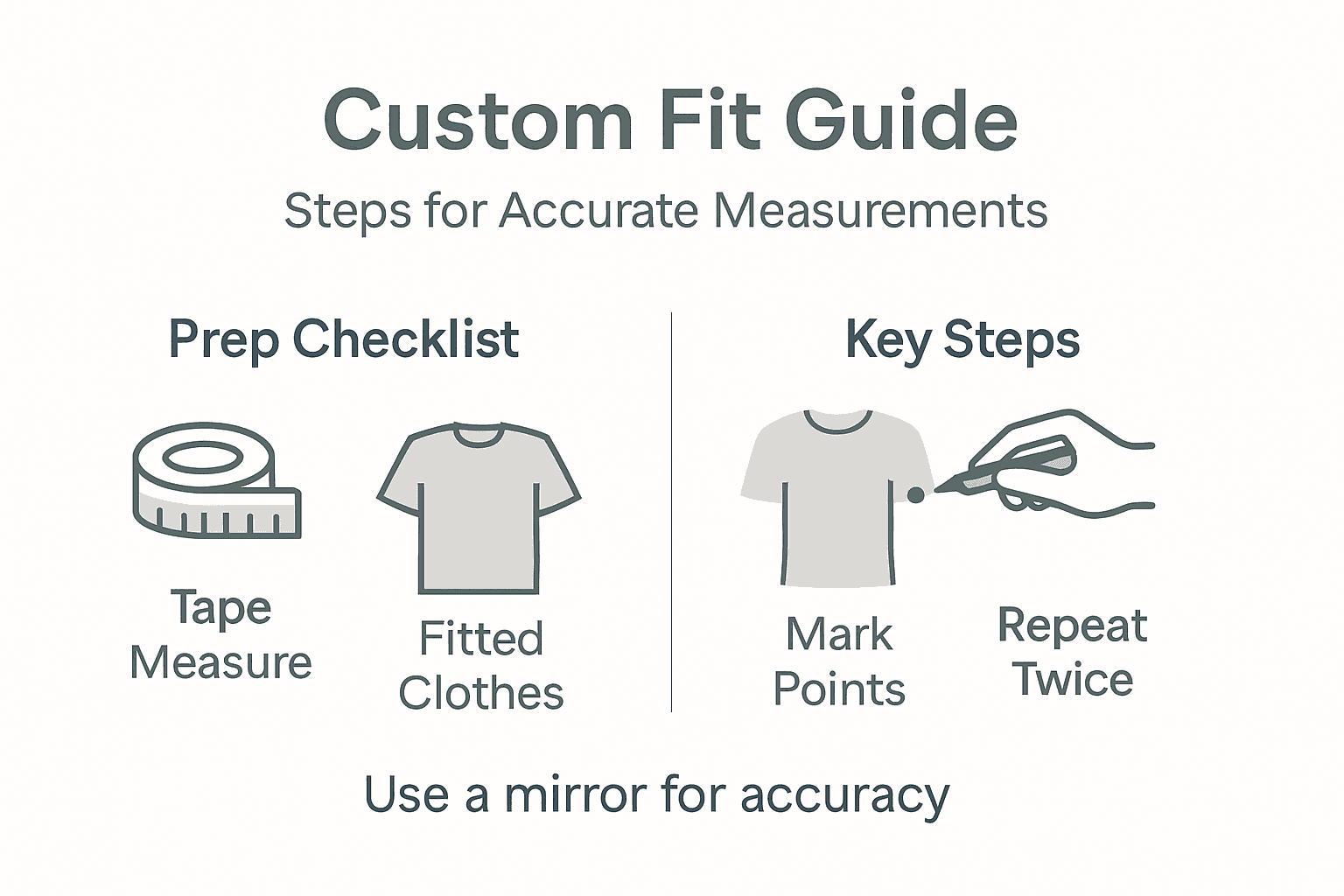
Start by gathering essential measurement tools recommended by body measurement experts. You’ll need:
- Flexible measuring tape (fabric or metal, preferably non-stretch)
- Clipboard or notepad for recording measurements
- Pencil or pen for documenting numbers
- Full-length mirror for visual alignment
For clothing, choose form-fitting items that reveal your body’s natural shape without adding unnecessary bulk. Wear tight undergarments like fitted tank tops, leggings, or compression wear. Avoid baggy clothing, bulky sweaters, or multiple layers that can distort your actual body dimensions.
Precision matters: Even minor clothing variations can shift measurements by up to half an inch.
Understanding the importance of standardized measurement protocols is crucial. The National Institute of Standards and Technology emphasizes using consistent tools and techniques to capture reliable body data.
Pro tip: Measure yourself in the morning before eating for the most consistent results, as body measurements can slightly change throughout the day.
Step 2: Identify and mark essential body reference points
Accurate clothing measurements depend on precisely identifying and marking key anatomical landmarks on your body. These reference points serve as crucial guides for capturing your unique body shape with exceptional precision.
Your goal is to locate and temporarily mark critical measurement reference points. The most important landmarks include:
- Acromion point (shoulder tip where shoulder meets arm)
- Bust line (fullest part of chest)
- Natural waistline (smallest part of torso)
- Iliac crest (top of hip bone)
- Shoulder-to-waist length
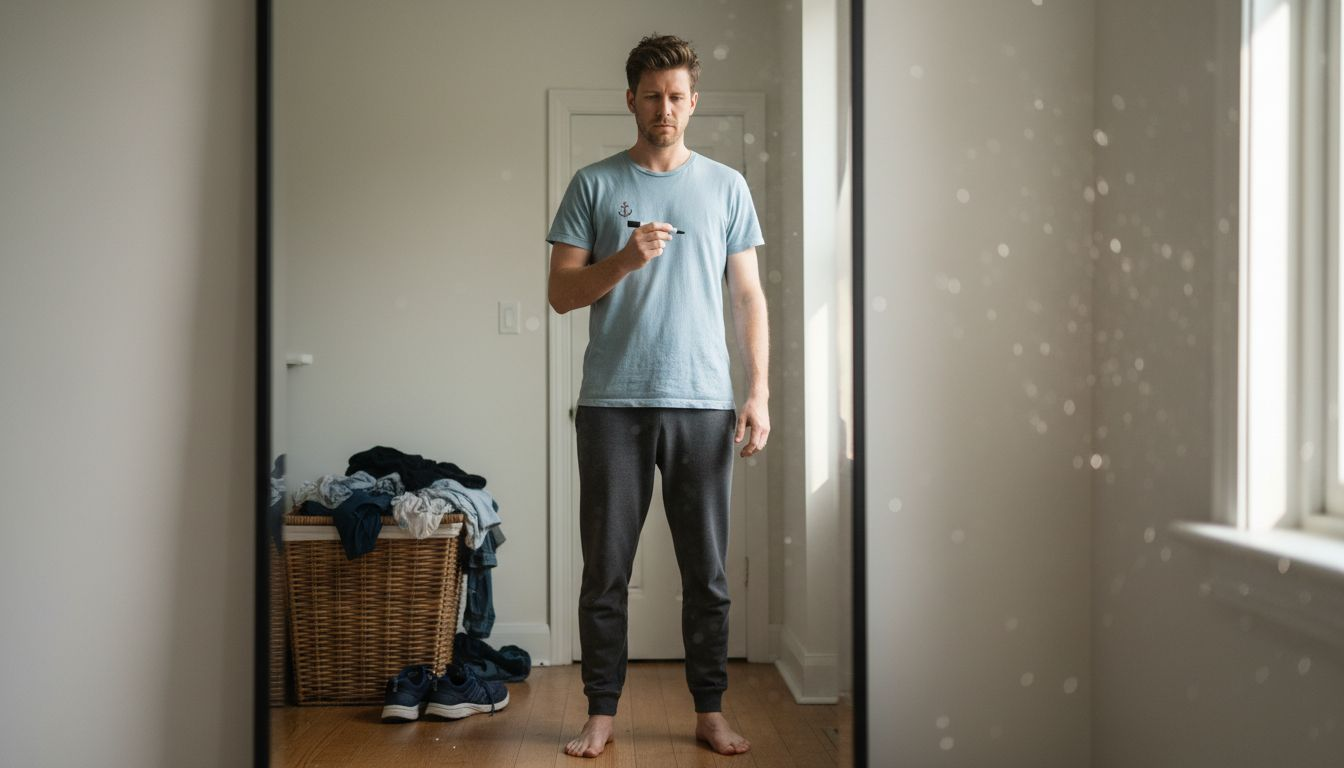
Use a washable marker or tailor’s chalk to lightly mark these points directly on your fitted clothing or skin. These temporary markings will help you maintain consistent positioning while taking measurements. Stand naturally with good posture, keeping your feet slightly apart and arms relaxed at your sides.
Precision is key: Even a quarter-inch shift can dramatically affect your final measurements.
The Indian Health Service guidelines emphasize the importance of clear visualization and careful landmark identification to minimize measurement errors.
Pro tip: Take measurements in front of a full-length mirror to help you accurately place markers and ensure proper body alignment.
Step 3: Take accurate bust, waist, hip, and sleeve measurements
Capturing precise body measurements is an art that requires attention to detail and consistent technique. Each measurement plays a crucial role in creating clothing that fits like a second skin, highlighting your unique body shape.
Follow these standardized measurement techniques for each key body area:
Here’s a quick reference comparing key body measurement types and their impact on clothing fit:
| Measurement Type | What It Determines | Common Fit Challenges | Best Practice |
|---|---|---|---|
| Bust | Chest size and fullness | Tightness or gapping in tops | Keep tape level across back |
| Waist | Torso contour | Loose or constricted waistbands | Measure at the natural dip |
| Hip | Bottom and skirt fit | Hip pull or sagging | Stand with feet together |
| Sleeve | Arm length for sleeves | Sleeves too short or long | Arm relaxed, slightly bent |
- Bust Measurement
- Stand straight with arms relaxed
- Wrap measuring tape around fullest part of chest
- Keep tape level and parallel to ground
- Breathe normally and measure at natural chest position
- Waist Measurement
- Find your natural waistline (smallest part of torso)
- Measure without sucking in or pushing out stomach
- Tape should be snug but not tight
- Stand with feet slightly apart for balance
- Hip Measurement
- Measure around widest part of hips and buttocks
- Keep tape level and horizontal
- Stand with feet together
- Wear fitted clothing to ensure accuracy
- Sleeve Measurement
- Measure from shoulder point to wrist
- Keep arm slightly bent
- Measure over shoulder and down arm
- Ensure tape follows natural arm curve
Professional tip: Always measure to the nearest 1/8 inch for ultimate precision.
The CDC methodology study emphasizes repeating measurements multiple times to ensure consistency and accuracy.
Pro tip: Have someone help you take measurements for the most precise results, as it’s challenging to maintain perfect positioning while measuring yourself.
Step 4: Double-check and record final measurements securely
Capturing your body measurements is only half the journey - documenting them accurately ensures your custom clothing will fit perfectly. Think of this step as your final quality control checkpoint, where precision meets documentation.
Follow these critical data recording guidelines to guarantee measurement integrity:
- Read measurements aloud as you record them
- Verify each number at least twice
- Use a dedicated measurement notebook or digital spreadsheet
- Write clearly and legibly
Organize your measurement documentation with these specific strategies:
Here’s a summary of key strategies for secure measurement recording:
| Recording Approach | Accuracy Benefit | Common Mistakes | Security Tip |
|---|---|---|---|
| Spoken + Written | Minimizes recording errors | Misheard or miswritten values | Read aloud and confirm |
| Notebooks | Ensures chronological records | Accidental smudges or illegibility | Use dedicated notebook |
| Digital Spreadsheets | Enables easy updates/tracking | Data loss from device failure | Back up and password-protect |
| Photograph Backup | Protects against paper loss | Poor photo clarity | Store in secure folder |
- Create separate sections for each body measurement
- Include date of measurement
- Note any specific body positioning or clothing worn
- Consider taking a reference photo wearing fitted clothing
Precision matters: A single misrecorded number can dramatically impact clothing fit.
The Centers for Disease Control anthropometric standards emphasize the importance of systematic, secure data management to maintain measurement reliability.
Pro tip: Take a clear smartphone photo of your written measurements as a backup, storing it in a secure, password-protected digital folder.
Achieve the Perfect Fit with Custom Clothing Tailored to Your Exact Measurements
Measuring yourself accurately can be challenging and even a small mistake can affect how your clothes fit and feel. This guide highlights how precise bust, waist, hip, and sleeve measurements matter for a flawless fit. Prima Dons and Donnas understands these challenges and transforms your exact body measurements into bold, confident styles crafted just for you.
Experience the difference that true customization makes with our made-to-order fashion collection. Whether you want luxury made-to-measure pieces or sustainable faux fur options, we bring your personalized vision to life. Visit Prima Dons and Donnas now to embrace confidence through fashion that fits your unique silhouette perfectly. Start your style journey today and stand out with exclusive, intentional designs created with you in mind.
Frequently Asked Questions
What measurement tools do I need for custom clothing?
To measure accurately for custom clothing, gather a flexible measuring tape, clipboard or notepad, a pencil or pen, and a full-length mirror. Start by collecting these tools before wearing fitted clothing for the best results.
How do I identify the key reference points on my body?
To find and mark essential reference points, locate your acromion point, bust line, natural waistline, iliac crest, and shoulder-to-waist length. Use a washable marker or tailor’s chalk to lightly mark these points to ensure precision when taking measurements.
What are the proper steps to take my bust, waist, hip, and sleeve measurements?
To take measurements, stand naturally and wrap the measuring tape snugly around the appropriate areas: the fullest part of your chest for bust, the smallest part of your torso for waist, the widest part of your hips, and from your shoulder to your wrist for sleeves. Make sure to measure to the nearest 1/8 inch for the best fit.
How can I ensure my recorded measurements are accurate?
To ensure accuracy, read each measurement aloud as you record it and verify numbers at least twice. Organize your measurement documentation clearly, using a dedicated notebook or digital format for easy updates and tracking.
When is the best time to take my body measurements?
The best time to take body measurements is in the morning before eating, as body size can slightly change throughout the day. Choose a time when you can maintain a consistent measuring environment for optimal results.
What should I wear while measuring for custom clothing?
Wear form-fitting clothing like fitted tank tops or leggings that reveal your natural body shape without adding bulk. Avoid baggy clothing and multiple layers to ensure your measurements are as accurate as possible.
Recommended
- How to Order Made-to-Measure Clothing for Confidence – Prima Dons & Donnas
- Made-to-Order Sizing Guide for Perfect Fit Fashion – Prima Dons & Donnas
- Custom Clothing Order Workflow for Unique Fashion Success – Prima Dons & Donnas
- Step by Step Custom Clothing Guide for Unique Looks – Prima Dons & Donnas


Leave a comment