

Step-by-Step Guide to Measuring for Made-to-Order Clothing
Personal style means choosing clothing that honors your shape and values, not settling for one-size-fits-all fast fashion. For women who crave unique expression and eco-conscious choices, achieving that perfect fit starts long before the first stitch is sewn. Gathering your toolkit for precise measurements lays the foundation for personalized, sustainable pieces designed just for you, setting the stage for a confident, truly custom wardrobe.
Table of Contents
- Step 1: Gather Essential Tools And Clothing
- Step 2: Choose The Right Undergarments For Measuring
- Step 3: Take Accurate Body Measurements
- Step 4: Record And Double-Check Key Details
- Step 5: Submit Measurements For Made-To-Order Perfection
Quick Summary
| Essential Insight | Explanation |
|---|---|
| 1. Use Professional-Grade Tools | Invest in high-quality measuring instruments for accurate body measurements to achieve a perfect fit in custom clothing. |
| 2. Choose Proper Undergarments | Select lightweight, form-fitting undergarments to ensure your true body shape is reflected during measurements. |
| 3. Measure with Precision | Follow specific techniques for taking body measurements, recording each step for accuracy and consistency. |
| 4. Document Measurements Diligently | Keep a detailed record of measurements in a dedicated notebook or digital format, including notes on conditions and dates. |
| 5. Communicate Clearly with Designers | When submitting measurements, provide detailed notes about fit preferences and include any unique body considerations for optimal results. |
Step 1: Gather Essential Tools and Clothing
Custom clothing measurement starts with assembling a comprehensive toolkit that transforms your design dreams into perfectly tailored reality. Preparing for precise measurements requires more than just enthusiasm - you need specialized equipment that ensures accuracy and professional results.
To kickstart your made-to-order clothing journey, you’ll want to collect a range of specialized pattern making tools. Your essential toolkit should include:
- Flexible measuring tape for body measurements
- Sharp fabric scissors or dressmaker’s shears
- Marking pencils or fabric chalk
- Straight pins and pin cushion
- Cutting mat or board
- Notebook for recording measurements
- Comfortable, form-fitting clothing for accurate sizing
When gathering your tools, prioritize quality over quantity. Professional-grade measuring tools can make a substantial difference in achieving a perfect fit. Consider investing in a sturdy, retractable measuring tape with clear markings and a lightweight, ergonomic design.
Professional garment makers know that precision starts with the right tools.
For clothing selection, opt for lightweight, form-fitting undergarments that allow for accurate body measurement. Think seamless, neutral-colored pieces that won’t add bulk or interfere with your measurement process.
Pro tip: Always keep your measuring tools clean and stored properly to maintain their accuracy and extend their lifespan.
Step 2: Choose the Right Undergarments for Measuring
Accurate body measurements are the foundation of perfectly tailored clothing, and your choice of undergarments can make or break this crucial process. When preparing for custom clothing measurements, you need to select form-fitting base layers that reveal your true body shape without adding extra bulk.
To ensure precise measurement techniques, opt for undergarments that meet these specific criteria:
- Lightweight, seamless underwear
- Non-padded, well-fitted sports bra
- Thin, stretchy leggings or form-fitting shorts
- Neutral-colored undergarments to minimize visual distraction
- Smooth, compression-free fabric that follows natural body contours
Professional tailors recommend wearing undergarments similar to those you’ll typically wear with the garment being designed. This approach ensures that your custom piece will fit perfectly in real-world wearing conditions.
The right undergarments are your secret weapon for achieving a flawless custom fit.
Avoid bulky, padded, or loose-fitting clothing that can add inches to your measurements and compromise the accuracy of your custom design. The goal is to create a precise body outline that reflects your true dimensions.
Pro tip: Invest in a set of neutral, well-fitted undergarments specifically reserved for taking measurements to maintain consistency across different clothing projects.
Step 3: Take Accurate Body Measurements
Capturing precise body measurements is the critical foundation for creating perfectly tailored clothing that fits like a second skin. Accurate measurement techniques transform your custom clothing dreams from abstract concept to wearable reality.
To capture precise body measurement guidelines, follow these essential steps:
- Stand straight with relaxed posture
- Use a flexible measuring tape
- Keep tape parallel to the floor
- Measure over thin, form-fitting undergarments
- Breathe normally during measurements
- Ask a friend to help for hard-to-reach areas
- Record measurements immediately
Key measurement areas require special attention and technique. Focus on these critical zones:
Here’s a summary of key measurement areas and what each requires for best accuracy:
| Measurement Area | Key Requirement | Common Error |
|---|---|---|
| Bust | Tape at fullest chest point | Tape too high or low |
| Waist | Find natural waistline | Measuring above/below waist |
| Hips | Widest lower body location | Ignoring hip asymmetry |
| Shoulders | Shoulder point to point | Curved tape over back |
| Sleeve Length | Shoulder seam to wrist | Bent arm during measurement |
- Bust: Measure at the fullest part of your chest
- Waist: Find your natural narrowest point
- Hips: Measure at the widest part of your lower body
- Shoulders: Measure across back from shoulder point to shoulder point
- Sleeve length: From shoulder seam to wrist
Precision is the difference between a good fit and a perfect fit.
Remember that measurement consistency matters most. Take multiple measurements to ensure accuracy, and always measure to the nearest quarter-inch for the most precise custom clothing experience.

Pro tip: Create a permanent measurement record in a dedicated notebook or digital app, updating it every few months to track any body changes.
Step 4: Record and Double-Check Key Details
Precision in custom clothing starts with meticulous measurement documentation. Your carefully captured body measurements are the blueprint for your perfectly tailored garment, making accurate recording crucial to transforming design dreams into reality.
Careful measurement recording techniques require strategic approach and attention to detail:
- Use a dedicated measurement notebook
- Create a digital backup in a spreadsheet or app
- Date each measurement record
- Include notes about measurement conditions
- Take measurements at consistent times of day
- Verify measurements in different postures
- Cross-reference with previous records
When documenting your measurements, include these essential details:
- Full body measurements (bust, waist, hips)
- Specific length measurements (inseam, sleeve length)
- Shoulder width and arm circumference
- Notes on body shape and unique proportions
- Preferred style and fit preferences
Accuracy in documentation transforms good intentions into perfect clothing.
Remember that measurement consistency is key. Slight variations can occur, so always measure at least twice and average the results for the most accurate representation of your body.
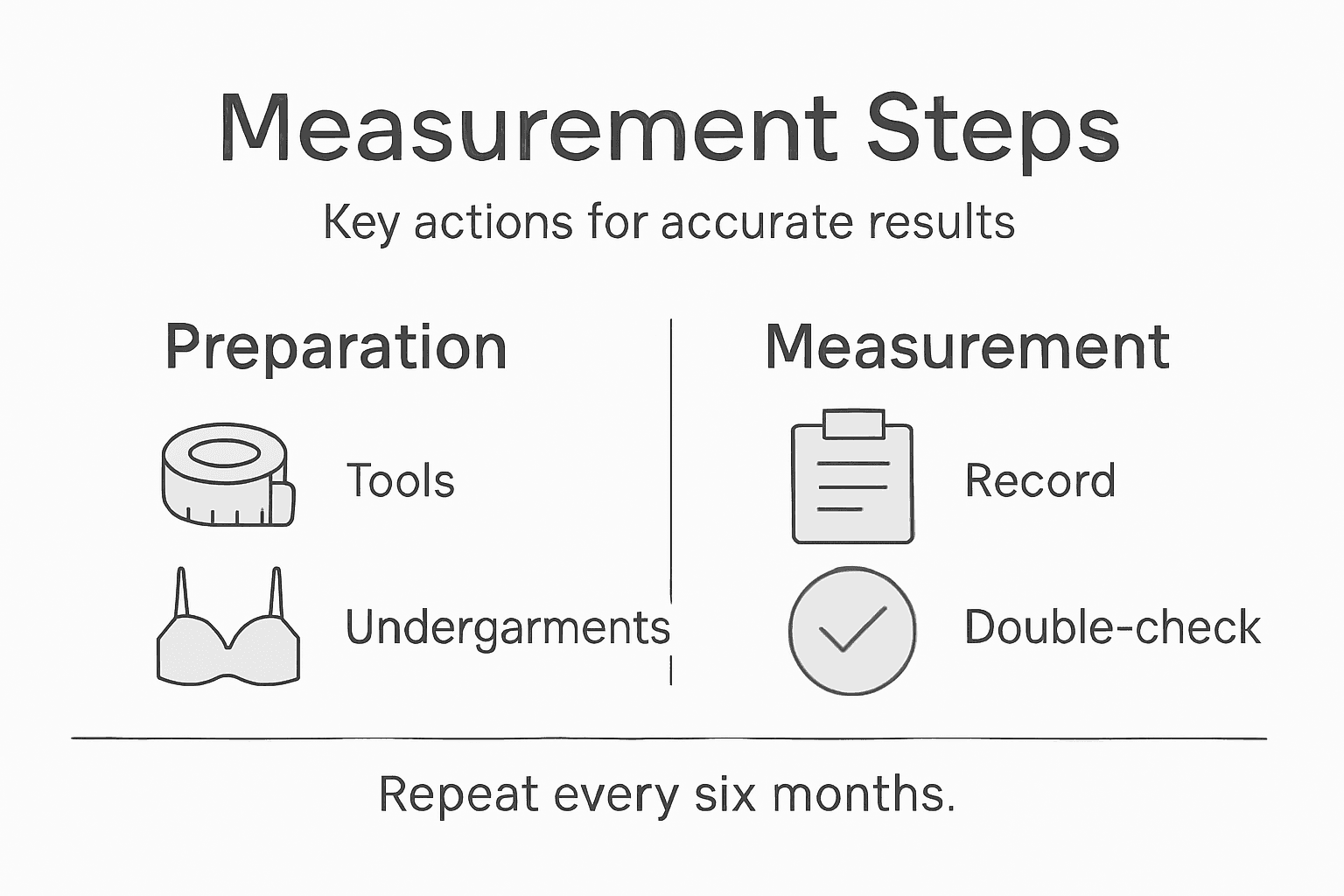
Pro tip: Take photos of your measurement process to create a visual reference that can help you maintain consistency in future measurements.
Compare these common measurement recording methods and their advantages:
| Method | Benefits | Potential Drawback |
|---|---|---|
| Paper Notebook | Easy to annotate, tactile | Prone to loss or damage |
| Spreadsheet | Easy calculations, backup | Requires device and software |
| Photo Archive | Visual reference | Needs consistent organization |
| Measurement App | Automated reminders | Dependent on device/software |
Step 5: Submit Measurements for Made-to-Order Perfection
Transforming your meticulously gathered measurements into a stunning custom garment requires strategic submission that ensures designers capture every nuanced detail of your unique body shape. Precise measurement communication is the bridge between your vision and the final tailored masterpiece.
Understand the made-to-order measurement submission process with these critical steps:
- Verify all measurements are current and accurate
- Choose a digital or physical submission method
- Include clear, detailed notes about fit preferences
- Attach any supplementary body shape documentation
- Provide context about intended garment usage
- Confirm contact information for potential follow-ups
- Request confirmation of measurement receipt
Successful measurement submission involves more than just numbers:
- Communicate your style personality
- Highlight any unique body considerations
- Share inspiration images if possible
- Be open to designer recommendations
- Maintain clear communication channels
Your measurements tell a story - make sure it’s a narrative of perfect fit.
Remember that communication is as important as accuracy. Designers appreciate context that helps them understand your specific fit requirements and aesthetic preferences.
Pro tip: Keep a personal copy of your measurements and take clear, well-lit photos of your body from multiple angles to provide comprehensive reference for designers.
Achieve Perfect Fit with Prima Dons and Donnas
Measuring for made-to-order clothing can feel overwhelming but precise measurements are the key to unlocking a custom wardrobe that truly fits your unique body shape. If you have followed the step-by-step guide and understand the importance of accuracy in taking bust, waist, hips, shoulders, and sleeve measurements then you are ready to experience how those numbers translate into bold, confident fashion designed just for you. Prima Dons and Donnas specializes in transforming your carefully taken measurements into luxurious, statement-making pieces that emphasize personal style and comfort.
Now is the time to let your personalized measurements guide you toward exclusive fashion that blends luxury aesthetics with sustainable choices such as high-quality faux fur. Explore our custom clothing and footwear options to express your individuality with bold designs made to your specifications. Don’t settle for ill-fitting off-the-rack clothes when you can stand out with precision fit and captivating style. Visit Prima Dons and Donnas today to order your perfect custom piece and embrace confidence that comes from flawless fit and intentional fashion.
Frequently Asked Questions
What tools do I need for accurate measurements?
To take accurate measurements for made-to-order clothing, gather essential tools like a flexible measuring tape, sharp fabric scissors, marking pencils or fabric chalk, and a comfortable outfit. Ensure that you prioritize quality tools, as professional-grade equipment can significantly improve the accuracy of your measurements.
How should I choose undergarments for measuring my body?
Select lightweight, seamless, and well-fitted undergarments that will reveal your true body shape without adding bulk. Opt for neutral colors and avoid padded or loose-fitting items to ensure accurate measurements for your custom garment.
What are the key areas to measure for a perfect fit?
Focus on critical measurement areas, including the bust, waist, hips, shoulders, and sleeve length. Ensure that you use a flexible measuring tape and record each measurement accurately, aiming for precision to the nearest quarter-inch for the best results.
How do I record my body measurements accurately?
Use a dedicated notebook or digital method to document your measurements consistently. Include details such as body shape, unique proportions, and the date of each measurement to track any changes over time.
What should I include when submitting my measurements to a designer?
When submitting your measurements, confirm their accuracy and provide clear notes about your fit preferences and intended garment usage. Consider including additional documentation about your body shape and any inspiration images that may help communicate your style vision.
How can I ensure my measurements are reliable over time?
Take measurements at consistent times of day and in the same posture for reliability. Regularly update your measurement documentation every few months to track any body changes and maintain accurate records for future custom clothing projects.


Leave a comment