

Expressive Fashion Psychology: Dress for Who You Are
TL;DR:
- Clothing influences self-identity, mood, and social confidence by connecting to their symbolic meanings.
- Dressing intentionally according to psychological goals enhances emotional well-being and supports authentic self-expression.
Most people treat getting dressed as a daily task. Pick something. Move on. But expressive fashion psychology tells a very different story. The clothes you wear are not just fabric. They shape how you think, how you feel, and how you show up in the world. Research now confirms that clothing influences self-identity, mood, and even social confidence in measurable ways. Whether you are picking an outfit for a concert, a wedding, or a regular Tuesday, understanding the psychology of clothing choices can change the way you think about your wardrobe entirely.
Table of Contents
- Key takeaways
- The foundations of expressive fashion psychology
- Emotional well-being and clothing satisfaction
- Practical frameworks for expressive dressing
- Embracing individuality through custom fashion
- Overcoming wardrobe mismatches and social barriers
- My take on dressing with purpose
- Shop intentional fashion at Primadonsanddonnas
- FAQ
Key takeaways
| Point | Details |
|---|---|
| Clothing shapes mindset actively | Wearing a garment while connecting to its meaning shifts your behavior and cognitive focus. |
| Fit and satisfaction predict well-being | Finding clothes that fit and feel right directly reduces social avoidance and lifts mood. |
| Mismatched wardrobes drain confidence | Closets full of past-identity pieces cause decision fatigue and low self-esteem. |
| Custom fashion reinforces identity | Made-to-order pieces aligned with who you are now support emotional consistency and confidence. |
| Special occasions deserve intentional dressing | Choosing the right outfit for events like weddings or concerts has real psychological impact. |
The foundations of expressive fashion psychology
Expressive fashion psychology is the study of how clothing choices interact with your psychological state, your sense of self, and your emotional experience. It is not about looking good for others. It is about what happens inside you when you put something on.
The most important concept here is enclothed cognition. This describes how clothing influences thoughts, feelings, and behaviors when two things happen at once: you physically wear the garment, and you consciously connect to its symbolic meaning. A landmark study illustrated this with a simple experiment. Participants who wore a doctor’s coat showed significantly higher attention and focus than those who wore the same coat but were told it belonged to a painter, or those who simply saw the coat on a hanger. The coat itself was identical. The meaning made all the difference.
Here is what makes this relevant to everyday dressing:
- Wearing a bold, confident piece while believing you are someone who owns that energy will change how you carry yourself.
- Putting on formal attire is linked to abstract thinking and stronger identity internalization.
- Business suit wearers show higher testosterone levels and better negotiation outcomes compared to people wearing casual clothes in the same situation.
The physical and symbolic elements of a garment work together. One without the other produces a weaker effect. That is why the same dress can feel empowering one day and hollow the next. If you are not mentally connected to what you are wearing, the psychological lift is minimal.
Pro Tip: Before you get dressed, pause for ten seconds and decide what psychological state you want to show up in. Choose your outfit to match that intention, not just the weather or what is clean.
Emotional well-being and clothing satisfaction
The connection between clothing and emotional health is not anecdotal. It is measurable.
A UK survey found that 19% of variance in well-being scores could be explained by clothing satisfaction alone, particularly among women aged 38 to 67. That is a significant number. It means that how satisfied you feel with your clothes predicts a meaningful chunk of your overall psychological well-being, independent of income, age anxiety, or other lifestyle factors. Separately, research confirms that clothing satisfaction predicts mental health regardless of aging anxiety. Your wardrobe is doing more emotional work than you may realize.
The specific mechanisms are worth knowing:
- Women who could not find well-fitting, age-appropriate clothes reported higher rates of social avoidance. They skipped events, canceled plans, and withdrew from opportunities.
- Clothing that fits your body and your current sense of self creates a feedback loop. You feel seen, you engage more, and that engagement reinforces confidence.
- The emotional role of clothing extends to mood regulation and self-esteem as a direct extension of the self, not just a covering.
This is why the impact of fashion on emotions is not shallow. It is structural. When you repeatedly fail to find clothes that work for your body or your identity, the cost is not just frustration. It translates into real social withdrawal and reduced psychological well-being over time.
Pro Tip: When building or editing your wardrobe, prioritize how a piece makes you feel over how it looks on a hanger. Emotional resonance and physical fit are not bonuses. They are the whole point.
Practical frameworks for expressive dressing
Understanding expressive fashion psychology is useful only if you can apply it. The practical question is: how do you build a wardrobe that actually supports the person you are and want to become?
Start by dressing for the psychological state you want to occupy, not for the trend cycle. Trends tell you what is popular. Expressive styles in fashion tell you what is yours. These are often very different things.
Here is how different occasions and intentions connect to psychological outcomes:
| Occasion | Style intention | Psychological effect |
|---|---|---|
| Wedding or formal event | Structured, elegant, tailored fit | Dignity, social confidence, belonging |
| Concert or night out | Bold color, statement silhouette | Energy, self-expression, social openness |
| Lunch date | Comfortable but intentional | Ease, warmth, approachability |
| Work or presentation | Formal or power-coded clothing | Abstract thinking, authority, focus |
| Casual self-care day | Soft textures, personal comfort | Emotional regulation, self-compassion |
For plus-size women especially, the ability to find garments that fit well and reflect personal style is not a luxury. It is a psychological need. Research consistently links clothing fit and satisfaction to reduced social avoidance and higher engagement with life. When those options are limited or sizing is inconsistent, the psychological cost is real and documented.
Dressing with purpose also means accounting for how clothing shapes social identity and group belonging. What you wear signals something to others and, more importantly, something to yourself. Choosing an outfit that aligns with who you are right now, not who you were three years ago, is one of the most direct acts of psychological self-care available to you.
You can start with this checklist when planning an outfit for any special occasion:
- Does this fit my body the way it is today?
- Does this match the emotional tone I want to feel?
- Does this reflect something true about who I am now?
- Does this support the social role I am stepping into?
If the answer to even two of those is yes, you are dressing with psychological intention.
Embracing individuality through custom fashion
There is a reason custom and made-to-order fashion has such a strong psychological pull. It removes the friction between who you are and what you wear.
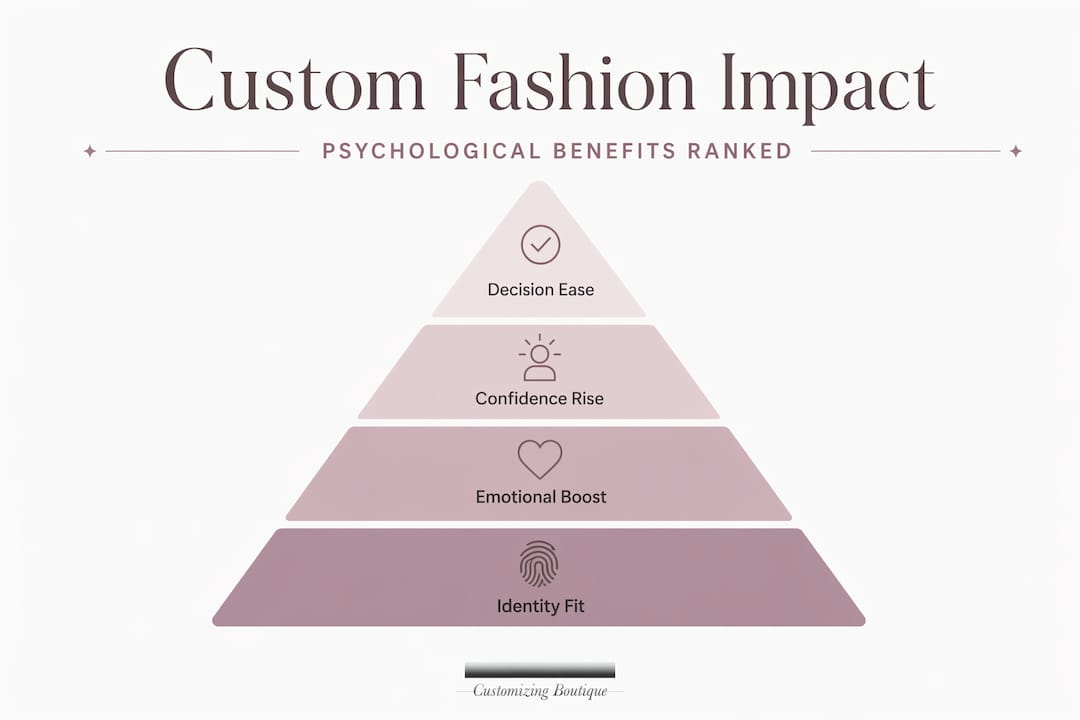
Off-the-rack fashion is designed for a generalized body and a generalized taste. For many people, especially those in plus sizes or those with a very clear personal aesthetic, that gap between what exists and what fits creates constant low-grade frustration. Custom pieces close that gap. And when clothing supports self-expression as a direct extension of identity, the emotional benefits follow naturally.
The advantages of personalized fashion choices are concrete:
- You reduce decision fatigue because every piece already aligns with your current identity and taste.
- You build stronger emotional bonds with your wardrobe, which research links to better mood regulation and self-esteem.
- You stop buying filler pieces that take up space but never get worn, a wardrobe pattern tied to lower well-being.
- You create a consistent visual identity that reinforces your sense of self across different contexts and occasions.
- You gain access to sizing that actually fits your body, which matters enormously for confidence and social engagement.
Statement fashion operates similarly. A bold piece that feels unmistakably you does not just look interesting. It activates the psychological effect of expressive fashion psychology in its most direct form. You put it on, you know what it means, and that meaning shapes how you move through the day. That is statement fashion at work. The garment becomes a tool, not just a thing to wear.
Overcoming wardrobe mismatches and social barriers
One of the most common and least discussed problems in the psychology of clothing choices is the identity mismatch wardrobe. You open your closet and nothing feels right. Not because your taste is bad, but because the clothes in there belong to an older version of you.
Research makes this explicit. Wardrobe mismatches with current identity cause the “nothing to wear” feeling, even in a full closet. Those past identity pieces create decision fatigue and social avoidance. The more items that do not reflect who you are now, the harder it is to find clarity about what to put on and, by extension, how to show up.
Strategies that actually work:
- Do a focused edit, not a massive purge. Remove items that belonged to a version of you that no longer fits your current life or values.
- Build a small core of identity-consistent pieces that feel right across multiple occasions.
- Recognize emotional bonds with specific items. Strong attachment to clothing strengthens mood regulation. Keep those pieces intentionally.
- Invest in garments for the social occasions you actually want to attend, not the ones you have been avoiding.
The solution is not always buying more. Sometimes it is removing the noise so that what remains actually speaks for you.
Pro Tip: When your closet feels overwhelming, ask yourself: “Does this piece belong to who I am now?” Keep the yeses. Release the rest. A smaller, identity-consistent wardrobe outperforms a large, mismatched one every time.
My take on dressing with purpose
I have watched a lot of people get fashion completely backwards. They chase what is trending and then wonder why they still feel invisible. Or they avoid shopping altogether because nothing fits right, and then they skip the event because they have nothing to wear. Both outcomes come from the same mistake: treating clothing as decoration instead of a psychological tool.
What I know from experience is that the moment someone finds a piece that truly fits, both physically and in terms of who they are, something shifts. They stand differently. They engage more. The confidence is not performative. It is structural.
I have seen this especially with plus-size clients who for years settled for whatever came closest to fitting. Finding something made for their body, in a color and silhouette they actually love, is not a small thing. It changes how they move through social spaces. That is expressive fashion psychology in real life, not in a lab.
My strong recommendation: stop chasing trends and start wearing with purpose. Pick pieces that mean something to the version of you that exists right now. Special occasions, weddings, concerts, lunch dates, all of it deserves intentional dressing. You do not need a full wardrobe overhaul. You need a few pieces that actually tell the truth about who you are.
Experiment. Try the bold silhouette. Try the color that scares you. The research backs you up, and your own experience will too.
— Latoya
Shop intentional fashion at Primadonsanddonnas
If this article has you rethinking your wardrobe, the next step is finding pieces that actually deliver on these principles.
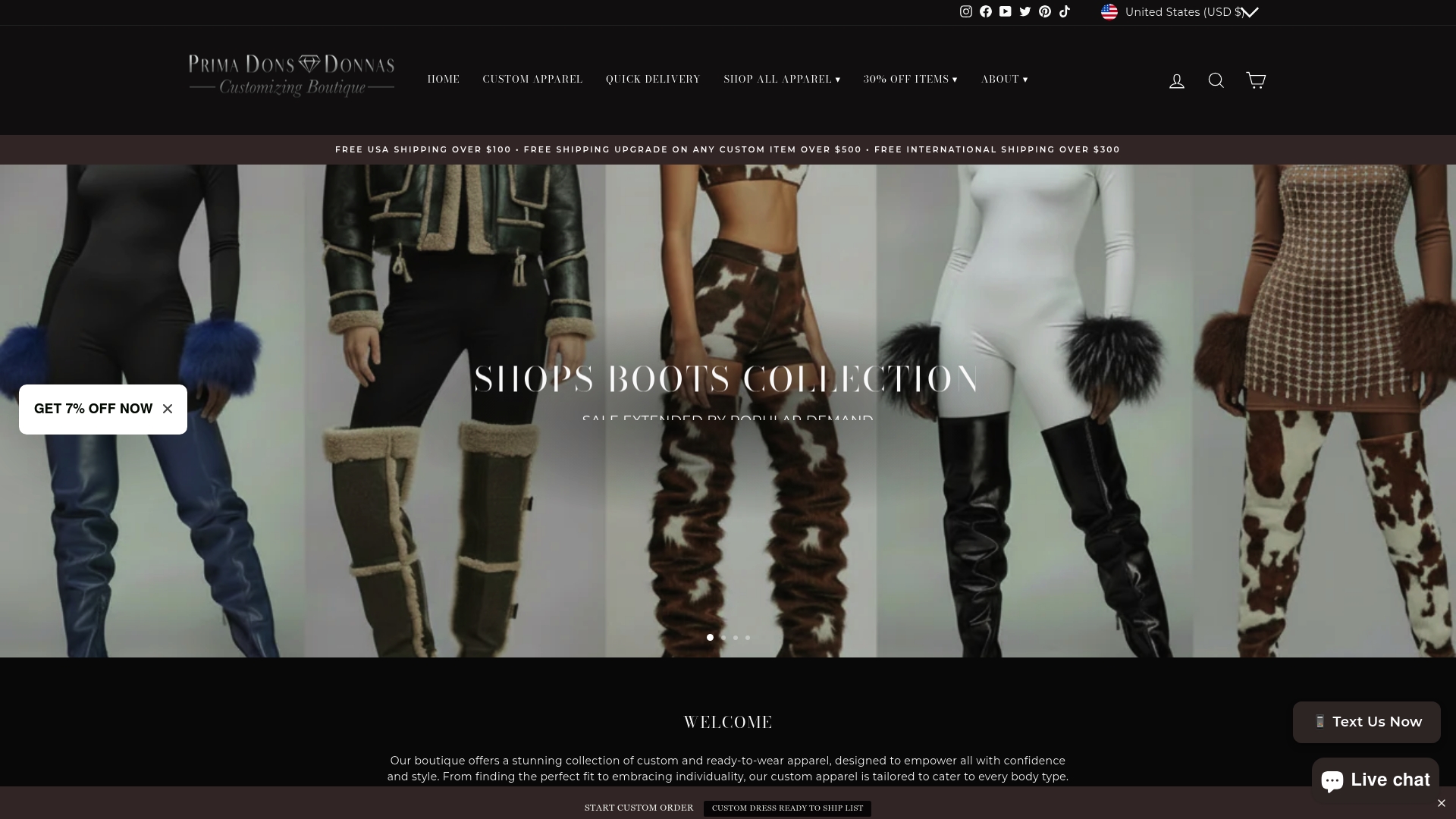
Primadonsanddonnas specializes in made-to-order dresses and custom apparel designed for exactly this kind of intentional expression. Every piece is tailored to your size and color preference, so the fit-and-identity alignment that research links to well-being is built into the process. Special occasion looks for parties, concerts, weddings, and lunch dates are all available, including options for plus size boots and bold outerwear. Ready-to-ship options are also available for quick delivery. Shop the full custom apparel collection and find pieces that belong to who you are right now.
FAQ
What is expressive fashion psychology?
Expressive fashion psychology is the study of how clothing choices shape identity, mood, and behavior. It draws on concepts like enclothed cognition to explain why what you wear affects how you think and feel.
How does clothing affect your emotional well-being?
Research shows that clothing satisfaction explains up to 19% of variance in well-being scores. Clothes that fit well and reflect your identity reduce social avoidance and support better mood and confidence.
Why do I feel like I have nothing to wear with a full closet?
This is a documented psychological pattern. A closet full of past-identity pieces creates decision fatigue and misalignment. A smaller, curated wardrobe of identity-consistent clothing outperforms a larger mismatched one for confidence and social engagement.
Does custom or made-to-order fashion have real psychological benefits?
Yes. Custom clothing removes the gap between your identity and what you wear, reduces decision fatigue, and builds stronger emotional bonds with your wardrobe, all of which support self-esteem and mood regulation.
How should I dress for special occasions like weddings or concerts?
Choose with psychological intention. Match the emotional tone of the event, prioritize fit, and pick pieces that reflect who you are now. The right outfit for a concert or wedding is one that makes you feel present, confident, and authentically yourself.
Recommended
- How clothing sparks confidence and personal expression – Prima Dons & Donnas
- Fashion Individuality Explained: Making Style Personal – Prima Dons & Donnas
- Statement-Making Fashion: Empowering Individuality Now – Prima Dons & Donnas
- Individual Expression in Clothing: Empowering Identity – Prima Dons & Donnas


Leave a comment