

Step by Step Ordering Custom Footwear: Your Full Guide
TL;DR:
- Ordering custom footwear requires thorough preparation, including precise measurements, clear style references, and material choices, to ensure a perfect fit and desired outcome. The process involves multiple stages, such as consultation, sampling, and final production, which demand patience and attention to detail for satisfactory results. Proper inspection upon delivery and honest wear testing are essential to verify quality and comfort, ultimately resulting in long-lasting, personalized shoes.
Custom footwear sounds exciting until you actually try to order it and realize you don’t know where to begin. Most people get stuck before they even pick a style. The step by step ordering custom footwear process has more stages than most shoppers expect, and skipping even one can mean delays, poor fit, or shoes that just don’t match what you pictured. This guide walks you through every phase clearly, from your first inspiration image to the moment you lace up your finished pair. Follow these steps and you’ll avoid the most common mistakes right from the start.
Table of Contents
- Key takeaways
- What you need before placing your order
- The step by step ordering custom footwear process
- Common pitfalls when ordering custom shoes
- What to expect when your shoes arrive
- My honest take on the custom footwear process
- Shop custom footwear at Primadonsanddonnas
- FAQ
Key takeaways
| Point | Details |
|---|---|
| Measure beyond length and width | Accurate foot measurements, including arch height and heel width, directly determine how well your custom shoes fit. |
| Expect a long timeline | Fully bespoke shoes can take 80 to 145 days from start to delivery, so plan ahead. |
| Sample rounds are non-negotiable | Budget for 2 to 5 sample rounds to catch fit and material issues before final production. |
| Material quality determines longevity | Construction details like leather grain direction and stiffener quality matter more than color or brand. |
| Inspect everything upon delivery | Check stitching, sole attachment, and comfort in motion before accepting your order as complete. |
What you need before placing your order
Most people jump straight to picking colors and styles. That’s the fun part, of course, but going in without the right prep is the fastest way to end up with shoes that disappoint. Here’s what to gather and decide before you ever submit a design brief.
Foot measurements. Standard sizing is not enough for custom work. You need your full foot profile. Accurate measurements should include arch height, instep, and heel width, not just length and width. Get these taken by a professional if you can, or use a Brannock device and a tape measure at home.
Style direction. Know what you want before you contact a maker or brand. Collect reference images, note specific details you love, and identify anything you definitely don’t want. Vague briefs produce vague results.
Material preferences. Colors are just the start. Think about leather type, texture, sole style, and hardware finishes. Material choices like leather grain orientation and stiffener quality affect durability and comfort far more than most shoppers realize.
Budget and order quantity. For individual orders, most custom shoemakers start at 1 to 2 pairs. Know your budget ceiling including deposits, shipping, and potential revision costs.
Here’s a quick preparation checklist before you move forward:
- Full foot measurements (length, width, arch height, instep, heel width)
- 5 to 10 inspiration images or design references
- Preferred materials, colors, and sole type noted
- Budget range confirmed, including deposit amount
- Delivery deadline identified (especially for events or special occasions)
- Contact details for your chosen maker or retailer ready
Pro Tip: Before your consultation, create a simple one-page brief with your measurements, reference images, and style notes. Makers who receive clear briefs consistently deliver better first samples.
| Preparation item | Why it matters |
|---|---|
| Full foot measurements | Determines last shape and final fit accuracy |
| Style reference images | Reduces design miscommunication significantly |
| Material preferences | Guides sourcing and sets quality expectations |
| Confirmed budget | Prevents surprises during deposit and balance phases |
| Delivery timeline | Helps maker schedule production appropriately |
The step by step ordering custom footwear process
This is the core of your custom shoe ordering guide. Walk through each step in order and you’ll have a clear picture of what’s happening at every stage.
Step 1: Initial consultation and design brief (Days 1 to 5). This is where you share your vision. Whether you’re ordering online or in person, you’ll discuss your style direction, intended use, and any specific requirements. Bring your prep materials. The more specific you are, the better. A good maker will ask clarifying questions and document everything in an order confirmation.
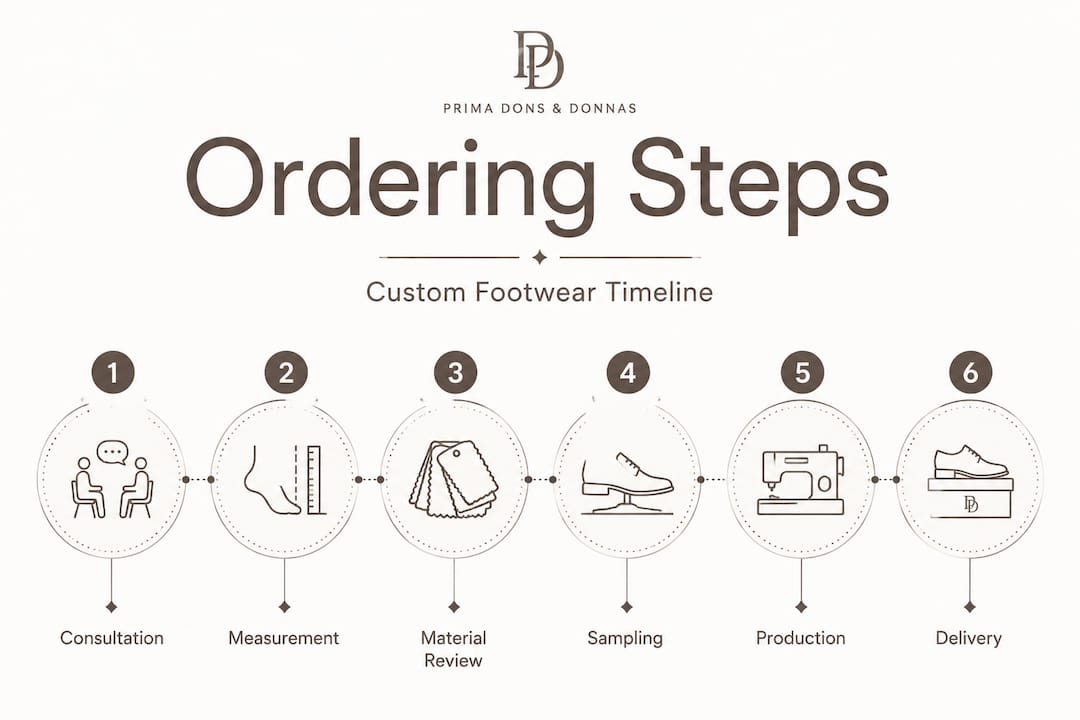
Step 2: Foot measurement review (Days 3 to 7). Even if you submitted measurements upfront, expect the maker to review or request clarification. For fully bespoke work, they may ask for traced outlines of both feet or additional width measurements. This step feeds directly into last creation, which is the foot-shaped mold your shoe is built around.
Step 3: Material selection and approval (Days 5 to 14). You’ll review swatches, sole options, and hardware choices. Approve these in writing. Do not skip this step or assume the maker will match your reference image exactly. Physical swatches and approved samples are your protection here.
Step 4: Sample development (Days 15 to 60). The bespoke ordering process typically requires 2 to 3 sample rounds for modified designs and 3 to 5 rounds for fully bespoke pairs. Each round involves the maker sending a physical sample for your review. You test the fit, inspect the construction, and mark any changes. This phase takes patience but it’s where your final shoes are shaped.
Pro Tip: Wear each sample for at least 30 minutes on hard floors and soft surfaces before giving feedback. Fit issues that don’t appear during a quick try-on will show up during an honest wear test.
Step 5: Final approval and production (Days 60 to 100). Once you’ve signed off on a sample, production begins. This is a hands-on phase involving pattern cutting, upper assembly, lasting, sole attachment, and finishing. Quality checks happen throughout. You should receive progress updates from your maker during this phase.
Step 6: Shipping and delivery (Days 100 to 145). Fully bespoke shoes with new lasts typically ship within 5 to 45 days after production wraps, depending on location. Track your shipment closely and be available to receive the package in good condition.
| Phase | Estimated timeframe |
|---|---|
| Consultation and brief | Days 1 to 5 |
| Measurement review | Days 3 to 7 |
| Material selection | Days 5 to 14 |
| Sample development | Days 15 to 60 |
| Production | Days 60 to 100 |
| Shipping and delivery | Days 100 to 145 |
For a deeper breakdown of the full ordering process, Primadonsanddonnas offers a tailored walkthrough from design brief to doorstep.
Common pitfalls when ordering custom shoes
Even with a solid plan, things go wrong. Here are the mistakes that trip people up most often, and how to avoid each one.
- Skipping sample wear tests. A quick try-on in your living room is not enough. At least 3 to 5 pairs should be wear-tested by different people before any production approval. For individual orders, wear the sample through a full day before giving feedback.
- Inaccurate measurements. One wrong number throws off the entire last. Measure both feet separately. The larger foot is your guide.
- Not approving material swatches. Assuming the maker will match your inspiration image is a costly mistake. Always approve physical or digital swatches in writing before production starts.
- Ignoring payment terms. Deposits with balances due upon completion are standard. Understand the full payment schedule before you commit, and get it in writing.
- Unrealistic deadlines. Ordering custom shoes for an event three weeks away is almost never going to work. Build in buffer time for each phase.
“Upfront clarity on payment terms is not just good practice. It’s what keeps both sides committed to the lengthy, complex process of making truly custom footwear.”
Pro Tip: Ask your maker for a written timeline and milestone checklist at the start. If they can’t provide one, that’s a red flag worth paying attention to.
Managing production delays is another real concern, especially around holidays when manufacturers are backed up. Place orders for special occasion footwear at least three to four months in advance when timing matters. Clear, consistent communication with your maker is the single best way to catch problems before they become expensive.
What to expect when your shoes arrive
Delivery day is exciting. But before you wear them out, take 15 minutes to do a proper inspection. This is part of any good personalized shoe buying process and it protects you if something needs to be corrected.
Inspect the construction first. Look at the stitching along the upper and the welt. Check that the sole is attached evenly with no gaps. Run your fingers along the interior lining for any rough seams or loose adhesive. A thorough inspection should cover stitching, sole attachment, finishing quality, and fit comfort during movement.
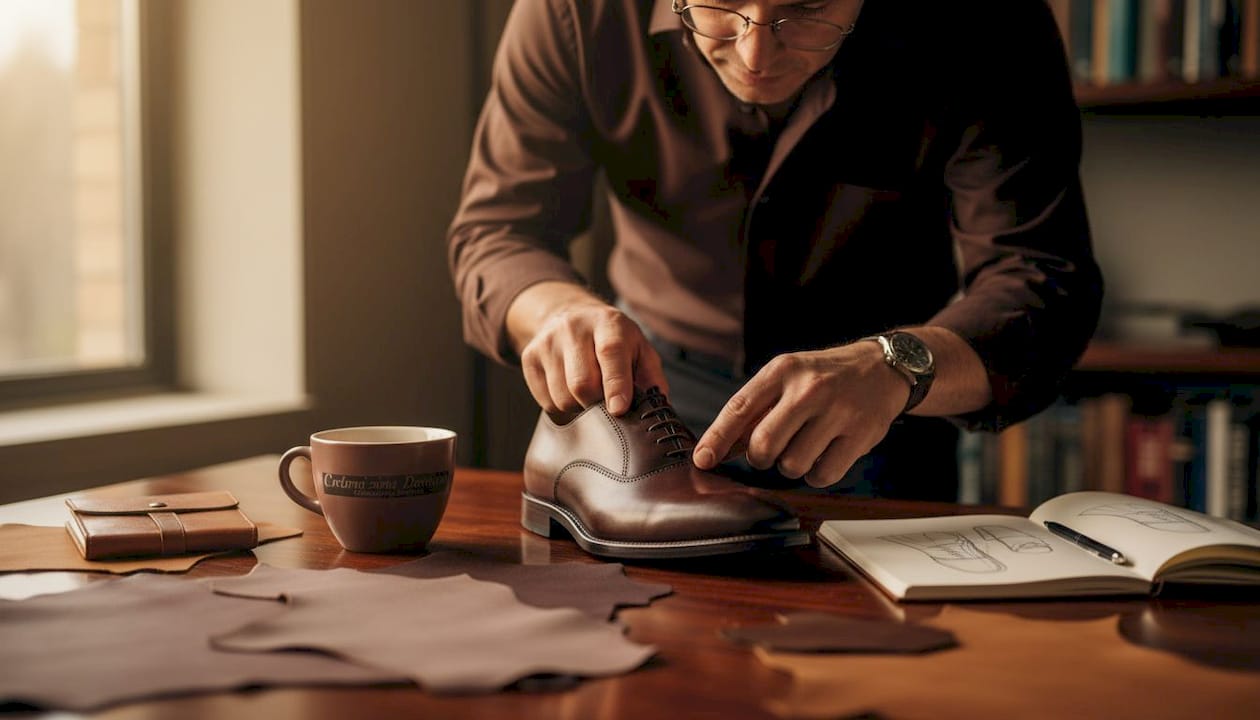
Test the fit in motion. Walk around for at least 20 minutes. Go up and down stairs. Stand still for a few minutes. The shoe should feel secure at the heel, have no pressure points, and allow your toes to move slightly.
Here is a comparison of what quality looks like versus what to watch out for:
| Quality indicator | Common defect |
|---|---|
| Even, tight stitching throughout | Loose or skipped stitches at stress points |
| Sole attached flush with no lifting | Sole edges separating or uneven bonding |
| Smooth interior lining | Rough seams or exposed adhesive inside |
| Snug heel with no slippage | Heel gap or excessive looseness |
| Consistent color and finish | Uneven dye, scuffs, or patchy finish |
If something doesn’t meet the standard you agreed on, document it with photos immediately and contact your maker within 48 hours. Most reputable custom shoemakers will correct construction defects. For long-term care, store your custom shoes in their dust bags, use cedar shoe trees, and condition leather regularly. These habits protect your investment and extend the life of the shoe significantly.
My honest take on the custom footwear process
I’ve seen people go through this process and come out the other side thrilled. I’ve also seen people rush it and end up with shoes they never wear. The difference is almost always preparation and patience.
In my experience, the step that gets skipped most often is the wear test. People get excited when a sample arrives and want to approve it immediately so production can move faster. That impatience is understandable, but it’s where fit problems get locked in. I always recommend treating each sample round like a test drive, not a formality.
The other thing I’ve learned is that material quality shapes everything. Customers often spend a lot of energy choosing colors but don’t ask enough questions about construction. A beautifully colored shoe built on a poor stiffener will break down within a year. The best practice for custom footwear is to ask your maker specifically about the materials going inside the shoe, not just on top of it.
My recommendation: give the process the time it actually needs. Set your delivery deadline, count backward through the phases, and add two weeks of buffer. If you’re ordering for a concert, event, or special occasion, start earlier than you think you need to. The benefits of made-to-order footwear are real, but only when the process is followed correctly.
— Latoya
Shop custom footwear at Primadonsanddonnas
Ready to put this guide into practice? Primadonsanddonnas makes it easy to start your custom order with expert support at every step.
Browse the custom shoes and sneakers collection to find styles you can personalize by size, color, and design details. Every pair is made to order for your measurements and preferences. Need a coordinated full look for a special occasion? The made-to-order dress collection pairs perfectly with custom footwear for weddings, parties, concerts, and lunch dates. Plus sizes available across all categories. Ready to ship options also available for faster delivery.
FAQ
How long does ordering custom footwear take?
Fully bespoke shoes with new lasts typically take 80 to 145 days from consultation to delivery, covering sampling, production, and shipping phases.
What measurements do I need for custom shoes?
You need length, width, arch height, instep, and heel width for both feet. The larger foot is used as the sizing guide.
How many sample rounds are normal?
Modified designs typically require 2 to 3 sample rounds, while fully bespoke pairs often need 3 to 5 rounds before production approval.
What should I inspect when my custom shoes arrive?
Check stitching, sole attachment, interior lining quality, color consistency, and how the shoe fits during at least 20 minutes of movement before accepting the order.
How do I avoid mistakes when ordering custom shoes online?
Approve all material swatches in writing, get a clear payment and production timeline upfront, and always wear-test samples fully before giving approval for final production.


Leave a comment