

Custom Footwear Sizing Guide for a Perfect Fit in 2026
TL;DR:
- Accurate custom footwear fitting relies on precise measurements of both feet taken in the afternoon while standing with full weight.
- Selecting the appropriate shoe last based on your foot shape and style preferences is crucial for achieving comfort and proper fit.
- Providing detailed measurements and style considerations to your shoemaker ensures your custom shoes fit perfectly and last longer.
Custom footwear sizing is the process of precisely measuring your feet and matching those dimensions to a shoe last and construction that fits your unique foot anatomy. This guide to custom footwear sizing covers every step you need, from the tools on your table to the last inside your shoe. Brands like Primadonsanddonnas build every pair to your exact measurements, which means your numbers matter more than any generic size chart. Get them right, and you get shoes that feel as good as they look.
What tools and preparations do you need for accurate custom shoe fitting?
The right setup before you measure makes every number more reliable. You need a ruler, a flexible tape measure, two sheets of blank paper, a pencil, and a flat wall to press your heel against. Socks matter here. Wear the same thickness you plan to wear with the finished shoes, whether that is a thin dress sock or a thicker knit.
Measuring feet in the afternoon captures natural swelling that builds throughout the day. Shoes sized in the morning can feel tight by evening. That single timing adjustment prevents one of the most common fit complaints in custom orders.
Tools and preparation at a glance
| Tool | Purpose |
|---|---|
| Blank paper (2 sheets) | Tracing surface for each foot |
| Pencil | Marking heel, toe, and width points |
| Ruler (30 cm or longer) | Measuring length and width in millimeters |
| Flexible tape measure | Capturing instep and heel circumference |
| Wall or baseboard | Anchoring heel for accurate length reading |
Pro Tip: Place the paper on a hard floor, not carpet. Carpet compresses under your weight and shifts the paper, which throws off your tracing by several millimeters.
Stand with your full weight on the foot you are tracing. Leaning or sitting reduces the spread of your foot and produces a smaller measurement than your true loaded size. Repeat the full setup for the other foot before moving to measurements.
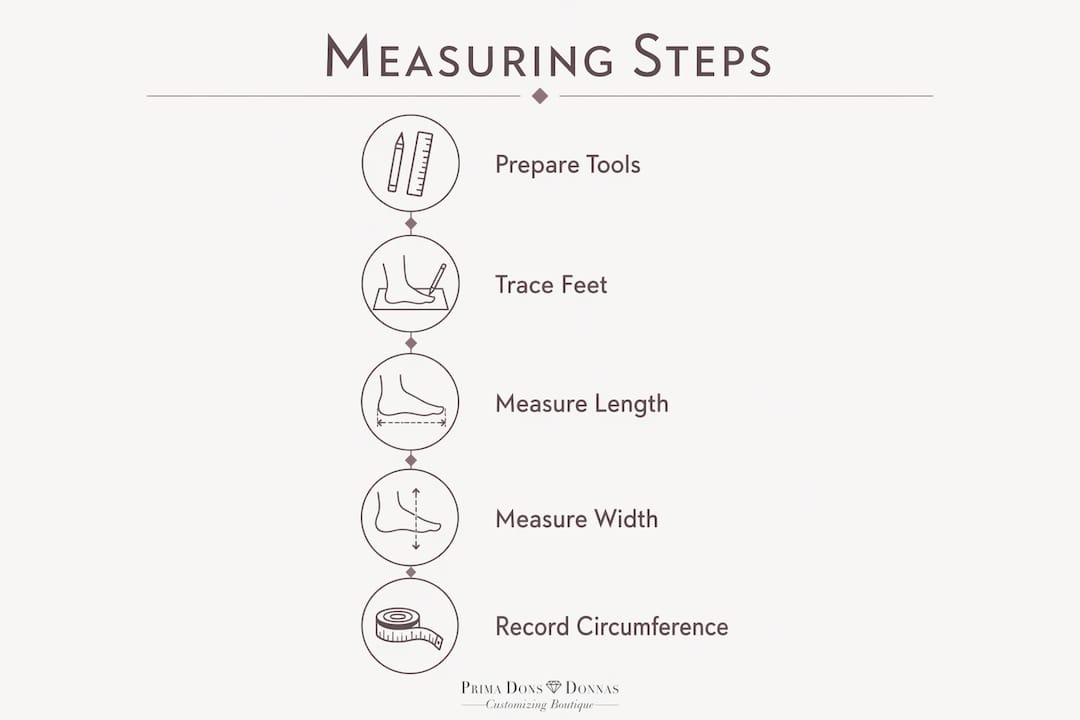
How to measure your feet step by step for length, width, and circumference
Accurate personalized footwear measurements follow a specific sequence. Skipping steps or estimating produces errors that show up as pinching, heel slippage, or a toe box that crowds your longest toe.
Follow these steps in order for each foot:
- Trace your foot. Stand on the paper with your heel touching the wall. Hold the pencil vertical (not angled) and trace the full outline of your foot.
- Mark the length. Draw a straight horizontal line at the tip of your longest toe and another at the back of your heel. Measure the distance between the two lines in millimeters.
- Mark the width. Find the widest part of your foot, typically across the ball. Draw two parallel vertical lines at those points and measure the distance between them.
- Measure instep circumference. Wrap the flexible tape measure around the highest point of your foot arch. Record the number in millimeters.
- Measure heel circumference. Wrap the tape around your heel and across the instep in a diagonal loop. This measurement helps determine heel cup depth.
- Record both feet separately. Fitting to the larger foot prevents chronic discomfort because significant size differences between feet are common. Never average the two numbers.
Correct foot measuring requires standing flat with full body weight distributed evenly. Sitting reduces foot length by up to 5 millimeters in some people, which is enough to cause a poor fit in a custom shoe.
Pro Tip: Measure three times and use the largest reading for each dimension. Feet shift slightly between tracings, and the largest number reflects your true maximum size under load.
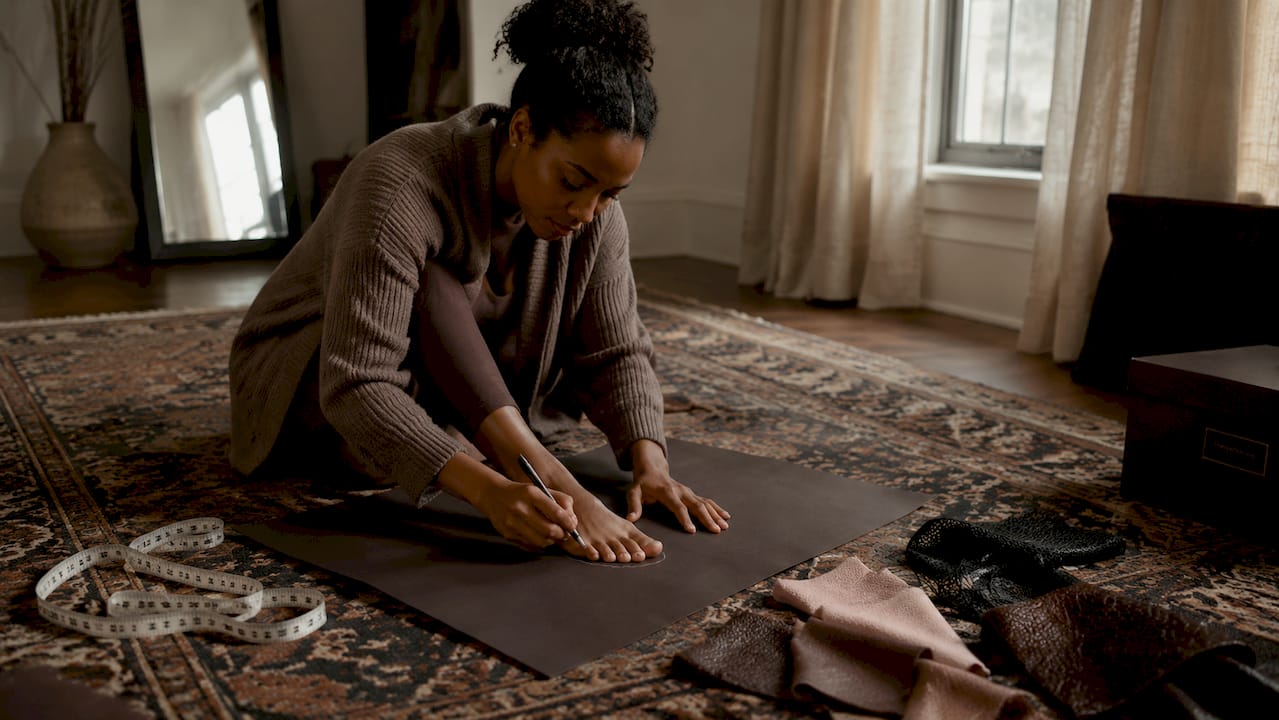
Convert all measurements to millimeters before submitting to any shoemaker or size chart. Centimeters introduce rounding errors. Millimeters give the maker the precision they need to select the right last.
Which shoe lasts and style considerations affect custom footwear fit?
A shoe last is the three-dimensional form around which a shoe is constructed. It determines toe room, heel hold, arch support, and the overall silhouette of the finished shoe. Two shoes marked the same size can feel completely different because they were built on different lasts. This is the single most misunderstood fact in custom footwear.
Master shoemakers consistently say that last compatibility with foot architecture matters more than the labeled size number. A size 9 on a narrow last fits nothing like a size 9 on a wide anatomical last. Knowing your last type is as important as knowing your length.
Common last types and their best uses
| Last Type | Foot Shape Suited | Best Style Use |
|---|---|---|
| Almond last | Medium width, standard arch | Formal dress shoes, heels |
| Anatomical last | Wide forefoot, high instep | Comfort boots, everyday wear |
| Chisel last | Narrow to medium width | Fashion-forward styles, statement boots |
| Round last | Wide toe box, low instep | Casual shoes, plus-size comfort fits |
Different lasts suit different foot shapes and style requirements, affecting both comfort and aesthetics. An almond last on a wide foot creates pressure points across the ball. A round last on a narrow foot produces heel slippage and a sloppy silhouette.
Style purpose also drives last selection. Running shoes need a snug fit with room in the toe box, while a formal heel requires a closer hold across the instep. Thigh-high boots need accurate calf and instep circumference data in addition to foot length. Ignoring these distinctions is why many people receive custom shoes that look right but feel wrong.
Pro Tip: Ask your shoemaker which specific last they use for your order. If they cannot name it, request a sample shoe built on that last before committing to a full pair.
What are the best practices for ordering custom footwear after measuring?
Ordering custom shoes with your measurements in hand is only half the process. How you communicate those measurements determines whether the finished shoe matches your expectations. Providing comprehensive foot specs and preferences improves custom order accuracy and satisfaction significantly.
Follow these best practices when placing your order:
- Match measurements to the brand’s size chart first. Most custom makers provide a conversion chart. Use your millimeter measurements, not your standard retail size.
- State your sock thickness. A 3mm difference in sock thickness changes the interior volume of the shoe. Specify thin, medium, or thick.
- Note any foot asymmetry. If your left foot is 8mm longer than your right, say so explicitly. Ask the maker how they handle size differences between feet.
- Request a fit trial or adjustment policy. Reputable custom shoemakers offer at least one round of adjustments. Confirm this before paying.
- Account for seasonal changes. Feet swell more in summer heat. If you are ordering boots for winter, measure in conditions that reflect typical winter wear.
- Describe your daily activity level. A shoe worn for a four-hour concert event needs different allowances than one worn for a two-hour lunch date.
The step-by-step ordering process at Primadonsanddonnas walks you through submitting your measurements directly, with guidance on communicating style preferences alongside fit data. That combination of fit and fashion input is what separates a truly custom shoe from a resized standard one.
You can also review made-to-measure ordering advice for 2026 to understand how current production timelines and material options affect your choices.
How to troubleshoot common custom footwear sizing problems
Even well-measured shoes can present fit issues. Common fitting problems include heel slippage, toe pinching, and uneven fit caused by differences in foot size. Each problem points to a specific measurement or last selection error.
- Heel slippage usually means the heel cup is too wide or the instep circumference was measured too loosely. Add a heel grip pad as a short-term fix and request a last adjustment for future pairs.
- Toe pinching points to a last that is too narrow at the forefoot or a length measurement taken while sitting. Confirm your tracing was done standing with full weight.
- Uneven fit between left and right shoes almost always means both feet were averaged rather than measured separately. Always fit to the larger foot.
- Arch discomfort suggests the instep height of the last does not match your foot. A custom insole can correct mild cases; a different last corrects the root cause.
Pro Tip: Break in new custom shoes on short outings first, no more than two hours at a time. Leather and structured materials need time to conform to your foot shape. Wearing them for a full event on day one risks pressure points that feel permanent.
Made-to-order footwear reduces foot pain significantly compared to standard sizing. Getting your measurements right from the start is the most direct path to that result.
For activewear or sneaker sizing reference, the sneaker size chart from Kyndeo Activewear offers a useful comparison point when cross-referencing athletic fit standards.
Key takeaways
Precise foot measurements combined with the right shoe last selection are the two factors that determine whether custom footwear fits and flatters.
| Point | Details |
|---|---|
| Measure in the afternoon | Foot swelling peaks later in the day, giving you the most accurate size for all-day comfort. |
| Always measure both feet | Fit to the larger foot to prevent chronic discomfort from natural size differences. |
| Know your last type | Last shape affects fit more than the labeled size number; match it to your foot width and arch. |
| Communicate fully when ordering | Share sock thickness, activity level, and foot asymmetry details with your shoemaker. |
| Troubleshoot by measurement first | Most fit problems trace back to a measurement error or a mismatched last, not the shoe itself. |
Why I stopped trusting size labels and started trusting measurements
I have watched too many people order custom shoes using their standard retail size and then wonder why the fit feels off. The label is a starting point at best. It tells you nothing about your instep height, your heel width, or whether the last inside that shoe was built for a narrow European foot or a wider American one.
The clients who get the best results are the ones who show up with millimeter measurements for both feet, know which last type suits their foot shape, and communicate their style intent clearly. They are not guessing. They are giving the shoemaker the data needed to build something that actually fits.
The other thing I have noticed is that people underestimate how much style choice affects fit. A pointed-toe boot on a wide foot is not just uncomfortable. It changes how you walk, which changes how the shoe wears, which shortens its life. Choosing the right last for your foot type is not a technical detail. It is the difference between a shoe you wear twice and one you wear for years.
Trust the measurement process. It takes fifteen minutes and it protects every dollar you spend on custom footwear.
— Latoya
Shop custom footwear at Primadonsanddonnas
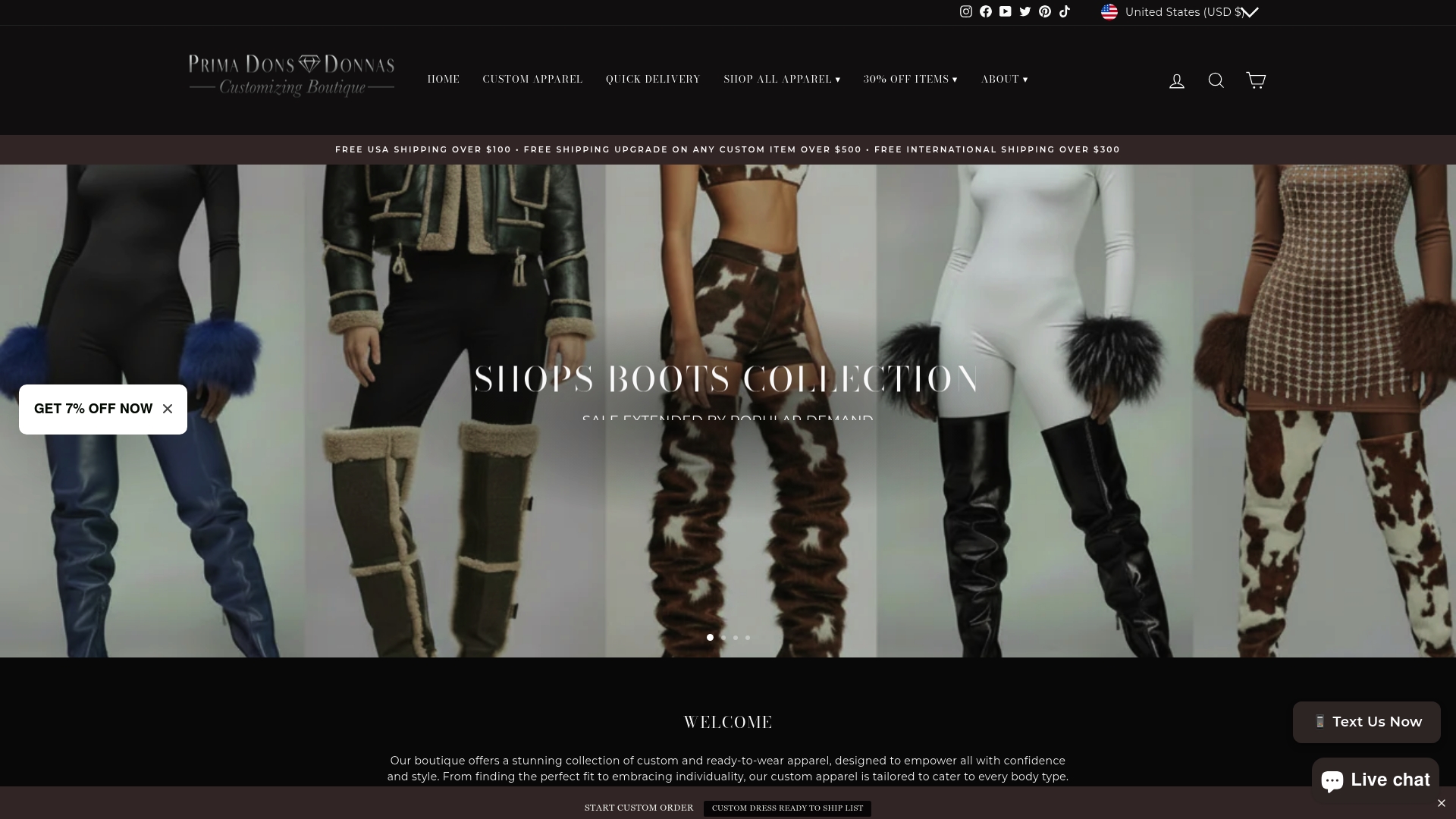
Primadonsanddonnas builds every shoe, boot, and made-to-order piece to your exact measurements and style preferences. The collection includes custom thigh-high boots in plus sizes, statement heels, and everyday styles, all available in your choice of color and material. If you are ready to put your measurements to work, browse the made-to-order collection and submit your specs directly. Ready-to-ship options are also available for faster delivery. Every piece is designed to fit your body and reflect your style, not the other way around.
FAQ
What is custom footwear sizing?
Custom footwear sizing is the process of measuring your feet precisely and matching those dimensions to a shoe last and construction built for your foot shape. It goes beyond standard retail sizing by accounting for length, width, instep height, and heel circumference.
When is the best time to measure my feet for custom shoes?
Measure your feet in the afternoon. Foot swelling peaks later in the day, so afternoon measurements reflect the largest size your foot reaches during normal wear.
Why does the shoe last matter more than my shoe size?
Two shoes marked the same size can fit completely differently because they are built on different lasts. The last determines toe room, heel hold, and arch fit, which are the factors that actually control comfort.
How do I handle different sizes between my left and right foot?
Always measure both feet separately and order to fit the larger foot. Fitting to the larger size prevents discomfort because significant size differences between feet are common.
What should I tell my shoemaker when ordering custom shoes?
Share your millimeter measurements for length, width, instep, and heel circumference. Also include your sock thickness, any foot asymmetry, your activity level, and the style of shoe you want. Comprehensive foot specs improve order accuracy and reduce the need for adjustments.
Recommended
- Custom footwear: bold style meets sustainability in 2026 – Prima Dons & Donnas
- Personalized Footwear: Style, Fit & Sustainability Guide – Prima Dons & Donnas
- Made-to-Order Footwear Benefits: 40% Less Foot Pain – Prima Dons & Donnas
- Step by Step Ordering Custom Footwear: Your Full Guide – Prima Dons & Donnas


Leave a comment