

Personalized Footwear: Style, Fit & Sustainability Guide
TL;DR:
- Personalized footwear is customized for fit, style, materials, and function using advanced digital tools.
- It offers improved comfort, durability, and sustainability compared to mass-produced shoes.
- Choosing genuine custom shoes involves considering fit process, materials, production time, and eco-credentials.
The idea that unique, well-fitting shoes require sacrificing comfort or the planet is simply outdated. Personalized footwear customizes every element of a shoe to your preferences, from fit and color to materials and function, using tools like 3D scanning, printing, and online design platforms. For fashion-conscious women who want their wardrobe to reflect both their identity and their values, this is a genuine shift. This guide breaks down exactly what personalized footwear means, the technology driving it, and how to make smart, sustainable choices when you shop.
Table of Contents
- What is personalized footwear?
- Key technologies shaping personalized footwear
- How personalization improves style, fit, and comfort
- Sustainability and the future of personalized footwear
- What to consider before ordering personalized shoes
- Our take: Why depth of personalization matters more than ‘custom’ labels
- Stand out with thoughtful, custom style
- Frequently asked questions
Key Takeaways
| Point | Details |
|---|---|
| True personalization | Custom shoes blend your style, fit needs, and eco values in ways mass products cannot. |
| Tech-powered fit | 3D scanning and printing offer both comfort and creative self-expression. |
| Eco-friendly options | Made-to-order and sustainable materials reduce waste and environmental impact. |
| Ask the right questions | Consider timeline, budget, and material transparency before buying. |
What is personalized footwear?
Personalized footwear goes far beyond picking a color or adding a monogram. True personalization means your shoes are built around your specific foot shape, style preferences, material choices, and functional needs. Personalized footwear customizes shoes to the wearer’s preferences using advanced technology, making mass-produced sizing a thing of the past.
What separates a personalized shoe from a standard one comes down to four core elements:
- Fit: Shoes shaped to your actual foot measurements, not a generic size chart
- Style: Color, silhouette, heel height, and detailing chosen by you
- Materials: Options like vegan leather, recycled fabrics, or high-quality faux fur for conscious choices
- Function: Support, cushioning, and structure tailored to how you actually move
The tools making this possible include 3D foot scanners, digital design configurators, and on-demand production systems. You can now explore custom footwear and sustainability options that were simply unavailable a decade ago.
Mass-produced shoes are designed for an average foot that does not really exist. Most women have one foot slightly larger than the other, unique arch heights, or width variations that standard sizing ignores entirely. Personalized footwear accounts for all of this.
Pro Tip: Before ordering custom shoes, trace both feet on paper and measure length, width, and arch height. This simple step gives any brand the data it needs to build a truly accurate fit.
Key technologies shaping personalized footwear
The technology behind custom shoes has moved fast. What once required a specialist cobbler and weeks of handwork can now be initiated online in minutes. Understanding these tools helps you ask better questions when shopping.
3D foot scanning captures the exact contours of your foot using structured light or photogrammetry. The result is a digital model accurate to fractions of a millimeter. Brands use this data to cut and construct shoes that match your actual anatomy rather than a size approximation.
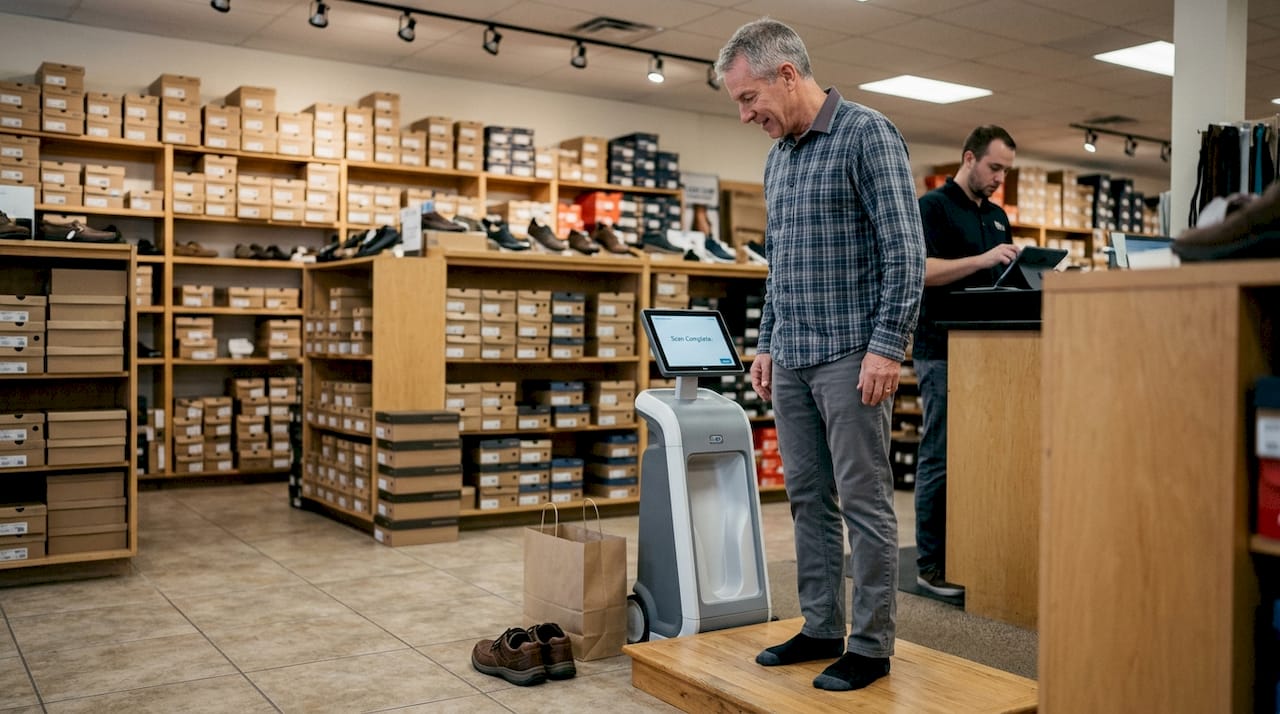
3D printing takes this further. 3D printing enables complex lattices for energy return and breathability, with some midsoles achieving up to 86% energy rebound. That is performance-level engineering applied to everyday fashion.
Digital design platforms let you select style elements remotely: upper materials, sole colors, strap configurations, and more. You see a rendered preview before anything is produced.
Here is a quick comparison of how these technologies stack up:
| Technology | Primary benefit | Best for |
|---|---|---|
| 3D foot scanning | Precision fit | Comfort and support |
| 3D printing | Custom structure and cushioning | Performance and innovation |
| Online configurators | Style and material selection | Aesthetic personalization |
| AR and VR tools | Virtual try-on before purchase | Reducing return risk |
Research on custom fit satisfaction consistently shows that consumers report higher satisfaction with personalized shoes compared to off-the-shelf options. The combination of precise fit data and on-demand production is what makes that outcome repeatable.
Stat to know: Consumers who use 3D-scanned custom fit report significantly higher comfort scores and lower rates of foot pain than those wearing standard-sized footwear.
How personalization improves style, fit, and comfort
Knowing the technology is one thing. Seeing how it translates into real-world results is what matters for your wardrobe and your wellbeing.
Consumer studies show high satisfaction with custom fit and stability over standard shoes, with measurable reductions in foot pain and discomfort during extended wear. That is not a minor upgrade. For women who spend long days on their feet or need footwear that performs across multiple settings, this difference is significant.
Here is how the process typically unfolds from start to finished product:
- Foot measurement or scan: Either at a physical location or via an at-home scanning app
- Style selection: Choose silhouette, color, material, and detailing through a digital platform
- Fit confirmation: Review a digital or AR preview of your shoe
- Production: Your shoe is made to order, not pulled from existing inventory
- Quality check and delivery: Each pair reviewed before shipping
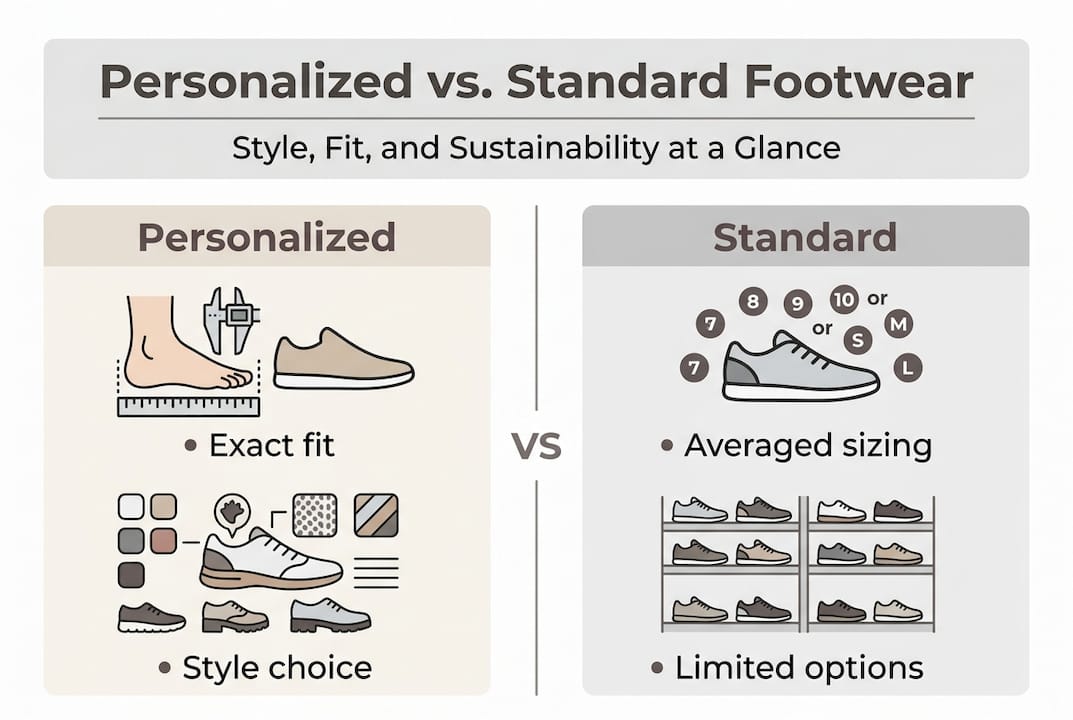
Comparing custom versus standard footwear makes the case clearly:
| Factor | Custom footwear | Standard footwear |
|---|---|---|
| Fit accuracy | Built to your measurements | Based on average sizing |
| Foot pain reduction | High, per consumer research | Variable |
| Style options | Unlimited combinations | Limited to existing stock |
| Longevity | Higher, due to correct fit | Lower, due to wear from poor fit |
| Eco impact | Lower, made to order | Higher, due to overproduction |
Exploring custom shoe benefits in more depth reveals why tailor-made style advantages go beyond aesthetics. The importance of custom sizing becomes especially clear when you consider how much foot pain and discomfort women tolerate simply because standard sizing does not account for individual anatomy.
Sustainability and the future of personalized footwear
Style and comfort are compelling enough. But for many shoppers in 2026, sustainability is non-negotiable. Personalized footwear aligns well with eco-conscious values, and the reasons go deeper than marketing claims.
Key sustainability advantages of personalized footwear:
- Made-to-order production eliminates the overstock and unsold inventory that drives fashion waste
- Eco-material options including vegan leather, recycled textiles, and high-quality faux fur are now widely available
- Longer product life because shoes that fit correctly wear evenly and last longer
- Fewer returns since custom fit reduces the likelihood of sending shoes back, cutting transportation emissions
“The custom shoes market was valued at $5.2 billion in 2023 and is projected to reach $8.54 billion by 2035, with AI and AR identified as key drivers for scalability and eco-material integration.”
AI is now being used to predict fit from photos, reducing the need for physical samples. AR lets shoppers visualize shoes on their own feet before committing. Both tools cut waste at the design and returns stage.
Pro Tip: When evaluating a brand’s sustainability claims, look for published information on material sourcing, production location, and waste reduction policies. Vague language like “eco-friendly” without specifics is a signal to ask more questions.
For a deeper look at how bespoke style and sustainability intersect, or to explore the latest custom fashion trends shaping 2026, both are worth exploring before you buy.
What to consider before ordering personalized shoes
Custom footwear is an investment. Going in with the right questions protects that investment and ensures your purchase delivers on style, comfort, and values.
Work through these steps before placing an order:
- Clarify the fit process: Does the brand use 3D scanning, a measurement guide, or a physical fitting? More precise input means better output.
- Ask about production time: High costs and production time remain the two biggest challenges in the custom shoe market. Know the timeline upfront.
- Review material options: Are eco-materials available? Can you choose vegan or recycled options without compromising style?
- Check the return and adjustment policy: If the fit is off, what happens? A brand confident in its process will offer adjustments.
- Verify eco-credentials: Look for specifics, not just labels. Where are materials sourced? What happens to production offcuts?
- Compare cost to longevity: A well-made custom shoe worn for five years costs less per wear than a cheap pair replaced annually.
For a full walkthrough of ordering custom footwear, step-by-step guidance is available to simplify the process.
Pro Tip: Ask brands whether they offer AR or VR virtual try-on tools before purchase. This single feature dramatically reduces the chance of a poor fit and the hassle of returns.
Our take: Why depth of personalization matters more than ‘custom’ labels
The word “custom” is everywhere in fashion right now. But not all customization is equal, and that gap matters.
A shoe that lets you pick from three colors is not the same as one built to your foot’s exact measurements using verified material sourcing. The label is the same. The value is not. The real value of deep personalization comes from fit accuracy, ethical material choices, and transparency about how a product is made.
We think the brands worth supporting in 2026 are those that can answer hard questions clearly. Where does the leather come from? How is fit verified? What happens if the shoe does not work? Brands that cannot answer these questions are offering customization as a marketing angle, not a genuine service.
Lasting value in footwear comes from thoughtful design, honest material choices, and alignment with the wearer’s actual life. A shoe that fits perfectly, uses materials you feel good about, and holds up over years of wear is the real definition of personalized. That standard should drive every purchase decision.
Stand out with thoughtful, custom style
If this guide has made one thing clear, it is that personalized footwear is about more than aesthetics. It is fit, ethics, and lasting value working together.
Prima Dons & Donnas makes it straightforward to build a wardrobe that reflects exactly who you are. Explore the custom dress collection to find made-to-order pieces that pair with your new footwear vision. Shop custom boots available in every size and color preference, including sustainable material options. Ready to start? Shop Prima Dons & Donnas and discover made-to-order and ready-to-ship styles built for bold, conscious fashion.
Frequently asked questions
What does personalized footwear actually mean?
Personalized footwear means shoes are customized for your foot shape, style preference, material choice, and function, often built using digital tools like 3D scanning and online configurators. It goes well beyond standard sizing or color selection.
Is personalized footwear more sustainable?
Yes. Made-to-order production cuts overstock waste, and eco-materials and made-to-order practices reduce environmental impact compared to mass-produced footwear.
Are custom shoes more comfortable than regular shoes?
Consumer studies show custom-fit shoes provide greater stability and reduce foot pain compared to standard footwear, making them a practical upgrade beyond just aesthetics.
What is the biggest challenge with ordering personalized shoes?
The main hurdles are higher upfront cost and longer production lead times, though high costs and production time are steadily improving as AI and on-demand manufacturing scale up across the industry.
Recommended
- Custom footwear: bold style meets sustainability in 2026 – Prima Dons & Donnas
- Understanding bespoke footwear: custom style and sustainability – Prima Dons & Donnas
- Why Tailor-Made Footwear Elevates Your Style – Prima Dons & Donnas
- Custom Clothing Guide for Unique, Sustainable Fashion – Prima Dons & Donnas


Leave a comment