

How to customize faux fur for a unique, sustainable look
TL;DR:
- Faux fur is highly customizable through trims, color upgrades, and detachable accessories.
- DIY methods like sewing or gluing enable personalized, eco-friendly wardrobe updates.
- Upcycling and specific tailoring promote sustainable fashion and individual style.
Off-the-rack faux fur pieces flood every store each season, yet so many look identical. The same silhouettes, the same colors, the same trim placements. If you’ve ever pulled on a faux fur jacket and felt like you were wearing a costume rather than an expression of yourself, you’re not alone. The good news: faux fur is one of the most customizable fabrics available, and transforming a basic piece into something personal doesn’t require a fashion degree. From no-sew trim additions to detachable collars and color upgrades, these methods give you full creative control while keeping your wardrobe eco-conscious and seasonally fresh.
Table of Contents
- What you need: Tools and materials for faux fur customization
- Step-by-step: Adding trim and detail to faux fur pieces
- Creative customizations: Detachable accessories and color upgrades
- Sustainable style: Upcycling, eco-fabrics, and reducing waste
- Why real style is crafted, not copied
- Take your customized faux fur style further
- Frequently asked questions
Key Takeaways
| Point | Details |
|---|---|
| DIY faux fur upgrades | Adding trim or creating detachable pieces is easy with the right tools and guidance. |
| Personal style impact | Customizing faux fur fashion lets you set trends instead of following them. |
| Sustainable fashion wins | Upcycling and using recycled faux fur helps you look stylish while supporting the planet. |
| No-sew options available | Fabric glue and fasteners make customization accessible to everyone, even without sewing skills. |
What you need: Tools and materials for faux fur customization
Before touching scissors to fabric, having the right setup makes all the difference. Rushing in without the proper tools leads to frayed edges, uneven lines, and glue that won’t hold. A little preparation goes a long way.
Understanding what faux fur coats are helps you choose the right material for your project. Short-pile faux fur works best for trim and collar details, while long-pile varieties create dramatic cuffs and hood accents. Recycled polyester faux fur is the most eco-friendly style option, and it’s widely available at fabric retailers and online.
Essential tools for faux fur customization:
- Sharp fabric scissors or a rotary cutter (dull blades cause fraying)
- Hand-sewing needles and heavy-duty thread in matching colors
- Strong fabric glue rated for synthetic fabrics
- Removable snaps, magnetic closures, or hook-and-eye sets
- Straight pins and a seam ripper
- A lint roller and soft bristle brush for finishing
Optional tools for advanced projects:
- Sewing machine with a walking foot (handles thick pile without bunching)
- Fabric spray dye or acrylic-based textile paint
- Iron-on interfacing for stabilizing edges
- Satin ribbon or lining fabric for backing detachable pieces
Here’s a quick comparison of faux fur types and their best customization uses:
| Faux fur type | Pile length | Best use |
|---|---|---|
| Short pile | Under 1 inch | Collar trim, cuff edges, hem detail |
| Medium pile | 1 to 2 inches | Hood accents, bag charms, patches |
| Long pile | Over 2 inches | Statement cuffs, full collar pieces |
| Recycled polyester | Varies | All uses, most sustainable option |
Pro Tip: Always cut a small test swatch and apply your chosen technique, whether glue, sewing, or dye, before working on the full garment. Faux fur pile direction affects how adhesive bonds and how stitches sit. Testing first saves the whole project.
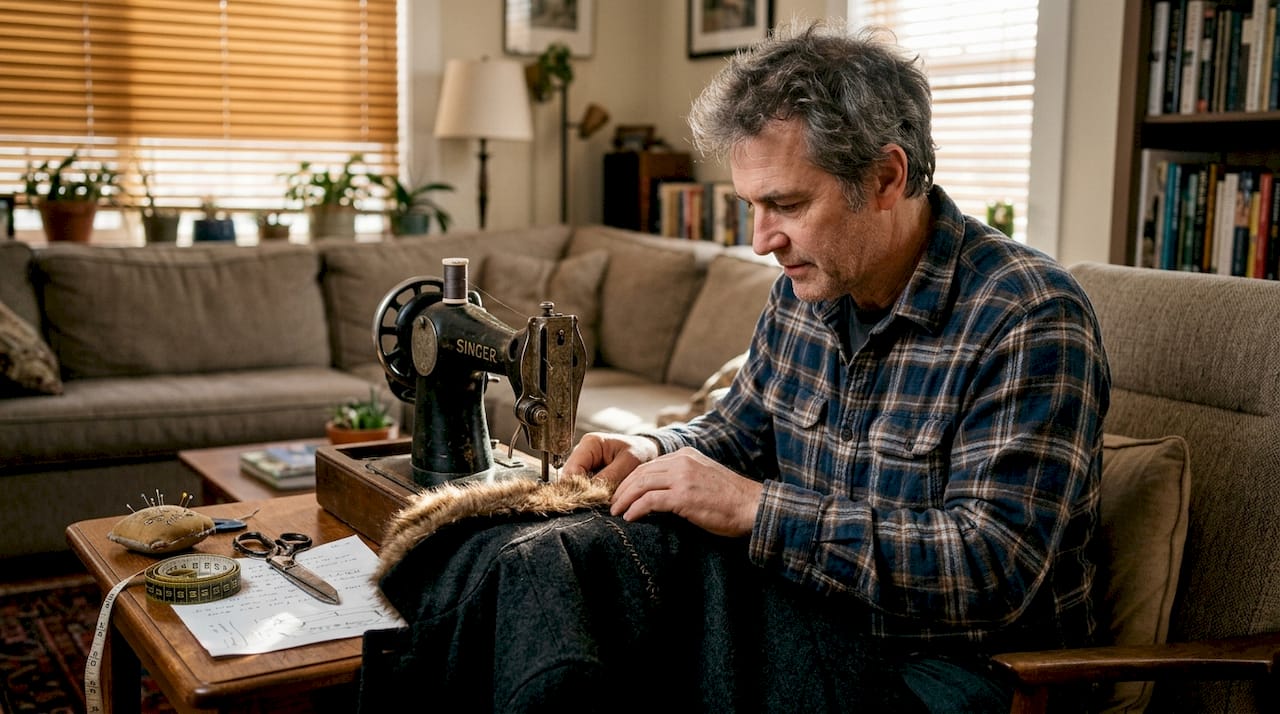
Adding faux fur trim to collars, cuffs, hoods, or hems is a primary customization method using basic sewing or no-sew glue techniques, making it accessible for all skill levels.
Step-by-step: Adding trim and detail to faux fur pieces
Once you have your materials ready, it’s time to transform your pieces with new trims and creative details. The most popular and impactful customization is adding trim to existing garments. It changes the entire feel of a coat, jacket, or even a simple cardigan.
Choosing where to add trim matters. Collars and cuffs draw attention to your face and hands. Hood edges add volume and drama. Hem trim grounds an outfit and elongates the silhouette. Start with one focal point rather than trimming every edge at once.
Step-by-step: Adding faux fur trim to a jacket collar
- Measure the collar edge and cut your faux fur strip to match, adding half an inch on each end for overlap.
- Brush the pile away from the cut edge to expose the backing fabric.
- Pin the trim in place with the pile facing inward (toward the collar) so it flips outward when attached.
- For sewing: use a whip stitch or backstitch along the backing edge, keeping stitches tight and even.
- For no-sew: apply fabric glue to the backing, press firmly onto the collar edge, and let it cure for the full recommended time.
- Flip the pile outward and brush gently to blend the seam.
Pro Tip: Use fabric glue for quick, temporary results when testing a new look. Switch to hand-sewing once you’re sure about placement. Hand-stitched trim lasts significantly longer through washing and wear.
“Customizing faux fur via trim addition allows you to tap into trending styles like Penny Lane coats and shearling silhouettes while keeping your look entirely your own.” Faux fur coat outfits
Sewing vs. no-sew: Which method suits your project?
| Method | Best for | Durability | Skill level |
|---|---|---|---|
| Hand-sewing | Collars, cuffs, hems | High | Beginner to intermediate |
| Machine sewing | Long seams, full linings | Very high | Intermediate |
| Fabric glue | Quick fixes, patches | Medium | Beginner |
| Iron-on tape | Flat, short-pile trims | Medium | Beginner |
Common mistakes to avoid: cutting through the pile instead of just the backing (always cut from the back side), skipping the test swatch, and using glue not rated for synthetic fabrics. For deeper style inspiration, faux fur mink jackets show how trim placement elevates a whole look. If you want to see the effect before committing to a DIY, try a faux fur jacket as a style reference.
Creative customizations: Detachable accessories and color upgrades
Beyond trims, next-level customization lets you create versatile pieces that switch with the season or your mood. Detachable faux fur accessories are one of the smartest wardrobe investments you can make. One well-made collar works across multiple coats, blazers, and sweaters.
Creating detachable collars or accessories from faux fur enhances versatility for seasonal mixing. Lining with satin and adding snaps, brooches, or ribbons adds personalization and comfort against the skin.
Step-by-step: Making a detachable faux fur collar
- Cut your faux fur into the collar shape you want, using a paper template for accuracy.
- Cut a matching piece of satin or soft lining fabric in the same shape.
- Place the faux fur and lining right sides together and sew around the edges, leaving a small gap to turn it right side out.
- Turn right side out, press gently (no direct heat on faux fur), and slip-stitch the gap closed.
- Attach snaps, a brooch backing, or ribbon ties at each end for fastening.
Color and accessory upgrade options:
- Spray fabric dye for an ombre or color-blocked effect
- Acrylic textile paint applied with a stiff brush for painted tips
- Glitter or metallic spray for seasonal party looks
- Satin ribbon ties in contrasting colors for a bow-front collar
- Vintage brooches pinned to the collar for added dimension
- Embroidered patches sewn onto faux fur cuffs
For color upgrades, always test on a scrap piece first. Faux fur made from recycled polyester takes dye differently than virgin synthetic fibers. A patch test tells you how saturated the color will be before you commit to the full piece.
| Upgrade type | Tools needed | Reversible? |
|---|---|---|
| Snap-on collar | Satin, snaps, needle | Yes |
| Dyed trim | Fabric dye, gloves | No |
| Painted tips | Textile paint, brush | No |
| Brooch accent | Brooch, pin backing | Yes |
For more accessory ideas, faux fur bag inspiration shows how small faux fur accents transform everyday pieces. Ready-made options like a faux fur set can also serve as starting points for your own customization. The goal of personalizing your fashion is building a wardrobe that works across seasons without buying new every time.
Sustainable style: Upcycling, eco-fabrics, and reducing waste
For fashion that feels as good as it looks, sustainability is the ultimate upgrade. Faux fur customization isn’t just a creative exercise. It’s a direct act against fast fashion waste.
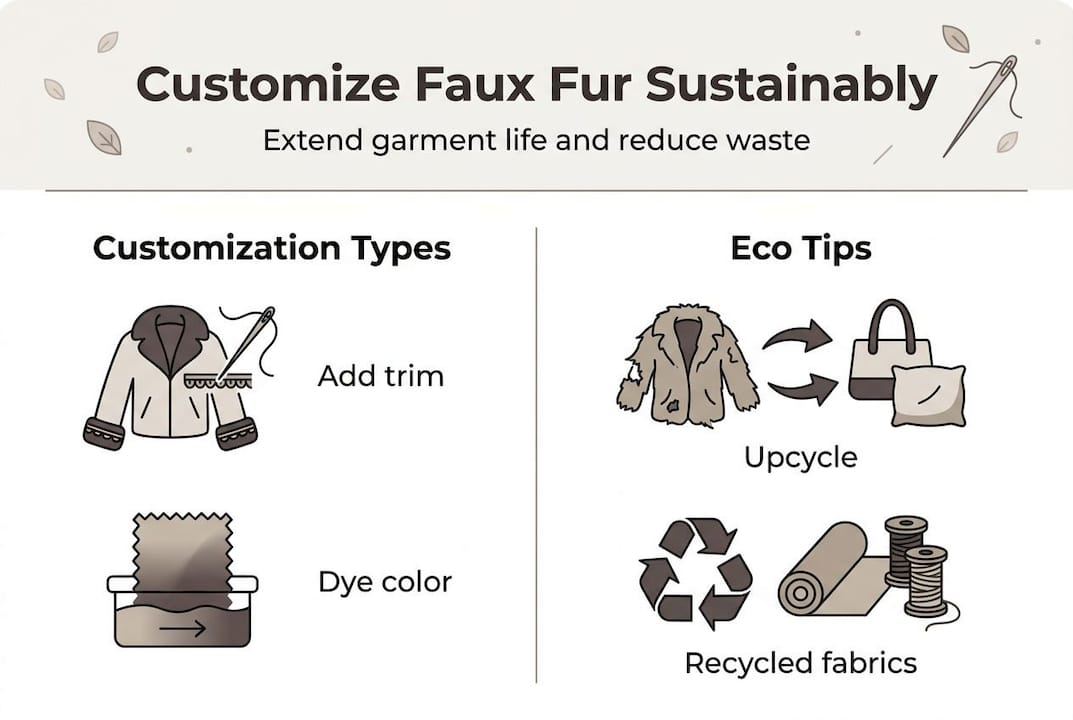
Upcycling existing garments by adding fur trim promotes sustainability, reducing fast fashion waste. Faux fur from recycled materials is available for eco-conscious choices, making it easier than ever to refresh without buying new.
Benefits of upcycling with faux fur:
- Extends the life of garments you already own
- Reduces the number of pieces sent to landfill each year
- Lowers your overall cost per wear on existing items
- Supports slow fashion by favoring quality over quantity
- Reduces demand for new manufacturing and its associated emissions
The fashion industry accounts for roughly 10% of global carbon emissions annually, and extending a garment’s life by just nine months reduces its environmental footprint by up to 30%.
Finding sustainable faux fur is easier now than it was even five years ago. Look for recycled polyester faux fur at specialty fabric stores, online fabric marketplaces, and even thrift stores where old faux fur coats can be repurposed for trim. Some brands now label their faux fur with recycled content percentages, similar to how activewear brands disclose recycled nylon content.
Pro Tip: Focus on small, high-impact changes rather than overhauling your entire wardrobe. Adding a single faux fur trim to a coat you already own creates a new look without any new garment production. That’s sustainable fashion in its most practical form.
The slow fashion mindset pairs perfectly with faux fur customization. Instead of buying a new coat every season, you update the one you have. A simple collar swap or a new cuff trim signals a seasonal refresh without the environmental cost of a full new purchase.
Why real style is crafted, not copied
Here’s something most fashion content won’t say directly: chasing trends is exhausting, and it rarely results in a wardrobe that feels like yours. Faux fur is everywhere each winter, but most of it looks the same because most people buy the same mass-produced pieces.
Customization breaks that cycle. When you add a hand-stitched trim, a detachable collar in a color no one else chose, or a painted cuff that reflects your actual taste, the piece becomes something no algorithm can replicate. That’s not a small thing. That’s the difference between dressing and expressing.
The brands and influencers selling seasonal trends want you to believe that style is something you buy. It isn’t. Personalization in fashion is what creates lasting impact, not the newest silhouette or the most viral coat. The women with truly memorable wardrobes aren’t the ones who bought the most. They’re the ones who made intentional choices and added their own touch to what they owned.
Faux fur customization is one of the most accessible entry points into that kind of intentional dressing. Start with one piece. Make it yours.
Take your customized faux fur style further
Ready to bring your custom style to life? DIY customization is a powerful starting point, but there’s a level beyond that: pieces designed specifically for you, in your size, your color, and your vision.
Prima Dons and Donnas specializes in made-to-order faux fur and outerwear, built around your exact preferences. Explore the full range of faux fur coats across colors and silhouettes, or go fully custom with custom outerwear options tailored to your measurements. For those who want a complete look, the made-to-order dress collection pairs beautifully with custom faux fur accents. Ready-to-ship options are also available for faster delivery.
Frequently asked questions
Can you customize faux fur clothing without sewing?
Yes. Strong fabric glue or stick-on fasteners work well for no-sew faux fur trim and patch applications, especially for short-pile materials on flat surfaces.
What is the best way to make a detachable faux fur collar?
Sew a satin backing to your faux fur strip, then add snaps or ribbon ties at each end. This detachable collar method keeps the piece comfortable against the skin and easy to swap between garments.
How does customizing with faux fur support sustainability?
Adding faux fur trim to existing garments extends their lifespan and reduces the need for new purchases. Upcycling with faux fur directly cuts down on fast fashion waste.
Can I dye faux fur to match seasonal trends?
Some faux fur types accept fabric dye or spray well, but results vary by fiber content. Always test for colorfastness on a scrap piece before applying dye to the full garment.
Recommended
- Faux Fur & Leather Coats, Jackets & Boots | Ethical Fashion – Prima Dons & Donnas
- Sustainable fashion styling tips: Build an eco-friendly wardrobe – Prima Dons & Donnas
- Why Sustainable Fashion Matters: Eco-Friendly Style Guide – Prima Dons & Donnas
- What Is a Faux Fur Coat? | Stylish, Ethical & Cozy Outerwear Guide – Prima Dons & Donnas


Leave a comment