

Unlock key advantages of personalized fashion in 2026
Fashion fatigue is real. When your closet mirrors everyone else’s and viral trends dictate your wardrobe, individuality vanishes. Fast fashion churns out identical pieces at breakneck speed, leaving style-conscious women craving something different. Personalized fashion offers a refreshing alternative, where every garment reflects your unique identity rather than fleeting algorithms. In 2026, consumers prioritize unique wardrobes reflecting personal identity over viral trends. This shift transforms how we think about clothing, from disposable commodities to intentional expressions of self. Let’s explore the key advantages driving this revolution.
Table of Contents
- Key takeaways
- Why personalized fashion empowers individuality
- Sustainability benefits of personalized fashion
- How AI enhances fit and style confidence
- E-commerce and confidence gains from hyper-personalization
- Challenges and limits of personalized fashion
- Explore custom fashion collections for your unique style
- Advantages of personalized fashion in 2026: frequently asked questions
Key Takeaways
| Point | Details |
|---|---|
| Individuality through personalization | Personalized fashion lets you tailor clothes to fit your aesthetic, body, and lifestyle, preserving unique style rather than chasing trends. |
| Sustainability through on demand | On demand production reduces waste by only making what customers order and using efficient materials. |
| AI improves fit accuracy | AI virtual fitting and 3D prototyping cut returns by 15 to 35 percent. |
| Guided customization preserves brand | Start with curated options to maintain design coherence while letting customers express personal style. |
Why personalized fashion empowers individuality
Fast fashion’s greatest weakness is its strength turned against itself. Mass production creates affordability but sacrifices uniqueness. When everyone shops the same trends from the same retailers, personal style disappears into a sea of sameness. This shift from mass uniformity to personal diversity defines fashion’s evolution in 2026.
Personalized fashion puts you back in control. Instead of chasing what influencers wear this week, you craft a wardrobe that genuinely represents your aesthetic, body, and lifestyle. This approach supports maximalism for those who love bold statements and minimalism for those who prefer refined simplicity. Your choices become deliberate rather than reactive.
The advantages of individual expression in clothing extend beyond aesthetics:
- You avoid the awkward moment of wearing the same outfit as three other people at an event
- Custom sizing eliminates the frustration of standard measurements that never quite fit your proportions
- Color and detail customization means your wardrobe coordinates seamlessly with your existing pieces
- Made-to-order production ensures exclusivity without the luxury price tag of haute couture
One potential risk deserves mention. When brands offer unlimited customization options, they may dilute their signature aesthetic. Too many choices can overwhelm rather than empower. The solution? Start with brands that offer guided personalization, where you select from curated options that maintain design coherence while expressing your style.
Pro Tip: Mix personalized statement pieces with classic staples to create a balanced wardrobe. A custom bold coat over simple black pants delivers impact without costume territory. Understanding why choose custom clothing helps you identify which pieces deserve personalization investment.
Sustainability benefits of personalized fashion
Fast fashion’s environmental cost is staggering. Overproduction leads to massive waste when unsold inventory ends up in landfills. Personalized fashion flips this model by producing only what customers actually order. This on-demand approach eliminates speculative manufacturing that creates excess.

The sustainability advantages multiply through technology. AI virtual fitting reduces returns by 15-35%, while 3D prototyping cuts material waste and AI dyeing saves water. These innovations transform personalized fashion from a niche luxury into a scalable solution for conscious consumers.
| Sustainability Metric | Traditional Fashion | Personalized Fashion |
|---|---|---|
| Production waste | High excess inventory | Minimal, made-to-order only |
| Return rate impact | 20-30% average returns | 15-35% fewer returns via better fit |
| Water usage | Standard dyeing processes | AI-optimized dyeing reduces consumption |
| Prototype waste | Multiple physical samples | 3D digital prototyping |
| Market growth | Declining fast fashion | $65B POD market by 2026 |
The print-on-demand market reaching $65 billion by 2026 reflects consumer appetite for sustainable alternatives. This isn’t just about feeling good. Personalized fashion reduces overproduction through small-batch and on-demand manufacturing, delivering measurable environmental benefits.
Additional sustainability advantages include:
- Longer garment lifespan because custom-fit pieces receive better care and more wear
- Reduced shipping waste through direct-to-consumer models that eliminate retail middlemen
- Material efficiency from precise cutting and minimal fabric waste in custom production
- Conscious material choices like high-quality faux fur that align luxury with ethics
Pro Tip: When exploring sustainable options in custom clothing, ask brands about their production process. Truly sustainable personalization combines on-demand manufacturing with eco-friendly materials. Staying current with fashion sustainability trends 2026 helps you make informed choices that align style with values.
How AI enhances fit and style confidence
Nothing kills shopping confidence faster than ordering online and receiving clothes that don’t fit. Traditional sizing charts rely on standardized measurements that ignore individual body variations. AI technology solves this by creating personalized fit profiles with remarkable precision.
Advanced AI systems now achieve body measurement accuracy at 0.38cm, with style matching at 87.4% and high user satisfaction. These aren’t incremental improvements. They represent a fundamental shift in how accurately technology can predict fit and style preferences.
The AI-powered personalization process works through several integrated steps:
- Initial data collection captures body measurements through photos, manual input, or previous purchase history
- Machine learning algorithms analyze your style preferences based on browsing behavior and saved items
- CNN-Transformer-GAN models process this data to recommend pieces that match both fit and aesthetic preferences
- Virtual try-on features provide real-time previews showing how garments will look on your specific body type
- Feedback loops continuously refine recommendations as you interact with the platform
The confidence boost from accurate fit predictions transforms the online shopping experience:
- You eliminate guesswork about whether something will actually fit your proportions
- Style recommendations introduce you to pieces you wouldn’t have discovered through browsing alone
- Virtual try-on reduces purchase anxiety by showing realistic previews before you commit
- Return rates drop dramatically when fit accuracy improves, saving time and frustration
This technology democratizes access to the kind of personalized service previously available only through expensive personal stylists. Fashion personalization custom style becomes accessible to anyone with internet access, removing geographic and economic barriers to great fit.
E-commerce and confidence gains from hyper-personalization
Personalized fashion doesn’t just benefit consumers. The e-commerce performance metrics tell a compelling story about how customization drives business success and customer satisfaction simultaneously. When retailers implement hyper-personalized experiences, everyone wins.
The numbers are striking. Hyper-personalization increases revenue per email by 28-45%, average order value by 17-32%, and reduces returns by 20-30%. These aren’t marginal improvements. They represent fundamental shifts in how effectively brands can serve individual customers.
| Metric | Standard E-commerce | Hyper-Personalized E-commerce |
|---|---|---|
| Revenue per email | Baseline | 28-45% increase |
| Average order value | Baseline | 17-32% increase |
| Return rate | 20-30% typical | 20-30% reduction |
| Customer engagement | Generic recommendations | Tailored to individual preferences |
| Shopping confidence | Moderate | Significantly higher |
The confidence gains extend beyond just feeling good about purchases. When you know a garment will fit properly and match your style, you’re more likely to experiment with new silhouettes and colors. This willingness to explore expands your fashion horizons while maintaining the security of personalized guidance.
For consumers, hyper-personalization delivers:
- Curated shopping experiences that save time by filtering out irrelevant options
- Confidence in purchase decisions backed by accurate fit and style predictions
- Fewer disappointing deliveries that don’t match expectations
- Discovery of new styles that genuinely suit your aesthetic and body type
Retailers benefit equally through reduced return processing costs, higher customer lifetime value, and stronger brand loyalty. This alignment of interests creates a sustainable business model where personalization investment pays dividends for both parties. Staying aware of trends custom fashion 2026 helps you leverage these advances effectively.
Challenges and limits of personalized fashion
Honesty matters when evaluating any trend. Personalized fashion delivers significant advantages but also presents real challenges worth understanding before you commit fully to this approach.
Cost remains the most significant barrier. Custom production typically costs more than mass-manufactured alternatives. While prices are decreasing as technology improves and adoption grows, personalized pieces still command premium pricing. This high cost excludes some consumers from accessing these benefits.
The challenges extend beyond economics:
- Excessive customization options can lead to decision paralysis rather than empowerment
- AI-generated designs occasionally contain distortions or hallucinations that require human oversight
- Over-personalization may result in cluttered wardrobes lacking cohesive aesthetic direction
- Unlimited customization can dilute brand identity when signature design elements disappear
- Technology barriers prevent some consumers from effectively using digital personalization tools
The AI fashion brand identity risks deserve particular attention. When brands offer infinite customization, they risk losing the distinctive aesthetic that attracted customers initially. The solution lies in guided personalization that offers meaningful choices within a coherent design framework.
Another practical concern involves the learning curve. Personalization platforms require initial time investment to set up profiles, input measurements, and communicate style preferences. Some consumers find this process tedious compared to simply clicking “add to cart” on standard items.
Understanding these limitations helps you approach personalized fashion strategically. Start with key wardrobe pieces where fit and uniqueness matter most, like outerwear or statement dresses. Reserve standard purchases for basic items where personalization adds minimal value. This balanced approach maximizes benefits while managing costs and complexity.
Explore custom fashion collections for your unique style
You’ve learned how personalized fashion enhances individuality, supports sustainability, and boosts confidence through AI-driven precision. Now it’s time to experience these advantages firsthand through collections designed specifically for women who refuse to blend into the background.
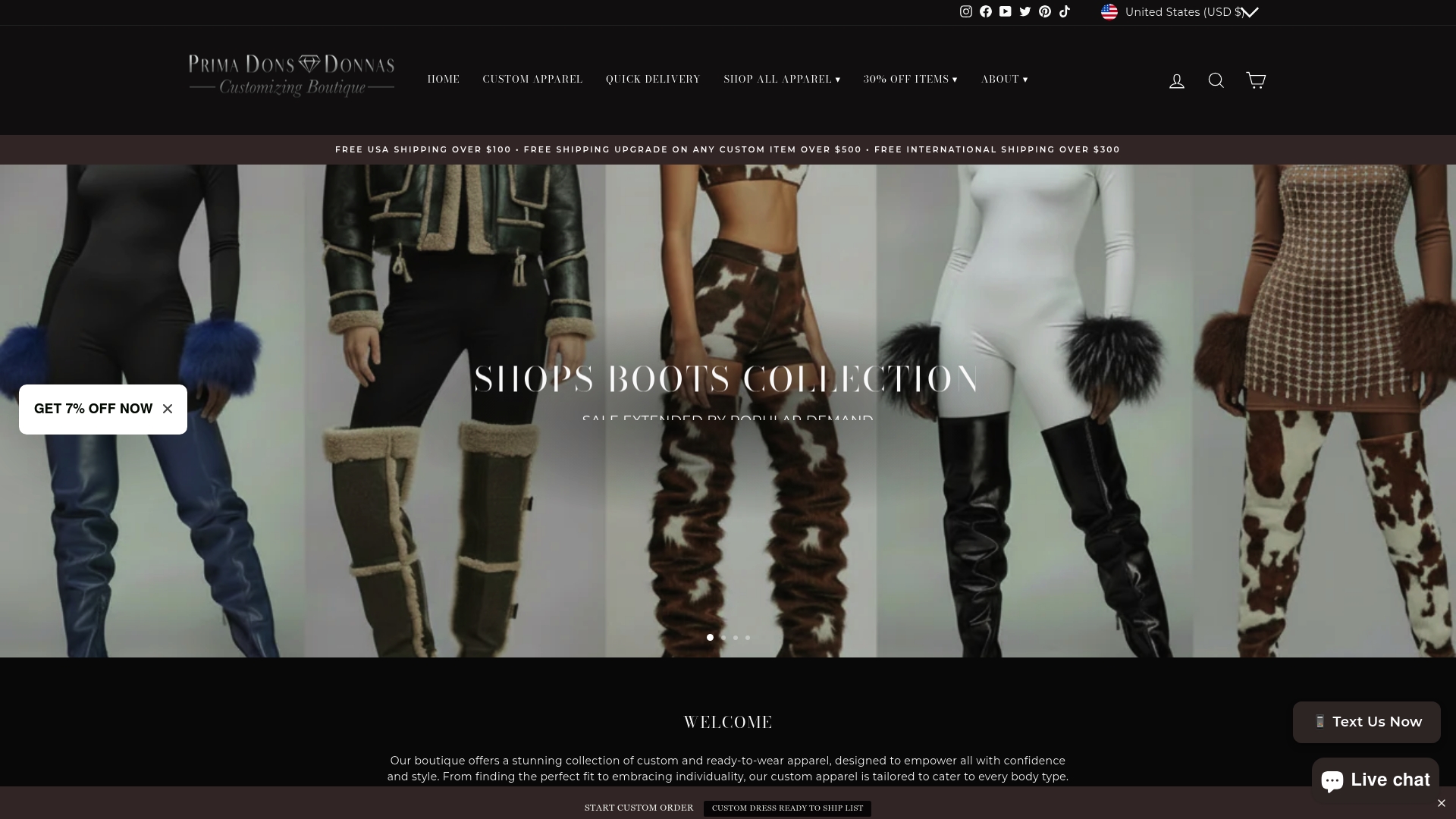
Prima Dons and Donnas specializes in made-to-order pieces that combine bold design with personalized fit. Our made to order dress collection features styles tailored to your exact measurements and color preferences, ensuring you stand out at every occasion. Each dress balances luxury aesthetics with wearability, so you look stunning and feel comfortable.
Explore our custom outerwear collection for statement pieces that anchor your wardrobe. From faux fur coats to tailored jackets, every item reflects conscious material choices without compromising style. Complete your look with custom boots designed to your specifications, where color, height, and details express your individuality.
Pro Tip: Start with one statement piece that fills a gap in your current wardrobe. A custom coat or dress demonstrates the quality difference while building your confidence in personalized fashion before expanding your collection.
Advantages of personalized fashion in 2026: frequently asked questions
What makes personalized fashion more sustainable than fast fashion?
Personalized fashion eliminates overproduction by manufacturing only ordered items, cutting inventory waste significantly. AI-driven fit accuracy reduces returns by 15-35%, saving shipping emissions and processing resources. Technologies like 3D prototyping and AI-optimized dyeing further minimize material and water consumption compared to traditional manufacturing.
How accurate is AI in measuring and recommending styles?
Current AI systems achieve body measurement precision within 0.38cm and style matching accuracy of 87.4%. These systems use advanced CNN-Transformer-GAN models that analyze photos, purchase history, and style preferences to deliver highly personalized recommendations. User satisfaction rates confirm these technologies now rival or exceed human stylist accuracy.
Can personalized fashion reduce my clothing return rates?
Absolutely. Better fit prediction through AI technology reduces returns by 20-30% compared to standard online shopping. When garments match your actual measurements and style preferences accurately, you’re far less likely to send items back. This saves you time, reduces environmental impact from return shipping, and increases confidence in online purchases.
Are there drawbacks to customizing too much?
Yes, excessive customization can lead to decision fatigue and cluttered wardrobes lacking cohesive style. Unlimited options sometimes overwhelm rather than empower, while costs remain higher than mass-produced alternatives. The solution is strategic personalization focused on key pieces where fit and uniqueness deliver maximum value, balanced with classic staples.
How can I start building a personalized wardrobe?
Begin by identifying wardrobe gaps where fit or uniqueness matters most, like statement outerwear or special occasion dresses. Choose one quality personalized piece that fills this need and complements your existing wardrobe. As you gain confidence, gradually expand with additional custom items while maintaining balance with versatile basics. Learn more about why personalized fashion matters to guide your journey.
Recommended
- Master personalized special occasion styling in 2026 – Prima Dons & Donnas
- Fashion sustainability trends 2026: bold eco-friendly style – Prima Dons & Donnas
- Trends in Custom Fashion 2026: Bold Style and Personalization – Prima Dons & Donnas
- Why Personalized Fashion Matters for Modern Women – Prima Dons & Donnas


Leave a comment