

What Is Personalized Sizing? Your 2026 Fit Guide
TL;DR:
- Personalized sizing creates garments tailored to individual measurements rather than relying on standard size labels. It reduces online return rates, improves comfort, and promotes sustainable fashion by aligning production with actual demand. Advanced technology from fit quizzes to digital pattern grading enhances fit accuracy, especially for special occasions or plus sizes.
Personalized sizing is the practice of creating clothing that fits your individual body measurements rather than a generic size chart. Unlike standard S, M, L, or XL labels, this approach uses your actual bust, waist, hip, and inseam numbers to shape a garment specifically for you. Platforms like True Fit and Prime AI have made this technology accessible at scale, and made-to-order brands have built their entire model around it. If you have ever ordered a dress online and returned it because the shoulders fit but the hips did not, you already understand the problem personalized sizing solves.
What is personalized sizing and how does it differ from standard sizing?
Personalized sizing, also called custom fit or made-to-measure, replaces static size categories with garments shaped to your specific body data. Standard sizing assumes that a size 12 body looks the same across every brand, every country, and every fabric. It does not. A size 12 at one retailer can fit like a 10 or a 14 at another, depending on how that brand grades its patterns.
The core difference is data. Standard size charts list garment measurements. Personalized sizing captures your measurements and builds the garment around them. Digital pattern grading software applies unique grade rules to a base pattern using your individual dimensions, adjusting every seam and panel for a true custom result. That process happens at the design stage, before a single piece of fabric is cut.
This matters most for shoppers who fall between standard sizes, wear plus sizes, or need clothing for a specific occasion where fit is non-negotiable. A wedding guest dress or a concert outfit that gaps at the back or pulls across the chest is not just uncomfortable. It affects how you carry yourself all night.

How does personalized sizing work across technology levels?
The technology behind custom fit ranges from simple to sophisticated. Here is how the spectrum breaks down:
-
Interactive fit quizzes. Entry-level tools ask about your height, weight, body shape, and fit preferences. Basic recommendation tools take retailers about 30 minutes to set up and integrate into a product page. They are fast to deploy and useful for shoppers who know their general proportions.
-
AI-driven size finders. Tools like Prime AI combine height, weight, body shape, fit preferences, and previous purchase and return data with machine learning to produce highly accurate size recommendations that adapt over time. Prime AI reports over 99% accuracy validated by live customer results.
-
3D digital twins. Advanced retailers use body scanning apps or uploaded photos to build a digital replica of your body. The system maps your proportions in three dimensions and matches them against a garment’s construction.
-
Digital pattern grading. This is the most precise level. Software adjusts every dimension of a base pattern to your measurements before production begins. The result is a garment built for your body, not altered after the fact.
Pro Tip: If you are shopping for a special occasion like a wedding, gala, or concert, choose a brand that uses digital pattern grading or made-to-order construction rather than a fit quiz alone. The quiz helps you pick a size. Pattern grading builds the size for you.
What are the key benefits over standard sizing?
The most direct benefit is fewer returns. Poor fit drives 53% average online return rates, reaching 70% for some retailers. That number represents real cost: shipping, restocking, and the time you spend reordering. Personalized sizing cuts that rate by matching the garment to your body before it ships.
“Shifting from static garment size charts to data-driven digital fitting solutions using AI relies on observed shopper purchase outcomes rather than self-reported data to improve fit confidence.” — True Fit Expert Insights
Beyond returns, the comfort difference is significant. A garment built to your measurements does not require constant adjusting. You are not tugging a hem down or pulling a neckline up. That freedom changes how you feel in an outfit, especially at events where you are on your feet for hours.
Here is how personalized sizing compares to standard sizing across key factors:
| Factor | Standard Sizing | Personalized Sizing |
|---|---|---|
| Fit accuracy | Based on average body proportions | Built to your exact measurements |
| Return rate | 53–70% driven by poor fit | Significantly reduced |
| Comfort | Variable across brands | Consistent to your body |
| Sustainability | Overproduction common | Production aligned to demand |
| Occasion suitability | Hit or miss | Reliable for formal and special events |
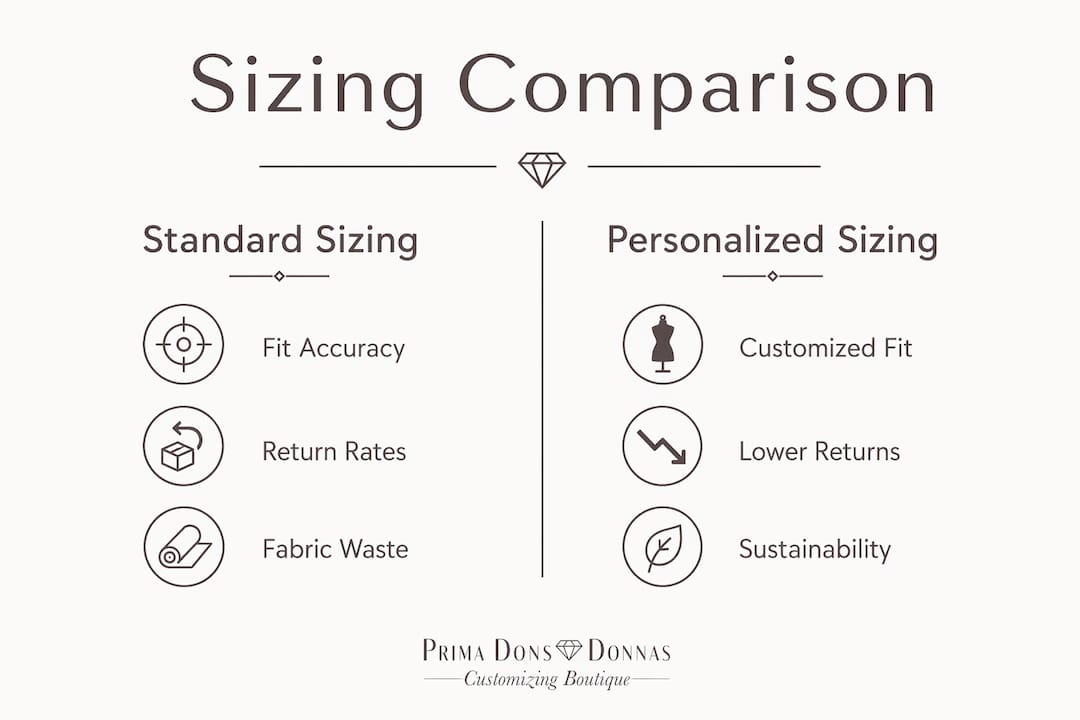
Sustainability is a real advantage here, not just a marketing claim. Personalized sizing reduces fabric waste by aligning production to individual measurements, moving fashion away from the linear take-make-dispose model. When you order one garment that fits, you do not need to order three to find the right one. That reduction in overproduction matters, especially for shoppers who care about sustainable custom clothing.
What should you consider when ordering personalized sizing?
Accurate measurements are the foundation of a good custom fit. Measuring over fitted undergarments and averaging multiple readings gives you more consistent numbers than a single measurement taken over bulky clothing. Sizing standards vary across brands and regions, so your label size from one retailer means nothing to another.
Key things to check before you order:
- Bust: Measure at the fullest point, keeping the tape parallel to the floor.
- Waist: Measure at your natural waist, which sits above your hip bones and below your rib cage.
- Hips: Measure at the fullest part of your hips, typically 7–9 inches below your natural waist.
- Inseam: For pants or jumpsuits, measure from your crotch to your ankle bone.
- Height: Always include this. It affects hem length, sleeve length, and overall proportion.
Fabric type changes how you should interpret your measurements. Non-stretch woven fabrics require sizing up slightly with room for tailoring, while stretch knits allow you to size down for a cleaner silhouette. A bodycon dress in ponte fabric behaves very differently from a structured blazer in cotton twill.
Pro Tip: For tops and dresses, prioritize your bust measurement. For bottoms and skirts, prioritize your hip measurement. When in doubt about a borderline size, go larger. Taking in a seam is far easier than letting one out.
How are brands using personalized sizing in 2026 fashion retail?
Retail adoption of personalized fit tools has accelerated. True Fit powers size recommendations on hundreds of brand sites by pulling from observed shopper outcomes and purchase data across its network, rather than relying on what shoppers self-report. That distinction matters because people often misjudge their own measurements.
Prime AI takes a similar approach. Its system learns from negative outcomes like returns and non-conversions, continuously refining its recommendations for specific styles and products. A flared midi dress and a fitted blazer require different fit logic, and adaptive systems account for that.
Here is where personalized sizing is making the biggest impact in 2026:
| Category | Personalized Sizing Benefit |
|---|---|
| Plus size apparel | Consistent fit across a wider measurement range |
| Special occasion dresses | Precise fit for formal events with no return window |
| Outerwear | Shoulder and sleeve length accuracy |
| Bridal and wedding wear | Zero tolerance for fit errors |
| Everyday tops and bottoms | Reduced return cycles and faster reorder confidence |
Made-to-order brands are the clearest expression of this model. Instead of producing inventory in bulk and hoping it sells, they build each piece after an order is placed. That approach eliminates overstock, reduces waste, and delivers a garment calibrated to the buyer. For shoppers who have struggled to find clothes that fit well off the rack, especially in plus sizes or for formal occasions, this model is a direct solution.
Key takeaways
Personalized sizing delivers better fit, fewer returns, and less waste by building garments to your exact measurements rather than generic size categories.
| Point | Details |
|---|---|
| Definition | Personalized sizing builds garments to your body measurements, not a standard label. |
| Return rate impact | Poor fit causes 53–70% of online returns; custom fit directly reduces this. |
| Technology range | Options span from 30-minute fit quizzes to AI-driven digital pattern grading. |
| Measurement accuracy | Always measure over fitted undergarments and prioritize bust for tops, hips for bottoms. |
| Sustainability link | Made-to-order production cuts overstock and fabric waste across the supply chain. |
Why i think most shoppers are still leaving fit to chance
I have watched the conversation around personalized sizing grow for years, and the honest truth is that most shoppers still default to their label size out of habit. They know a size 14 at one brand fits nothing like a size 14 at another. They return items constantly. And yet they keep entering “size 14” at checkout and hoping for the best.
The technology to fix this has existed for a while. True Fit, Prime AI, and made-to-order brands have proven the model works. The gap is not technology. It is habit and awareness.
What I find most compelling about personalized sizing in 2026 is not the AI. It is the shift in expectation. Shoppers who have experienced a garment built to their measurements do not want to go back. That experience is especially powerful for plus size shoppers and anyone buying for a high-stakes occasion like a wedding, concert, or formal dinner. When the fit is right, you stop thinking about the clothes and start enjoying the event.
My advice: take your measurements once, save them, and use them every time you shop. Pair that with a brand that builds to order, and you will return far less and enjoy what you own far more. The personalized fashion benefits go beyond comfort. They change your relationship with your wardrobe.
— Latoya
Shop custom fit at Primadonsanddonnas
Primadonsanddonnas builds every piece to your measurements. No guessing. No returns because the hips were too tight or the shoulders sat wrong.
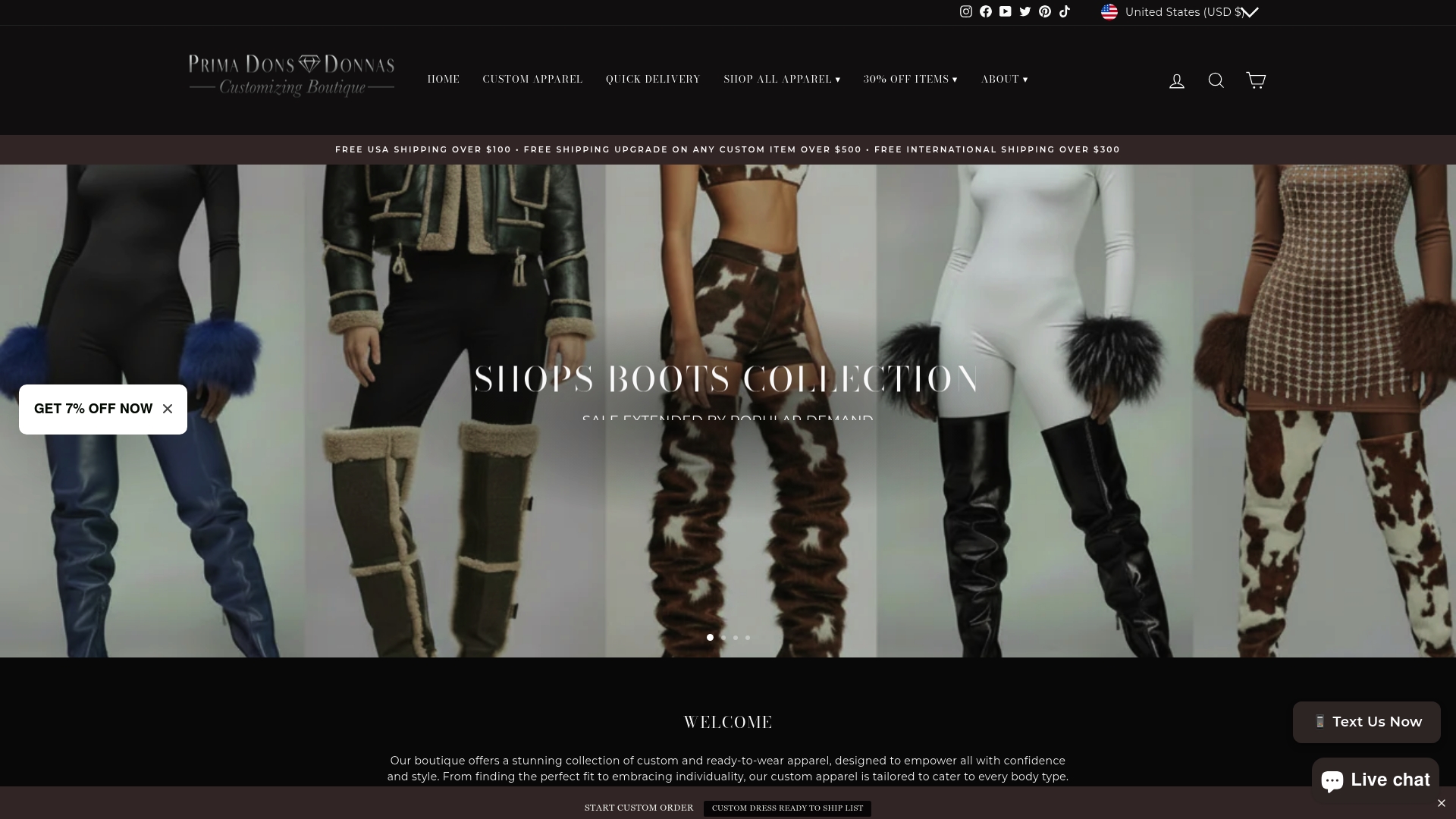
The made-to-order dress collection covers everything from party events and concert outfits to wedding guest looks and formal lunch dates. Every dress is cut to your size, in your color. The custom plus size apparel collection brings the same approach to a full range of sizes, so fit is never a compromise. Ready-to-ship options are also available for faster delivery when you need something quickly. Shop the full made-to-order apparel range at Primadonsanddonnas and order in your size, not someone else’s average.
FAQ
What is personalized sizing in fashion?
Personalized sizing is the practice of creating clothing to an individual’s exact body measurements rather than standard S, M, L, or XL categories. It uses measurement data, and sometimes AI tools like True Fit or Prime AI, to produce a garment that fits your specific proportions.
How do i determine my size for custom clothing?
Measure your bust, waist, hips, and height over fitted undergarments, and average two readings for accuracy. Use those numbers rather than your label size, since sizing standards vary significantly across brands and regions.
What are the advantages of personalized sizing over standard sizing?
Personalized sizing reduces return rates, which average 53% online due to poor fit, and delivers consistent comfort across different garment types. It also supports sustainability by aligning production to actual demand rather than bulk inventory.
Does fabric type affect personalized sizing?
Yes. Non-stretch woven fabrics require a slightly larger size with room for tailoring, while stretch knits allow for a smaller, cleaner fit. Always factor in fabric composition when reviewing a brand’s size recommendations.
Is personalized sizing available for plus sizes and special occasions?
Yes. Made-to-order brands like Primadonsanddonnas offer custom fit across all sizes, including plus sizes, and for specific occasions like weddings, concerts, and formal events where fit accuracy is critical.
Recommended
- Personalized Footwear: Style, Fit & Sustainability Guide – Prima Dons & Donnas
- Personalized fashion: Better fit, unique style, less waste – Prima Dons & Donnas
- Your essential guide to custom fashion sizing for a perfect fit – Prima Dons & Donnas
- Your Guide to Personalized Footwear: Style, Fit & Sustainability – Prima Dons & Donnas


Leave a comment