

Why custom sizing matters: fit, style, and sustainability
Many women struggle with inconsistent sizing and poor fit when shopping for clothing and footwear, leading to frustration, returns, and wasted money. Poor fit deters 43% of shoppers from making purchases, while inconsistent sizing creates confusion across brands. Custom sizing solves these problems by providing personalized measurements that ensure perfect fit every time. Made-to-order models reduce waste, support sustainability, and empower you to express unique style confidently. This article explores why custom sizing matters for fashion-conscious women prioritizing fit, individuality, and ecological responsibility in 2026.
Table of Contents
- The Impact Of Poor Fit And Inconsistent Sizing In Fashion
- How Custom Sizing And Made-To-Order Models Solve Fit Problems
- Technical Nuances Of Custom Sizing For Clothing And Footwear
- Applying Custom Sizing To Your Wardrobe For Style, Comfort, And Sustainability
- Explore Custom Sizing Options At Prima Dons & Donnas
- Frequently Asked Questions About Custom Sizing
Key takeaways
| Point | Details |
|---|---|
| Poor fit deters purchases | Nearly half of fashion shoppers avoid buying due to sizing inconsistency and poor fit issues. |
| Custom sizing reduces waste | Made-to-order production cuts textile waste by up to 30% compared to mass manufacturing. |
| Technology improves accuracy | 3D scanning and sizing algorithms deliver precise measurements that lower return rates significantly. |
| Personalization enhances style | Custom sizing enables unique expression while supporting sustainable and ethical fashion choices. |
The impact of poor fit and inconsistent sizing in fashion
Fashion shopping should be exciting, but sizing problems turn it into a frustrating gamble. Poor fit (43%) and inconsistent sizing (36%) rank among the top reasons consumers avoid purchasing items, right behind cost and quality concerns. These issues create a ripple effect that damages both customer satisfaction and brand loyalty.
Returns plague the industry because standard sizing fails so many body types. 38% of consumers often return ill-fitting clothes, with jeans (60%) and trousers (53%) leading the pack. Each return costs brands money in shipping, processing, and restocking while wasting your time and energy. The traditional sizing system uses arbitrary numbers that vary wildly between brands, leaving you guessing whether a size 8 will actually fit.
Common consequences of sizing problems include:
- High return rates that burden retailers and frustrate customers
- Wasted time trying on multiple sizes or waiting for exchanges
- Decreased confidence when shopping online or in stores
- Inventory overstock as brands produce excess quantities to cover size ranges
- Lost sales when shoppers abandon carts due to sizing uncertainty
Pro Tip: Keep a measurement journal with your key dimensions for bust, waist, hips, inseam, and foot length to compare against brand size charts before ordering.
The financial impact extends beyond individual purchases. Brands lose revenue when potential customers walk away, while processing returns drains operational budgets. For you, poor fit means clothes that don’t flatter your shape, shoes that cause discomfort, and a closet full of unworn items. Standard sizing assumes everyone fits into predetermined boxes, ignoring the beautiful diversity of real bodies.
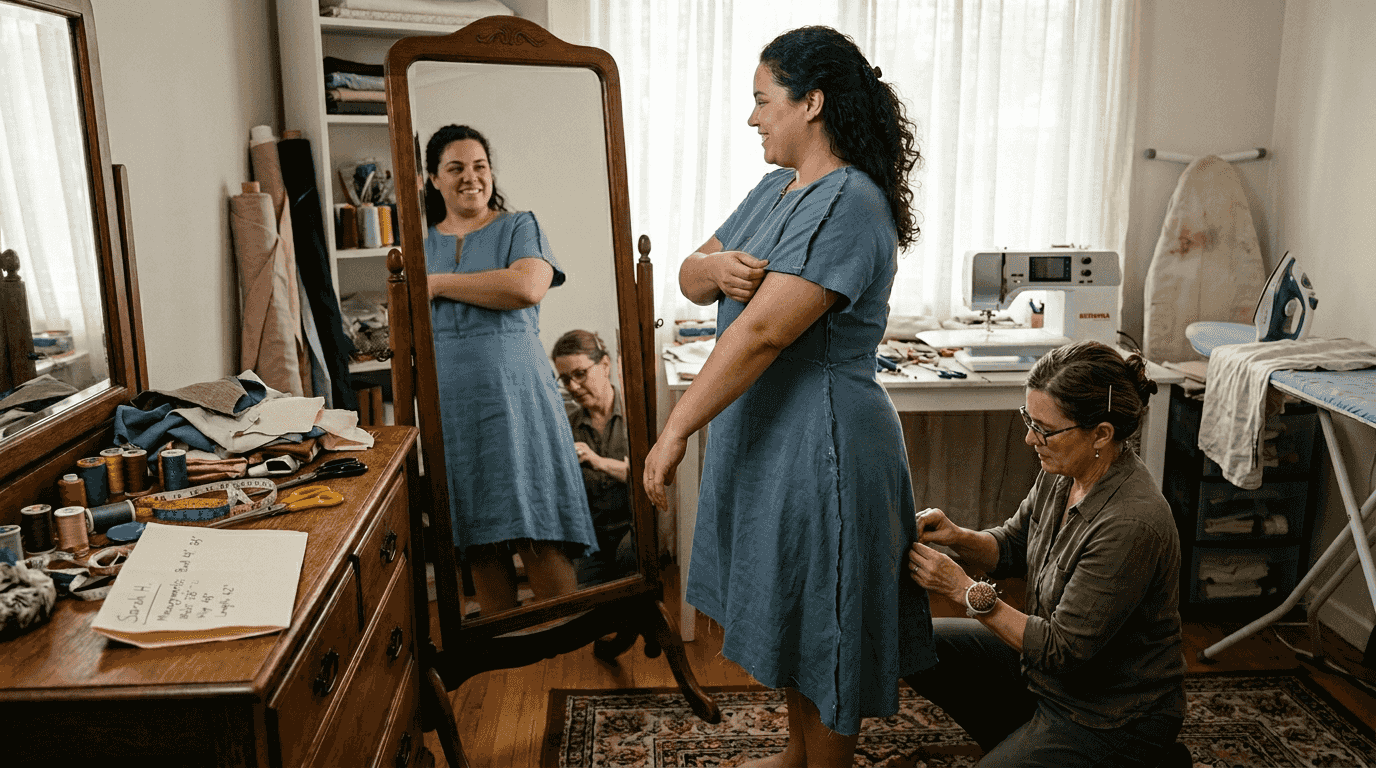
Custom plus size clothing addresses these frustrations by building garments around your specific measurements rather than forcing you into generic categories. This approach respects your unique proportions and eliminates the guesswork that makes shopping stressful. Understanding made-to-order sizing transforms how you approach fashion purchases, replacing anxiety with confidence.
How custom sizing and made-to-order models solve fit problems
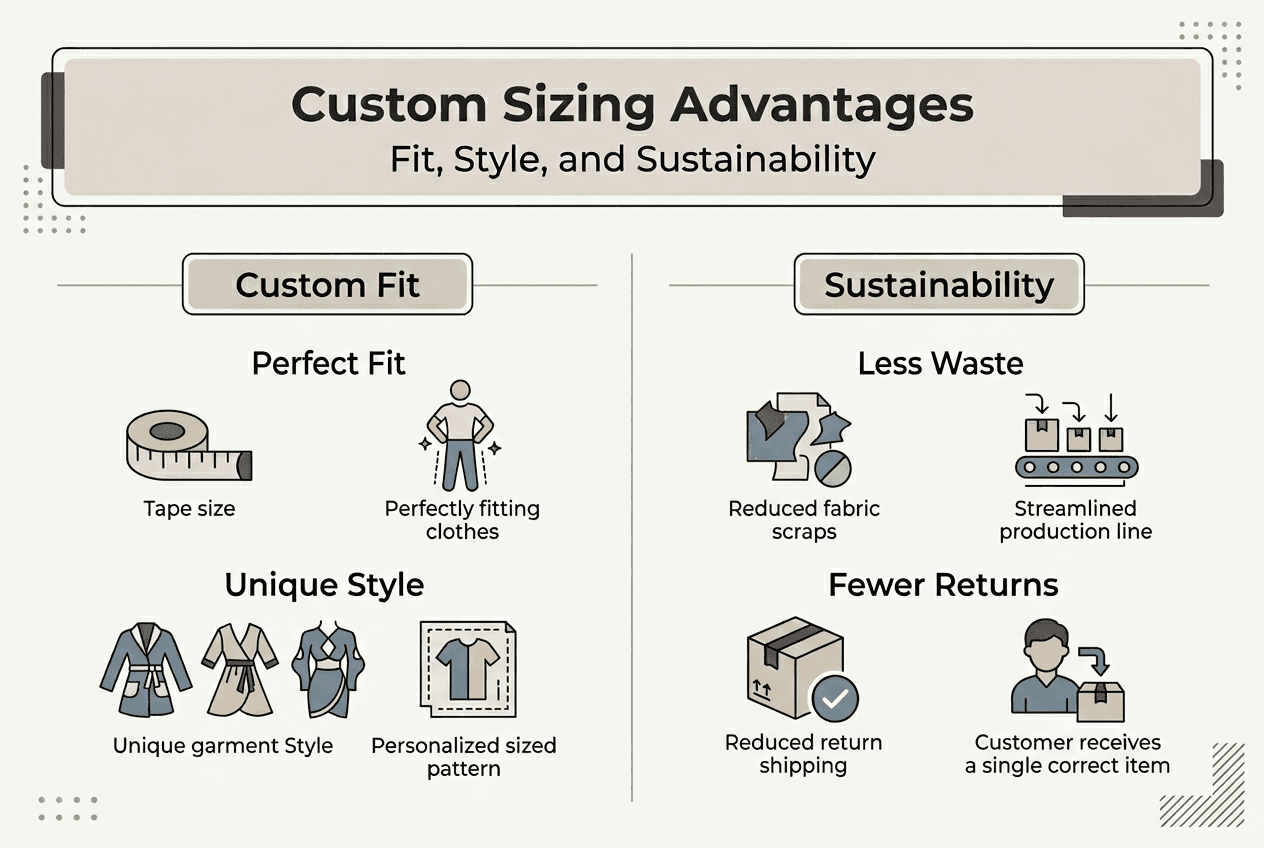
Made-to-order production fundamentally changes the fashion equation by creating garments only after you place an order. This approach eliminates the waste inherent in mass production, where manufacturers guess at demand and produce excess inventory that often ends up in landfills. Made-to-order models reduce textile waste by up to 30% compared to traditional manufacturing, making every purchase an environmental win.
Advanced technology powers the custom sizing revolution. 3D foot scanning reduced returns by 38% for Reima, a children’s footwear brand, by capturing precise measurements that standard sizing charts miss. These digital tools create detailed profiles of your body or feet, feeding data into algorithms that calculate optimal dimensions for each garment or shoe. Mobile apps make scanning accessible from home, removing barriers to accurate measurement.
Benefits of custom sizing include:
- Fewer returns because items fit correctly the first time
- Better comfort through precise measurements that accommodate your unique proportions
- Less textile waste as production matches actual demand
- Higher purchase confidence when you know sizing will be accurate
- Personalized style options that reflect your preferences and needs
Data-driven sizing replaces unreliable size charts with mathematical precision. Brands collect measurements across thousands of customers, refining their algorithms to predict fit with remarkable accuracy. This scientific approach eliminates the arbitrary nature of traditional sizing, where a medium in one brand fits like a large in another.
| Factor | Made-to-Order | Traditional Mass Production |
|---|---|---|
| Textile waste | 30% less waste through on-demand creation | High waste from overproduction and unsold inventory |
| Return rates | Significantly lower due to custom fit | 20-40% returns common for online fashion |
| Environmental impact | Reduced carbon footprint per garment | Large footprint from excess manufacturing and transport |
| Fit accuracy | High precision through personalized measurements | Variable fit across standard size ranges |
Pro Tip: Use mobile 3D scanning apps before ordering custom items to capture measurements in seconds, boosting your confidence and reducing the chance of returns by up to 38%.
Sustainable custom clothing combines ecological responsibility with perfect fit, addressing two priorities at once. Size-inclusive shopping becomes simpler when brands build around your measurements rather than forcing you into predetermined categories. Understanding why to choose made-to-order helps you make informed decisions that benefit both your wardrobe and the planet.
Technical nuances of custom sizing for clothing and footwear
Footwear design relies on a critical component called the last, a three-dimensional form that shapes the shoe during construction. The last determines comfort, performance, and longevity by establishing the shoe’s internal volume, arch support, and toe box shape. Custom footwear uses lasts tailored to your specific foot dimensions, eliminating the compromises inherent in standard sizing.
Standard shoe sizes rely on key parameters like ball girth and length, with brands making small adjustments for their target market. These base measurements work for average feet but fail when your proportions fall outside the narrow range. Width variations, arch height, instep volume, and heel-to-ball length all influence fit dramatically, yet standard sizing addresses only length and sometimes width.
Key custom measurements for perfect fit:
- Bust, waist, and hip circumference for clothing silhouette and comfort
- Shoulder width and sleeve length for proper garment drape and movement
- Inseam and rise measurements for pants that sit correctly at your natural waist
- Foot length, width, and arch height for footwear that supports without pinching
- Calf circumference for boots that fit snugly without gaping or constricting
- Neck and wrist dimensions for collars and cuffs that feel comfortable all day
Fabric behavior adds another layer of complexity. Stretch materials accommodate minor measurement variations, while woven fabrics require precise dimensions to avoid pulling or bagging. Custom sizing accounts for fabric properties, adjusting patterns to ensure the finished garment moves with your body naturally. Knit fabrics need negative ease (slightly smaller than body measurements) to hug curves, while structured pieces require positive ease for comfort and range of motion.
| Dimension | Standard Sizing | Custom Fit Adjustment | Impact on Comfort | | — | — | — | | Bust/chest | Fixed per size, 2-inch increments | Measured to 0.25 inch precision | Eliminates gaping or pulling across chest | | Waist placement | Assumes standard torso length | Adjusted to natural waist location | Prevents riding up or sliding down | | Sleeve length | Limited to short/regular/long | Tailored to exact arm length | Ensures cuffs hit wrist bone correctly | | Foot width | Often only narrow/medium/wide | Measured across ball and heel | Reduces blisters and pressure points | | Arch support | Generic arch built into sole | Matched to individual arch height | Improves stability and reduces fatigue |
Pro Tip: Choose brands that prioritize ergonomic last design tailored to your foot shape and intended use, whether you need athletic support, all-day walking comfort, or elegant evening wear.
Understanding custom clothing measurements empowers you to communicate your needs clearly to makers. Learning how to order made-to-measure footwear in 2026 ensures you get shoes that truly fit rather than settling for close enough.
Applying custom sizing to your wardrobe for style, comfort, and sustainability
Custom sizing unlocks style possibilities that standard sizing restricts. When garments fit your body perfectly, you can explore silhouettes and designs that might look unflattering in off-the-rack versions. A tailored blazer that follows your shoulder line and waist curve creates a polished look impossible to achieve with generic sizing. Custom footwear in your exact width and arch height lets you wear statement shoes all day without pain.
Made-to-order models support sustainability by producing only what customers actually want. Sustainable practices through made-to-order reduce textile waste and overproduction, addressing fashion’s environmental crisis at its source. Each custom piece represents intentional consumption rather than impulse buying that leads to closet clutter and eventual disposal.
Tips for choosing custom clothing and footwear:
- Prioritize versatile pieces that work across multiple occasions to maximize wear
- Select quality fabrics that age beautifully and justify the custom investment
- Consider your lifestyle needs when specifying details like pocket placement or heel height
- Choose colors and patterns that complement your existing wardrobe for easy mixing
- Request sustainable materials like organic cotton, Tencel, or quality faux leather
- Work with makers who offer clear measurement guides and responsive customer service
- Start with foundational items like well-fitting jeans or everyday boots before branching into statement pieces
Pro Tip: Use custom sizing to elevate confidence in special occasion wear and everyday staples alike by ensuring every piece fits like it was made for you, because it was.
Diverse body types thrive with custom sizing because it accommodates proportions that standard sizing ignores. Petite frames, tall builds, athletic shapes, and curvy figures all benefit from garments constructed around actual measurements rather than industry averages. This inclusivity extends beyond size numbers to address real fit challenges like long arms, short torsos, or wide feet.
Custom fashion enables self-expression by removing the constraints of mass-produced options. Understanding what custom tailoring offers helps you decide which pieces deserve the investment. Custom boots for plus sizes demonstrate how personalized footwear solves specific fit challenges that standard sizing cannot address.
Sustainable fabrics amplify the ecological benefits of custom sizing. Organic fibers, recycled materials, and innovative textiles like Tencel combine environmental responsibility with luxurious feel. Ethical brands that prioritize fair labor practices ensure your custom pieces support workers as well as the planet. This holistic approach to fashion aligns your wardrobe with your values.
Explore custom sizing options at Prima Dons & Donnas
Prima Dons & Donnas brings custom sizing to life through curated collections that celebrate individuality and perfect fit. Their made-to-order approach ensures each piece reflects your unique measurements and style preferences, eliminating the frustration of standard sizing compromises. From statement footwear to bold apparel, every item combines luxury aesthetics with practical wearability.
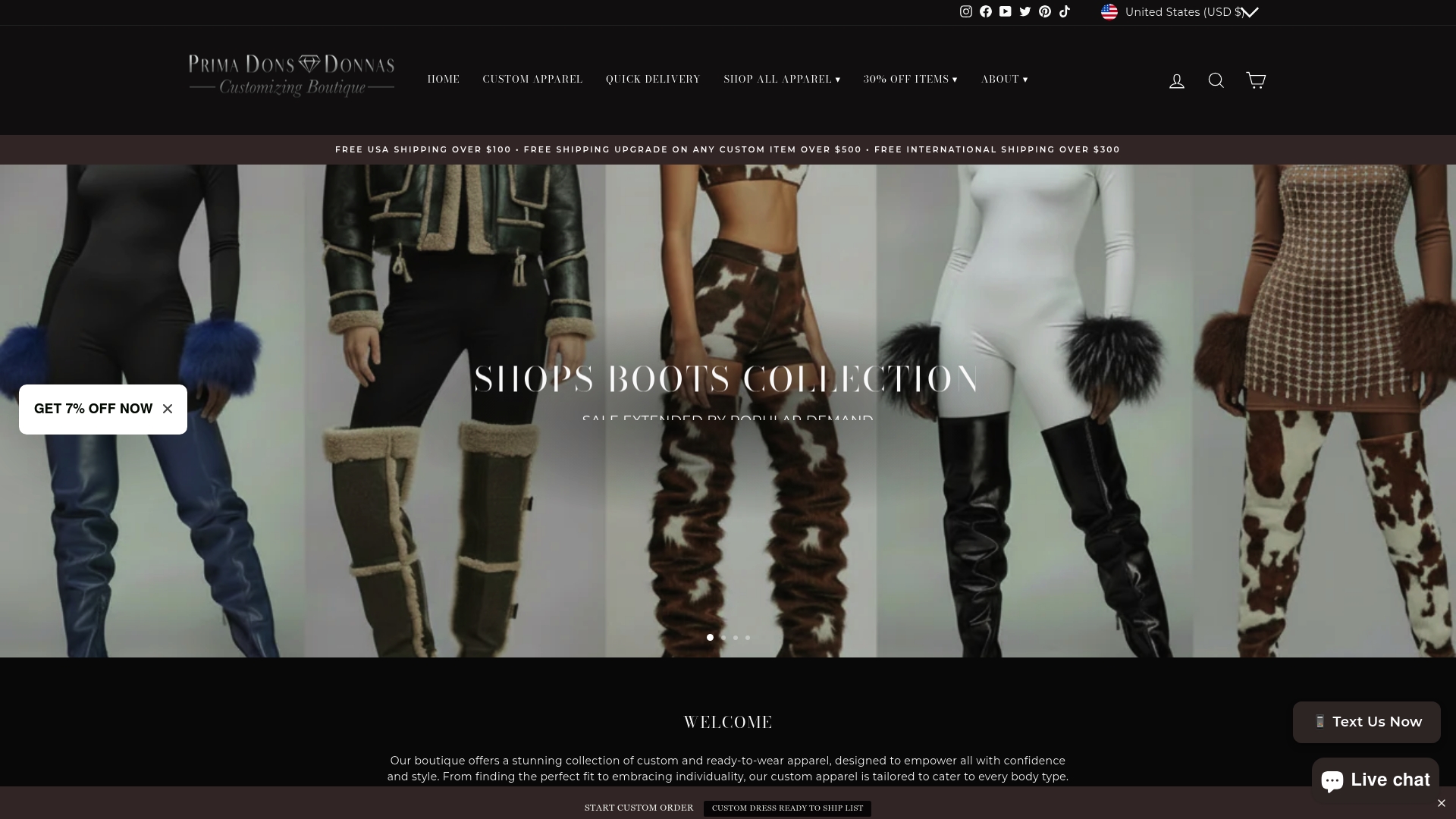
Discover custom crystal sneakers that sparkle with personality while fitting your feet precisely, or explore custom embellished shoes designed to turn heads at any event. The brand’s commitment to sustainability through made-to-order production means you can shop confidently, knowing your purchase supports responsible fashion practices. Ready-to-ship options provide quick solutions when you need something immediately, while custom orders deliver the perfect fit worth waiting for. Visit Prima Dons & Donnas to experience fashion that truly fits your body, style, and values.
Frequently asked questions about custom sizing
Why is custom sizing important for fashion-conscious women?
Custom sizing matters because it eliminates the fit frustrations that plague standard sizing, ensuring every garment and shoe works with your unique proportions. Perfect fit enhances comfort, confidence, and style expression by allowing you to wear designs that flatter your specific body shape. Custom options support sustainability by reducing returns and waste while empowering you to build a wardrobe that reflects your individuality. Understanding custom plus size clothing benefits reveals how personalized sizing transforms the shopping experience across all body types.
How does custom sizing reduce clothing returns and waste?
Custom sizing limits overproduction by creating garments only after orders are placed, eliminating the excess inventory that ends up in landfills. Accurate measurements ensure items fit correctly the first time, dramatically lowering return rates that burden both retailers and the environment. Made-to-order models reduce waste by up to 30% while decreasing returns significantly through precise fit. This efficient resource use supports sustainable fashion by matching production to actual demand rather than guessing at market needs.
What role does technology play in custom sizing accuracy?
Technologies like 3D scanning provide precise body and foot measurements that eliminate human error and guesswork in sizing. 3D scanning technologies reduce returns by 38% and improve conversion rates by giving customers confidence in fit accuracy. Sizing algorithms process measurement data to calculate optimal garment dimensions, accounting for fabric properties and design details. Mobile apps make these tools accessible from home, democratizing access to professional-grade measurement services that once required in-person fittings.
How can I start shopping for custom-sized clothing and footwear in 2026?
Research brands offering made-to-order or custom-fit options that align with your size range, style preferences, and budget. Use available digital measurement tools or visit boutiques that provide 3D scanning services to capture your precise dimensions. Consult detailed guides for ordering made-to-measure footwear to understand the process and set realistic expectations. Reach out to brand customer service teams with questions about measurement, fabric choices, and turnaround times to ensure a smooth ordering experience.


Leave a comment