

Why size inclusivity matters: confidence, custom fit, and fashion's future
TL;DR:
- True size inclusivity involves designing for all body types with extended ranges and proper fit.
- Size-inclusive brands outperform non-inclusive ones in loyalty, sales, and sustainability.
- Custom and made-to-order fashion enhance confidence, reduce waste, and promote responsible production.
Most women’s closets tell the same frustrating story: endless scrolling through size 0 to 12 options, while 67% of American women wear size 14 or above and find near-empty racks waiting for them. The fashion industry has spent decades designing for a narrow slice of the population, treating the majority as an afterthought. That gap is not just inconvenient. It affects confidence, self-expression, and even the planet. This article breaks down what size inclusivity actually means, why it drives real business growth, how it transforms individual lives, and why the most forward-thinking brands are treating it as a non-negotiable standard, not a trend.
Table of Contents
- What size inclusivity really means in fashion
- The business case: Why size inclusivity fuels industry growth
- Personal power: The positive impact of size inclusivity on confidence and self-expression
- Size inclusivity and sustainability: Less waste, more responsible fashion
- A fresh take: True size inclusivity is creative, committed, and sustainable
- Experience size-inclusive custom fashion for yourself
- Frequently asked questions
Key Takeaways
| Point | Details |
|---|---|
| Most women excluded | Nearly 70% of American women wear sizes that most brands don’t carry, making inclusivity essential. |
| Drives business growth | Offering all sizes expands market reach and boosts brand reputation and sales figures. |
| Boosts confidence | Wearing clothes made for real bodies empowers women and supports true self-expression. |
| Reduces waste | Inclusive sizing and custom-fit fashion lead to less overproduction and more sustainable wardrobes. |
What size inclusivity really means in fashion
Size inclusivity is not a marketing buzzword, and it is not simply adding a plus-size section to a website. True inclusivity covers the full spectrum of body types: petite, tall, mid-size, straight size, and curve. It means every design is engineered to fit real bodies, not just scaled up from a sample size.
Many brands practice what the industry calls token representation. They feature a size 14 model in one campaign photo but produce no actual inventory above a size 12. That is not inclusivity. That is optics. Real size inclusion happens at the production level, in the grading process, in the way patterns are adjusted for different proportions, and in stocking meaningful quantities across the full range.
Here is what genuine size inclusivity looks like in practice:
- Extended size ranges: Offering sizes from 00 through 32 or beyond, not stopping at 16.
- Proper fit across sizes: Adjusting seam placement, proportions, and construction for each size bracket.
- Diverse inventory availability: Ensuring popular styles are actually available in all sizes, not just a few.
- Representation across all marketing: Featuring a variety of body types consistently, not seasonally.
- Custom and made-to-order options: Giving shoppers the ability to specify exact measurements.
Research confirms this matters commercially too. Brands offering extended sizes from 00 to 32 are perceived as more trustworthy, and that trust increases purchase intent even among shoppers who wear straight sizes. Inclusivity builds brand loyalty across the board.
“Size inclusivity is not about plus size. It is about every size. When fit works for everyone, fashion finally works.”
Exploring inclusive fashion explained can help clarify what this shift looks like for real shoppers and real wardrobes.
Pro Tip: When evaluating a brand’s inclusivity, check the size range on their bestsellers, not just their extended sizes page. Availability on popular styles is the real indicator.
The business case: Why size inclusivity fuels industry growth
The numbers are impossible to ignore. The plus-size market alone represents 20% of U.S. women’s apparel sales, valued at $25 billion, with global projections reaching $697 billion by 2027. Brands that ignore extended sizing are not being exclusive. They are leaving enormous revenue on the table.
Consumer loyalty tells a similar story. Shoppers who find a brand that fits them consistently return at higher rates, spend more per transaction, and refer others. The cost of acquiring a loyal customer drops significantly when that customer feels seen and served.
Inclusive vs. non-inclusive brands: A quick comparison
| Factor | Inclusive brands | Non-inclusive brands |
|---|---|---|
| Market reach | Full adult size spectrum | Narrow size range |
| Customer loyalty | Higher repeat purchase rate | Lower retention |
| Return rates | Lower (better fit) | Higher (fit issues) |
| Brand perception | Trustworthy, modern | Limited, dated |
| Revenue potential | Maximized across all sizes | Constrained to minority |
Beyond sales data, trust is the real currency. Customers of all sizes respond more positively to brands that commit to inclusive sizing. The halo effect is real: shoppers at a size 8 are more likely to buy from a brand they perceive as size-forward, because it signals quality, care, and integrity.
Key reasons inclusive brands outperform:
- They access underserved segments with significant spending power.
- They reduce return rates by offering better fit across the size range.
- They build word-of-mouth loyalty from customers who rarely find options elsewhere.
Staying current with size inclusive fashion trends and learning practical strategies through shopping inclusive apparel can help you make smarter choices as a consumer and support brands doing the work right.
Personal power: The positive impact of size inclusivity on confidence and self-expression
Numbers matter, but people matter more. For the woman who has spent years avoiding certain styles because nothing ever fit right, size inclusivity is not abstract. It is transformational.
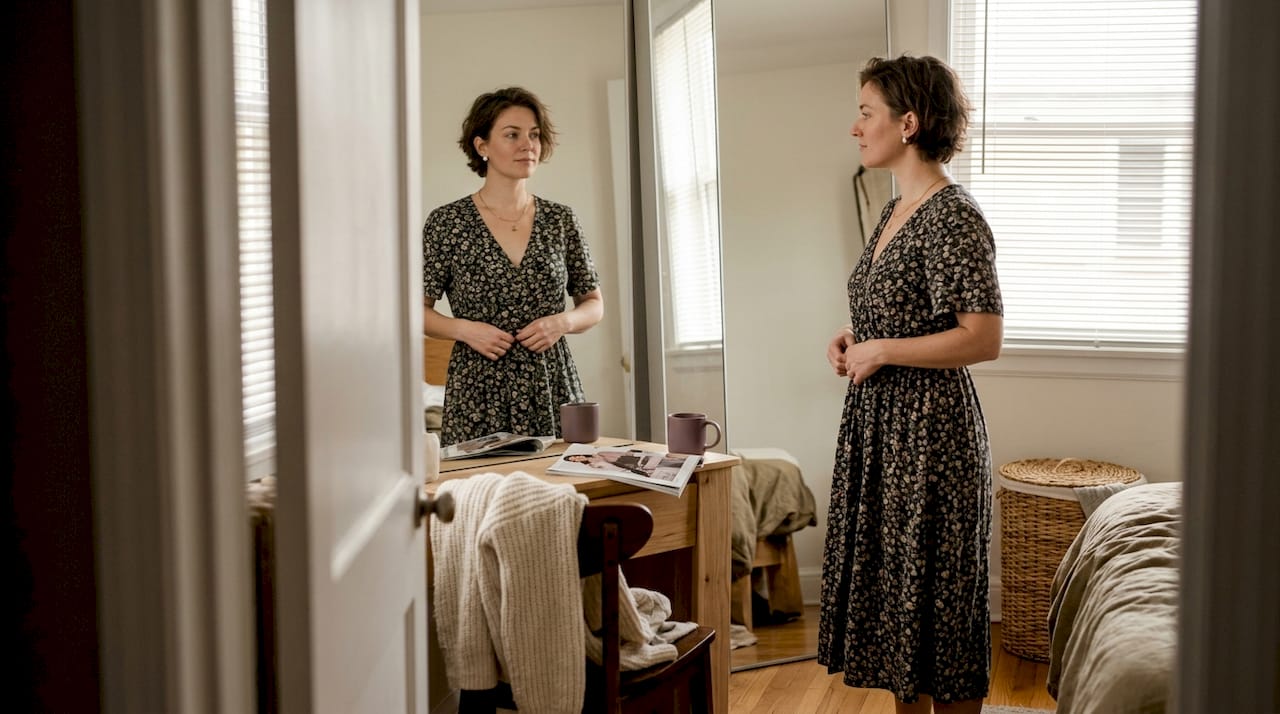
When clothing is made for your actual body, rather than a body you are supposed to have, the experience of getting dressed changes. Custom fits celebrate individuality by flattering unique shapes and boosting confidence without asking anyone to compromise their style.
Here is how size inclusivity improves the personal experience of fashion:
- Less anxiety, more joy. Shopping stops being a test you might fail and becomes an experience you actually look forward to.
- Higher self-esteem. When clothing fits beautifully, it reinforces a positive relationship with your body, not a critical one.
- Style without compromise. You stop choosing between what fits and what you love. Inclusive options let you have both.
- Greater creative freedom. Access to more styles, silhouettes, and cuts means more room to build a wardrobe that truly reflects who you are.
- Reduced mental load. No more mentally editing out half of every store’s inventory before you even begin browsing.
“Fashion should not require you to shrink, stretch, or settle. Your size is not the problem. The lack of options is.”
Custom and made-to-order clothing takes this further. Instead of adapting to a garment, the garment adapts to you. Learning more about the benefits of custom plus size fashion shows just how different the experience can be when fit is built around your measurements, not a size chart average.
For actionable guidance on styling with confidence, plus size style tips offer practical direction on making the most of inclusive collections.
Size inclusivity and sustainability: Less waste, more responsible fashion
Sustainability and size inclusivity share a common foundation: intentional production. Fast fashion thrives on overproduction, churning out massive quantities of limited-size garments, many of which are never sold and end up in landfills. The narrower the size range, the more inventory misses the mark.
When brands design for a wider range of bodies, more garments find owners. Fewer pieces go unsold. Less fabric ends up wasted. It is a straightforward connection that the industry is only beginning to take seriously.
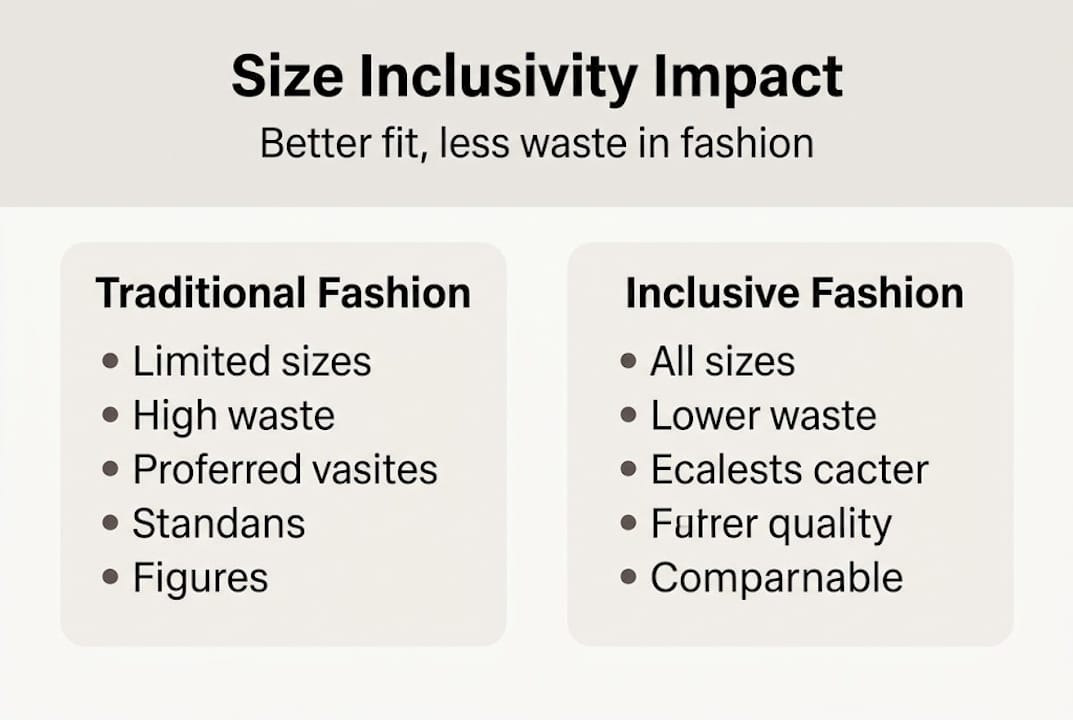
Fashion waste vs. inclusive production: Key comparisons
| Approach | Waste level | Longevity | Customer satisfaction |
|---|---|---|---|
| Fast fashion (limited sizes) | Very high | Low | Inconsistent |
| Extended size ready-to-wear | Moderate | Medium | Improved |
| Custom made-to-order | Minimal | High | Consistently high |
Sustainable custom fashion reduces environmental impact through durability and zero overproduction waste. When a garment is made to your exact measurements, you wear it more, care for it better, and keep it longer.
Additional sustainability benefits of size-inclusive and custom fashion:
- Fewer returns: Better fit means fewer garments shipped back, reducing transportation emissions.
- Higher wearability: Items made to fit correctly get worn repeatedly, not donated after one awkward outing.
- Intentional materials: Custom brands often invest in quality fabrics, including ethical alternatives like high-quality faux fur.
- No dead stock: Made-to-order eliminates unsold inventory entirely.
Pro Tip: When shopping sustainably, prioritize brands with made-to-order options. You get better fit and a smaller environmental footprint in one decision.
Understanding custom sizing and sustainability highlights how fit and ethics intersect. For practical guidance on achieving perfect fit without waste, the made-to-order fit guide is a strong starting point.
A fresh take: True size inclusivity is creative, committed, and sustainable
Here is what most conversations about size inclusivity miss: adding one curvy model to a lookbook is not progress. It is publicity. Real change requires investment at the pattern-making and grading level, where fit is actually built or broken.
Tokenism fails shoppers when brands feature plus-size representation in campaigns but make no production commitment to actual fit or inventory. A size 22 woman in a campaign means nothing if the brand stops producing at size 16.
The brands worth supporting are those that treat inclusive sizing as a design standard, not a marketing moment. That means redesigning patterns for different proportions, not just stretching sample sizes. It means stocking inventory at all sizes, not limiting availability to the middle range.
Custom and made-to-order fashion represents the most honest answer to this problem. When nothing is produced until an order is placed, every garment is intentional. Exploring personalized fit tips can help shoppers identify what real fit commitment looks like and demand it from every brand they choose.
Size inclusivity is not the future. It is the standard. Brands that treat it otherwise are simply behind.
Experience size-inclusive custom fashion for yourself
Everything covered in this article, from the data on missed revenue to the personal confidence that comes from a perfect fit, points toward one clear direction: fashion made for your body, not in spite of it.
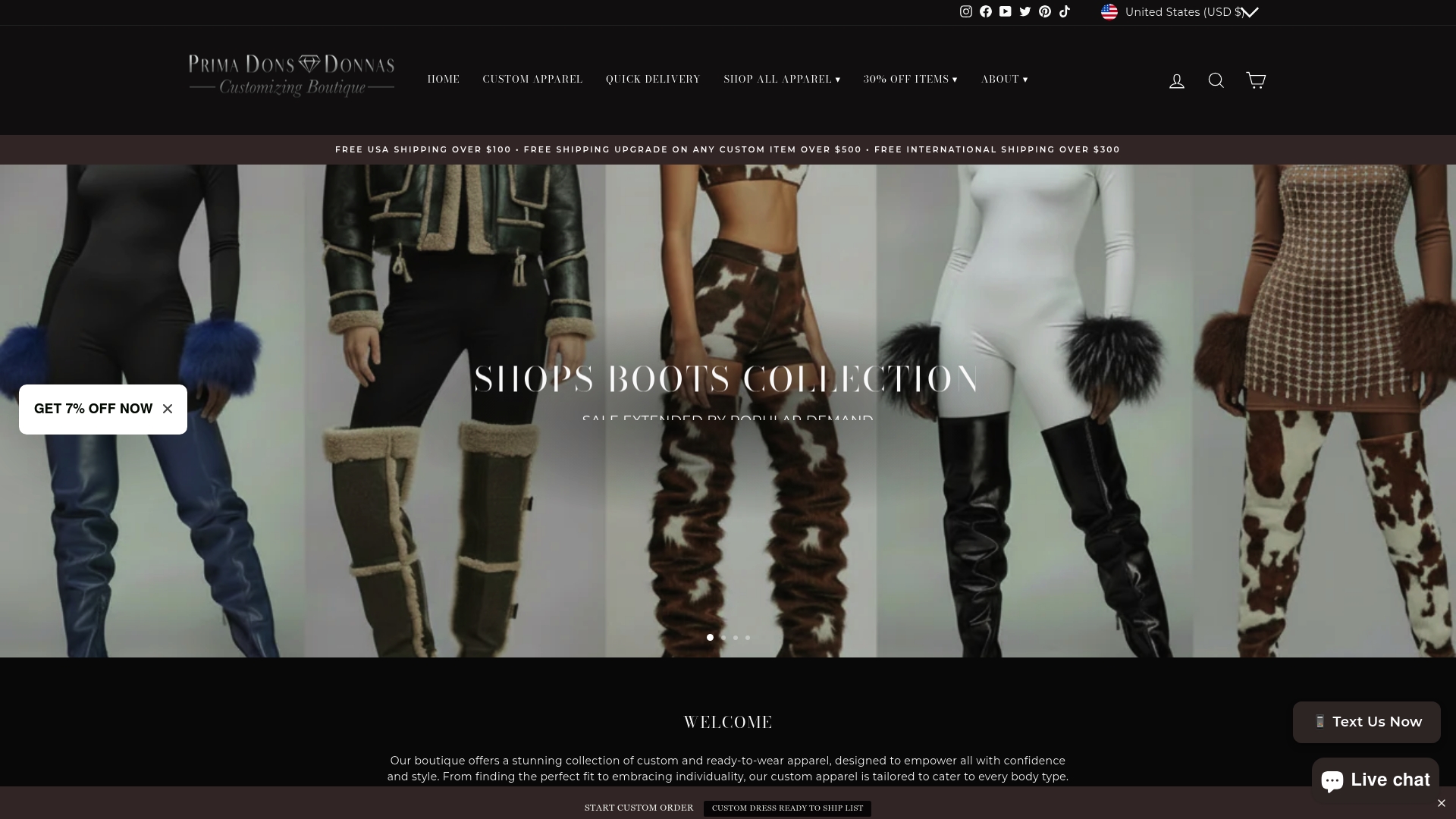
Prima Dons and Donnas builds every piece to order, in any size, any color, with bold and luxurious style as the baseline. From shop custom dresses crafted to your exact measurements to custom outerwear designed for real-world wearability and statement-making style, every option is intentional. Ready-to-ship selections are also available for shoppers who want inclusive fashion without the wait. This is size inclusivity done right, with fit, quality, and confidence built in from the start.
Frequently asked questions
Why does size inclusivity matter so much in women’s fashion?
Because 67% of American women wear size 14 or above yet face severely limited options, size inclusivity means more women can find clothing that actually fits, supports confidence, and reflects their personal style.
How does size inclusivity help the environment?
Sustainable custom fashion reduces environmental impact through durability and zero overproduction, meaning fewer garments are discarded and more are genuinely worn and loved.
What’s the difference between tokenism and real size inclusivity?
Tokenism places a plus-size model in a campaign but produces no actual inventory or properly graded patterns. Real inclusivity commits to designing and grading garments for actual bodies across the full size range.
Does size inclusivity benefit women who wear straight sizes too?
Yes. Research shows brands offering extended sizes from 00 to 32 earn higher trust and purchase intent even from shoppers who wear standard sizes, proving inclusivity lifts all customers.
Recommended
- Size Inclusive Fashion 2026: Empowering Bold Confidence – Prima Dons & Donnas
- Why custom sizing matters: fit, style, and sustainability – Prima Dons & Donnas
- 6 Essential Tips for Size-Inclusive Shopping Success – Prima Dons & Donnas
- Custom Fashion and Self-Expression: Why It Matters – Prima Dons & Donnas


Leave a comment