

Express your individuality through fashion: a style guide
TL;DR:
- Personal style is about expressing your authentic self, not following fleeting trends.
- Building a capsule wardrobe with meaningful pieces supports sustainability and individuality.
- Customization and bold styling foster confidence and unique self-expression.
You follow the trends. You buy what’s popular. Yet somehow, your wardrobe still doesn’t feel like you. That disconnect is more common than you’d think, and it’s worth addressing directly. Fashion isn’t just about looking current. It’s one of the most immediate tools you have for communicating who you are before you say a single word. This guide walks through practical steps to build a wardrobe that reflects your personality, supports sustainable choices, and helps you show up with genuine confidence every day. No more dressing for the algorithm. Time to dress for yourself.
Table of Contents
- Identify your personal style: Beyond trends
- Build your capsule wardrobe: Personality-first, sustainable choices
- Customize and upcycle: Make every piece your own
- Push boundaries with creative styling—without shame
- A fresh perspective: Authentic style beats the rules every time
- Ready to express your individuality? Unique fashion options await
- Frequently asked questions
Key Takeaways
| Point | Details |
|---|---|
| Authentic style matters | Expressing your unique identity through fashion boosts well-being and confidence. |
| Capsule wardrobes work | Start with clothes you love and coordinate multiple outfits for sustainable, flexible style. |
| Customization amplifies individuality | Personal touches and upcycling transform basics into signature pieces that reflect you. |
| Break limiting rules | Challenge restricting style guidelines and experiment within your comfort for true self-expression. |
Identify your personal style: Beyond trends
Most wardrobes are built on borrowed ideas. A trend appears, you buy into it, and six months later it feels foreign. That cycle is exhausting, and it rarely produces a closet you love.
The core issue is the difference between a fashion orientation and a style orientation. Fashion orientation means chasing what’s current. Style orientation means curating clothes that feel timeless and true to you. Research shows that style orientation positively correlates with subjective well-being, while trend-chasing does not carry the same psychological benefit. That’s a meaningful distinction.
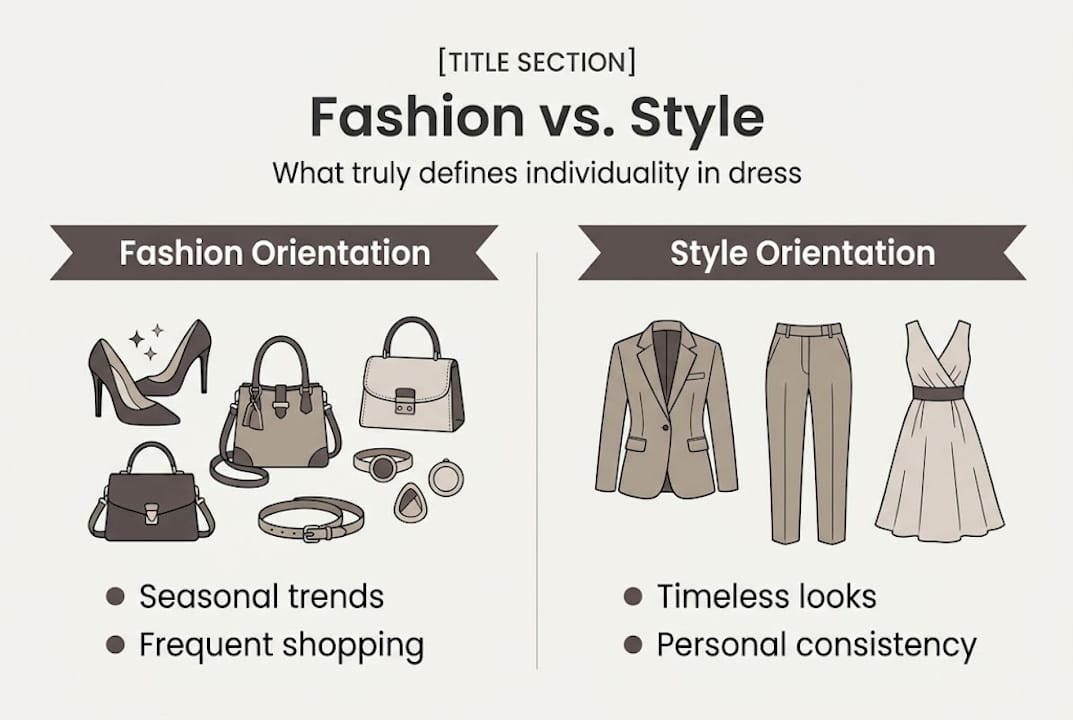
So how do you identify your actual style? Start with reflection, not shopping.
Signs you’re dressing for trends, not yourself:
- You feel uncomfortable or unlike yourself in new purchases after a week
- Your closet has pieces you never reach for
- You buy items because they’re popular, not because they excite you
- Getting dressed feels stressful rather than enjoyable
Experts recommend reflecting on go-to outfits and experimenting with shape, volume, and proportion rather than following body-shame rules or seasonal trends. Journaling about style inspiration, saving images that genuinely excite you, and noting what you feel best in are all practical starting points.
| Fashion orientation | Style orientation |
|---|---|
| Follows seasonal trends | Builds timeless, personal looks |
| Buys based on popularity | Buys based on personal resonance |
| Wardrobe feels inconsistent | Wardrobe feels cohesive and intentional |
| Confidence depends on validation | Confidence comes from within |
Explore fashion individuality explained for a deeper look at what separates trend-following from genuine self-expression. The connection between confidence and personal style is also worth understanding before you start rebuilding your wardrobe.
Pro Tip: Pull out your five most-worn pieces right now. What do they have in common? Color family, silhouette, fabric weight? That pattern is your style DNA.
Build your capsule wardrobe: Personality-first, sustainable choices
Once you know your style orientation, the next step is building a wardrobe that actually reflects it. A capsule wardrobe isn’t a rigid list of neutral basics. Done right, it’s a curated set of pieces that work together and feel unmistakably like you.
The key insight: start with existing loved pieces, use a personality-first color palette, and ensure each item coordinates with at least five others. That approach can generate 60 or more outfits from just 25 to 30 pieces, dramatically reducing the need to keep buying.
Personality-first capsule vs. generic basics approach:
| Generic basics method | Personality-first method |
|---|---|
| Starts with a shopping list | Starts with a wardrobe audit |
| Neutral colors only | Colors chosen for personal resonance |
| Focused on versatility alone | Focused on versatility and expression |
| Ignores existing wardrobe | Builds on what you already love |
Step-by-step capsule build:
- Audit your current wardrobe. Remove anything you haven’t worn in 12 months or that doesn’t feel like you.
- Identify your color palette. Choose 3 to 5 colors that genuinely excite you, not just what’s considered safe.
- Map out coordination. Every piece you keep or add should work with at least five others already in your closet.
- Add signature items. These are the pieces that feel bold and distinctly you. Statement coats, printed trousers, textured boots.
- Fill gaps intentionally. Only buy what’s missing from your coordination map, not what’s trending.
Sustainability is built into this method naturally. Fewer purchases, higher wear-per-item, and a focus on quality over quantity all reduce waste. For more actionable guidance, check out these eco-friendly wardrobe tips and explore sustainable fashion options that align with a personality-first approach.
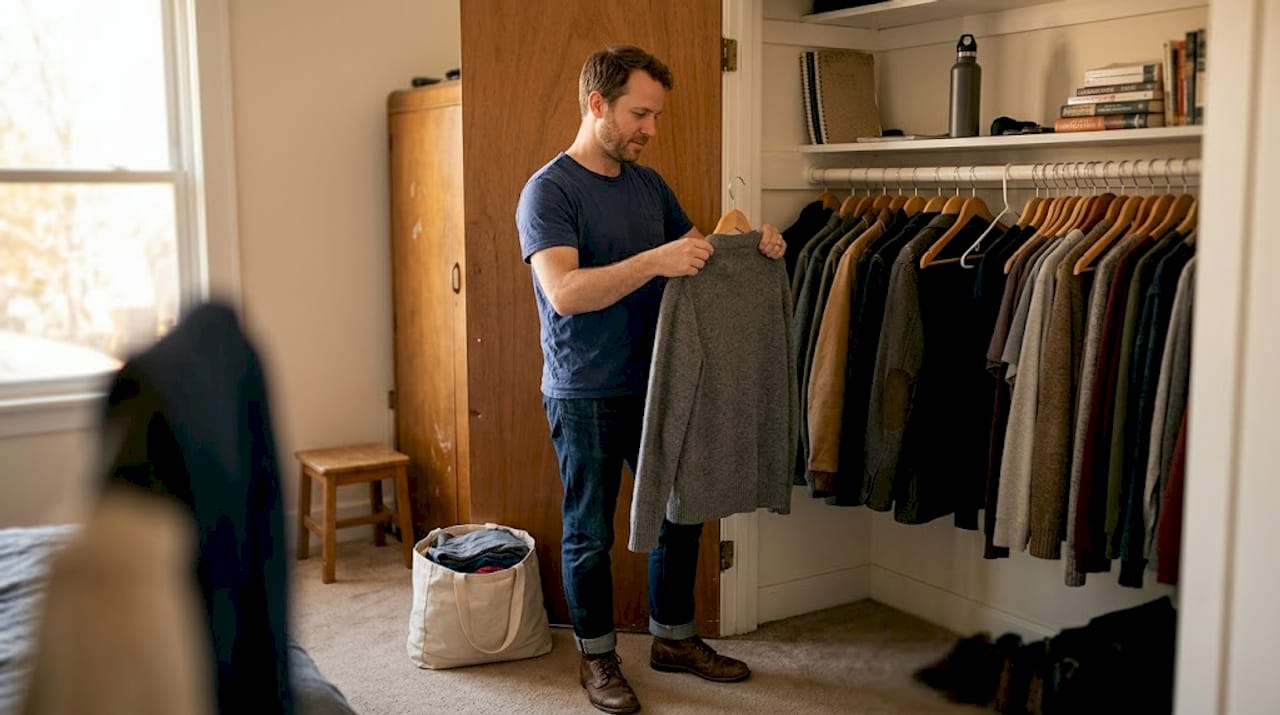
Pro Tip: When adding new pieces, ask yourself: does this work with at least five things I already own? If the answer is no, it’s not a capsule piece.
Customize and upcycle: Make every piece your own
A capsule wardrobe gives you a strong foundation. Customization is what makes it unmistakably yours.
Personalizing your clothes doesn’t require a full design background. Small changes create major impact. Consider these options:
- Tailoring for a precise fit that flatters your specific body
- Embroidery or patches to add visual personality to basics
- Fabric paint or dye to transform a tired piece into something fresh
- Trim swaps like replacing standard buttons with vintage or statement alternatives
- Structural alterations such as cropping, hemming, or adding volume
Technology is also changing what’s possible. MIT Refashion software enables modular, reassemblable clothing designs that support adaptability and zero-waste sustainability. That kind of thinking, designing clothes to be transformed rather than discarded, is shaping the future of conscious fashion.
Upcycling follows the same principle. An oversized blazer becomes a structured vest. A maxi skirt becomes a midi with a new hem. These aren’t just budget-friendly moves. They’re acts of creative ownership that make your wardrobe feel personal in a way no store-bought piece can replicate.
Every custom detail tells a story about who you are. A hand-embroidered collar. A coat in a color that exists nowhere else. These choices communicate identity without a single word.
For practical guidance on putting custom pieces together, explore custom clothing style tips and learn more about sustainable custom clothing that supports both individuality and environmental responsibility.
Pro Tip: Before buying something new, ask whether an existing piece could be customized to fill the same gap. Often the answer is yes, and the result is far more personal.
Push boundaries with creative styling—without shame
Knowing your style and building your wardrobe are the preparation. Actually wearing bold, personal looks in public is the execution. And that’s where most people hesitate.
Common style rules create unnecessary limits. “Dress for your body type.” “Keep it professional.” “Don’t mix prints.” Some of these rules have context. Most of them don’t serve authentic expression.
Experts note that body-type rules create shame, and the better approach is focusing on how clothes feel rather than whether they’re considered “flattering” by external standards. Flattering is a subjective term shaped by cultural bias. How you feel in what you wear is a fact.
Steps to experiment with more confidence:
- Start with one bold element per outfit, a color, a silhouette, a texture, and build from there.
- Test new combinations at lower-stakes occasions before wearing them to high-pressure environments.
- Identify which “rules” you follow out of genuine preference versus fear of judgment.
- Dress for how you want to feel, not for how you think you’ll be perceived.
- Document outfits you love. Revisit them when confidence dips.
“Style is a way to say who you are without having to speak.” This idea is at the heart of authentic fashion. When you dress from the inside out, the result reads as intentional, not accidental.
Professional environments do present real constraints. But even within a dress code, there’s room for personality. A structured blazer in an unexpected color. A shoe with a distinctive detail. Jewelry that means something to you. The boundaries are narrower, but they’re not walls.
Learn more about why fashion reflects individuality and how intentional dressing builds lasting self-confidence.
A fresh perspective: Authentic style beats the rules every time
Most style advice focuses on standing out. Find your statement piece. Be different. Make an entrance. That framing puts pressure on the wrong thing.
The most genuinely confident dressers we’ve seen aren’t trying to be different. They’re simply being consistent with themselves. That consistency is what reads as style. It’s not about owning unusual pieces. It’s about knowing yourself well enough to dress with intention, even on ordinary days.
Conventional advice overemphasizes the outward performance of individuality. Real style is quieter than that. It comes from regularly checking in with yourself, noticing what still resonates and what no longer fits, and updating your wardrobe accordingly. Not because a trend changed, but because you changed.
Taste evolves. Life changes. A wardrobe built on self-awareness adapts naturally. One built on trends requires constant replacement.
The most practical move? Schedule a quarterly wardrobe reflection. Not a haul. Not a purge. Just a check-in. Does this still feel like me? That question, asked consistently, does more for personal style than any shopping guide. Explore how personal style builds confidence over time for a deeper look at this connection.
Ready to express your individuality? Unique fashion options await
Building a wardrobe that reflects who you are is a process, and having the right pieces makes it easier. Prima Dons and Donnas offers custom, made-to-order apparel and footwear designed to fit your size, your color preferences, and your style vision.
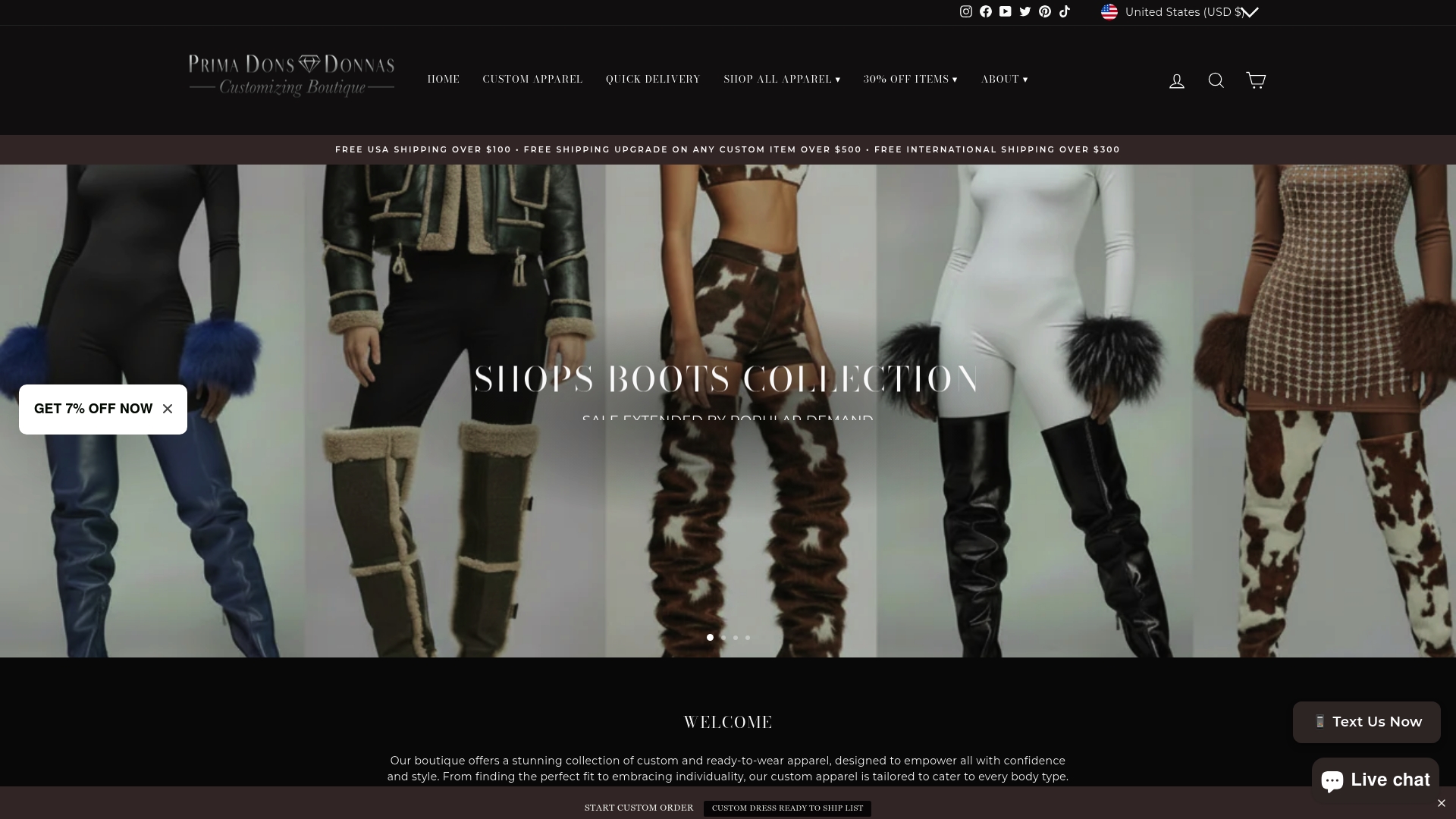
From custom made-to-order dresses to bold custom boots and statement-making custom outerwear, every piece is built with intention. Sustainable materials, including high-quality faux fur options, support conscious choices without compromising on style. Ready-to-ship options are also available for faster delivery. Shop collections designed for women who want to stand out with purpose, not just follow the crowd.
Frequently asked questions
What is the difference between following trends and expressing individuality in fashion?
Following trends means dressing to fit current mainstream styles, while expressing individuality means curating a wardrobe that truly represents your unique personality and preferences. Style orientation supports well-being in ways that trend-chasing simply does not.
How can I start building a sustainable capsule wardrobe that fits my style?
Start with your favorite existing pieces, choose a flexible color palette, and ensure every item coordinates with multiple outfits for versatility. Personality-first capsule building can yield 60 or more outfits from just 25 to 30 items.
Can customization and upcycling really make my wardrobe more unique?
Yes, customizations like tailoring and upcycling with tech-driven tools can turn basics into expressive, sustainable statement pieces. MIT Refashion software demonstrates how clothing can be reassembled into entirely new, eco-friendly designs.
How do I confidently experiment if I feel limited by body-type rules or professional dress codes?
Focus on how clothes make you feel, experiment within boundaries, and ditch restrictive rules for a style that expresses you comfortably and authentically. Body-type rules create shame, so prioritizing feel over “flattering” is always the better approach.
Recommended
- Fashion Individuality Explained: Making Style Personal – Prima Dons & Donnas
- Why Fashion Reflects Individuality in Modern Style – Prima Dons & Donnas
- Guide to expressing style with custom fashion in 2026 – Prima Dons & Donnas
- Statement Fashion: Expressing Bold Individuality – Prima Dons & Donnas
- Step-by-step sneaker shopping guide to authentic kicks – Flex Store


Leave a comment