

Sustainable fashion options for conscious women in 2026
You’ve probably heard that sustainable fashion means buying organic cotton tees or choosing brands with green logos. The reality is far more complex. True sustainable fashion involves intricate considerations like water consumption, carbon emissions, textile waste, and circular production systems that most consumers never see. In 2026, the fashion industry still contributes roughly 10% of global carbon emissions, yet genuine eco-friendly options exist for women who want style without environmental compromise. This guide cuts through the noise to reveal what sustainable fashion really means, which materials and brands deliver authentic results, and how personalized clothing choices can align your wardrobe with your values while expressing your unique style.
Table of Contents
- Understanding Sustainable Materials: Key Eco-Friendly Fabrics Explained
- Brands Leading Sustainable Fashion In 2026: Stylish Options You Can Trust
- Navigating Sustainability Claims: Spotting Greenwashing And Verifying True Eco-Fashion
- Personalized Sustainable Fashion: How Custom And Made-To-Order Pieces Reduce Waste And Express Style
- Explore Custom Sustainable Fashion With Prima Dons & Donnas
Key takeaways
| Point | Details |
|---|---|
| Sustainable materials matter most | Fabrics like organic cotton and Tencel dramatically reduce water use and chemical pollution compared to conventional textiles. |
| Brand transparency is essential | Many fashion companies meet only half their sustainability commitments, making verification through certifications and lifecycle data critical. |
| Made-to-order reduces waste | Custom fashion eliminates overproduction and excess inventory, diverting millions of garments from landfills annually. |
| Certifications vary in scope | Labels like B Corp and OEKO-TEX cover different aspects, so understanding what each verifies helps you make informed choices. |
| Personalization supports sustainability | Tailored pieces fit better, last longer, and reduce returns, creating a more sustainable consumption cycle. |
Understanding sustainable materials: key eco-friendly fabrics explained
Fabric choice forms the foundation of any garment’s environmental footprint. When you choose clothing made from sustainable materials, you’re directly reducing water consumption, chemical pollution, and carbon emissions. The difference between conventional and eco-friendly textiles is staggering in measurable impact.
Organic cotton stands out as a game changer. Organic cotton reduces water usage by 91% compared to conventional cotton, which typically requires intensive irrigation and pesticide application. This massive reduction comes from improved soil health and rain-fed farming practices that eliminate the need for synthetic fertilizers.

Tencel, made from sustainably harvested wood pulp, operates on a closed-loop system that recycles 99% of solvents used in production. The fabric feels luxuriously soft, drapes beautifully, and biodegrades naturally at end of life. You get performance and comfort without environmental compromise.
Beyond these leaders, several other materials deserve attention. Hemp grows rapidly without pesticides, requires minimal water, and produces strong, durable fibers perfect for structured garments. Linen comes from flax plants that thrive in poor soil with little intervention, creating breathable fabric ideal for warm weather. Recycled polyester diverts plastic bottles from landfills, though it still sheds microplastics during washing.
Regenerative organic cotton minimizes environmental impact beyond typical organic standards by actively improving soil health, sequestering carbon, and supporting fair labor practices. This next-level approach rebuilds ecosystems while producing premium fibers.
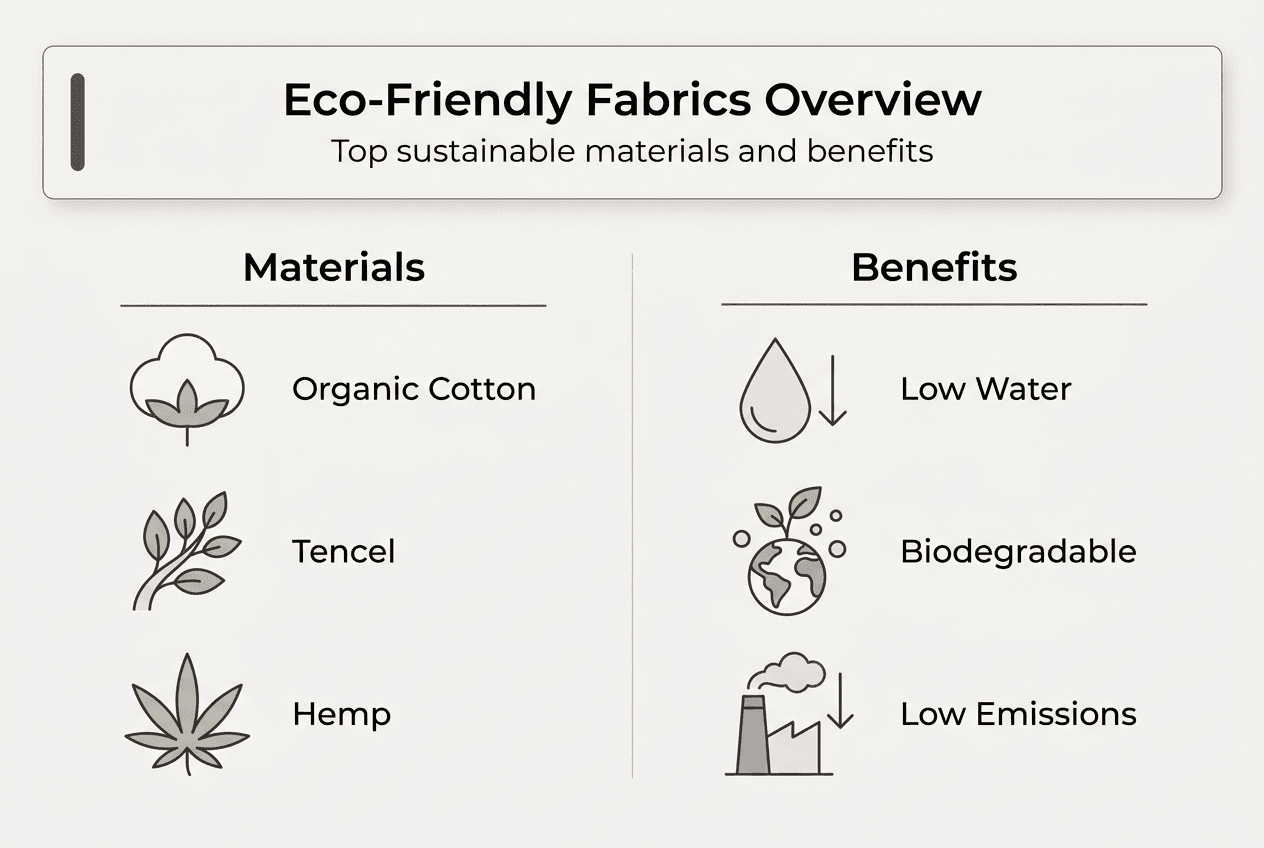
Here’s how major sustainable fabrics compare on key environmental metrics:
| Material | Water Use | Chemical Impact | Carbon Footprint | Biodegradability |
|---|---|---|---|---|
| Organic Cotton | Very Low | Minimal | Moderate | Excellent |
| Tencel | Low | Near Zero | Low | Excellent |
| Hemp | Very Low | None | Very Low | Excellent |
| Recycled Polyester | Low | Moderate | Moderate | Poor |
| Regenerative Cotton | Very Low | Minimal | Very Low | Excellent |
These materials directly influence fashion’s sustainability footprint because textile production accounts for the majority of a garment’s lifetime environmental impact. Choosing sustainable options custom clothing made from these fabrics creates ripple effects throughout the supply chain.
Pro Tip: Always verify fabric claims by checking brand transparency reports and third-party certifications. Look for detailed information about fiber sourcing, production methods, and supply chain audits rather than vague sustainability statements.
Brands leading sustainable fashion in 2026: stylish options you can trust
Knowing which materials matter is one thing. Finding brands that actually use them while delivering style is another. Several companies have built reputations for combining eco-conscious practices with designs that fashion-forward women genuinely want to wear.
Patagonia has expanded its regenerative organic cotton line into elegant everyday pieces that go far beyond outdoor gear. Their dresses, blouses, and tailored separates emphasize durability and timeless style while meeting rigorous environmental standards. The brand’s commitment to transparency means you can trace exactly where your garment came from and how it was made.
Eileen Fisher built an empire on timeless organic collections that resist trend cycles. Their minimalist aesthetic focuses on quality over quantity, with pieces designed to work together season after season. The brand takes back worn garments for resale or recycling, creating a true circular system that keeps textiles in use.
Reformation captures attention with fashionable sustainable dresses that look nothing like stereotypical eco-fashion. Their data-driven approach tracks the environmental impact of every garment, showing you exactly how much water, carbon, and waste your purchase saves. The brand proves that sustainability and style aren’t mutually exclusive.
Pact makes affordable organic basics accessible to budget-conscious shoppers. Their soft cotton essentials combine sustainability with everyday wearability at price points that won’t break the bank. Fair trade certification ensures workers receive living wages throughout the supply chain.
Brands like Patagonia, Eileen Fisher, Reformation, and Pact offer eco-conscious, stylish options for women seeking fashion that aligns with their values without sacrificing design or quality.
What sets these brands apart from greenwashing competitors:
- Transparent supply chains with published factory lists and audit results
- Third-party certifications from rigorous organizations, not self-created labels
- Measurable environmental goals with annual progress reports
- Investment in innovative materials and production methods
- Take-back programs or repair services extending garment lifespans
- Living wages and safe conditions verified through independent audits
These distinctive features separate genuine commitment from marketing spin. When evaluating best sustainable plus size brands, look for the same transparency markers regardless of size range. The 2026 eco-friendly fashion trends show more companies adopting these practices, but established leaders still set the standard.
Navigating sustainability claims: spotting greenwashing and verifying true eco-fashion
Brand names and green labels only tell part of the story. The fashion industry’s self-regulation creates opportunities for misleading claims that sound impressive but lack substance. Learning to evaluate sustainability credentials protects you from greenwashing while supporting genuinely responsible companies.
Certifications provide a starting point, but they vary dramatically in rigor and scope. B Corp certification evaluates overall business practices including governance, workers, community, and environment, but doesn’t specifically verify textile sustainability. OEKO-TEX tests finished products for harmful substances, ensuring safety without addressing production methods or carbon footprint. GOTS (Global Organic Textile Standard) covers organic fiber processing with strict environmental and social criteria throughout manufacturing.
Here’s what popular certifications actually verify:
| Certification | Covers Materials | Covers Production | Covers Labor | Covers Full Lifecycle |
|---|---|---|---|---|
| B Corp | Partial | Partial | Yes | No |
| OEKO-TEX | No | Partial | No | No |
| GOTS | Yes | Yes | Yes | Partial |
| Fair Trade | Partial | Partial | Yes | No |
| Cradle to Cradle | Yes | Yes | Partial | Yes |
The gaps in these certifications matter. Many fashion brands meet only 50% of their commitments and lack full emissions tracking or biodegradability measures. Without comprehensive verification, companies can highlight certified aspects while ignoring problematic practices elsewhere in their operations.
Lifecycle assessment benchmarks and supply chain transparency are critical to validate sustainability claims beyond surface-level certifications. LCA data shows the complete environmental impact from raw material extraction through manufacturing, use, and disposal. Brands publishing detailed LCA results demonstrate genuine accountability.
Follow these steps to verify brand sustainability claims:
- Check the company website for detailed sustainability reports with specific metrics and timelines.
- Look for third-party certifications from recognized organizations, not proprietary labels created by the brand.
- Search for published factory lists showing where garments are actually produced.
- Review annual progress reports tracking goal achievement, not just aspirational statements.
- Investigate whether the brand participates in independent benchmarking studies or industry coalitions.
- Verify that sustainability claims match the scope of certifications, avoiding overgeneralization.
Pro Tip: Request LCA data or third-party audit reports directly from brands. Companies with nothing to hide willingly share detailed information, while those engaged in greenwashing typically respond with vague marketing language or ignore inquiries entirely.
Why does self-regulation fall short? Financial incentives favor marketing over meaningful change. Without external accountability, brands can selectively report positive metrics while burying problematic data. Consumer vigilance creates market pressure for genuine transparency. Understanding custom clothing sustainability guide principles helps you ask the right questions. The conscious fashion explained framework provides additional context for evaluating brand commitments.
Personalized sustainable fashion: how custom and made-to-order pieces reduce waste and express style
Mass production creates mountains of unsold inventory that eventually reaches landfills. Custom and made-to-order fashion flips this wasteful model by producing garments only when customers request them. This approach eliminates speculative manufacturing while delivering personalized style that fits your body and preferences perfectly.
Made-to-order production reduces waste by matching supply exactly to demand. Brands create pieces after you order, using precise measurements and color choices you specify. No excess inventory sits in warehouses hoping for buyers. No unsold stock gets marked down, shipped to outlet stores, or ultimately discarded.
Personalization delivers benefits beyond sustainability. You express unique style through custom details impossible in mass-produced clothing. Better fit means garments feel comfortable and look flattering, increasing how often you wear them. Longer garment lifespan results from quality construction and personal connection to pieces made specifically for you.
Sustainability advantages of custom apparel include:
- Zero excess inventory reducing resource waste from unsold garments
- Minimized returns because pieces match your specifications from the start
- Less landfill waste from unwanted or ill-fitting clothing
- Reduced carbon emissions from eliminated overproduction and excess shipping
- Support for small-scale production methods with lower environmental impact
- Encouragement of mindful consumption over impulse purchases
These benefits compound over time. Circular models and made-to-order approaches help divert over 1.5 million garments from landfills yearly by fundamentally changing how fashion gets produced and consumed. When you invest in custom pieces, you’re participating in a system designed for longevity rather than disposability.
Pro Tip: Choose custom brands focused on eco-friendly materials and transparent production. The sustainability benefits of made-to-order disappear if the garment uses conventional fabrics or exploitative labor practices. Look for companies combining personalized service with verified environmental commitments.
Custom collections demonstrate how personalization and sustainability reinforce each other. Tailored dresses in organic fabrics fit beautifully while minimizing environmental impact. Made-to-order outerwear in your exact size and preferred color eliminates the waste of mass production. The custom sustainable fashion guide explores these connections in depth, while expressing style custom fashion shows how personalization enhances both sustainability and individual expression.
Explore custom sustainable fashion with Prima Dons & Donnas
Putting sustainable fashion principles into practice becomes simple when you have access to brands that prioritize both style and environmental responsibility. Prima Dons & Donnas offers custom and made-to-order apparel crafted with sustainability in mind, empowering you to express unique style while minimizing waste through tailored production.
Our collections include everything from elegant made to order dress collection pieces to statement custom outerwear collection items, all designed to your specifications. Each garment gets produced only after you order, eliminating excess inventory and ensuring perfect fit. Explore our full range of custom made-to-order apparel curated to eco-conscious standards that don’t compromise on bold, confident style.
What are sustainable fashion options?
What fabrics are considered sustainable and why?
Sustainable fabrics include organic cotton, Tencel, hemp, linen, and regenerative organic cotton because they require minimal water, avoid harmful chemicals, and biodegrade naturally. Organic cotton uses 91% less water than conventional varieties, while Tencel recycles 99% of production solvents. These materials reduce fashion’s environmental footprint at the most impactful stage.
How can I be sure a brand’s sustainability claims are real?
Verify claims by checking third-party certifications like GOTS or Fair Trade, reviewing published sustainability reports with specific metrics, and looking for lifecycle assessment data. Genuine brands provide transparent factory lists and annual progress updates. Request detailed information directly, as companies with authentic commitments willingly share comprehensive data.
Why is made-to-order fashion better for the environment?
Made-to-order eliminates overproduction waste by creating garments only when customers request them, matching supply exactly to demand. This approach diverts over 1.5 million pieces from landfills annually while reducing carbon emissions from excess manufacturing and shipping. Custom production also minimizes returns because garments match your specifications from the start.
What are the top brands offering sustainable options for women?
Patagonia, Eileen Fisher, Reformation, and Pact lead sustainable fashion for women through transparent supply chains, verified certifications, and measurable environmental goals. These brands combine eco-friendly materials with stylish designs that appeal to fashion-conscious consumers. Each offers distinct aesthetics from timeless minimalism to trend-forward pieces.
How does sustainable fashion contribute to reducing textile waste and carbon footprint?
Sustainable fashion reduces waste through durable materials, circular business models, and made-to-order production that eliminates excess inventory. Eco-friendly fabrics lower carbon footprints by requiring less water, energy, and chemical processing than conventional textiles. The 2026 sustainable fashion guide explains how these practices create measurable environmental improvements across the industry.
Recommended
- Conscious fashion choice in 2026: Bold, sustainable style – Prima Dons & Donnas
- What is sustainable fashion: A 2026 guide – Prima Dons & Donnas
- Fashion sustainability trends 2026: bold eco-friendly style – Prima Dons & Donnas
- Bold statement outfit ideas 2026: sustainable custom style – Prima Dons & Donnas


Leave a comment