

How to measure for custom fashion: women's fit guide
TL;DR:
- Standard sizing often doesn’t fit women accurately, making custom measurements essential.
- Proper tools, environment, and techniques are crucial for precise body measurements.
- Accurate measurements lead to better fit, less waste, and more personalized women’s fashion.
Standard sizing fails most women. Whether you’re shopping for a gala gown, a statement coat, or a made-to-order dress for a milestone event, the odds that a generic size chart will deliver a perfect fit are surprisingly low. Custom fashion solves that problem, but only when your measurements are accurate. This guide walks you through every essential step: gathering the right tools, measuring each key area of your body, understanding how your numbers compare to standard size benchmarks, and avoiding the most common mistakes. Get this right, and your next custom piece will fit like it was made for you. Because it was.
Table of Contents
- What you need: Tools and prep for accurate measuring
- How to take essential body measurements step by step
- Size charts, custom fit, and why every measurement matters
- Troubleshooting and common mistakes to avoid
- Why measuring right is a superpower for women’s fashion
- Ready for your custom fit? Explore more made-to-order options
- Frequently asked questions
Key Takeaways
| Point | Details |
|---|---|
| Prep is crucial | Using proper tools, clothing, and a helper sets you up for accurate body measurements. |
| Measure step by step | Careful, repeated measurements ensure your custom clothing will fit as expected. |
| Custom trumps size charts | Personal measurements outperform standard sizes—especially for women with unique proportions or curves. |
| Fit fuels sustainability | Precision in measuring means less waste and a more responsible, eco-friendly wardrobe. |
What you need: Tools and prep for accurate measuring
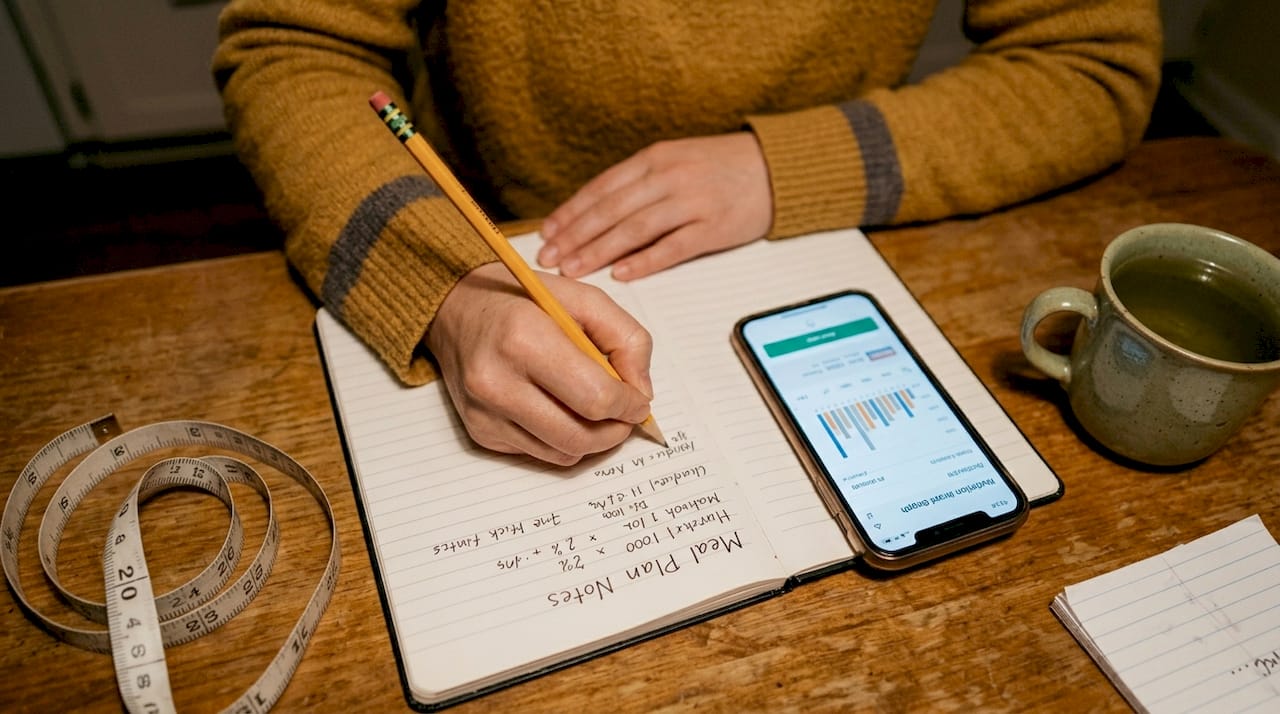
Before you take a single measurement, set yourself up for success. The right tools and environment make a real difference in accuracy, and skipping prep is one of the fastest ways to end up with a garment that doesn’t fit.
Essential tools:
- Flexible tape measure (fabric, not metal)
- Full-length mirror or a second mirror for your back
- Notepad and pen, or a notes app on your phone
- A helper, ideally someone you trust to hold the tape steady
A helper is strongly recommended. As noted in The Ultimate Guide to Taking Body Measurements, helpers improve accuracy, and you should avoid sucking in, stiffening your posture, or allowing the tape to twist or droop.
Prep checklist before you start:
- Wear fitted, seamless undergarments only
- Remove shoes and stand on a flat, hard surface
- Stand in good lighting so you can see the tape clearly
- Pull hair up if it falls past your shoulders
- Breathe normally and stand in your natural posture
| Tool | Purpose |
|---|---|
| Flexible tape measure | Wraps smoothly around curves |
| Full-length mirror | Confirms tape placement |
| Notepad | Records measurements for reference |
| Helper | Ensures consistent tape tension |
For a solid foundation on measurement basics or a full walkthrough on measuring at home, those resources cover the essentials in detail.
Pro Tip: Measure at the same time of day each session. Bodies shift slightly from morning to evening due to hydration and activity, so consistency matters.
How to take essential body measurements step by step
With your tools and prep sorted, it’s time to measure each part of your body. Core measurements for custom women’s clothing include bust, waist, hips, shoulder width, neck, arm length, torso length, inseam, and thigh. Work through each one in order.
- Bust: Wrap the tape around the fullest part of your chest, keeping it parallel to the floor. This is not your bra size.
- Natural waist: Find the narrowest point of your torso, usually just above your navel. Do not use your trouser waist.
- Hips: Measure around the fullest part of your hips and seat, typically 7 to 9 inches below your natural waist.
- Shoulder width: Measure from the edge of one shoulder across the back to the other shoulder edge.
- Arm length: Start at the shoulder point, bend your elbow slightly, and measure to your wrist.
- Torso length: Measure from the top of your shoulder straight down to your natural waist.
- Inseam: Measure from your crotch to the floor along the inside of your leg.
- Thigh: Wrap the tape around the fullest part of your upper thigh.
For precision, take each measurement two to three times and average the results. For bust and chest, exhale fully, then inhale and measure at the natural resting point.
Your measurements are your body’s actual dimensions. They are not your garment size. A size 12 dress from one brand may require completely different measurements than a size 12 from another. Always work from your body numbers, not a label.
For detailed measurement instructions or luxury measuring tips specific to premium garments, those guides go deeper on technique. If you want to sidestep common measuring mistakes before they happen, that resource is worth a read.
Pro Tip: Record every number immediately after measuring. Memory is unreliable, and even a half-inch difference can affect how a garment drapes.
Size charts, custom fit, and why every measurement matters
After recording your measurements, it’s important to understand how these numbers compare to standard sizing and why the difference matters.
Standard size benchmarks vary by brand, but general women’s size estimates look like this:
| Size | Bust (in) | Waist (in) | Hips (in) |
|---|---|---|---|
| XS | 31-32 | 24-25 | 34-35 |
| S | 33-34 | 26-27 | 36-37 |
| M | 35-36 | 28-29 | 38-39 |
| L | 37-39 | 30-32 | 40-42 |
| XL | 40-42 | 33-35 | 43-45 |
These are estimates. They shift significantly across brands, countries, and garment types. Custom fit sidesteps this entirely by working from your exact numbers.
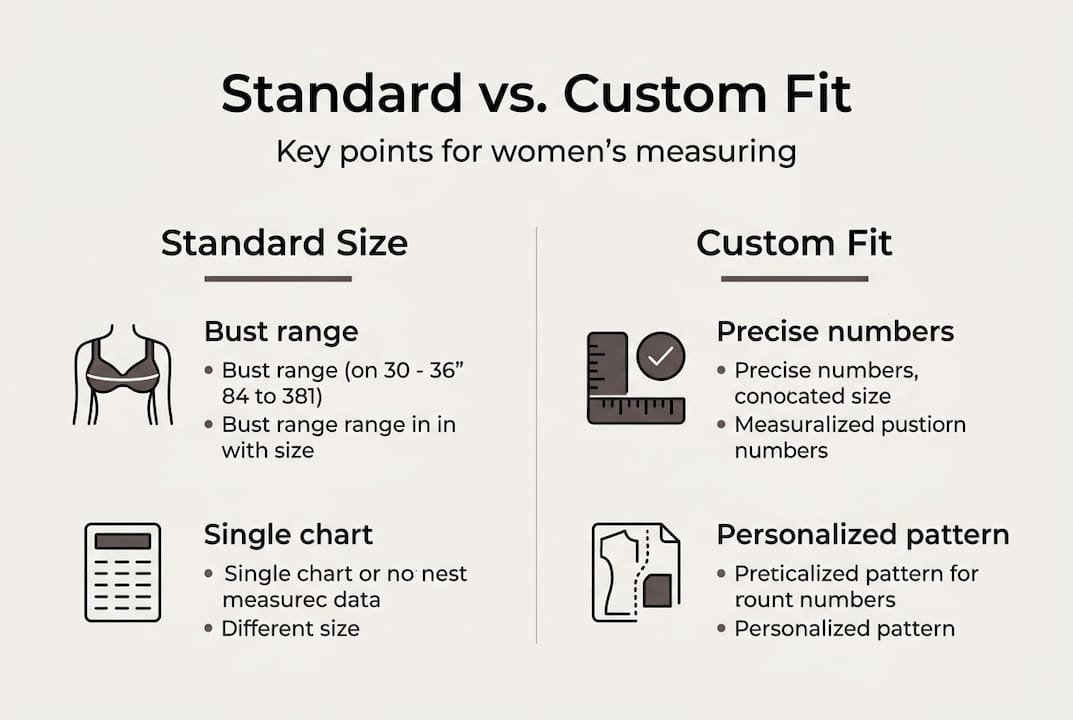
This is especially important for plus sizes and unique body proportions. Made-to-order production also reduces fabric waste and supports sustainability, since garments are cut only when ordered, with no excess inventory.
Top reasons every inch of your measurement matters:
- Luxury fabrics drape differently on every body. Precise fit lets the fabric perform as designed.
- Special occasion pieces need to hold up through movement, seating, and dancing.
- Returns and alterations are reduced when the fit is right from the start.
- Confidence on the day of your event depends on feeling secure in what you’re wearing.
- Custom sizing honors every body shape without forcing it into a standard mold.
For more on the made-to-order sizing guide, custom sizing importance, and size-inclusive tips, those pages break down the full picture.
Troubleshooting and common mistakes to avoid
Even with the best intentions, measuring mistakes happen. Here’s how to catch and fix them before you place your order.
Most common measuring mistakes:
- Using your bra size instead of your actual bust measurement. These numbers are not the same.
- Measuring your trouser waist instead of your natural waist near your navel.
- Rounding numbers up or down. Record the exact figure, even if it’s a fraction.
- Measuring over thick clothing, which adds bulk and throws off every number.
- Allowing the tape to twist, angle, or droop. It must lie flat and level.
- Measuring alone without a mirror, especially for back and shoulder measurements.
For plus sizes and curvier body types, pay extra attention to hip placement. The fullest point of the hip can sit lower than expected, and missing it by even an inch affects how a skirt or trouser fits through the seat. Double-check fuller areas by measuring twice from different starting points.
As noted in body measurement guidance, there is an important distinction between body measurements and garment measurements. Always send your body measurements, not the size of clothing you currently wear.
For special occasion attire, consider a professional fitting if you have any doubt. The investment is worth it for a piece you’ll wear to a wedding, gala, or milestone event.
For help avoiding measurement errors or understanding the full order workflow accuracy process, those guides walk through each step.
Pro Tip: If you’re between two measurements, always go with the larger number. It’s far easier to take a garment in than to let it out.
Why measuring right is a superpower for women’s fashion
Conventional fashion sizing was never designed to serve every woman. It was built around a narrow set of averages that excludes most body types by default. Learning to measure accurately is not just a practical skill. It’s a way of reclaiming your relationship with clothing.
When you send in your real numbers, you stop letting a size tag decide what fits or what’s available to you. That shift matters. Luxury fashion has long been associated with exclusivity, but the truest form of luxury is clothing that fits your actual body, made with intention, and built to last.
Custom measurements also connect directly to sustainability. A garment made to your exact dimensions uses only the fabric it needs. There are no returns driven by poor fit, no alterations that stress the seams, and no pieces that sit unworn because they never felt right. Ordering made-to-measure clothing is both a personal and an environmental choice.
Measuring right is an act of self-advocacy. It tells the fashion world exactly who you are and what you need.
Ready for your custom fit? Explore more made-to-order options
You now have the tools, the technique, and the knowledge to measure with confidence. Put those skills to work with a wardrobe that’s built around your body, not a size chart.
Browse the made-to-order dress collection for statement pieces designed to your exact measurements. Planning something for a cooler season or a bold occasion? The custom outerwear collection offers luxurious faux fur and tailored options in any size or color. Complete the look with custom boots made to fit your foot and style. Every piece at Prima Dons and Donnas is crafted to order, so your measurements are the starting point for something truly yours.
Frequently asked questions
How do I measure my bust if I wear a different bra style day-to-day?
Always measure your bust without heavily padded or minimizing bras. As confirmed in bust measurement guidance, your natural silhouette is what custom fashion is built around, not your bra size.
What if my body changes after I send in my measurements?
Contact the designer as soon as possible if a significant change occurs. Order only when your size is stable, or provide updated measurements before production begins.
Why do custom measurements matter so much for sustainable fashion?
Precise measurements reduce fabric waste and eliminate fit-related returns. Made-to-order production supports eco-friendly fashion by cutting only what’s needed for each individual order.
Can I use a standard size chart instead of sending my own measurements?
Standard size charts vary widely across brands and countries. As body measurement experts confirm, always measure personally to ensure a reliable, personalized fit for custom or luxury fashion.
Recommended
- Custom Clothing Measurement Guide for Perfect Fit – Prima Dons & Donnas
- Made-to-Order Sizing Guide for Perfect Fit Fashion – Prima Dons & Donnas
- Step-by-Step Guide to Measuring for Made-to-Order Clothing – Prima Dons & Donnas
- Top tips for personalized fit: elevate made-to-order style – Prima Dons & Donnas


Leave a comment