

Step by Step Sustainable Fashion Guide for 2026
TL;DR:
- Sustainable fashion emphasizes mindful purchasing, garment care, and incremental wardrobe building to reduce environmental impact.
- Key strategies include shopping secondhand, understanding certification distinctions, and repairing clothes to extend their lifespan.
Sustainable fashion is defined as a practice of making mindful clothing choices that reduce environmental harm across the full lifecycle of a garment. This step by step sustainable fashion guide gives you a practical roadmap to build an eco-conscious wardrobe through intentional buying, careful garment care, and smart wardrobe management. About 11.3 million tons of textiles were landfilled in the US in 2018 alone. That number means the average consumer’s closet habits carry real environmental weight. Certifications like GOTS and OEKO-TEX, tools like AI closet scanners, and strategies like capsule wardrobes are all covered here. You will leave with a clear, step-by-step plan you can start today.
What are the essential prerequisites for a step by step sustainable fashion guide?
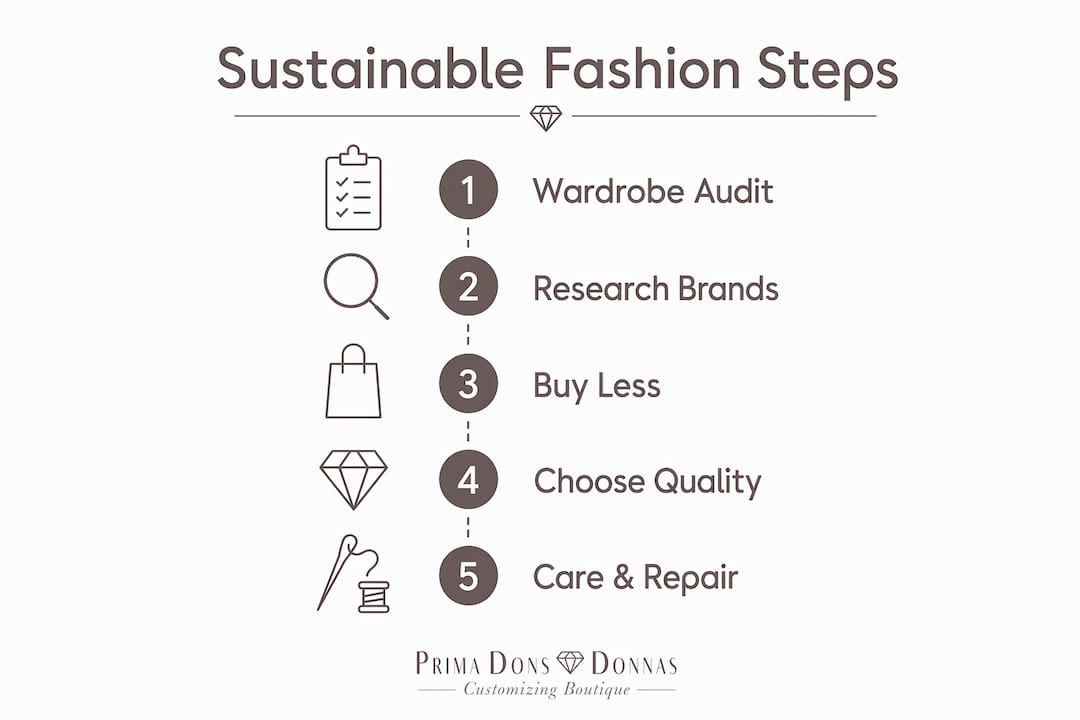
Before you buy a single new piece, audit what you already own. A wardrobe audit reveals what you actually wear, what you ignore, and what gaps genuinely exist. Most people discover they own far more than they use, which is the first behavioral shift this process requires.
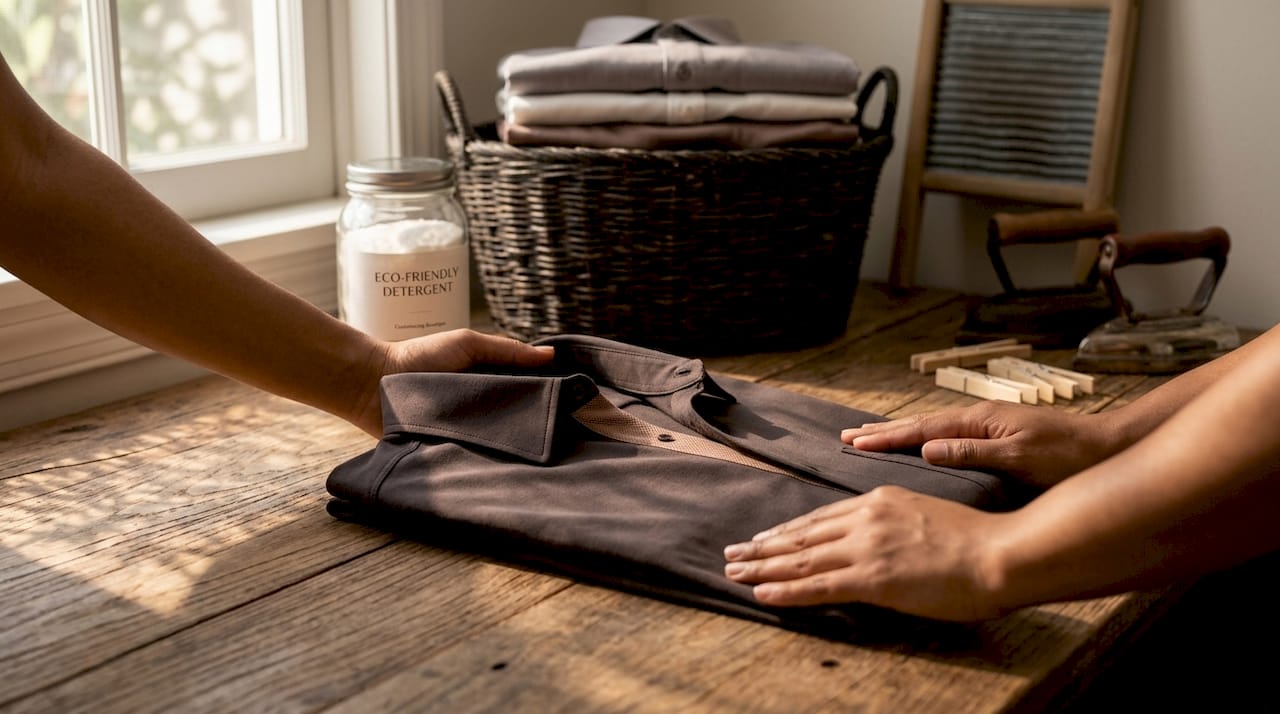
The mindset change from fast fashion to slow fashion is not about deprivation. It is about replacing impulsive purchases with intentional ones. Fast fashion trains you to buy on trend and discard quickly. Sustainable fashion trains you to buy for longevity and wear frequently.
Certification literacy is non-negotiable. Here is what the two most common labels actually mean:
- GOTS (Global Organic Textile Standard): Requires ≥95% certified organic fiber for the “Organic” label, or ≥70% for “Made with Organic.” It covers both environmental and social criteria across the supply chain.
- OEKO-TEX Standard 100: Certifies that a textile is free from harmful substances. It does not certify organic farming or ecological production. These are fundamentally different claims.
- B Corp: Certifies a brand’s overall social and environmental performance, not just a single product.
Consumers routinely conflate GOTS with OEKO-TEX, assuming both mean the same thing. They do not. GOTS answers “how was this grown?” OEKO-TEX answers “is this safe to wear?” Knowing the difference stops you from being misled.
Digital tools also belong in your starting kit. AI closet scanning apps digitize your wardrobe, identify your actual staples, and reduce impulse purchases by showing you what you already own. Physical tools matter too: a basic repair kit with needles, thread, and fabric glue extends garment life significantly.
Pro Tip: Before your next purchase, photograph every item you own and sort by how often you wore it in the last 90 days. Items worn zero times are candidates for donation, not companions for new purchases.
How to shop sustainably: step-by-step strategies for buying less but better
Shopping sustainably is not about finding the perfect eco label. Buying less and choosing better quality is the single most effective lever available to any consumer. Here is a practical sequence to follow every time you shop.
- Shop secondhand first. Starting with secondhand is the simplest entry point for beginner sustainable fashion. Platforms like ThredUp, Poshmark, and local thrift stores extend garment life without generating new production demand.
- Assess fabric and construction quality. Check the fabric content label. Natural fibers like organic cotton, linen, and wool generally last longer than synthetic blends. Pull gently at the seams. Loose stitching signals a short lifespan.
- Research brand transparency before buying new. Evaluating full brand transparency is the best tool to avoid greenwashing. Look for published supply chain information, third-party certifications, and labor practice disclosures. A single “eco” product from a brand with no broader sustainability commitment is a marketing tactic, not a practice.
- Plan around a capsule wardrobe. A capsule wardrobe of 30 to 40 versatile pieces reduces the total number of items you need. Every new purchase should work with at least three items you already own.
- Calculate cost-per-wear. Divide the price of a garment by the number of times you realistically expect to wear it. A $200 dress worn 40 times costs $5 per wear. A $30 trend piece worn twice costs $15 per wear. Cost-per-wear is the most honest sustainability metric in retail.
Greenwashing red flags to watch for:
- Vague terms like “conscious collection” or “eco-friendly line” with no certification backing
- Sustainability claims limited to packaging, not production
- No published information on factory conditions or fiber sourcing
- Single sustainable product within an otherwise conventional catalog
Pro Tip: Search a brand’s name alongside “sustainability report” or “supply chain transparency.” Brands serious about sustainability publish this information publicly. Brands that do not have something to hide.
How to wear and care for clothes sustainably to extend their lifespan
Wearing clothes more and washing them less is one of the most measurable sustainable behaviors available to any individual. The production phase of a garment accounts for the majority of its carbon footprint, but laundering adds up fast over a garment’s life.
Practical garment care habits that reduce environmental impact:
- Wash less often. Most garments do not need washing after every wear. Airing out clothes, spot cleaning, and steaming extend the time between full washes significantly.
- Use cold water. Cold water washing cuts energy use per cycle and reduces fiber degradation, which means clothes hold their shape and color longer.
- Choose eco-friendly detergents. Brands like Seventh Generation and Dropps offer plant-based formulas that are gentler on fibers and waterways.
- Use a Guppyfriend washing bag. Synthetic fabrics shed microplastics with every wash. A Guppyfriend bag captures microplastic fibers before they enter the water system.
- Repair before discarding. A loose button, a small tear, or a broken zipper are fixable in under 15 minutes. Brands like Patagonia offer repair programs. Learning basic hand stitching keeps garments in rotation for years longer.
- Store clothes properly. Fold knits instead of hanging them to prevent stretching. Use cedar blocks instead of chemical moth repellents. Keep clothes away from direct sunlight to prevent fading.
Upcycling is another underused option. Worn-out jeans become shorts. An oversized shirt becomes a crop top. Altering fit through a local tailor costs far less than replacing a garment and produces zero new production waste.
Pro Tip: Turn dark garments inside out before washing to preserve color. Wash denim no more than once every 10 wears. Levi’s famously recommends washing jeans as infrequently as possible, and the fabric science backs that up.
How to build and maintain a sustainable wardrobe incrementally
Building a sustainable wardrobe does not happen in a weekend. The most effective approach is incremental, replacing items only as they wear out and making better choices each time.
Follow this sequence:
- Declutter with purpose. Donate wearable items to organizations that redistribute them. Textile recycling programs accept items too worn to donate. Never landfill clothing that still has life in it.
- Identify your actual staples. Use your audit data or an AI closet app to find the 10 to 15 pieces you reach for most. These are your wardrobe anchors.
- Build a replacement schedule. When a staple wears out, replace it with a higher-quality, more sustainable version. This prevents panic buying and keeps you from reverting to fast fashion out of convenience.
- Avoid trend cycling. Trend-driven purchases have the shortest cost-per-wear ratio of any clothing category. Slow fashion prioritizes personal style over seasonal trends.
- Track wearing frequency. Manual tracking in a notebook or an app like Stylebook shows you which items earn their space and which are just taking up room.
The table below outlines a realistic replacement timeline for common wardrobe categories:
| Wardrobe category | Sustainable replacement approach |
|---|---|
| Everyday basics (tees, tanks) | Replace with GOTS-certified organic cotton when worn out |
| Outerwear (coats, jackets) | Invest in one high-quality piece; consider custom or made-to-order |
| Denim | Prioritize secondhand or brands with published supply chain data |
| Occasion wear (dresses, formal) | Rent, borrow, or choose made-to-order to avoid single-use purchases |
| Footwear | Buy quality leather or certified vegan alternatives; repair soles before replacing |
Made-to-order clothing fits this model particularly well for occasion wear. A custom dress made to your exact measurements gets worn more often, fits better, and eliminates the waste of ill-fitting garments that never leave the closet. For conscious fashion choices in 2026, custom and made-to-order pieces represent the highest-impact investment you can make in your wardrobe.
Key takeaways
Sustainable fashion works because buying less, caring for what you own, and replacing items intentionally reduces waste, cost, and environmental impact more than any single product swap.
| Point | Details |
|---|---|
| Audit before you buy | A wardrobe audit prevents overbuying and reveals what you actually need to replace. |
| Learn certification differences | GOTS certifies organic fiber content; OEKO-TEX certifies chemical safety. They are not interchangeable. |
| Shop secondhand first | Secondhand shopping extends garment life and is the lowest-barrier entry point for beginners. |
| Care habits extend garment life | Washing less, using cold water, and repairing items reduces both carbon footprint and replacement frequency. |
| Replace incrementally | Build your sustainable wardrobe one intentional replacement at a time, not through a full overhaul. |
What I have learned after years of watching people get sustainable fashion wrong
Most people approach sustainable fashion as a shopping problem. They think the solution is finding the right brand, the right label, the right certification. That framing keeps them buying. The real shift is behavioral, not transactional.
I have watched people spend hundreds on certified organic basics while still buying 12 new pieces a season. The certifications were real. The impact was not. Buying less is always more powerful than buying better, and most eco-conscious guides bury that fact because it does not sell anything.
Budget is a real constraint, and I will not pretend otherwise. Sustainable pieces often cost more upfront. The cost-per-wear math genuinely works in your favor over time, but only if you actually wear the item. That means buying for your real life, not your aspirational one. A bold statement dress you wear to three events a year beats a “sustainable” basic you never reach for.
The stigma around secondhand has largely collapsed in the last five years, and that is the best news in this space. Thrifting is now a skill people brag about, not hide. Use that cultural shift. Some of the best-quality garments available today are sitting in a Goodwill or on Poshmark for a fraction of their original price.
My strongest recommendation: invest in one or two made-to-order pieces per year for occasions that matter. A custom dress or coat made to your exact size and specifications gets worn repeatedly, fits perfectly, and carries no excess inventory waste. That is the closest thing to a perfect sustainable purchase that exists.
— Latoya
Shop custom, made-to-order fashion at Primadonsanddonnas
Custom clothing is one of the most sustainable choices you can make. No overproduction. No ill-fitting pieces that sit unworn. Every item made to your exact size, color, and style.
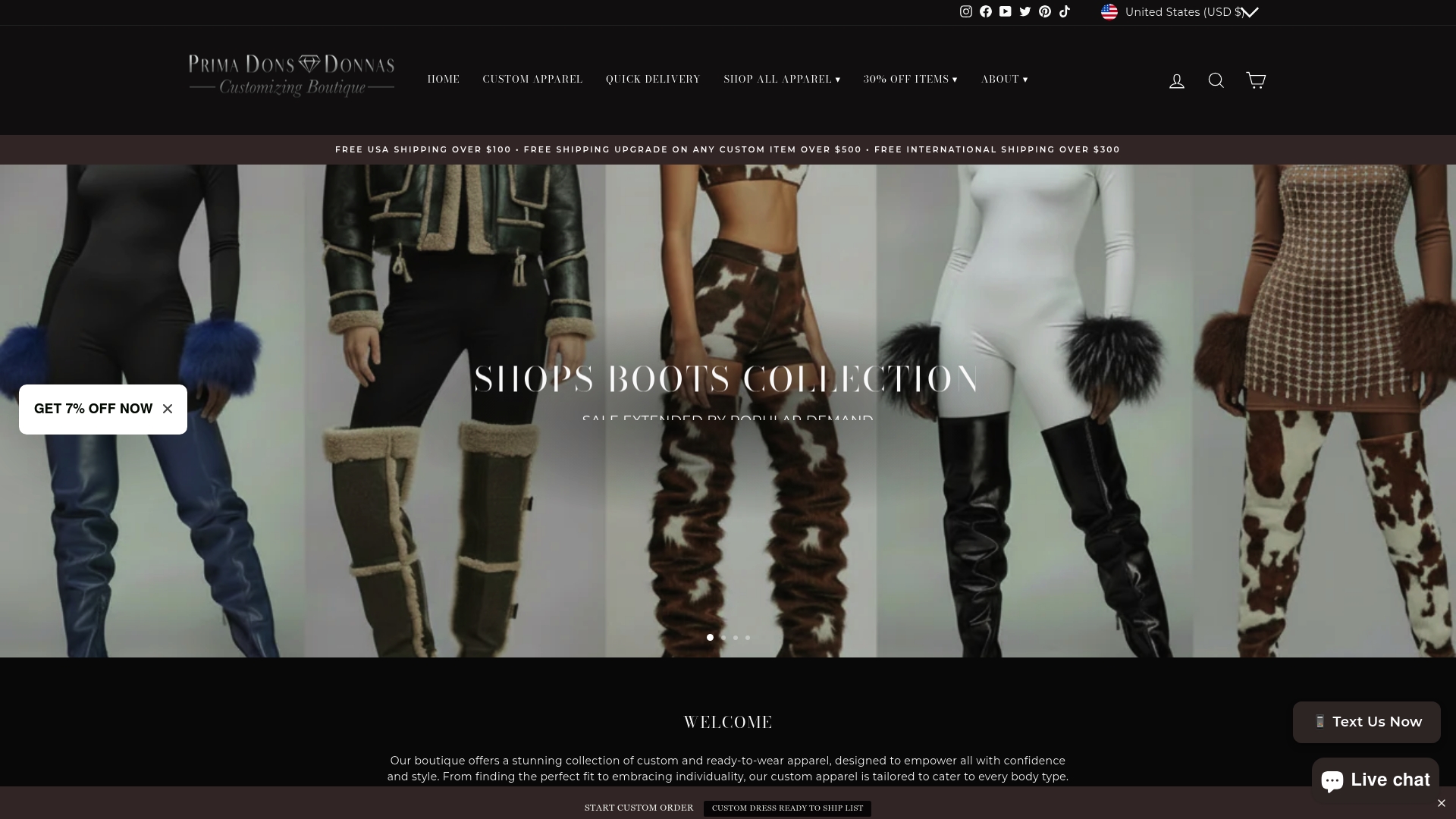
Primadonsanddonnas specializes in made-to-order dresses for every occasion, from concert outfits and lunch dates to wedding events and party looks. The custom plus-size apparel collection covers all sizes with the same bold, luxury aesthetic. Ready-to-ship options are also available for faster delivery. Shop the full collection at Primadonsanddonnas and build your wardrobe with pieces made specifically for you.
FAQ
What is sustainable fashion in simple terms?
Sustainable fashion is the practice of choosing clothing that reduces environmental and social harm across its full lifecycle. It includes buying less, choosing quality materials, shopping secondhand, and caring for garments to extend their use.
How do I start sustainable fashion as a beginner?
Start with secondhand shopping and a wardrobe audit before buying anything new. Identify what you already own and wear, then replace worn-out items intentionally with higher-quality pieces.
What is the difference between GOTS and OEKO-TEX?
GOTS certifies that a textile contains a minimum percentage of organic fiber and meets social and environmental production standards. OEKO-TEX Standard 100 certifies only that a finished textile is free from harmful chemical substances. They answer different questions.
How do I avoid greenwashing when shopping for clothes?
Evaluate full brand transparency rather than single-product claims. Look for published supply chain data, third-party certifications, and labor practice disclosures across the entire brand, not just one “eco” item.
Is made-to-order clothing more sustainable?
Yes. Made-to-order production eliminates overstock waste, reduces returns from poor fit, and creates garments worn more frequently because they fit correctly. It is one of the most waste-efficient purchasing models in fashion.
Recommended
- What is sustainable fashion: A 2026 guide – Prima Dons & Donnas
- Sustainable fashion options for conscious women in 2026 – Prima Dons & Donnas
- Sustainable fashion explained: a guide to eco-chic choices – Prima Dons & Donnas
- Sustainable fashion styling tips: Build an eco-friendly wardrobe – Prima Dons & Donnas


Leave a comment