

What Is Seasonless Fashion and Why It Matters in 2026
TL;DR:
- Seasonless fashion emphasizes versatile, durable clothing designed for year-round wear, aligning with sustainable practices. It promotes timeless silhouettes, neutral palettes, and thermoregulating fabrics to extend garment life and reduce waste. As consumer demand grows, brands are shifting toward made-to-order, long-lasting collections that challenge traditional seasonal trends.
Seasonless fashion is defined as a design and buying philosophy that creates clothing intended for year-round wear, independent of traditional spring, summer, fall, or winter collections. Unlike fast fashion cycles that pressure consumers to rebuild their wardrobes every few months, seasonless clothing prioritizes versatility, durability, and timeless style. In 2026, this approach has moved from niche concept to mainstream strategy, driven by shifting consumer values, rising clothing costs, and new environmental regulations reshaping how brands produce and sell apparel. For fashion enthusiasts and conscious consumers alike, understanding seasonless fashion is the first step toward building a wardrobe that works harder and lasts longer.
What is seasonless fashion and how it connects to sustainability
Seasonless fashion, also called trans-seasonal or perennial dressing, focuses on slowing consumption by creating core timeless pieces that transcend traditional seasonal lines. The practical result is a wardrobe built around versatile, layerable staples rather than trend-driven pieces with a three-month shelf life. This shift matters because the fashion industry generates enormous textile waste, and most of that waste starts with overproduction tied to seasonal buying cycles.
Sustainable fashion practices align directly with the seasonless model. When you invest in fewer, higher-quality pieces worn year-round, you avoid the full seasonal wardrobe refresh that drives excess purchasing and disposal. The UN Environment Programme confirms that extending garment life through repair, reuse, and buying second-hand reduces textile waste more effectively than recycling alone. That finding reframes the entire conversation: the most sustainable garment is the one already in your closet, worn repeatedly.
The regulatory environment in 2026 reinforces this direction. The EU’s Ecodesign regulation, effective July 2026, bans large companies from destroying unsold clothing and shoes. This policy directly targets the overproduction model that seasonal fashion depends on, making seasonless collections a smarter inventory strategy for brands and a more ethical choice for consumers.
“Reducing textile waste relies more on extending garment life than recycling. Seasonless wardrobes exemplify this by encouraging fewer, more versatile purchases.” — UN Environment Programme
Circular fashion concepts, including rental, repair, and second-hand buying, fit naturally within the seasonless framework. A well-made wool crepe blazer bought in October should still be earning its place in your wardrobe the following July, styled differently but worn consistently.
How seasonless garments are designed for adaptability
Designers building seasonless collections face a specific set of technical and aesthetic challenges. The goal is not just a neutral-colored piece that looks inoffensive year-round. It is a garment that functions across temperature ranges while maintaining a strong, confident aesthetic. That requires deliberate decisions at every stage of design.
The core design principles behind successful seasonless apparel include:
- Timeless silhouettes. Clean lines, classic cuts, and proportions that do not date quickly. A well-structured midi dress or a tailored wide-leg trouser reads as current in 2026 and will still read as current in 2030.
- Neutral and tonal palettes. Black, ivory, camel, navy, and slate gray mix with almost anything, reducing the need for season-specific color purchases. Bold color can work in seasonless fashion, but it requires stronger styling discipline.
- Fabric thermoregulation. Materials like merino wool, bamboo jersey, and technical ponte manage moisture and temperature across a wide range of conditions. These fabrics keep you comfortable in a 68-degree office and a 55-degree evening without requiring a full outfit change.
- Layering mechanics. The best seasonless pieces layer without adding bulk. A fitted turtleneck under a structured blazer, or a lightweight duster coat over a slip dress, adds warmth while preserving the original look’s integrity.
- Durability of construction. Reinforced seams, quality closures, and fabric weights that hold their shape after repeated washing extend the functional life of a garment significantly.
Material choice and design are the primary bottlenecks in creating truly trans-seasonal clothing that adapts aesthetically and functionally across climates. A linen shirt that works beautifully in July becomes impractical in January without a thoughtful layering strategy. Designers who solve this problem well, like those working in technical fabrics or structured knitwear, produce pieces that genuinely earn the seasonless label.
Pro Tip: When evaluating a potential seasonless purchase, ask yourself whether you can style it three different ways across three different temperatures. If you cannot, it is a seasonal piece regardless of how it is marketed.
Benefits and challenges of building a seasonless wardrobe
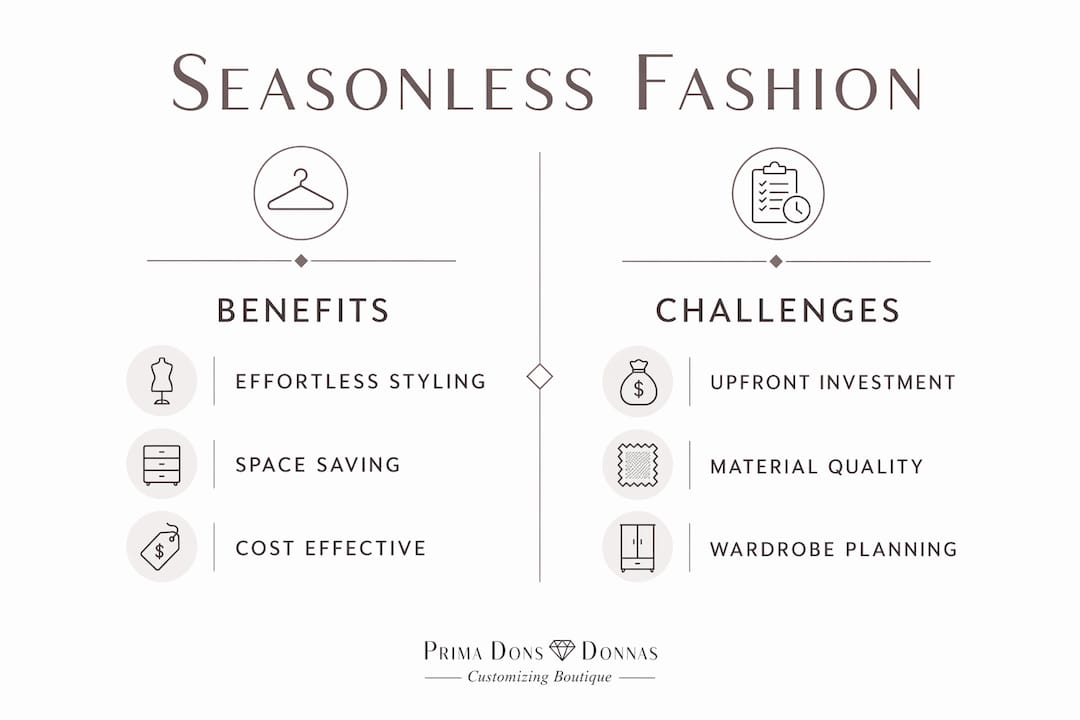
The practical case for seasonless dressing is strong. Seasonless dressing benefits include effortless styling, space-saving wardrobes, and cost-effectiveness from investing in timeless pieces rather than trend-driven items. Fewer pieces means less decision fatigue, less storage pressure, and a clearer personal style identity.
| Point | Details |
|---|---|
| Cost over time | Spending more upfront on quality pieces costs less than replacing cheap seasonal items every few months. |
| Wardrobe clarity | A smaller, cohesive wardrobe reduces decision fatigue and makes getting dressed faster. |
| Styling flexibility | Versatile pieces work across occasions, from lunch dates to concerts to formal events. |
| Environmental impact | Fewer purchases and longer garment life directly reduce your personal textile waste contribution. |
The challenges are real, though. The initial investment cost stops many consumers from making the switch. A quality merino knit or a well-constructed coat costs significantly more upfront than a fast fashion equivalent. Fabric mismatches are another common pitfall: buying a piece labeled “seasonless” that turns out to be too lightweight for winter or too heavy for summer. Breaking seasonal shopping habits is also harder than it sounds. The fashion industry has spent decades conditioning consumers to expect and desire new collections every few months. That urgency to buy now for the season is a deeply embedded behavior pattern, and resisting it requires conscious effort.
The solution is not to overhaul your wardrobe overnight. Start by identifying the pieces you already own that you reach for regardless of season. Those are your seasonless anchors. Build from there, replacing worn-out items with higher-quality versions rather than adding volume.
How to style and build a seasonless wardrobe
Building a seasonless wardrobe starts with selecting core pieces that carry real versatility. The wardrobe essentials checklist approach works well here: identify the categories you need, then fill each category with one or two pieces that work across multiple contexts.
Key seasonless wardrobe essentials to prioritize:
- A structured blazer in a neutral tone that works over dresses, trousers, and denim
- A midi or maxi dress in a fabric like ponte or jersey that layers under coats and over turtlenecks
- Wide-leg or straight-leg trousers in a medium-weight fabric
- A fitted turtleneck or mock-neck top in merino or cotton blend
- A duster coat or longline cardigan for transitional layering
- Thigh-high or knee-high boots that anchor both casual and dressed-up looks across fall, winter, and spring
Accessories are the most underused tool in seasonless styling. A statement belt, a structured bag, or a bold pair of earrings can shift a single outfit from a casual lunch date to a concert look to a wedding guest appearance without changing the base pieces. This is where fashion accessories earn their place in a conscious wardrobe: they add variety without adding volume.
Special occasion dressing fits within the seasonless model when you choose pieces with enough versatility to work beyond the single event. A custom-made dress in a rich fabric like faux velvet or structured satin can work for a party, a formal dinner, and a wedding reception depending on how you style it. Buying a dress you will wear once is the opposite of seasonless thinking.
Plus size styling in seasonless fashion follows the same principles with one additional consideration: fit. A garment that fits well at every size is inherently more versatile because it moves with the body comfortably. Sustainable fashion for women in 2026 increasingly includes size-inclusive options that do not compromise on quality or design, which is exactly what the seasonless model demands.
Pro Tip: When building a seasonless capsule, photograph your core pieces and plan three outfits per item before buying. If you cannot reach three, the piece is not versatile enough to earn a spot.
Key takeaways
Seasonless fashion works because it replaces trend-driven purchasing with deliberate investment in versatile, durable pieces that serve your wardrobe across every season and occasion.
| Point | Details |
|---|---|
| Core definition | Seasonless fashion means designing and buying clothes for year-round wear, not seasonal trends. |
| Sustainability link | Extending garment life reduces textile waste more effectively than recycling or donation alone. |
| Design requirements | Thermoregulating fabrics, timeless silhouettes, and layering mechanics define successful seasonless pieces. |
| Consumer benefits | Cost savings, wardrobe clarity, and styling flexibility reward the transition to seasonless dressing. |
| Getting started | Identify pieces you already wear year-round and build outward from those anchors. |
Why seasonless fashion is the most honest thing happening in style right now
I have watched fashion cycles accelerate for years, and the honest truth is that most seasonal collections exist to sell, not to serve the consumer. The spring collection arrives in January. The fall collection lands in July. By the time you actually need the clothes, they are already marked down or sold out. Seasonless fashion cuts through that manufactured urgency.
What I find most interesting in 2026 is that the brands doing seasonless well are not doing it as a marketing angle. They are doing it because their customers demanded it. Consumers who have lived through supply chain disruptions, rising prices, and growing awareness of textile waste are asking different questions before they buy. Not “is this on trend?” but “will I still wear this in three years?”
The integration of seasonless thinking with made-to-order production is the combination I find most compelling. When a garment is made specifically for you, in your size and your chosen color, it already has a longer intended life than anything produced speculatively for a seasonal rack. That is not just good sustainability practice. It is good business and good style.
The brands that will lead fashion in the next decade are the ones treating clothing as a long-term relationship rather than a transaction. Seasonless fashion is not a trend. It is a correction.
— Latoya
Shop seasonless style at Primadonsanddonnas
Primadonsanddonnas builds every piece with year-round wearability in mind. The made-to-order dress collection includes custom dresses suited for party events, concerts, lunch dates, and wedding occasions, each tailored to your size and color preference. For layering, the custom outerwear collection offers structured coats and ethical faux fur options that anchor any seasonless wardrobe. Plus size options are available across all collections, so every customer gets the fit and confidence that seasonless dressing requires. Ready-to-ship pieces are also available for faster delivery.
Shop the full range at primadonsanddonnas.com and build a wardrobe that works every month of the year.
FAQ
What does seasonless fashion mean?
Seasonless fashion means designing and buying clothing intended for year-round wear rather than specific seasonal collections. The focus is on versatile, durable pieces that transcend traditional spring, summer, fall, and winter cycles.
How does seasonless fashion support sustainability?
Seasonless fashion reduces textile waste by extending garment life and discouraging frequent seasonal purchases. The UN Environment Programme identifies extending garment use as more effective for waste reduction than recycling alone.
What are the best fabrics for seasonless clothing?
Merino wool, bamboo jersey, ponte, and technical blends are top choices for seasonless garments because they regulate temperature and hold their shape across a wide range of conditions.
Can plus size women build a seasonless wardrobe?
Yes. Seasonless fashion works for all sizes when garments are properly fitted. Made-to-order options from brands like Primadonsanddonnas offer custom sizing that makes versatile, year-round dressing accessible at every size.
What makes a piece of clothing truly timeless?
Timeless clothing combines a classic silhouette, a neutral or tonal color palette, quality construction, and fabric that performs across seasons. Pieces that meet all four criteria earn a permanent place in a seasonless wardrobe.
Recommended
- What is sustainable fashion: A 2026 guide – Prima Dons & Donnas
- Fashion sustainability trends 2026: bold eco-friendly style – Prima Dons & Donnas
- Conscious fashion choice in 2026: Bold, sustainable style – Prima Dons & Donnas
- Sustainable fashion options for conscious women in 2026 – Prima Dons & Donnas


Leave a comment