

What Defines Fashion-Forward Tailoring in 2026
TL;DR:
- Fashion-forward tailoring emphasizes deliberate silhouette, construction, and personal expression over fleeting trends. Modern techniques include soft, semi-structured, and fully structured styles, with an evolving focus on longevity and multi-generational wear. The future lies in personalized, relationship-driven tailoring that respects regional traditions and embraces technological innovation.
Fashion-forward tailoring gets misread constantly. Most people assume it just means wearing whatever walked the runway last season. It does not. What defines fashion-forward tailoring is something far more specific: the deliberate fusion of construction mastery, silhouette intelligence, and personal expression that makes a garment feel both modern and lasting. This applies whether you are dressing for a wedding, a concert, a lunch date, or a red-carpet event. The craft has evolved well beyond stiff shoulders and matching sets, and understanding that evolution changes how you shop, dress, and carry yourself.
Table of Contents
- Key Takeaways
- Core elements of fashion-forward tailoring
- Current trends shaping bespoke tailoring
- Regional tailoring traditions and modern style
- The personal dimension of tailored elegance
- My take on heritage, innovation, and why it all matters
- Shop made-to-order at Primadonsanddonnas
- FAQ
Key Takeaways
| Point | Details |
|---|---|
| Silhouette over trend | Fashion-forward tailoring prioritizes deliberate shape and proportion, not just whatever is currently popular. |
| Three construction levels | Fully structured, semi-structured, and unstructured tailoring each serve different style needs and body types. |
| Personalization is the craft | True tailored elegance starts with observing posture, personality, and movement, not just measurements. |
| Sustainability through longevity | The shift toward multi-generational garment care makes tailoring a smarter, more conscious investment. |
| Regional traditions still matter | Savile Row, Neapolitan, and American natural shoulder tailoring each offer a distinct modern vocabulary. |
Core elements of fashion-forward tailoring
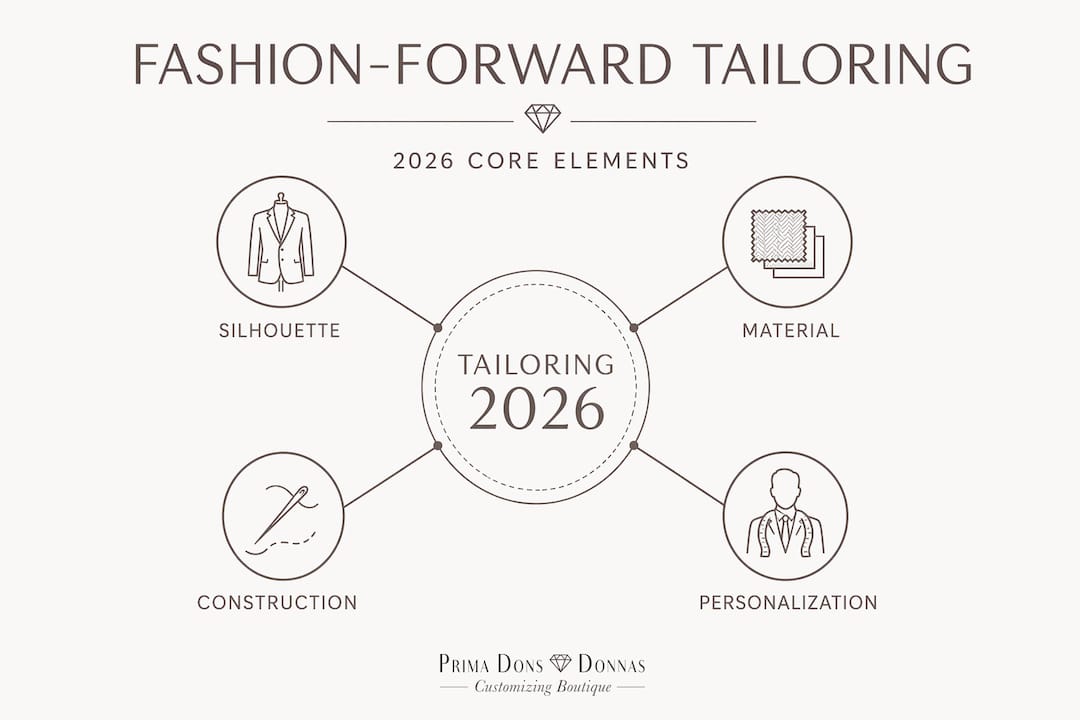
The simplest way to understand what defines fashion-forward tailoring is to look at its building blocks. Silhouette, material, and construction technique are the three pillars. Get one wrong and the whole garment reads as off, no matter how expensive the fabric.
In 2026, silhouette innovation centers on exaggerated proportions paired with minimalist codes. Think wide-leg trousers worn with a collarless jacket in a single tone. The drama is in the shape, not the decoration. That restraint is intentional and requires a skilled hand to pull off well.
Construction levels explained
Tailoring construction falls into three distinct categories, each with its own technical demands.
- Fully structured tailoring uses canvas, padding, and lining throughout the garment body. This creates sharp, defined silhouettes that hold their shape independently of the wearer.
- Semi-structured tailoring removes some internal support while keeping strategic shaping at the shoulders or chest. It bridges formal and relaxed dressing.
- Unstructured or soft tailoring eliminates pads and lining almost entirely, relying entirely on precise cutting for its shape. This is the most technically demanding approach of the three because there is no internal scaffolding to compensate for errors.
The definition of stylish cuts in modern tailoring often lives in that third category. Soft tailoring creates a second-skin quality that feels personal rather than performative. It moves with you instead of around you.
Pro Tip: When shopping for a tailored piece, feel the chest panel. If it folds naturally with almost no resistance, you are holding soft construction. If it holds a curved shape on its own, that is structured work. Neither is better universally — both serve different occasions and body types.
Bespoke tailoring takes all three approaches further by drafting from 30-plus measurements, creating a pattern unique to your body rather than adapting an existing block. Hand-stitching and deliberate fabric selection for breathability, drape, and longevity are what separate it from off-the-rack work that only approximates fit.
| Construction Type | Key Feature | Best For |
|---|---|---|
| Fully structured | Built-in shaping, holds form alone | Formalwear, suiting, sharp looks |
| Semi-structured | Partial support, relaxed feel | Business casual, smart occasions |
| Unstructured / soft | Cut-dependent, second-skin drape | Everyday elegance, warm climates |
Current trends shaping bespoke tailoring
The most significant shift in trends in bespoke tailoring right now is the move away from single garments toward what some in the industry call a lineage model. Instead of buying a new piece every season, clients invest in garments designed for multi-generational stewardship: pieces that get let out, taken in, re-lined, and handed down.
Modern luxury tailoring treats the tailor-client relationship as a long-term partnership, not a transaction. That changes how garments are built. Seam allowances are more generous. Fabrics are chosen for how they age, not just how they photograph on day one.
Technology is adding a new layer to this evolution. 3D printing and software-driven design now allow tailors and couturiers to create complex geometric shapes and tunable structure that traditional two-dimensional pattern cutting simply cannot produce. This is not replacing hand technique. It is expanding what hand technique can do.
Here is how the trend landscape breaks down in 2026:
- Garment systems over single pieces. Clients are increasingly buying a jacket, trouser, and coat designed to work together over years, not seasons.
- Relationship-led tailoring. The tailor becomes a wardrobe advisor, not just a fitter. Long-term tailor relationships act like having a doctor for your wardrobe, guiding you away from fleeting decisions and toward lasting choices.
- Tech-assisted construction. AI and 3D printing are being used to prototype fits faster and create silhouettes not achievable by hand alone.
- Sustainability as standard. Choosing quality over volume is no longer niche. It reflects a shift in how conscious dressers think about personalized fashion and waste reduction.
Pro Tip: Ask your tailor about seam allowances before commissioning a piece. Generous allowances mean the garment can be altered significantly as your body changes, extending its useful life by years.
Regional tailoring traditions and modern style
You cannot fully understand what is contemporary tailoring without knowing where the major traditions diverge. Three schools dominate the global conversation and each one influences fashion-forward clothing styles in a distinct way.
Savile Row’s structured approach has historically meant a defined chest, roped shoulders, and a suppressed waist. It is architecture on a body. But Savile Row in 2026 is not standing still. New labels on the Row are mixing classic construction with streetwear aesthetics and technical fabrics, building a case that heritage and modern relevance are not opposites. The challenge, as designer Johnny Allen has noted, is balancing historical prestige with energy that actually connects with younger clients.
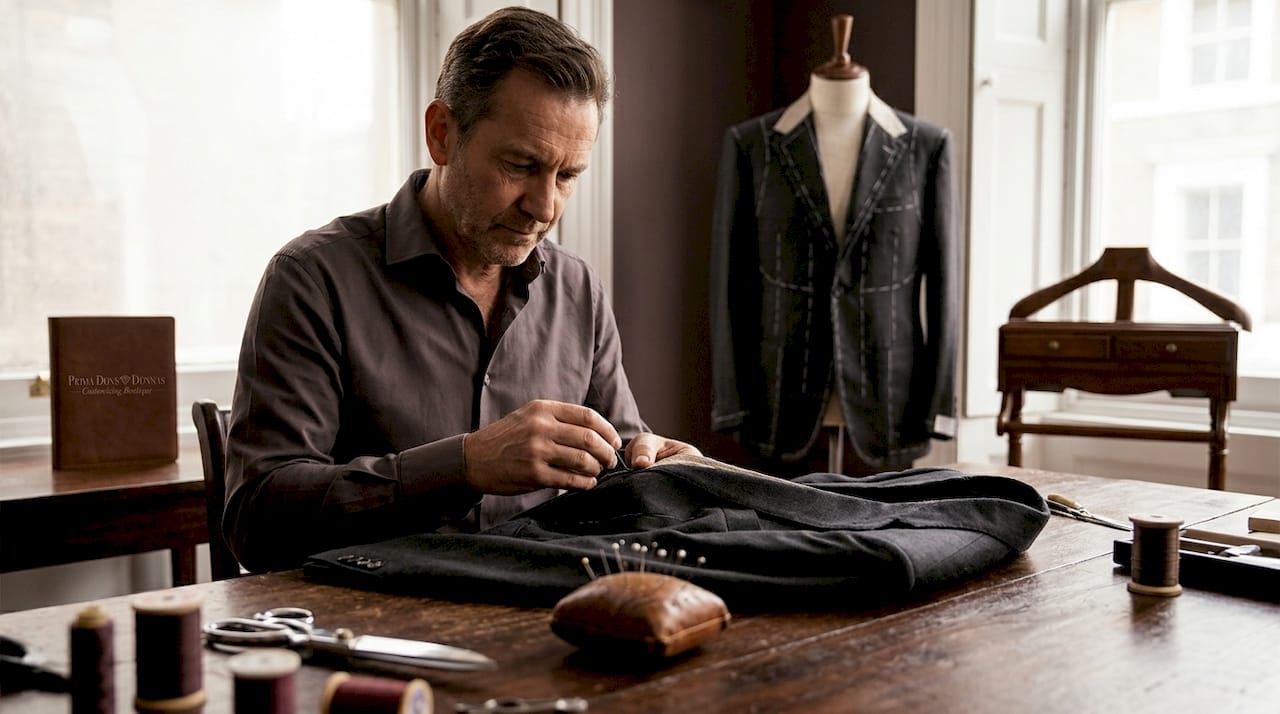
Neapolitan tailoring takes the opposite position. The spalla camicia shoulder technique creates a soft, rippled sleeve head that sits directly on the shoulder with no padding at all. The result is a jacket that feels almost like a shirt. Fluid, unconstructed, responsive to movement. This school is where the elements of modern tailoring lean softest.
American natural shoulder tailoring offers something else entirely: garments that follow the actual shoulder slope without any padding or roping. Rooted in Ivy League aesthetics, it values understatement and ease over drama. The clothes are meant to feel invisible, like you were not dressed up at all, just effortlessly put together.
| Tradition | Shoulder Construction | Overall Feel | Best Occasion |
|---|---|---|---|
| Savile Row | Roped, structured | Sharp, authoritative | Formal events, weddings |
| Neapolitan | Soft, rippled (spalla camicia) | Fluid, relaxed | Dinners, parties, travel |
| American natural shoulder | Unpadded, follows slope | Understated, comfortable | Everyday, casual events |
- Savile Row suits tend to hold their silhouette even on a hanger. Neapolitan jackets collapse gracefully.
- The American natural shoulder look works particularly well for concert outfits and lunch date dressing, where comfort and style need to coexist.
- All three traditions are influencing made-to-order brands today, including approaches to plus size tailoring where silhouette precision matters most.
The personal dimension of tailored elegance
How to achieve tailored elegance is not purely a technical question. It is also deeply observational. The best tailors do not just measure your body. They read your posture, your energy, and how you carry yourself in a room.
Garments built through observation and repeated fittings end up feeling like extensions of the wearer rather than clothes placed on top of them. This is what Heritage Oni describes as the tailor being a translator of personality, someone who listens to how a body moves and speaks, then gives that language a physical form.
The process looks like this in practice:
- First fitting focuses on structure: How does the shoulder sit? Where does the jacket break at the chest?
- Second fitting refines the drape and checks movement in the sleeves and back.
- Third and subsequent fittings fine-tune, addressing any shifts discovered when the garment is worn in real conditions.
This level of iteration is what separates custom tailoring from the experience of buying off a rack. The garment gets smarter about your body over time.
“The garment becomes a record of who you are at the moment it was made.” — an idea deeply embedded in tailoring cultures from West Africa to Naples to London’s East End.
For special occasions like weddings, party events, and formal dinners, that record matters. You want something that captures a version of you, not a generic silhouette you happened to fill.
My take on heritage, innovation, and why it all matters
I have spent a lot of time thinking about why fashion-forward tailoring resonates so differently depending on who you ask. For some, it is purely aesthetic. For others, it is about investment and sustainability. For me, it is both, and neither fully captures it.
What I have found is that the most powerful tailored pieces I have seen share one quality: they make the wearer look exactly like themselves, only more so. That is harder to achieve than it sounds. It requires a tailor who genuinely listens and a client willing to be observed.
The integration of technology is exciting to me, but not because it replaces the human eye. 3D prototyping speeds up the fitting cycle and lets you visualize geometry before a single cut is made. That is genuinely useful. But it still takes a skilled hand and a considered mind to decide what shape serves this particular person on this particular occasion.
My honest advice: do not chase a tailoring tradition just because it sounds prestigious. Pick the construction style that matches how you actually live. If you are wearing a suit to a wedding and then taking it to a dinner party next month, soft Neapolitan construction will serve you better than a stiff Savile Row build. If you need authority and structure for a formal presentation, flip that logic entirely.
The future of this craft belongs to people who know how to achieve a personalized fit while respecting what generations of makers got right. That combination is rare and worth seeking out.
— Latoya
Shop made-to-order at Primadonsanddonnas
Primadonsanddonnas builds every piece around the principles covered in this article: deliberate silhouette, personalized fit, and bold style that works for real occasions.
Whether you need a custom made-to-order dress for a wedding, a party, or a special event, or you want a custom outerwear piece built to your exact measurements and color preference, every item is crafted to order. Plus size options are available across all collections, because fashion-forward tailoring belongs to every body. Ready-to-ship styles are also on the site for clients who need a fast turnaround without sacrificing quality. Shop the full made-to-order apparel collection at Primadonsanddonnas and get something made for you, not adjusted for you.
FAQ
What defines fashion-forward tailoring today?
Fashion-forward tailoring in 2026 is defined by deliberate silhouette construction, material intelligence, and personalization. It balances exaggerated proportions with restrained design codes and prioritizes garments built to last over pieces chasing seasonal trends.
What is the difference between bespoke and made-to-measure?
Bespoke tailoring starts from a brand new pattern drafted from over 30 unique body measurements, while made-to-measure adapts an existing block pattern to your dimensions. Bespoke delivers a more individualized fit and allows greater design control.
How do tailoring traditions like Savile Row differ from Neapolitan tailoring?
Savile Row uses structured padding and a defined silhouette for a sharp, authoritative look. Neapolitan tailoring removes all padding for a soft, fluid feel using the spalla camicia shoulder construction, prioritizing comfort and natural movement.
Why does fit matter more than fabric in tailored clothing?
A perfectly cut garment in a modest fabric will always read better than an expensive fabric cut poorly. Fit shapes how the eye travels across a silhouette, and no amount of luxury material compensates for a jacket that pulls or trousers that break incorrectly.
Can fashion-forward tailoring work for plus sizes and special occasions?
Absolutely. The principles of silhouette balance, construction quality, and personalized fit apply at every size. Made-to-order tailoring is particularly suited to plus size dressing because garments are built from your measurements rather than graded from a standard block.


Leave a comment