

What Is a Fashion Mood Board: Your 2026 Guide
TL;DR:
- A fashion mood board is a curated visual collage that defines the style and emotional tone of a project before design begins. It includes essential elements like color palette, fabric samples, imagery, silhouettes, and mood words to communicate a clear aesthetic. Creating a focused, cohesive board aligned with a brief streamlines decision-making and ensures unified team understanding.
A fashion mood board is a curated visual collage that captures the style, mood, color palette, textures, and inspiration of a fashion concept before any design work begins. In the fashion design software market, now valued at $3.77 billion and projected to reach $7.99 billion by 2035, mood boards have become a standard communication tool across every level of the industry. Whether you are styling a wedding look, planning a concert outfit, or building a full collection, a mood board gives your creative vision a concrete, shareable form. Tools like Canva, Pinterest, and Adobe Express have made this process accessible to anyone with an idea worth developing.
What is a fashion mood board and why does it matter?
A fashion mood board is the industry’s standard term for what many people call an inspiration board or vision board in a styling context. The distinction matters. A vision board captures personal goals. A mood board communicates a specific aesthetic direction to others, whether that is a client, a manufacturer, or a creative team.
The core purpose is alignment. Before a single garment is cut or a single outfit is purchased, a mood board establishes the visual and emotional tone of the project. It answers questions like: What colors define this look? What textures feel right? What is the overall energy, polished and minimal or bold and maximalist?
Mood boards function as functional communication tools, not decorative exercises. They create a shared visual language among everyone involved in a project. That shared language prevents the kind of miscommunication that leads to expensive revisions and wasted time.
What are the essential components of a fashion mood board?
Professional fashion mood boards follow a consistent structure. Each element serves a specific purpose, and the best boards include all of them working together.
- Color palette. Professional boards include 5–8 primary colors, ideally referenced with Pantone codes or hex values. Color is the fastest way to communicate mood, so this is always the foundation. Learn more about color’s role in fashion to make stronger palette choices.
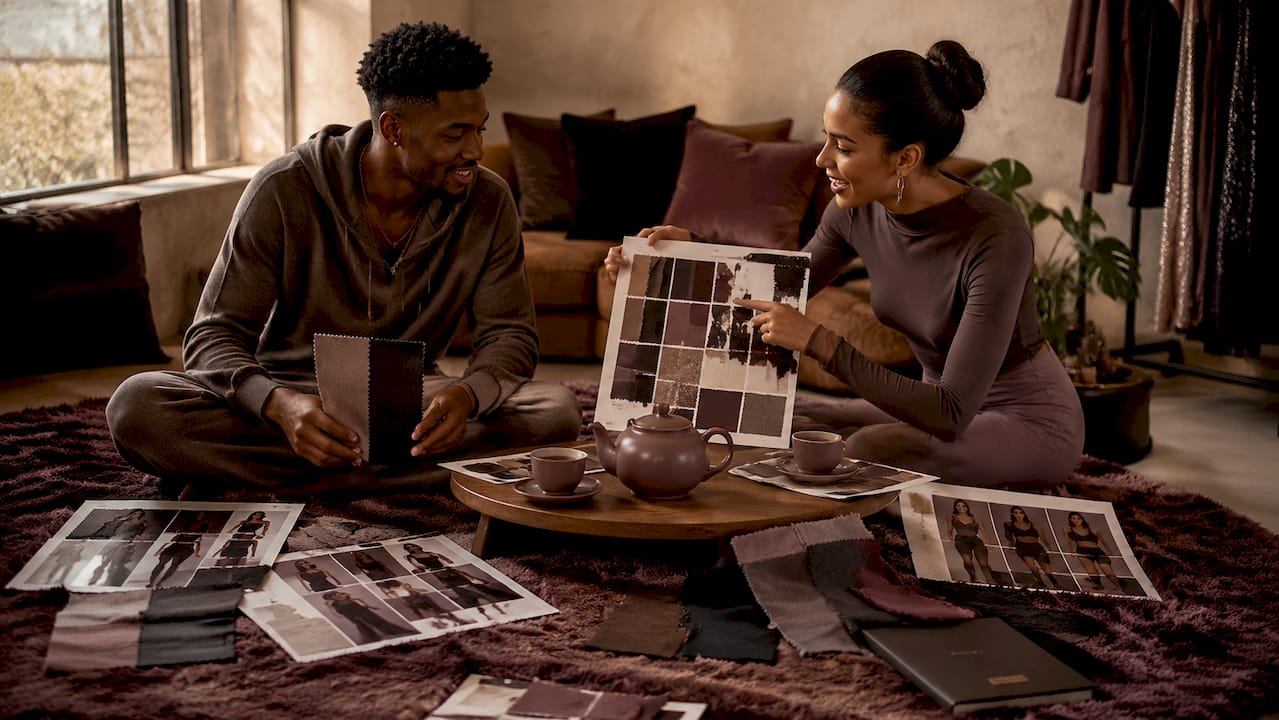
- Fabric and texture samples. Physical boards use actual swatches. Digital boards use close-up photography of materials like velvet, faux fur, silk, or denim. Texture tells the viewer how the final piece will feel, not just look.
- Inspirational images. These pull from editorial shoots, runway photography, art, architecture, and nature. The goal is to capture a feeling, not just copy a look.
- Silhouettes and garment references. Specific cuts, proportions, and shapes that define the collection or outfit direction.
- Typography and graphic elements. Font choices and graphic textures that reflect the brand or personal aesthetic. These are especially relevant for professional or commercial projects.
- Mood words or quotes. Short phrases that anchor the emotional register of the board. Words like “raw,” “celestial,” or “effortless” guide every subsequent creative decision.
- 3–7 anchor visual elements. Strong boards focus on a tight set of anchor images rather than a large collection of loosely related visuals. Fewer, stronger images communicate more clearly.
Cohesion is the standard that separates a useful mood board from a pretty collage. Every element should belong for a reason, not just because it looks good on its own.
How to create a fashion mood board step by step
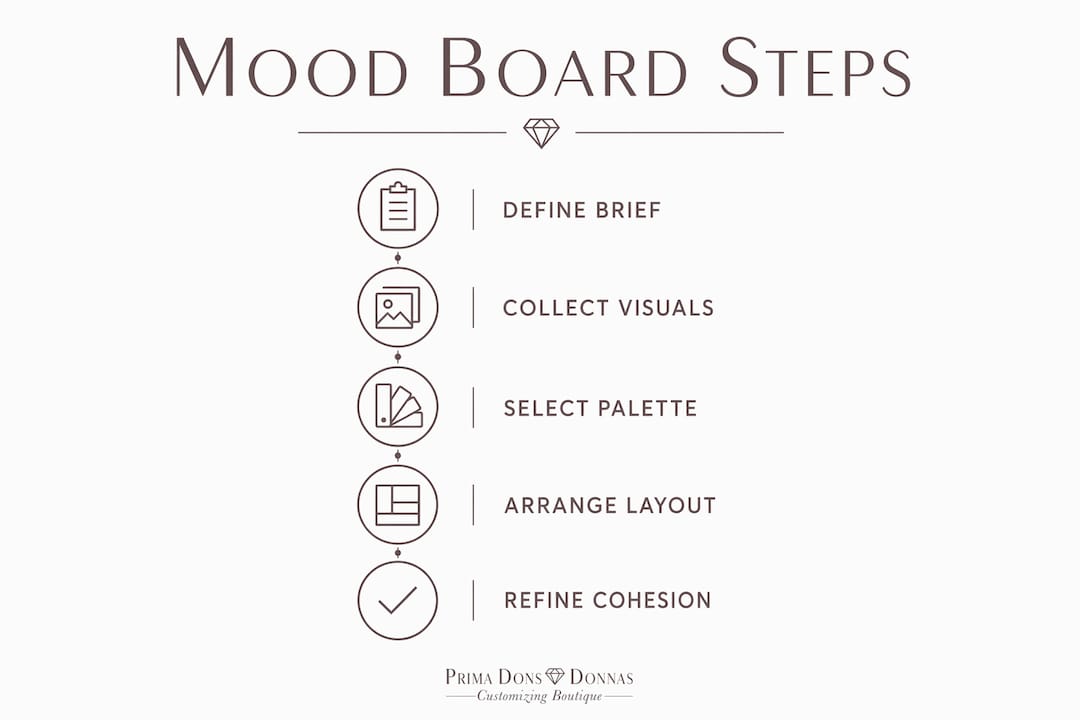
Building a mood board that actually guides your project takes a clear process. Here are the five steps professionals use.
- Define your narrative. Start with a brief. Write two or three sentences describing the project’s purpose, audience, and emotional tone. A mood board for a plus-size wedding guest look has a different brief than one for a concert outfit. Your brief is the filter for every decision that follows.
- Collect assets broadly. Pull images, color swatches, fabric references, and typography from anywhere relevant. Pinterest, with 600 million users, is the most widely used sourcing platform. Canva, with 260 million users, is the most popular tool for assembling boards digitally. Adobe Express works well for more polished, presentation-ready formats.
- Edit aggressively. This is the step most people skip. Start with many references but finalize only those sharing a coherent emotional or tonal theme. Cutting from 20–30 images down to 3–7 anchor elements is not a loss. It is the work. A board with 30 images says nothing. A board with 6 strong images says everything.
- Organize your layout. Arrange your elements on a canvas with intention. Asymmetrical layouts feel editorial and modern. Grid layouts feel structured and commercial. The layout itself communicates something about the aesthetic, so choose deliberately.
- Present and refine. Frame your board as a proposal, not a final statement. Invite feedback. Add annotations to explain abstract choices, such as why a photo of a brutalist building belongs on a fashion board. Annotations prevent misinterpretation and keep collaborators aligned with your intent.
Pro Tip: Add a short written note next to any image that might confuse a viewer. “This references the light quality, not the subject” is the kind of annotation that saves a project from going sideways.
Physical boards cost between $35 and $95 to produce with printed images and fabric swatches. Digital boards on Canva or Pinterest cost nothing and are easier to share and update. For personal styling projects, digital is the practical choice. For client presentations in professional settings, a physical board still carries weight.
Why are mood boards important in fashion design and styling?
A mood board functions as the North Star of any fashion project. It is the reference point every decision gets measured against. Mood boards guide design cohesion and prevent costly revisions by clarifying creative vision before production starts.
The practical benefits are specific and significant:
- Faster ideation. A clear visual reference speeds up every downstream decision, from fabric selection to accessory choices.
- Higher client approval rates. When clients see the aesthetic direction before work begins, they approve final results more quickly and with fewer change requests.
- Aligned teams. Mood boards give designers, manufacturers, buyers, and stylists a single shared reference. Everyone works from the same visual language.
- Prevented miscommunication. Words like “elegant” or “edgy” mean different things to different people. A mood board makes those words concrete.
“Mood boards are not merely decorative; they are functional communication tools that align all stakeholders by creating a shared visual language.” — Storyflow
The difference between a mood board and a style guide is worth noting. A style guide is a finished document that defines rules for an established brand. A mood board is a working tool used during the creative development phase. It is exploratory by nature. A style guide codifies decisions already made. A mood board is where those decisions get made.
For personal styling, the importance of mood boards in fashion is equally real. Building a board before shopping for a party outfit, a wedding guest look, or a concert ensemble saves money and prevents impulse purchases that do not work together. It gives you a filter. Read more about developing a personalized styling workflow to see how mood boards fit into a broader creative process.
Fashion mood board ideas for every occasion and style
The most useful fashion mood board ideas are specific to the occasion and the person wearing the look. Generic boards produce generic results. Here is how to approach boards for different projects.
| Occasion | Visual Anchors to Include | Tone to Target |
|---|---|---|
| Party or event | Sequins, bold color swatches, editorial night shots | High energy, statement-making |
| Concert | Streetwear references, texture close-ups, crowd photography | Edgy, comfortable, expressive |
| Lunch date | Soft fabrics, neutral palettes, café or garden imagery | Relaxed, polished, approachable |
| Wedding guest | Floral references, pastel or jewel tones, formal silhouettes | Elegant, occasion-appropriate |
| Plus-size styling | Full-figure editorial images, structured silhouettes, bold prints | Confident, flattering, bold |
Imagery from outside fashion consistently produces the most original boards. Architecture, film stills, botanical photography, and abstract art all carry emotional and tonal information that translates directly into garment and color choices. A board built entirely from runway images tends to look derivative. A board that pulls from a Brutalist building, a Georgia O’Keeffe painting, and one editorial shot tends to produce something genuinely original.
For plus-size fashion specifically, mood boards serve an additional function. They help identify which silhouettes and proportions align with your body and your confidence, before you spend money on pieces that do not deliver. Inclusive editorial photography and full-figure runway references belong on every plus-size mood board as anchor images.
Combining digital and physical elements works well for personal projects. Print two or three key images and pin them somewhere visible. Keep the full board digital on Pinterest or Canva for easy updates. The physical prints keep the vision present in your daily environment. That constant visual reference shapes purchasing decisions over time.
Pro Tip: When building a board for a special occasion outfit, include one image of the venue or setting. The environment is part of the look, and it keeps your choices grounded in reality.
Key takeaways
A fashion mood board is the most practical tool for translating a creative idea into a clear, shareable visual direction before any money is spent.
| Point | Details |
|---|---|
| Core definition | A mood board is a curated visual collage communicating aesthetic, tone, and direction for a fashion project. |
| Essential components | Include 5–8 colors, fabric references, anchor images, silhouettes, and mood words for a complete board. |
| Creation process | Define a brief, collect broadly, edit to 3–7 anchors, organize layout, then present as a proposal. |
| Functional value | Mood boards align teams, speed up approvals, and prevent costly revisions before production begins. |
| Occasion-specific use | Tailor visual anchors and tone to the specific event, from concerts to weddings to plus-size styling. |
Why i think most people build mood boards backwards
By Latoya
Most people start a mood board by collecting images they love. That is the wrong starting point. The brief comes first. Without a clear brief, you end up with a beautiful board that does not actually guide any decisions. I have seen this happen repeatedly, and the result is always the same: the board gets admired and then ignored.
The editing step is where real creative thinking happens. Removing visually appealing but unrelated images is harder than it sounds. You will want to keep the stunning photograph that does not quite fit. Do not keep it. Cohesion over aesthetics is the rule that separates boards that work from boards that just look good on screen.
The other thing I would push back on is the idea that mood boards are only for professionals. If you are shopping for a wedding guest outfit or building a concert look, a mood board saves you real money. It stops you from buying pieces that look great individually but do not work together. That is practical value anyone can use.
One last thing: pull from outside fashion. Architecture, nature, and art carry emotional information that runway images rarely do. The most interesting personal style I have seen always has a reference point that is not a fashion photograph. That outside influence is what makes a look feel like you, not like a copy of someone else.
— Latoya
Shop custom looks that match your mood board vision
Once your mood board is built, the next step is finding pieces that actually match it. Primadonsanddonnas makes that step straightforward. Every piece in the made-to-order dress collection is custom built to your size and color, so your mood board vision does not have to compromise with whatever happens to be in stock. Party events, weddings, lunch dates, concerts: Primadonsanddonnas covers all of it. The custom plus-size apparel collection is built for every body, with bold silhouettes and statement details that translate directly from board to wardrobe. Ready-to-ship options are also available for faster delivery when your event is close.
FAQ
What is a fashion mood board in simple terms?
A fashion mood board is a visual collage of images, colors, textures, and references that communicates the style and emotional direction of a fashion project before any design or shopping begins.
How many images should a fashion mood board include?
Professional mood boards focus on 3–7 anchor elements for maximum clarity. Starting with 20–30 images and editing down to the strongest few produces the most focused result.
What tools are best for creating a digital mood board?
Canva (260 million users) and Pinterest (600 million users) are the most widely used platforms for digital mood board creation. Adobe Express works well for polished, presentation-ready formats.
Can a mood board be used for personal styling, not just professional design?
A mood board works for any fashion project, including personal outfit planning for parties, weddings, and concerts. It helps you identify what works together before spending money on individual pieces.
What is the difference between a mood board and a vision board?
A vision board captures personal goals and aspirations. A mood board communicates a specific aesthetic direction to collaborators, clients, or yourself as a creative filter for a defined project.
Recommended
- What is sustainable fashion: A 2026 guide – Prima Dons & Donnas
- Guide to expressing style with custom fashion in 2026 – Prima Dons & Donnas
- Fashion sustainability trends 2026: bold eco-friendly style – Prima Dons & Donnas
- Trends in Custom Fashion 2026: Bold Style and Personalization – Prima Dons & Donnas


Leave a comment