

Exclusive Online Dress Shopping: Personalized Luxury 2026
TL;DR:
- Online exclusivity relies on limited production, waitlists, and personalized made-to-order options.
- Digital tools like AI and virtual try-ons enhance fit, personalization, and reduce waste.
- True exclusivity is about intention and personalized experiences, not just rarity or limited editions.
Most people assume online shopping means scrolling through pages of identical, mass-produced styles. That assumption is outdated. In 2026, exclusivity is fully available online, and it goes far beyond a limited-edition tag. For women who want a dress or pair of shoes that no one else is wearing, the digital space now offers made-to-order models, AI-powered personalization, and sustainable production that rivals anything found in a boutique. This guide breaks down exactly how exclusive online dress shopping works, what to look for, and how to secure pieces that are truly yours.
Table of Contents
- What makes online dress shopping exclusive?
- Personalization and sustainability through made-to-order
- Digital tools for personalized exclusivity
- Economic and psychological drivers behind exclusivity
- Our take: Balancing exclusivity, personalization, and access
- Explore exclusive, made-to-order collections
- Frequently asked questions
Key Takeaways
| Point | Details |
|---|---|
| Exclusive shopping mechanisms | Limited drops, waitlists, and made-to-order models provide genuine exclusivity online. |
| Personalization & sustainability | Made-to-order ensures unique fit and reduces waste for special-occasion dresses and footwear. |
| Digital tools enhance experience | AI and virtual try-ons improve accuracy, boosting user satisfaction with exclusive online purchases. |
| High value for custom segments | Custom dresses and footwear command premium prices due to scarcity and psychological appeal. |
| Balance exclusivity and access | The best brands blend rarity, ethical production, and digital personalization for fashion-forward shoppers. |
What makes online dress shopping exclusive?
Exclusivity online is not just about a high price tag. It is about controlled supply, intentional design, and production methods that keep each piece rare.
Limited production runs, made-to-order models, and controlled access through waitlists and VIP programs are the primary tools brands use to maintain exclusivity online. This stands in sharp contrast to fast fashion, where thousands of identical units ship globally within days of a trend appearing.
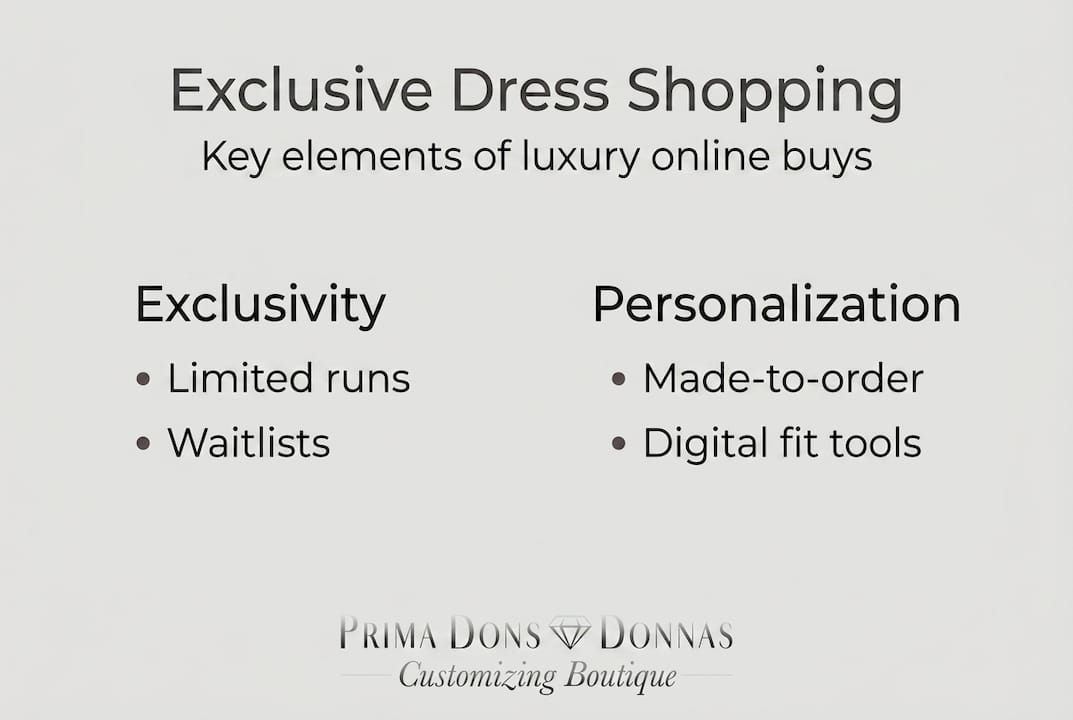
Brands like Hermès and Chanel have long understood the power of exclusivity as a core part of personal style. Online, these same principles translate through timed drops, private client portals, and invitation-only collections. Fenwick x Selected is one example of a collaboration that used scarcity to generate significant demand in the digital space.
However, physical scarcity translates online via drops and collabs but risks dilution if overexposed. When brands release too many “limited” pieces, the perception of exclusivity fades quickly.
Fast fashion vs. exclusive online dress shopping
| Feature | Fast fashion | Exclusive online shopping |
|---|---|---|
| Production volume | Thousands of units | Limited runs or single pieces |
| Customization | None | Full size, color, and style options |
| Lead time | Ships immediately | 1 to 4 weeks for made-to-order |
| Sustainability | High waste output | Low waste, produced on demand |
| Uniqueness | Widely duplicated | One-of-a-kind or near-exclusive |
Key strategies brands use to stay exclusive online:
- Limited drops: Timed releases that sell out fast
- Waitlists: Only approved customers get access first
- VIP programs: Loyalty tiers with early access and private previews
- Made-to-order: No stock exists until the customer orders
- Collabs: Partner-driven capsule collections with restricted quantities
Pro Tip: When shopping for exclusive pieces, sign up for brand waitlists early. Many truly limited collections never make it to the general public.
Understanding scarcity in luxury fashion helps explain why these strategies work so well. Scarcity signals value. And online visibility for fashion brands has become the new runway, replacing physical fashion weeks for many emerging designers.
Personalization and sustainability through made-to-order
After exploring exclusivity tactics, let’s look at how personalization and sustainability improve the shopping experience.
Made-to-order production is one of the most effective ways to ensure a dress is both exclusive and sustainable. Nothing is manufactured until a purchase is confirmed. That model eliminates overstock, reduces fabric waste, and guarantees that what arrives is made specifically for one customer.
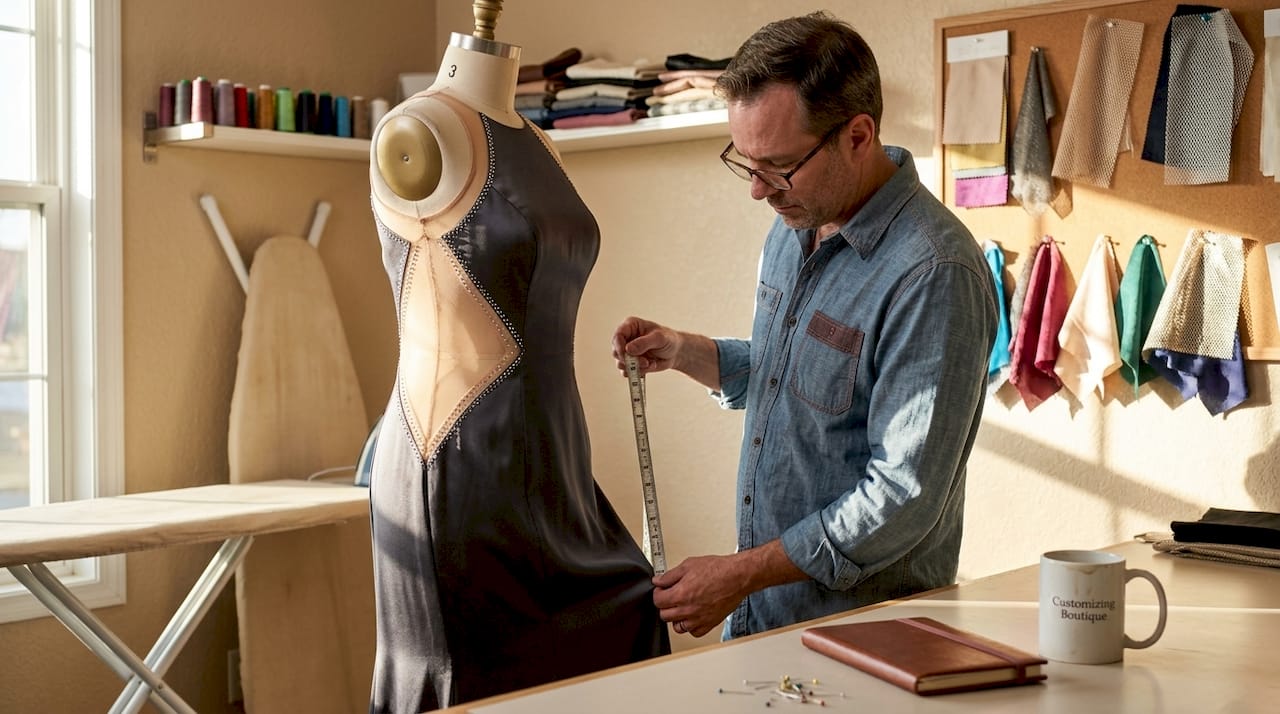
MTO production ensures exclusivity by producing only after purchase, reducing waste and guaranteeing uniqueness for special occasions. For a wedding, gala, or milestone event, that level of intention matters.
The made-to-order fashion benefits extend beyond sustainability. Fit is often dramatically better than off-the-rack sizing. Color options are broader. And the custom clothing workflow is more straightforward than most shoppers expect.
MTO vs. mass-produced: Key differences
| Factor | Made-to-order | Mass-produced |
|---|---|---|
| Units produced | 1 per order | Hundreds to thousands |
| Lead time | 1 to 4 weeks | Same day to 2 days |
| Fabric waste | Minimal | Significant |
| Fit accuracy | Tailored to measurements | Standardized sizing |
| Customer satisfaction | High | Variable |
Why shoppers are choosing MTO:
- Better fit across non-standard sizes
- Reduced environmental footprint
- Unique color and style options not available in stores
- Higher perceived and actual garment quality
- Alignment with ethical, mindful shopping insights values
For footwear, the same principles apply. A personalized footwear guide covers how custom shoes can be ordered to match any dress color, heel height, or embellishment preference.
One important note: variable dye results are a reality with MTO. Colors may appear slightly different in photos compared to finished fabric. Request swatches when possible, and always read the brand’s color notes.
AI-enhanced bespoke models like THE ONE use up to 20 measurements to create a custom fit. That level of precision was previously only available to haute couture clients spending tens of thousands of dollars.
Pro Tip: Take your measurements three times and use the average. Measure over the undergarments you plan to wear with the dress. This alone eliminates most fit issues with made-to-order orders. Check out why choose made-to-order fashion for more guidance before placing your first custom order.
Digital tools for personalized exclusivity
With MTO paving the way for personalized exclusivity, the next frontier is smart digital tools.
AI and digital tools enable personalized exclusivity online, with virtual try-ons and recommendation systems improving both fit accuracy and overall user satisfaction.
The numbers are strong. A recent deep learning study recorded a 0.38 cm measurement accuracy with 87.4% style match and a user satisfaction score of 4.55 out of 5 across 250 participants. That is near-perfect fit prediction from a digital tool.
Key digital tools shaping exclusive online dress shopping:
- Virtual try-on platforms: Overlay garments onto a customer’s image or avatar
- AI measurement tools: Use photos or body scans to calculate precise sizing
- Style recommendation engines: Match customers with designs based on preference history
- 3D garment visualization: Show how fabric drapes, moves, and fits before production
- Color simulation: Preview custom color choices in real lighting conditions
These tools matter especially for special occasion purchases. No one wants to guess on a dress they will wear once in front of every person they know. Understanding the personalized fashion advantages available in 2026 makes the decision to go custom much easier.
Virtual try-on technology also addresses a major hesitation: returns. When shoppers can see how a piece looks before ordering, return rates drop significantly. That is good for the customer and for the environment.
For practical steps on getting the best fit from digital tools, the personalized fit tips resource covers common measurement mistakes and how to avoid them.
Research on digital scarcity and equity also points to an important consideration: as digital tools improve, access to personalized fashion must remain broad. Exclusivity should not become a barrier based on tech literacy or income.
Economic and psychological drivers behind exclusivity
Understanding the tools is just part of the story. Let’s unpack why exclusivity matters so much.
The global wedding dress market alone was valued between $67 billion and $82 billion in 2024, with direct-to-consumer margins for custom and made-to-order styles ranging from 40% to 65% on platforms like Etsy. That profitability signals strong, sustained demand for personalized, exclusive pieces.
But the psychology behind that demand is just as important as the economics.
“Scarcity drives desire. When something is hard to get, we want it more. This is the foundation of Veblen goods, where demand increases with price and rarity rather than decreasing.”
Scarcity boosts desire but risks inequality when access becomes too restricted. Brands must balance rarity with fairness.
Drivers of exclusivity in online dress shopping:
- Status signaling: A one-of-a-kind dress communicates taste and intentionality
- Individuality: No one else at the event is wearing the same thing
- Emotional investment: Custom pieces carry more personal meaning
- Quality perception: Exclusive items are assumed to be better made
- Occasion significance: Special events demand special, memorable outfits
For special occasion shoppers, the exclusivity in personal style argument is straightforward: you only have one wedding, one gala, one night to make that impression. A mass-produced dress from a fast fashion retailer does not match the weight of that moment.
The made-to-order advantages also include long-term value. Custom pieces tend to hold up better, fit better over time, and are more likely to be kept rather than discarded after one use.
Exclusivity, when done right, is not about keeping people out. It is about making sure that what you offer is genuinely worth the investment.
Our take: Balancing exclusivity, personalization, and access
Here is a view that most fashion guides skip: true exclusivity is not really about rarity for its own sake. It is about intention.
The brands that do this best are not the ones releasing the fewest pieces. They are the ones that make every customer feel like the piece was made specifically for them, because it was. That is the real promise of made-to-order. Not scarcity as a marketing trick, but scarcity as a natural byproduct of genuine personalization.
The pitfall to avoid: obsessing over limited-edition labels while ignoring whether the piece actually fits, reflects your style, or aligns with your values. A hyped drop that ships in a standard size is no more exclusive than anything else.
For shoppers, the smarter move is to seek out brands that combine digital personalization tools with ethical production practices. Look for sustainable fashion options that use responsible materials and produce only what is ordered. That combination gives you something actually exclusive: a piece made for you, with care, that will not end up in a landfill after one season.
Pro Tip: Ask any brand directly about their production method before ordering. “Made-to-order” should mean your piece does not exist until you buy it, not just that it ships from a warehouse with your name on it.
Explore exclusive, made-to-order collections
Ready to try exclusive online shopping for yourself? Prima Dons and Donnas specializes in custom clothing and footwear made to your exact size, color, and style preferences. Every piece is produced after your order, so nothing on our racks is mass-produced or duplicated.
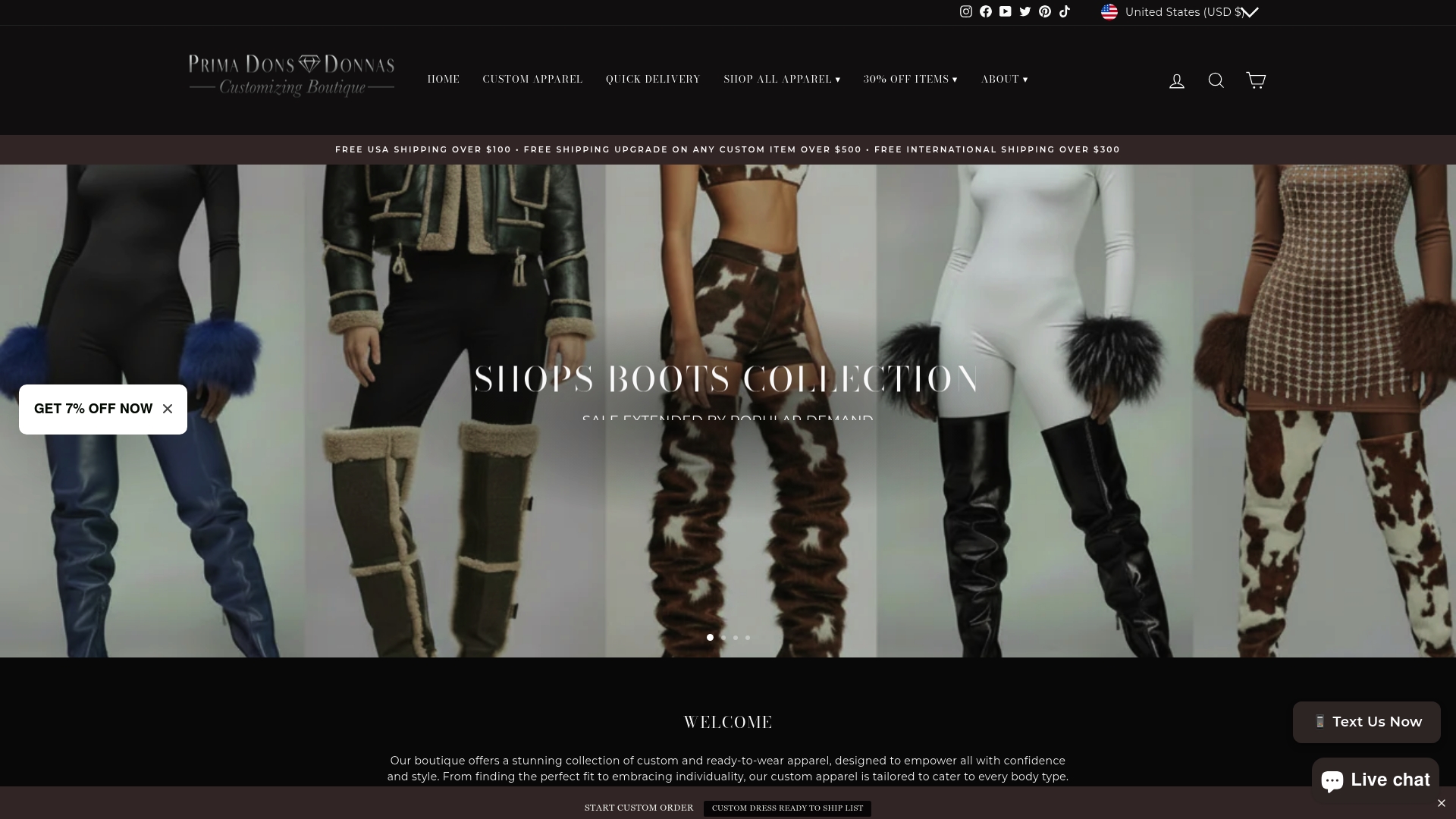
Browse the made-to-order dress collection for statement pieces built around your event. For footwear that matches your look, the custom crystal shoes are designed with bold detail and full size flexibility. Looking for something that blends streetwear with luxury, check the rhinestone Nike sneakers for a one-of-a-kind finish. Ready-to-ship options are also available for faster delivery.
Frequently asked questions
How do brands ensure exclusivity in online dress shopping?
Brands use limited runs, waitlists, VIP programs, and made-to-order models to maintain online exclusivity. These mechanisms control supply and guarantee that each customer receives something genuinely rare.
What is the typical wait or lead time for made-to-order dresses?
MTO lead times range from 1 to 4 weeks, depending on the design complexity and the brand’s production capacity. AI-enhanced bespoke services may use up to 20 measurements, which can add a day or two to the process.
Can digital tools actually improve fit and satisfaction for exclusive purchases?
Yes. AI systems achieve 87.4% style match accuracy and user satisfaction scores above 4.5 out of 5, making digital fit tools highly reliable for special occasion purchases.
Why are exclusive dresses and footwear seen as higher value for special occasions?
Custom and made-to-order pieces offer better fit, unique design, and lasting quality. The global custom dress market reflects strong demand, with DTC margins confirming that shoppers consistently pay more for truly personalized options.
Recommended
- Master personalized special occasion styling in 2026 – Prima Dons & Donnas
- Top 8 Luxury Made-to-Order Fashion Compared 2026 – Prima Dons & Donnas
- Unlock key advantages of personalized fashion in 2026 – Prima Dons & Donnas
- Top 8 Personalized Clothing Services 2026 – Prima Dons & Donnas
- Luxury Roses – OnlyRoses - UK


Leave a comment