

Discover Slow Fashion: Quality, Ethics, and Style Explained
TL;DR:
- Slow fashion prioritizes quality, ethics, sustainability, and timeless design over quantity.
- It encourages mindful consumption, supporting made-to-order, repairing, and buying less.
- The approach fosters individuality, reduces environmental impact, but faces higher costs and accessibility challenges.
The fashion industry accounts for up to 10% of global carbon emissions, and most garments are discarded within a year of purchase. Yet millions of women still feel pulled between wanting to look great and wanting to make responsible choices. The confusion is real. Fast fashion makes it easy to buy more and think less, while slow fashion asks for something different: intention. This guide breaks down what slow fashion actually means, how it compares to fast fashion, what benefits and challenges come with it, and how you can start building a wardrobe that reflects both your values and your personal style.
Table of Contents
- What is slow fashion? Core principles and origins
- Fast fashion vs. slow fashion: A side-by-side comparison
- Benefits and challenges of slow fashion for conscious women
- How to embrace slow fashion: Practical steps and style ideas
- The uncomfortable truth about slow fashion: What most guides won’t tell you
- Explore unique slow fashion with Prima Dons & Donnas
- Frequently asked questions
Key Takeaways
| Point | Details |
|---|---|
| Slow fashion basics | Slow fashion prioritizes quality, ethical production, and unique style over mass consumption. |
| Clear differences | Fast fashion prioritizes speed and quantity, while slow fashion values lasting impact and mindful choices. |
| Overcome barriers | While accessibility can be a challenge, conscious shopping and small shifts make slow fashion possible. |
| Start practical | Embracing slow fashion begins with buying less and choosing better for your wardrobe and the planet. |
What is slow fashion? Core principles and origins
Slow fashion is not just a trend. It is a philosophy built around producing and consuming clothing with care, purpose, and respect for people and the planet. Understanding it starts with where the idea came from.
The term was coined by Kate Fletcher in the early 2000s, directly inspired by the slow food movement. Just as slow food pushed back against fast food by prioritizing local sourcing, quality ingredients, and mindful eating, slow fashion challenges the disposable clothing culture by centering craftsmanship and longevity.
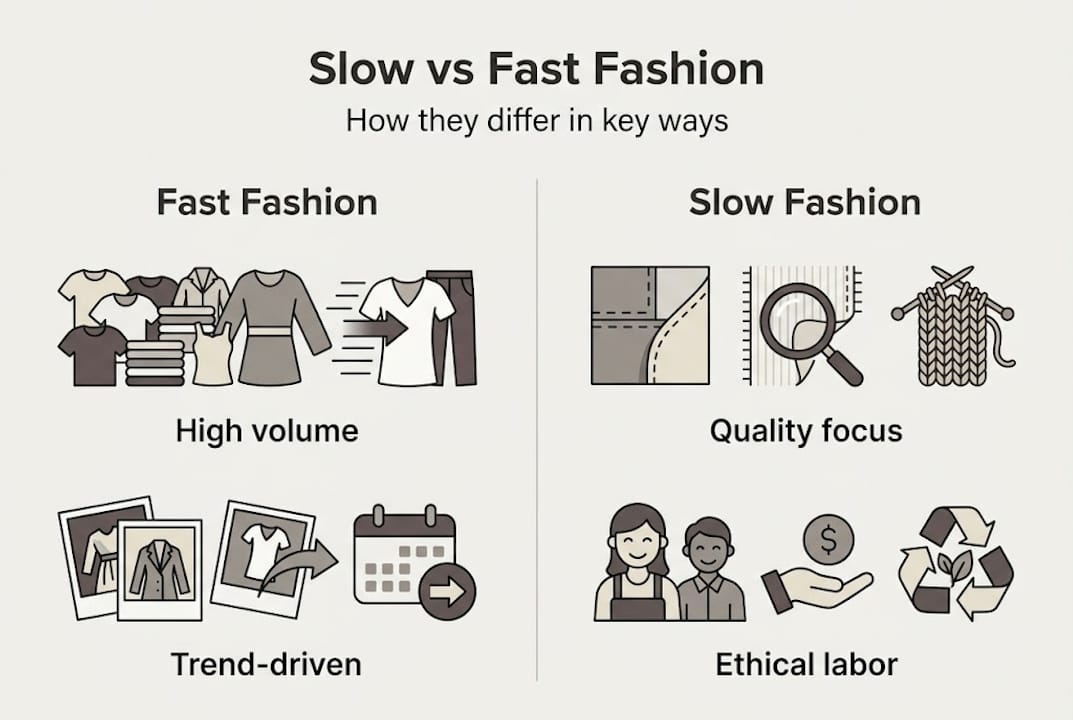
At its core, slow fashion values quality, ethical labor, sustainable materials, and timeless design. These are not abstract ideals. They show up in how a garment is cut, what fabric is used, who made it, and how long it is meant to last.
Here are the foundational principles slow fashion is built on:
- Quality over quantity. Fewer pieces, made to last. A well-constructed coat worn for ten years beats ten cheap ones.
- Ethical labor. Fair wages, safe working conditions, and transparency throughout the supply chain.
- Sustainable materials. Natural fibers, recycled textiles, and responsible alternatives like high-quality faux fur.
- Timeless design. Pieces that do not expire with the season. Style that stays relevant.
- Mindful consumption. Buying with intention rather than impulse.
“Slow fashion is not about wearing less. It is about wearing better.”
This approach directly challenges the fast fashion status quo, which runs on speed, volume, and low cost. You can learn more about the broader context in this sustainable fashion definition and explore why sustainability matters in today’s fashion landscape.
Slow fashion is also deeply connected to individuality. When you choose pieces made with care, you are choosing something that reflects who you are, not just what was mass-produced this week.
Fast fashion vs. slow fashion: A side-by-side comparison
Now that the core of slow fashion is clear, it helps to see exactly how it stacks up against the dominant fast fashion industry.
| Feature | Fast fashion | Slow fashion |
|---|---|---|
| Production speed | Weeks from design to shelf | Weeks to months, made with care |
| Volume | Overproduced by design | Made to order or in small batches |
| Materials | Synthetic, low-cost | Natural, recycled, or sustainable |
| Labor practices | Often low-wage, unregulated | Fair wages, transparent supply chain |
| Price point | Low upfront | Higher upfront, better long-term value |
| Design lifespan | One to two seasons | Timeless, years of wear |
| Environmental impact | High waste, high emissions | Significantly reduced footprint |
Fashion industry overproduction doubled in recent decades, and most garments are discarded within a year. That cycle drives enormous waste, from water usage to landfill overflow. Slow fashion interrupts this by producing only what is needed, when it is needed.
For the consumer, the trade-offs are real. Fast fashion gives you speed and low prices. Slow fashion gives you quality, uniqueness, and a clear conscience. You spend more per item but buy far less often. Over time, the cost difference narrows considerably.
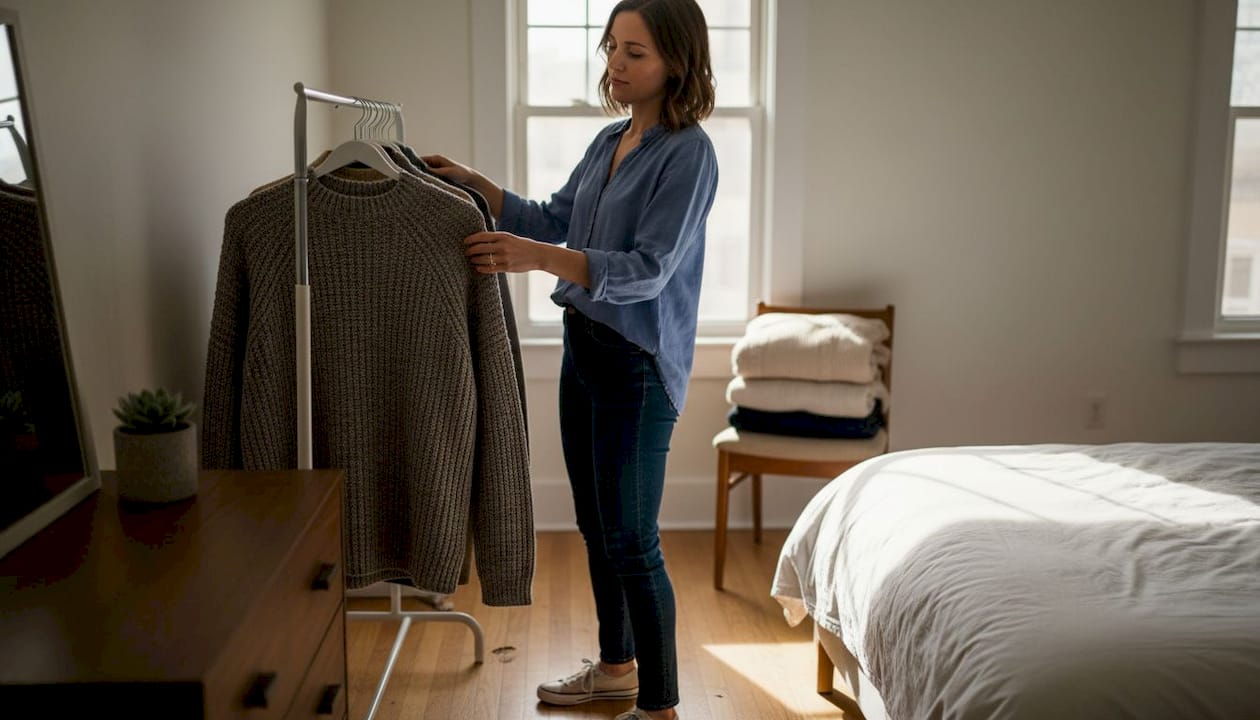
For a closer look at how these two models compare on impact, check out this breakdown of fast fashion’s impact and what it means for your choices.
Pro Tip: Before your next purchase, ask yourself: “Would I still want this in three years?” If the answer is no, it is likely a fast fashion impulse buy. Pause and reconsider.
The biggest shift slow fashion asks of you is not about budget. It is about mindset. Choosing one well-made piece over five throwaway ones is a decision that compounds over time, both for your wardrobe and for the planet.
Benefits and challenges of slow fashion for conscious women
Weighing the real benefits and challenges for you is the natural next step after understanding the contrast between fast and slow fashion.
The benefits are significant. Here is what slow fashion actually delivers:
- Lasting quality. Garments built to endure hold their shape, color, and structure far longer than fast fashion alternatives.
- Unique style. Made-to-order and small-batch pieces mean you are not wearing the same thing as everyone else.
- Empowerment. Knowing your clothing was made ethically adds confidence to how you wear it.
- Less waste. Buying less and keeping pieces longer directly reduces your personal fashion footprint.
- Better fit. Custom and made-to-order options are designed around your actual measurements, not a generic size chart.
“Dressing with intention is one of the most personal forms of self-expression.”
But slow fashion also comes with real challenges. Higher prices can limit accessibility, and an attitude-behavior gap persists among consumers who care about sustainability but still reach for cheaper options. This is not a character flaw. It is a structural problem built into how fashion is priced and marketed.
Other challenges include scalability, consumer education, and competition from cheap fast fashion. Greenwashing is also a real concern. Some brands use sustainability language without the practices to back it up. Transparency is the key indicator to watch for.
How do you overcome these barriers? Start small. Explore sustainable fashion options that fit your current budget, and build conscious shopping habits gradually rather than overhauling everything at once.
Pro Tip: Research a brand’s supply chain before buying. Look for specific details about where and how garments are made. Vague claims like “eco-friendly” without specifics are a red flag.
The goal is not perfection. It is progress, made one intentional purchase at a time.
How to embrace slow fashion: Practical steps and style ideas
With the rewards and obstacles addressed, it is time to explore how you can make slow fashion your own.
Shifting from overconsumption to mindful investment is the central move slow fashion asks of you. That shift does not have to happen overnight. Here are practical ways to get started:
- Buy less, choose better. Set a personal limit on how many new pieces you add per season. Focus on what you actually need and love.
- Invest in versatile basics. A well-cut blazer, a quality pair of trousers, or a timeless dress can anchor dozens of outfits.
- Support made-to-order brands. These produce only what is ordered, eliminating overstock waste entirely.
- Care for what you own. Washing on cold, air drying, and proper storage extend the life of every garment significantly.
- Explore secondhand with intention. Thrifting can be slow fashion, but only when you buy for durability and genuine need, not volume.
Here is a quick reference for building your slow fashion wardrobe:
| Action | Slow fashion benefit | How often |
|---|---|---|
| Audit your closet | Identify gaps, reduce impulse buys | Seasonally |
| Research brands | Avoid greenwashing | Before each purchase |
| Choose natural or sustainable fabrics | Lower environmental impact | Every purchase |
| Repair instead of replace | Extends garment life | As needed |
| Buy made-to-order | Zero overproduction waste | For key pieces |
For inspiration on building a wardrobe that looks great and aligns with your values, browse these eco-chic fashion ideas and styling tips for sustainability. If you are ready to invest in pieces made specifically for you, explore custom sustainable apparel as a starting point.
Slow fashion style is not about looking minimalist or boring. It is about looking intentional. Bold colors, statement silhouettes, and custom fits all belong here.
The uncomfortable truth about slow fashion: What most guides won’t tell you
Here is what most slow fashion content skips: buying slow fashion is not automatically a win. Secondhand shopping often mirrors fast fashion buying patterns, and real impact requires a deeper commitment than swapping one type of shopping for another.
The mindset shift matters more than any single purchase. You can buy every item from a sustainable brand and still consume too much. The actual change comes from wanting less, not just buying differently.
Slow fashion also has an accessibility problem that is rarely discussed honestly. Not everyone can afford ethically made clothing at full price. That is a real barrier, and dismissing it with “buy less, spend more” advice ignores the economic reality many women face.
What actually helps is celebrating the small wins while staying honest about the bigger picture. Wearing what you already own longer is slow fashion. Repairing instead of replacing is slow fashion. Making conscious style choices within your actual budget is slow fashion. None of these require a complete wardrobe overhaul or a high income.
The goal is not a perfect slow fashion identity. It is a genuine, ongoing commitment to doing better with what you have.
Explore unique slow fashion with Prima Dons & Donnas
If you are ready to take your next step into slow fashion, Prima Dons & Donnas offers a direct path forward. Every piece is made to order, which means zero overproduction and a garment built specifically for you, in your size and your chosen color.
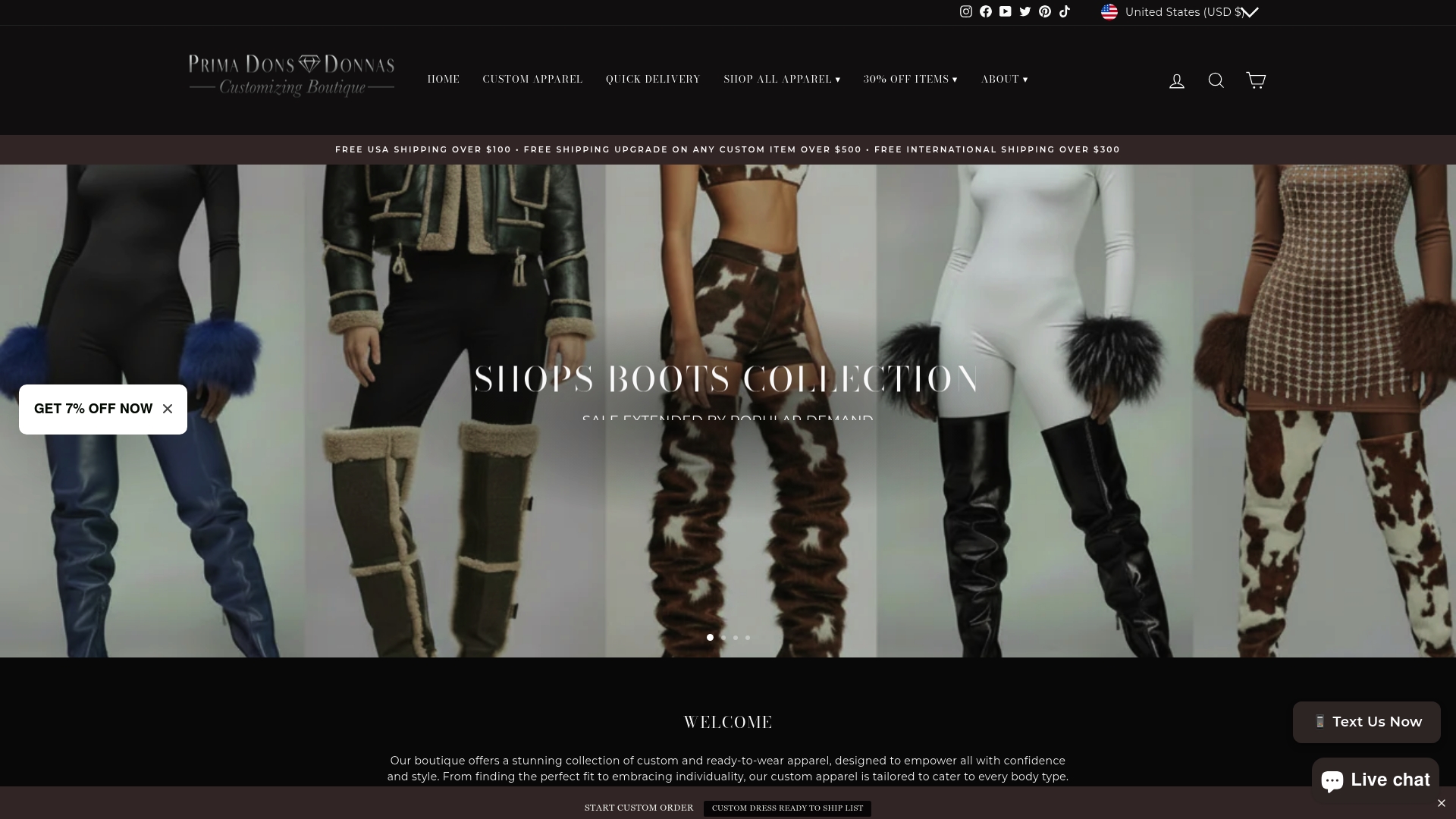
The collections span made-to-order dresses, custom outerwear, and custom boots, all designed with bold, confident style in mind. For those who want something sooner, ready-to-ship options are also available. This is slow fashion that does not ask you to compromise on style, fit, or speed when you need it.
Frequently asked questions
How does slow fashion differ from sustainable fashion?
Slow fashion focuses on intentional production pace and consumption habits, while sustainable fashion emphasizes eco-friendly materials and environmental practices. Both are quality and sustainability pillars that often overlap but are not identical.
Does slow fashion mean more expensive clothing?
Slow fashion can be pricier due to quality craftsmanship and ethical labor, but higher prices limit accessibility for some consumers. Buying fewer, longer-lasting pieces typically offsets the higher cost over time.
What are easy ways to start adopting slow fashion?
Start by buying less and choosing timeless pieces you will wear for years. Supporting made-to-order or custom brands is another strong move, since mindful investment over overconsumption is the core message of slow fashion.
Can secondhand shopping be considered slow fashion?
Secondhand shopping can align with slow fashion principles when done with intention and a focus on durability. However, secondhand often overlaps with fast fashion patterns when volume and impulse drive the buying behavior rather than genuine need.
Recommended
- Sustainable fashion explained: a guide to eco-chic choices – Prima Dons & Donnas
- Sustainable fashion styling tips: Build an eco-friendly wardrobe – Prima Dons & Donnas
- What Is Conscious Fashion and Why It Matters – Prima Dons & Donnas
- Why Sustainable Fashion Matters: Eco-Friendly Style Guide – Prima Dons & Donnas
- Duurzame parfumkeuze stappen voor bewuste liefhebbers – Pure Parfum


Leave a comment