

Build a Sustainable Fashion Workflow for Personal Style
TL;DR:
- A made-to-order workflow transforms sustainable fashion by focusing on personal style, quality, and genuine eco-consciousness.
- It requires clear planning, digital prototyping, supplier collaboration, and outcome-based metrics to ensure meaningful sustainability progress.
Most fashion lovers have hit the same wall. You want something bold, well-made, and eco-conscious, but the stores keep offering the same mass-produced options that fit poorly, fade fast, and carry a murky supply chain. Finding clothing or footwear that checks every box, personal style, quality materials, and genuine sustainability, feels nearly impossible when you are shopping off a standard rack. A made-to-order workflow changes that equation entirely. This guide walks you through every step: what to gather before you start, how to execute each stage, how to measure real impact, and how to avoid the mistakes that slow most people down.
Table of Contents
- What you need to start your sustainable fashion workflow
- Step-by-step sustainable fashion workflow for made-to-order pieces
- How to measure sustainability: KPIs, traceability, and circularity
- Common mistakes and troubleshooting your sustainable workflow
- Customer adoption and communicating your sustainable values
- Why outcome metrics and supplier support are the next frontiers in sustainable fashion
- Start your sustainable fashion journey with Prima Dons & Donnas
- Frequently asked questions
Key Takeaways
| Point | Details |
|---|---|
| Start with the right tools | Digital design and clear communication are essential to launching your sustainable workflow. |
| Prioritize outcome metrics | Focus on circularity, durability, and traceability for impactful sustainability. |
| Choose processes wisely | Opt for resource-saving methods like eco-friendly dyes to maximize impact. |
| Simplify for your suppliers | Support partners with manageable documentation and coordinated standards. |
| Communicate value clearly | Transparency about your process encourages customer trust and adoption. |
What you need to start your sustainable fashion workflow
Before anything else, you need to get clear on three things: your style vision, your material standards, and your communication plan with makers. Without these anchors, even the best workflow falls apart quickly.
Essential inputs to gather first:
- Style vision document: Photos, sketches, or saved images that show the silhouettes, colors, and textures you want. This becomes your reference for every conversation with a designer or supplier.
- Material standards list: Decide upfront which materials you will and will not accept. Faux fur, organic cotton, and recycled fibers are good starting points for conscious choices.
- Sustainability priorities: Know whether your focus is on water savings, waste reduction, fair labor, or all three. Trying to optimize everything at once without a ranked list leads to paralysis.
- Communication tools: A shared folder or project management app keeps your style references, fabric swatches, and approval notes in one accessible place.
The personalized fashion benefits for conscious shoppers go well beyond just getting the right fit. Custom pieces reduce overproduction waste at the source, meaning fewer garments end up in landfills before anyone even wears them.
One of the biggest shifts in the industry is the move toward digital-first production. On-demand apparel manufacturing is enabled by combining lean and just-in-time principles, rapid prototyping, and real-time data exchange, all with a focus on customer-serving responsiveness. That means your workflow can move fast without creating excess stock.
| Workflow element | Digital tool options | Key consideration |
|---|---|---|
| Style visualization | Mood boards, digital sketching apps | Clarity of reference images |
| Material sourcing | Supplier databases, sustainability indexes | Certifications and material origin |
| Communication | Shared drives, messaging platforms | Version control for approvals |
| Order tracking | Brand portals, spreadsheets | Delivery milestones and updates |
Keeping an eye on 2026 sustainable fashion choices helps you stay current on which materials and methods are gaining traction this year.
Pro Tip: Start with a single garment or accessory before scaling your workflow. One custom boot or dress will reveal gaps in your communication process, material preferences, and timeline expectations faster than any planning session.
Step-by-step sustainable fashion workflow for made-to-order pieces
Once your essentials are in place, you move through the practical workflow. Each step presents a decision point where you can raise or lower your sustainability impact.
-
Define your style brief. Write a one-page brief that covers silhouette, color palette, material preferences, and intended use. Be specific. “Bold faux fur coat in burgundy, knee-length, for winter events” gives a maker far more to work with than a vague mood board alone.
-
Choose digital prototyping. On-demand apparel manufacturing uses digital prototyping to shorten design-to-production cycles and reduce physical sample waste. Request 3D renderings or digital fit simulations before any fabric is cut. This step alone can eliminate one or two rounds of physical sampling.
-
Specify your dyes and finishes. This is where the biggest environmental gains often hide. Dye and finish choices can dramatically change resource use. Supercritical CO2 dyeing cuts water usage to zero and reduces energy consumption by roughly 50 percent compared to conventional methods. Dope dyeing, where color is added to the fiber before it is spun, also cuts water and chemical use significantly.
-
Confirm supplier ethics and capacity. Ask your maker directly about their labor practices, production capacity, and lead times. Review any available certifications. Check lean manufacturing in fashion to understand how efficient production methods affect quality and waste at the factory level.
-
Approve a physical or digital sample. Even with strong digital tools, one final sample confirmation before full production protects both you and the maker from costly misalignments on fit or finish.
-
Place your order with full documentation. Send a written order summary covering material specs, colorways, size details, finish instructions, and delivery dates. This document becomes your traceability record.
-
Confirm delivery and review against your brief. When your piece arrives, check it against your original brief point by point. Note anything to adjust for future orders.
| Dye method | Water usage | Energy savings | Cost range |
|---|---|---|---|
| Conventional dyeing | High | Baseline | Low |
| Dope dyeing | Low | Moderate savings | Moderate |
| Supercritical CO2 | Zero | ~50% reduction | Higher upfront |
| Natural plant-based dyes | Low to moderate | Variable | Moderate to high |
Exploring sustainable options in custom clothing gives you a solid foundation for understanding which material and dye combinations work best for different garment types.
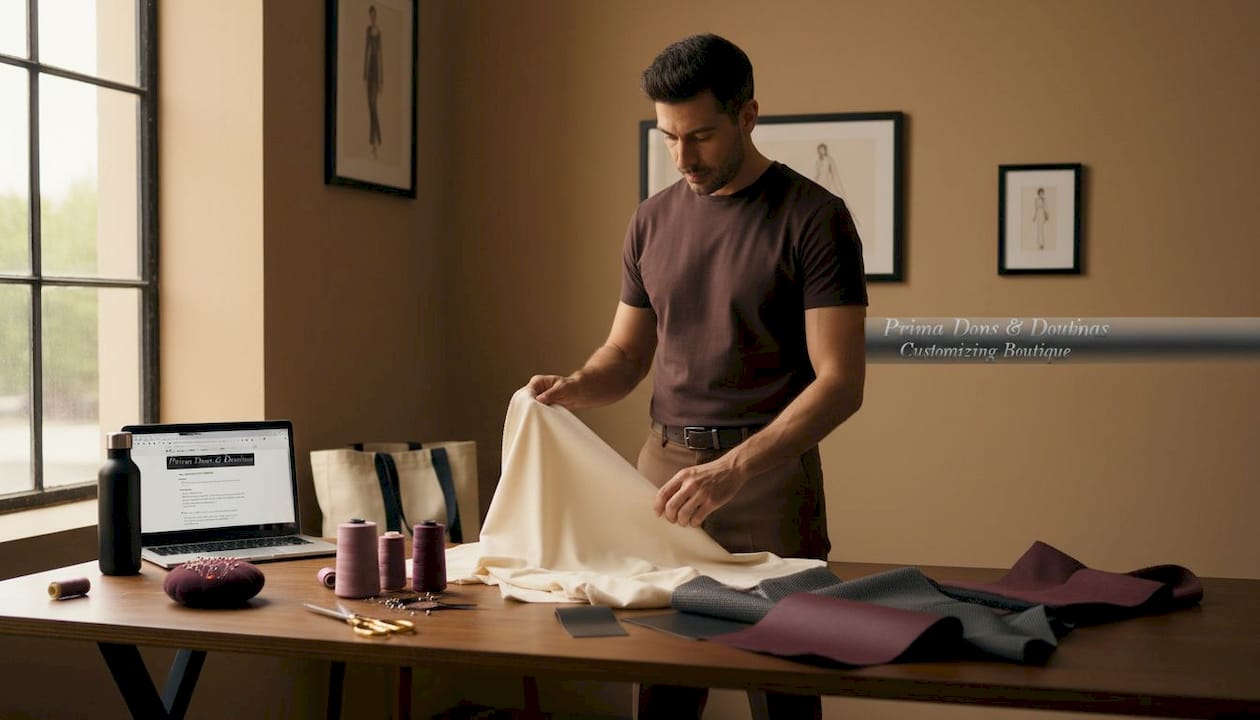
Pro Tip: Document every stage of your workflow in a simple running log. Include the date, the decision made, and who approved it. This log becomes invaluable when you need to trace an issue back to its source or replicate a successful result on a future order.
How to measure sustainability: KPIs, traceability, and circularity
After mapping your steps, you need a way to verify that your workflow is actually delivering on its sustainability promises. Activity counts, like “we sourced from two certified suppliers,” tell you very little. Outcome metrics tell you much more.
Brands use outcome-focused KPIs for durability, circularity, and traceability depth. Benchmarking uses circularity indicators like fiber recycling rates and traceability tiers. These are the numbers worth tracking.
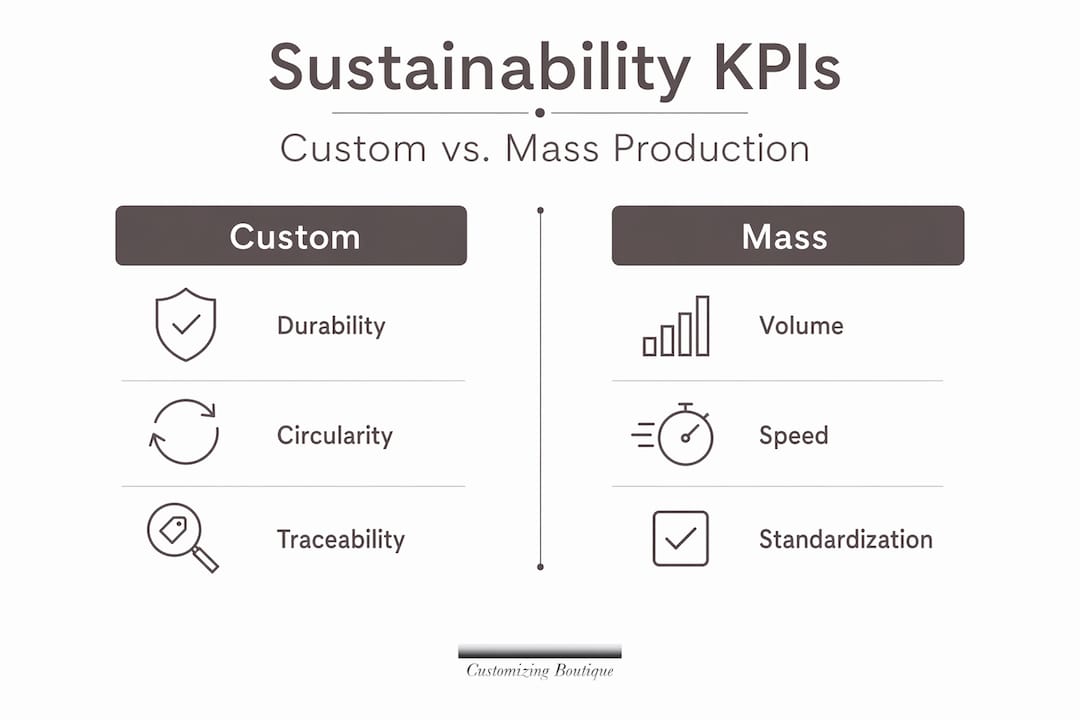
| KPI | What it measures | Why it matters |
|---|---|---|
| Durability score | Expected garment lifespan in years or washes | Longer life means fewer replacements and less waste |
| Circularity rate | Percentage of material that can be recycled or composted | Tracks end-of-life impact |
| Traceability depth | Number of supply chain tiers you can verify | Indicates how much you actually know |
| Water intensity | Liters used per garment produced | Compares efficiency across production methods |
Traceability is more complicated than most brands let on. No single traceability standard is widely adopted yet, and suppliers may juggle multiple requirements at once, which increases complexity for everyone involved.
“There is no single agreed standard for traceability across the industry yet.”
That reality means you should build your own simple traceability framework rather than waiting for a perfect external system to arrive. Track what you can verify directly.
What to capture in your own traceability log:
- Fiber or material origin (country and supplier name)
- Certifications held by your supplier (and their expiration dates)
- Dye and finish methods used on each order
- Estimated water and energy data from your supplier
- End-of-life plan for the garment (repairability, recyclability)
Following fashion sustainability trends in 2026 shows a clear move toward material passports and digital product IDs, which will make tracking easier in coming years. For now, a well-maintained spreadsheet gets you most of the way there. The eco-chic choices guide also walks through practical ways to evaluate the sustainability credentials of any brand or supplier you consider.
Common mistakes and troubleshooting your sustainable workflow
Even well-intentioned workflows break down. The good news is that most mistakes follow predictable patterns, which means you can prepare for them in advance.
Common workflow errors to watch for:
- Vague sustainability goals. Saying “we want to be sustainable” without specifying what that means in measurable terms leads to inconsistent decisions at every stage.
- Pushing compliance costs downstream. Compliance documentation can bottleneck improvements in supply chains when factories absorb most of the costs and administrative burden. Sharing the workload and the cost of documentation with your supplier creates a more functional partnership.
- Over-complicating traceability from day one. Trying to track every tier of your supply chain immediately is overwhelming and often counterproductive. Start with what you can realistically verify and expand gradually.
- Skipping the digital prototype step. Physical samples waste material and time. Digital approvals, even imperfect ones, reduce the number of rounds you need.
- No written order summary. Verbal agreements create misalignments. Every order needs a written spec sheet that both you and your maker confirm before production begins.
“When compliance costs fall entirely on suppliers, the relationship becomes adversarial rather than collaborative, and quality suffers as a result.”
The practical correction here is straightforward. Offer to co-create documentation templates with your maker. Share the time investment. When your supplier feels supported rather than audited, communication improves and results follow.
For personalized tips that apply directly to individual sustainable purchases, the personalized sustainable fashion tips resource covers material evaluation, supplier questions, and care practices that extend garment life significantly.
Customer adoption and communicating your sustainable values
A well-run workflow only creates full value when you communicate what makes it different. Transparency builds trust, and trust drives purchase decisions.
Consumer attitude, subjective norms, and eWOM (electronic word of mouth) significantly influence sustainable apparel purchases, and environmental consciousness moderates all of these relationships. In plain terms, customers who care about sustainability are far more likely to buy when they see clear, honest information about how a piece was made.
Best practices for transparent sustainability communication:
- Share your material sourcing story in plain language. Where did the faux fur come from? What certifications does it carry?
- Show the customization process visually. Behind-the-scenes photos and short videos of the making process build authenticity better than any marketing copy.
- Be specific about what you do not yet know. Honest gaps in your traceability data are more credible than sweeping green claims.
- Highlight the durability of each piece. Showing estimated lifespan or care instructions communicates long-term value, not just upfront cost.
- Invite customers to share their pieces. User-generated content and reviews from real buyers create the eWOM that influences new shoppers most effectively.
The eco-friendly styling tips resource provides practical guidance on communicating a sustainable wardrobe strategy to others, which is useful both for personal style and for building a community around conscious fashion choices. Understanding why sustainable fashion matters helps you frame your own choices in a way that resonates with other shoppers.
If you want context on how broader sports fashion trends in 2026 are influencing material innovation and wearability standards across categories, that resource offers useful cross-industry perspective.
Pro Tip: Make your customization process and sustainability choices highly visible at every customer touchpoint. A short “how it was made” note on your order confirmation or product page turns a transactional purchase into a meaningful story that customers remember and share.
Why outcome metrics and supplier support are the next frontiers in sustainable fashion
Here is the honest truth that most sustainable fashion guides skip over. Digitizing your workflow does not automatically make it more sustainable. You can adopt every trending tool, from blockchain traceability to AI-powered fit algorithms, and still produce garments with high environmental cost if you are not tracking what actually matters.
The real progress comes from two things most people underinvest in: outcome-based metrics and genuine supplier support.
Outcome metrics ask hard questions. How long will this garment actually last? Can the material be recycled at end of life? How much water did this production run use compared to the last one? These are measurable, improvable numbers. Compare them to activity metrics like “we attended a sustainability conference” or “we switched to a certified supplier” and the difference in usefulness becomes obvious immediately.
Supplier support is just as critical. Many brands in the made-to-order space work with small, skilled makers who have enormous craftsmanship but limited administrative capacity. Asking those makers to meet ten different documentation standards simultaneously, with no support, creates resentment, inaccurate data, and worse outcomes for everyone. Capacity building means investing time in helping your suppliers understand why documentation matters and making it as easy as possible for them to deliver it accurately.
The brands that move the needle on custom clothing sustainability are the ones treating their suppliers as long-term partners, not just vendors to audit. That shift in relationship quality shows up in the finished product, the accuracy of your traceability data, and the durability of your pieces.
Bold, circularity-focused KPIs are the next practical tool. Set a target for how many garments from your wardrobe can be repaired, resold, or recycled at end of life. Track it. Improve it each season. That number tells you far more about your real sustainability progress than any certification badge alone.
Start your sustainable fashion journey with Prima Dons & Donnas
Your workflow is ready. Now put it into action with pieces built for exactly this kind of intentional, personalized, sustainable shopping.
At Prima Dons & Donnas, every piece is made to order in your size, your color, and your vision. The made-to-order dress collection lets you apply every step in this guide directly to a statement piece built around you. Want something to wear now? Ready-to-ship options are available for faster delivery without sacrificing quality. Explore custom outerwear for bold faux fur and sustainable finishes, or shop custom boots to complete your look from the ground up. Every order is your workflow in motion.
Frequently asked questions
What is the first step in creating a sustainable fashion workflow?
Begin by clarifying your personal style goals and sourcing digital tools for design and communication. On-demand manufacturing benefits significantly from digital prototyping as a starting point for efficient, low-waste workflow design.
Which metrics matter most for measuring true sustainability in fashion?
Prioritize outcome metrics like circularity, durability, and traceability depth over simple activity counts. KPI systems in sustainability use outcome-focused benchmarks such as durability and circularity performance for meaningful progress tracking.
How can I avoid common workflow mistakes in sustainable fashion?
Support supplier partners and ensure clear sustainability goals before starting any project. Factories risk absorbing compliance workloads and costs when traceability requirements are fragmented, so sharing that burden improves both accuracy and relationships.
Why is communicating sustainability important for customer adoption?
Transparent communication builds buyer trust and directly influences purchase decisions. Attitude, subjective norms, and eWOM strongly impact sustainable apparel purchase behavior, especially among environmentally conscious shoppers.
Are there any industry-wide standards for traceability in sustainable fashion?
No universal standard exists yet. Traceability workflows remain fragmented with no agreed industry benchmark, meaning brands often impose different and sometimes conflicting requirements on the same suppliers.
Recommended
- Sustainable fashion styling tips: Build an eco-friendly wardrobe – Prima Dons & Donnas
- Sustainable fashion tips for personalized, luxe & eco-friendly style – Prima Dons & Donnas
- Master your personalized fashion styling workflow – Prima Dons & Donnas
- Sustainable fashion explained: a guide to eco-chic choices – Prima Dons & Donnas


Leave a comment